
What kind of grass do cats like and eat?
Cats are natural carnivores whose primary diet consists of meat. But they're often seen happily devouring green grass. So why is a bunch of greenery more appealing to cats than their favorite treat? What kind of grass do cats prefer? And is trying to diversify their diet detrimental to their health?
Content
Why do cats eat grass?
The idea that cats eat grass to replenish their vitamin stores is misguided. The gastrointestinal tract of carnivores is fundamentally incapable of digesting greens.
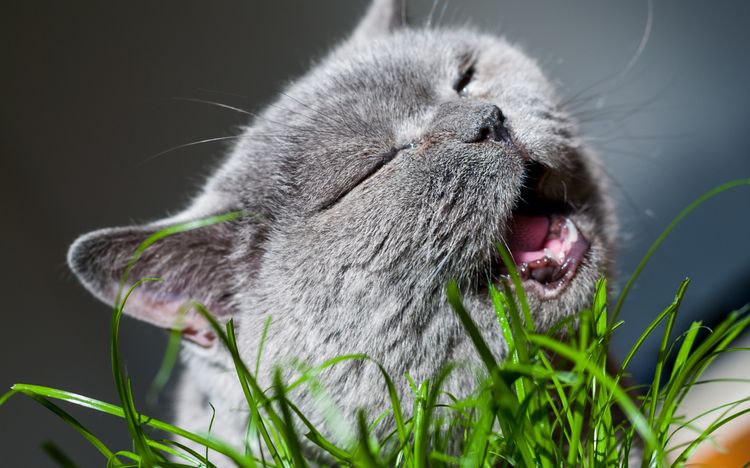
The urge to chew on leaves is a physiological need. In the wild, felines feed on birds and rodents, consuming them along with their feathers, skins, and bones. These difficult-to-digest ingredients are then regurgitated along with gastric juices. Grass performs a similar function. The tough fibers of greenery irritate the stomach lining, stimulating regurgitation and thereby promoting natural cleansing.
In pets that do not hunt, eating grass can cause them to regurgitate hair that has entered their stomach during grooming.
What grass is good for pets?
If you carefully observe your pets in nature and pay attention to the grass they eat, you'll notice that they prefer plants with tough leaves. These are most often sedge leaves. The elastic fibers of tough grass act like a brush in the stomach and intestines, cleaning the walls not only of food debris but also of parasites that have completed their life cycle.
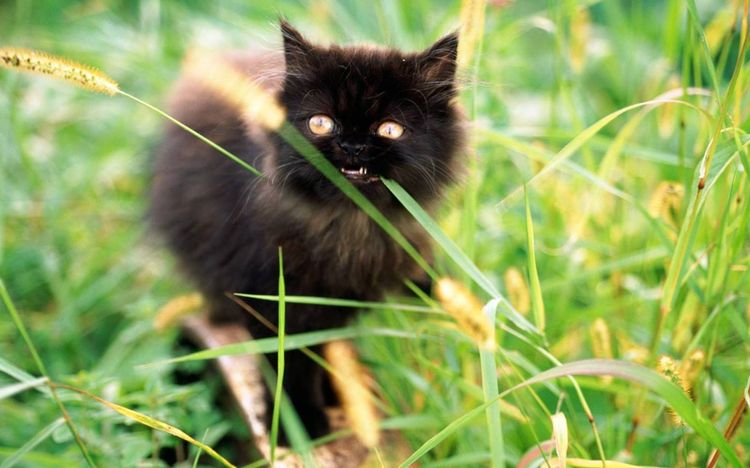
Animals also have a particular fondness for the ubiquitous weed, couch grass. Perhaps it's not just the fiber. Couch grass has long been used in folk medicine to treat metabolic disorders, gastritis, and arthritis. It's quite possible that knowledge of nature's secrets is one of the keys to the survival of our smaller brothers.
When choosing the best grass for cats, it's best to choose freshly sprouted perennial grass-based grasses. Regular oats, millet, and wheat are ideal for this purpose. Sprouted seeds can be purchased at pet stores or grown at home.
Do you have a herbivorous cat? Then it's worth taking steps to ensure this passion doesn't harm them. Flowers that are poisonous to cats include: daffodils, poppies, violets, lilies of the valley, geraniums, henbane, calendula, and philodendron.
When letting your pet bask in the grass, keep in mind that lawn greens may be treated with chemicals. Furthermore, urban grass can harbor dust, exhaust fumes, viruses, and pathogenic bacteria. Therefore, the best way to pamper your pet is to plant cat grass indoors.
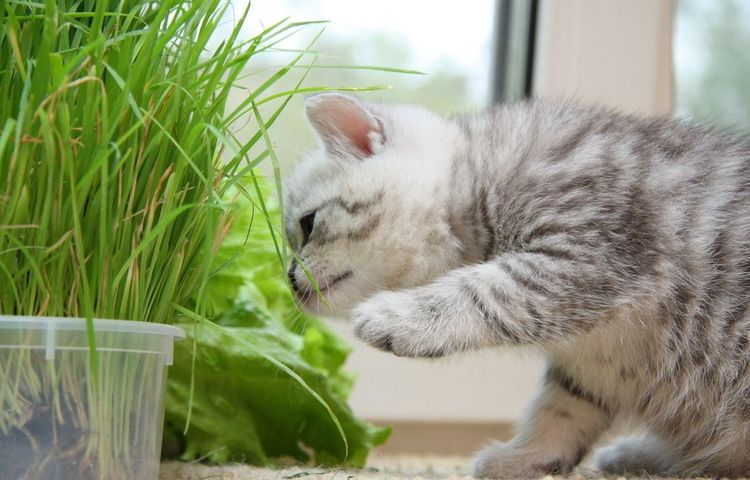
Sprouted wheat and oat grains are beneficial not only for your pet, but also for their owner! Upon awakening, they possess increased biological activity and are therefore capable of restoring the body at the cellular level.
Options for arranging a lawn on a windowsill
Indoor cats, often confined to the house, often indulge in potted plants or gnaw on brooms to make up for the lack of greenery. To avoid forcing them to do this, it's a good idea to research what kind of grass to plant and create a makeshift garden for your pet.
Determining your pet's taste preferences is only possible through trial and error. Offer them a variety of options. You're sure to find one that suits them.
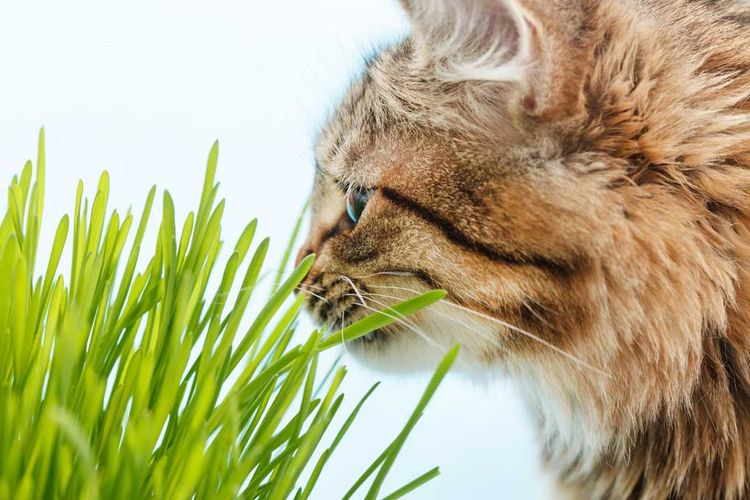
Cereal seeds can be germinated in one of three ways:
- With soil. Fill a container with 5-10 cm high sides with soil to a depth of 2-3 cm and moisten it. Add a second layer of seeds and cover them with another 2 cm of soil. Moisten the soil again. To create a greenhouse effect, cover the container with plastic wrap. Remove the plastic wrap when the first shoots appear.
- Soilless. Cats often like to dig in their "garden," scattering soil all over the windowsill. To prevent this, use damp cotton wool or cheesecloth instead of soil as a growing medium. To do this, take two plastic plates of the same diameter. Poke holes in the first to drain excess liquid, and use the second as a tray. Place the perforated plate over the undamaged one, lining the bottom with damp cotton wool. Spread the seeds over the surface and water them. Wrap the plate in plastic wrap and wait for the first shoots to appear.
- Based on wet sawdust. It is also convenient to use wood pulp instead of primer. filler, designed for filling cat litter boxes. The granules should be soaked in water until they form a smooth paste. Spread a thin layer of seeds on top of the moistened sawdust and cover with plastic wrap.
Either method is simple and easy to implement. The key is to use a clean litter box. Otherwise, your cat may use the "lawn" as a place to relieve itself.
If your pet eats special food every day, there is no need to grow cat grass.
Read also:


Add a comment