
What smell do dogs dislike?
Dogs have a much more developed sense of smell than humans. Just as we may like or dislike certain perfumes or scents in our everyday lives, dogs also have their favorite and least favorite scents. Today, we'll discuss the scents that dogs most often dislike and how you can use this fact to deter dogs from certain items in the house or a favorite flowerbed in the countryside.
Content
Peculiarities of a dog's sense of smell
For a dog, the nose is one of the most important senses, because it is through the sense of smell that animals receive maximum information about the world around them, as well as about the animals living nearby.
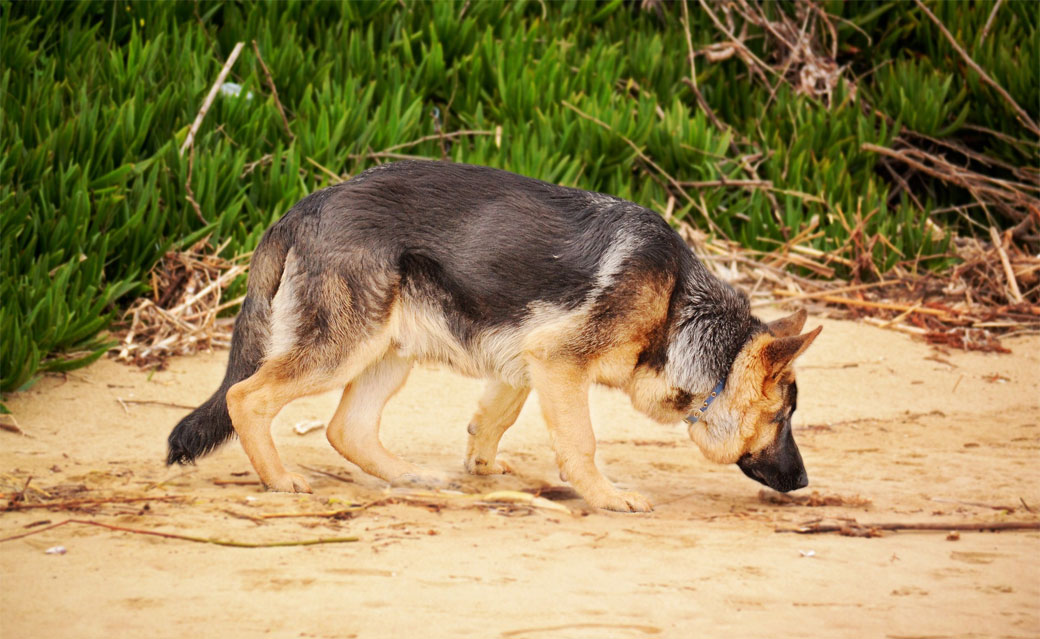
You've likely noticed more than once that your pet reacts to odors that are subtle or completely inaccessible to the human nose. Dogs owe their keen sense of smell to the large number of receptors responsible for odor perception.
Interesting fact! Different breeds have different scent perception abilities and different numbers of olfactory receptors.
For comparison, we present the following data:
|
Object |
Number of receptors |
|
Human |
6 million |
|
Cocker |
70 million |
|
Basset Hound |
125 million |
|
Fox terrier |
150 million |
|
German shepherd |
200 million |
|
Labrador Retriever |
220 million |
Interesting facts
- A dog's nose can detect even 1 molecule of an odorous substance dissolved in 1 liter of air or 1 ml of water.
- Dogs are able to distinguish and remember about 2 million smells.
- On average, a dog is guaranteed to detect a scent at a distance of 1 km from the source.
- Scientists have found that outdoors (under ideal weather conditions), dogs are able to smell at a distance of up to 20 kilometers.
- The receptors are most sensitive to the smells of fatty acids.
- As hunger increases, dogs' sense of smell becomes significantly more acute, which is why working animals (hunting and search animals) are usually not fed before a shift.
- Dogs are able to determine such parameters of smells as: concentration, strength, and age.
- Unlike our perception of smells (for humans, a scent is usually single and holistic), dogs sense the multifaceted nature of a scent, being able to distinguish its individual components.
- Dogs can control their breathing by increasing the percentage of air passing through their olfactory zones so that as many molecules as possible reach the receptors.
- The lower sense allows animals to detect odors left on the ground or grass, while the upper sense allows them to detect scents carried in air currents.
By understanding how your pet's olfactory system functions and knowing what scents dogs like and dislike, you can influence their behavior in one way or another.
What smell do dogs hate?
The acuteness of their sense of smell allows them to be used to search for people and certain objects, but at the same time, it makes dogs vulnerable to certain odors, which can not only temporarily dull the receptors or frighten animals, causing them discomfort, but also cause a fairly severe burn of the dog's delicate mucous membrane of the nasopharynx.

That's why, when talking about what smell repels dogs, we can roughly divide aromas into:
- safe for animals, which can drive away animals from certain areas of the apartment, protect things from being chewed, or protect plants near the house from unwanted markings;
- dangerous odors, which can not only drive dogs away from a certain area, but also cause a burn of the mucous membrane (in some cases, such a spray can be used as protection against attacks by aggressive large-breed dogs).
Natural remedies
In fact, there are many natural odors that dogs dislike. Animals dislike certain scents for various reasons—some are simply unpleasant to dogs, while others, even in small concentrations, cause receptor hypersensitivity and sneezing.
Almost all dogs dislike smells:
- citrus fruits (lemon, lime, orange, tangerine, grapefruit, pomelo, etc.), but at the same time Concentrated essential oils can cause burns to mucous membranes;
- lavender;
- carnations;
- wormwood;
- birch tar;
- spices (black pepper, garlic, cardamom) but Inhalation of large quantities may cause burns to mucous membranes;
- Vinegar (sprays based on solutions of table or apple cider vinegar will help to wean the dog from defecating in the wrong place, and will also remove the unpleasant smell of urine marks from the house);
- ammonia;
- cosmetics with strong odors (you should not intentionally spray deodorants, air fresheners, perfumes in front of dogs, or light aroma candles or incense sticks in the room where the dog lives);
- coffee (yes, dogs really don’t like the smell of coffee);
- naphthalene;
- alcohol and alcohol-containing solutions (tinctures, disinfectants, colognes, perfumes, etc.);
- tobacco (inhaling cigarette smoke causes sneezing fits in most dogs, and “passive smoking” is just as dangerous for animals as it is for humans);
- household chemicals, because cleaning products for furniture and clothes, washing and disinfecting floors, washing powders and rinses with a strong smell are not only unpleasant for animals, but also may cause allergic reactions and burns of the mucous membranes.
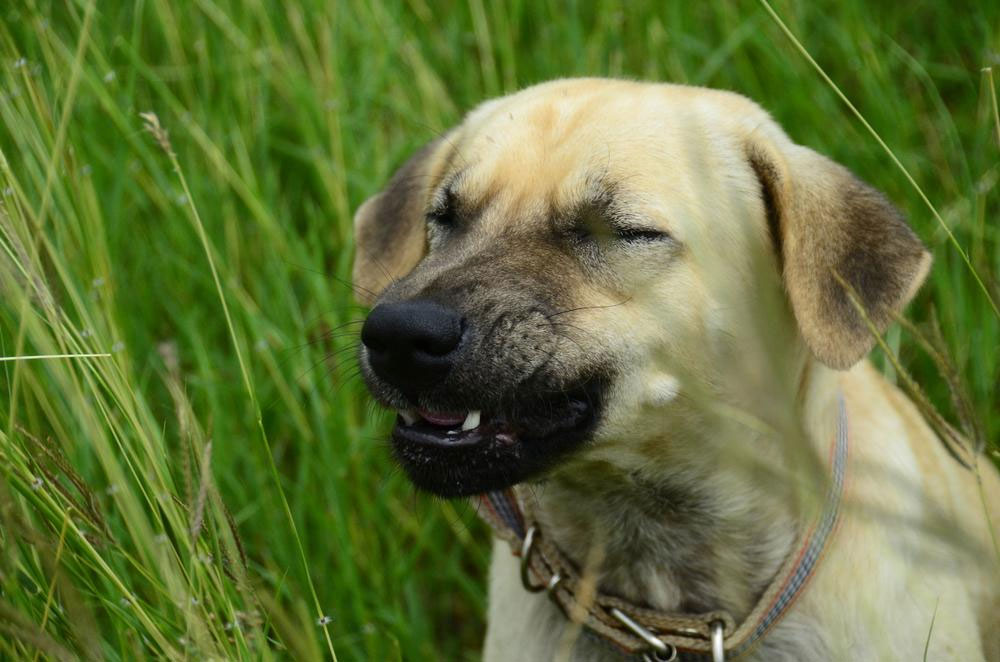
If you're faced with a dog-smelling problem and are worried that the smell will become ingrained in your home or that your flower beds will soon smell anything but floral, consider these simple and inexpensive ways to repel dogs using an unpleasant scent. Many of the remedies listed above will help you repel dogs from your property or discreetly drive them away from a specific corner of your apartment.
Important! Before using a scent that is unpleasant for dogs to correct your pet's behavior, be sure to consult a veterinarian and have your pet's health examined.
Remember that many strong odors can trigger an allergic reaction or cause extreme discomfort in your pet. Some dogs are also intolerant to certain odors, so don't be surprised if your pet doesn't react to a citrus-scented spray or herbal repellent tincture.
Antigadin spray from the store
Today, in specialized stores, you can easily find a variety of sprays designed to protect interior items from pets.
To prevent teething puppies from chewing furniture, and adult dogs from marking table legs, sofas, and carpets, you can try applying special sprays from the following manufacturers:
- Mr.Fresh Expert;
- Gardenox;
- BioVax;
- Arox;
- Benek;
- RAPAX.

We recommend that you read the instructions for using these products in more detail, as some are intended for indoor use, and some methods are even effective in repelling neighboring dogs from your property.
There is also information on our website, How to get rid of the smell of dog urine in an apartment.
Stray Dog Repeller Powder
If regular sprays aren't working and you need a more radical solution to keep strange dogs from pooping near your home, try sprinkling Braeco's special biopowder on your flowerbeds.
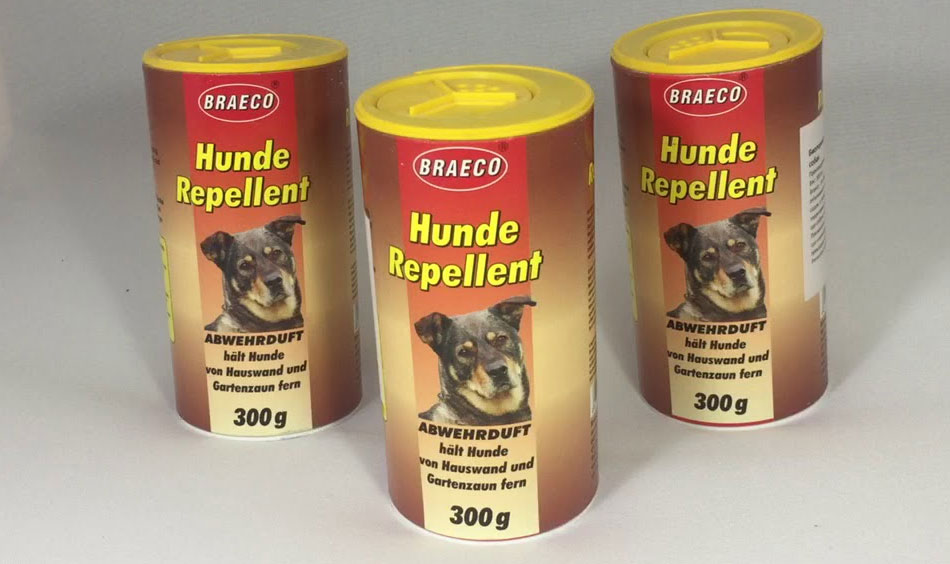
The product is safe for the health and life of animals, but it effectively repels dogs of any size and remains effective even after watering the area.
Means of protection against attack
All of the above recommendations are relevant for those seeking answers to the question of what to do to prevent stray dogs from defecating near their home or entryway, breaking flowers in flowerbeds, or marking flowers under their windows. No "peaceful" scent can protect a person or dog from an attack by an aggressive animal.
You can scare a large aggressive dog with the help of:
- ultrasonic repeller (there are devices with different ranges, but on average the device affects the dog at a distance of 5 meters);
- stun gun (the sound of the device going off can scare an animal from afar and make it retreat or pass by);
- pepper spray (objectively the best remedy if an attack actually occurs, but you need to know how to use this spray to avoid harming your health or the health of your pet)
Breeders' Advice
Read also:
- How to potty train a puppy using a pad
- Why are dogs afraid of fireworks and how to calm them down?
- How to stop a dog from barking


Add a comment