
What bones can and cannot be given to dogs?
A sugar bone is a favorite dog treat, containing essential organic and mineral nutrients that support a healthy four-legged friend. Owners often treat their pets with this "delicacy" as a reward. Therefore, it's important to know which bones are safe to give and which should be permanently removed from their diet.
Content
Benefits and harms
What are the beneficial properties of this product and why should an animal consume it?
- By chewing on cartilage, your pet performs a necessary hygienic procedure – cleaning the teeth, interdental spaces, and gums from plaque, which contains pathogenic microorganisms.
- A domestic dog harbors a hunter, so a bone is often a favorite toy, helping release suppressed instincts and relieve pent-up tension. In the process, the body produces endorphins, which makes the animal feel happy.
- Chewing is excellent exercise for the muscles and jaws. It also helps maintain the sharpness of canines, which gradually wear down with age.
- By gnawing, the animal provokes the secretion of saliva, which, entering the digestive tract, activates the production of gastric juice – an important element for the normal absorption of food.
- The spongy bone contains red bone marrow, which is essential for hematopoiesis. The minerals the dog receives help form feces and promote regular bowel movements.
- Bone marrow is rich in vitamin E, which prevents the deposition of harmful cholesterol and the narrowing of blood vessels, as well as group B, which is responsible for coordinated nervous activity, energy production, and the condition of the heart muscle.
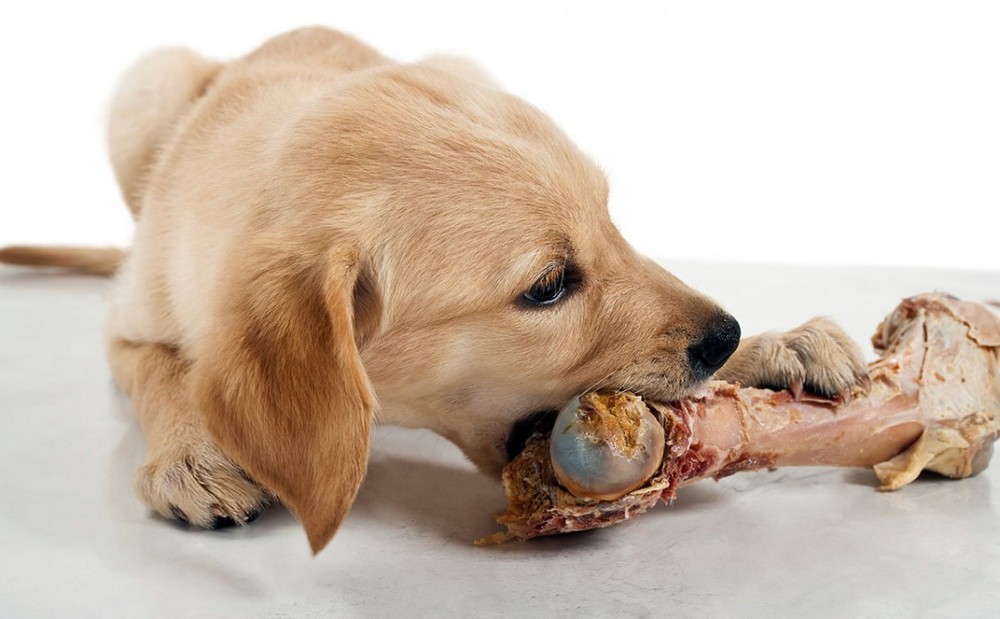
Bones are a healthy food that can be included in your pet's diet. However, it's important to note the reasons why it's not recommended to feed them to your dog frequently:
- The habit of constant chewing leads to thinning of tooth enamel, gum injury, and malocclusion. This can lead to inflammation, which can spread to the jaw, the development of cavities, or tooth fractures.
- Bone fragments have sharp enough edges to damage the gastrointestinal tract. Perforation of the intestine or stomach is often accompanied by profuse bleeding, which can be fatal. Trauma to the organ often causes extensive inflammation. peritonitis with necrotic processes.
- Chewing is a strenuous task that strains the muscles. This strain can cause muscle soreness in the mouth and temporary loss of appetite.
- Excessive consumption of pits can lead to a serious condition—intestinal obstruction, requiring professional treatment, including emergency surgery. Delays can lead to tissue necrosis and generalized sepsis.
- The fat content of bone marrow is 46.6%, comparable to the amount of cholesterol found in cheese, which is not recommended for dietary use. Therefore, including bones as a staple food in the diet can trigger pancreatic disease and lead to obesity.
- There is a high risk of suffocation if the airway is blocked by a large fragment.
- Bird tissues contain bacteria that cause osteomyelitis, a dangerous infection that penetrates the bone marrow and leads to deformation of the musculoskeletal system.
Negative consequences are typical for excessive consumption, as well as the use of an unapproved product. If a dog is given treats no more than 1-2 times a week and the owner carefully monitors their diet, there is no threat to their health.
Which dice are allowed and prohibited?
Often owners limit their animals' diets by not practicing feeding raw meatThe reason for this approach is the risk of worm infestation. However, it's important to remember that feeding cooked bones to dogs is strictly prohibited. After cooking, the food clogs the intestinal lumen, forming a dense plug, causing indigestion and intestinal obstruction. Therefore, only raw bones should be fed to your pet.
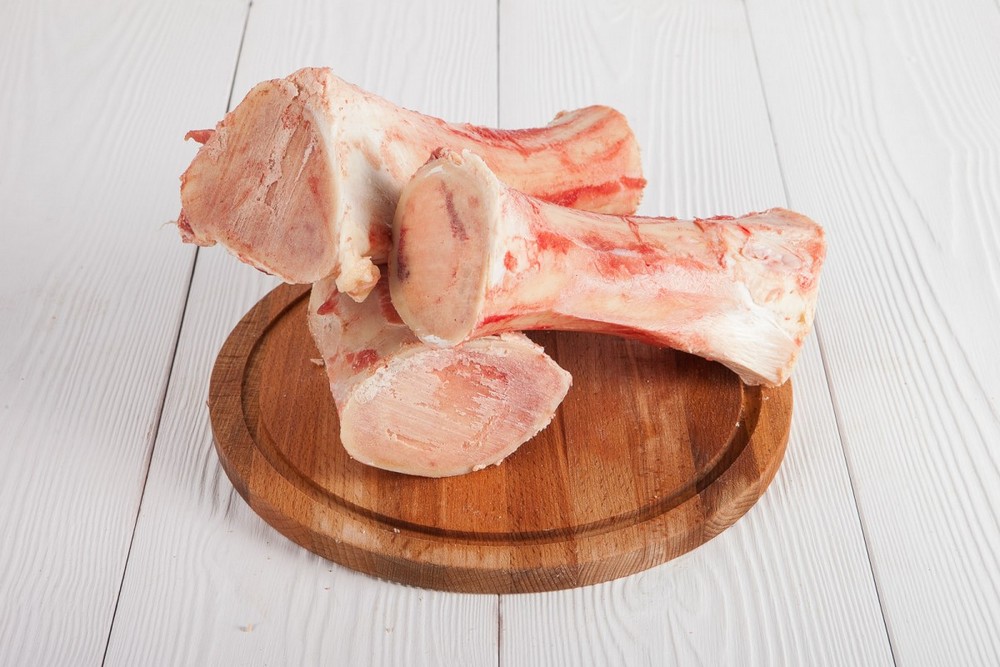
What bones can you give to a dog?
- Spongy parts from the thoracic and pelvic regions, as well as vertebrae, are useful for consumption.
- Of the tubular ones located in the limbs, only the bones are allowed to be taken.
It is recommended to include bones in the diet:
- Veal ribs are small, smooth, spongy, and have no pointed ends. Larger ribs can be pre-cut.
- Beef – you can feed spare ribs or thighs with some beef left. Once the dog has finished gnawing the meat, the bone is removed. Chewing is prohibited, as large fragments are dangerous for digestion and can cause choking. Furthermore, the fat content in cow bone marrow is much higher than the acceptable level.
- Chicken or turkey necks and backs contain a lot of useful cartilage tissue and have a soft structure.
What bones should not be given to dogs:
- Bird tubulars are easy to bite and swallow, but the sharp, broken ends can injure the esophagus, stomach, and intestines.
- Pork is where parasites are most often found.
- Rabbit bones have a bone structure similar to bird bones. The bones break easily, forming small, sharp fragments.
Sometimes dogs prefer to eat fish. It's recommended to boil small fish, removing the head and gills, tail, fins, and spine. The small bones "hidden" in the meat soften during cooking and pose no health risks. Feeding raw fish with bones is not recommended due to the risk of choking and parasite infestation.
Who is allowed to have this "delicacy"?
You can occasionally treat any breed, but only from four months of age. By this time, the puppy's baby teeth are sufficiently formed, and its digestive tract is prepared to process other types of food, not just mother's milk. A four-month-old puppy is given bird necks after the baby teeth have been replaced by permanent teeth. As the puppy matures and its permanent canines become stronger, veal bones are introduced into its diet.
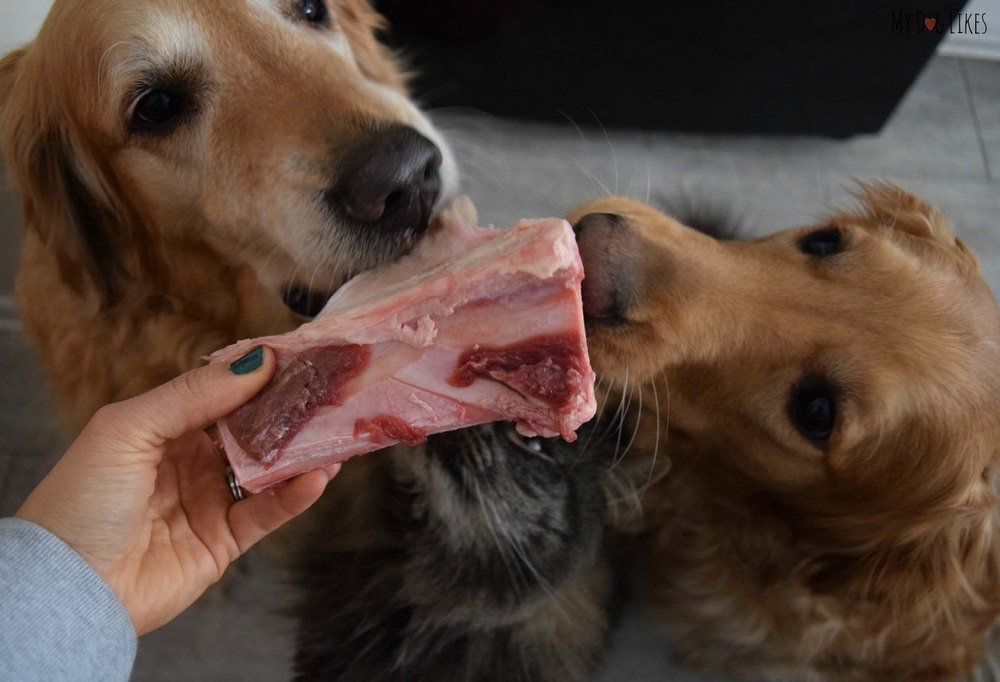
You can't chew on your favorite treat:
- For females in the last week of pregnancy and nursing. While nursing puppies, a balanced diet recommended by a veterinarian should be provided. Before whelping, it's important to prevent the risk of diarrhea and constipation, and clear the tract of any food that could cause damage to internal organs. Pregnant females have elevated calcium levels, so additional administration of this mineral may adversely affect the health of the puppies.
- Animals suffering from digestive system diseases, as well as those taking medications that reduce the production of gastric juice.
- For dogs preparing for an exhibition, unexpected illness can disrupt all plans.
If there are no contraindications and introducing bones into the diet is permitted, it is important to ensure that your pet eats no more than 10% of their weight. Otherwise, the stool will become too dense and risky. obstruction of a section of the intestine.
If your pet exhibits characteristic symptoms of choking, vomiting, excessive salivation, diarrhea, or constipation, it's advisable to consult a veterinarian who can quickly identify the problem and provide treatment. It's possible that the clinical picture is caused by a problem related to internal organ perforation—in this case, delay could lead to a tragic outcome.
What to do when using dry food
Bone-shaped treats are given to animals accustomed to a natural diet. However, it's best not to spoil pets raised on commercial food with such additives. Their digestive systems are adapted to dry mixes containing essential vitamins and minerals. Introducing natural ingredients into their diet can cause mild poisoning with vomiting and diarrhea or lead to chronic constipation.
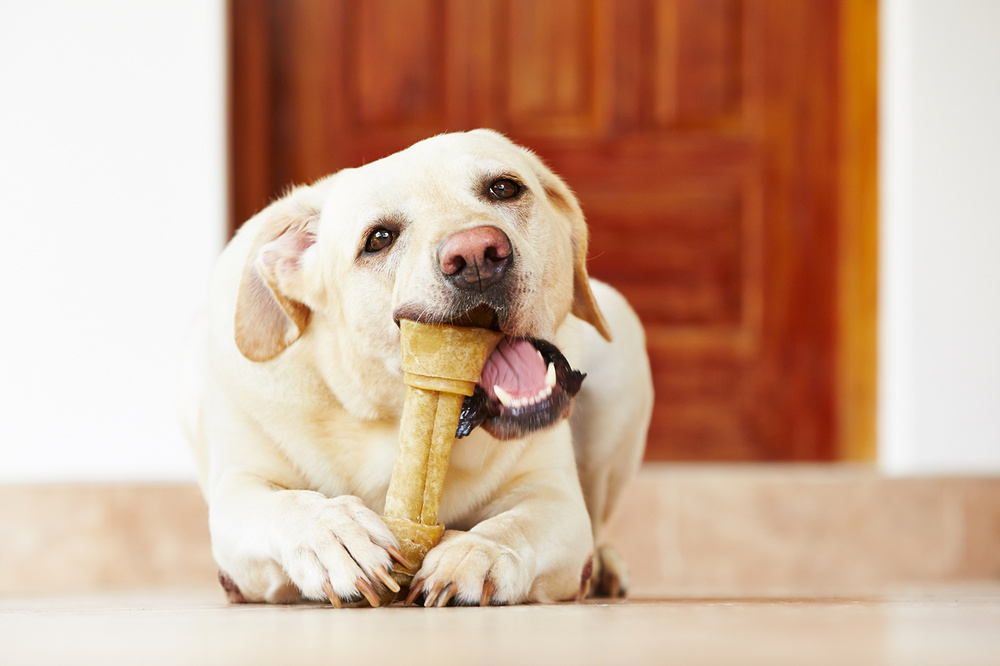
If you want to please a four-legged friend who is fed only balanced food, it's better to buy imitation bones rather than raw ones. Manufacturers produce a wide range of treats to satisfy their craving for chewing on dense treats, including dried tracheas and duck necks, twisted sinew, and rolled leather. These products undergo mandatory certification and are therefore safe for pets.
Introducing a "delicacy" into the diet
To prevent risks associated with the use of the product, it is enough to follow simple rules:
- It is allowed to treat your four-legged friend only with raw bones with cartilage tissue or leftover meat.
- The time when a treat is acceptable is after the main meal, on a full stomach.
- When an animal is gnawing, a person should monitor the process to remove the bare bone from the pet and prevent it from swallowing pieces.
- The process lasts no more than a quarter of an hour a day.
- Chewing on tubular structures and bones is dangerous!
- Keep this delicacy in the refrigerator for no longer than 3-4 days before use. Storing it longer can expose your dog to a bacterial infection.
- When the animal loses interest, discard the treat. It's unacceptable to allow the pet to play with dried bone or spongy material, as they become dangerously brittle and form sharp splinters when bitten.
- Mosly does not give in case of habit of swallowing them.
- Meat parts should make up no more than 20% of the total volume of food, naked parts – up to 10%.
- The size of the treat should correspond to the breed - for small ones, chicken necks are better, for large ones, turkey necks.
If a treat is causing concern, it's best to be extra cautious and avoid offering it to your pet. Any questions regarding nutrition and bone supplements should be discussed with a veterinarian – a professional will always be able to recommend the best option based on your pet's condition.
If natural ingredients are used, only raw, spongy, or soft bones that do not form sharp fragments when broken should be fed to the dog. To prevent injury or choking, the owner should be present during chewing, discard any chewed bones, and prevent ingestion.
Read also:


Add a comment