
What commands should a dog know?
To ensure a dog not only receives its share of love and attention but also learns to understand its surroundings, it must know certain commands. If there is understanding between owner and pet, unpleasant situations can be avoided at home, on walks, and when meeting other animals. And when preparing a dog for a show, certain essentials are simply unavoidable.
Content
On the general principles of teaching
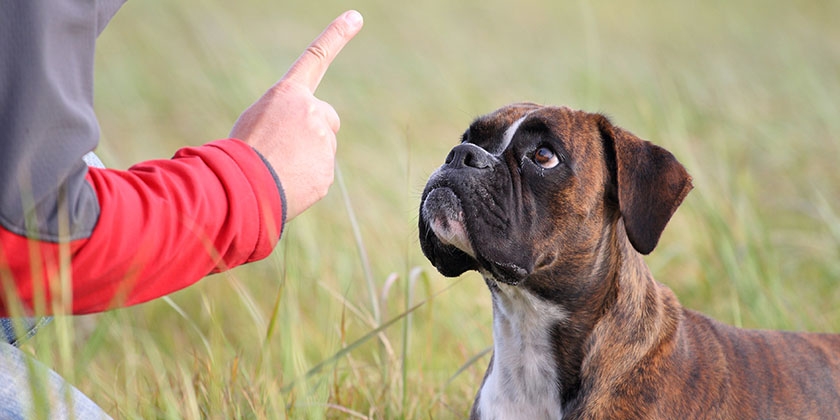
When starting training, keep in mind that the animal doesn't understand the meaning of words, but it is very sensitive to intonation and associates it with the owner's mood. After making a puddle on the floor, the dog will understand from the stern shout that it has done something wrong and will quickly learn that this must be done in the designated place.
At the same time, calm, soft intonations of praise, delivered at the right time, make it clear that this is the right thing to do. Praise should be accompanied by petting and a treat after completing a command or request.
The training process is gradual; the trainer must be consistent and patient. If something was forbidden yesterday and allowed today, it's difficult to achieve results, as the pet won't develop a clear understanding of your requirements. For example, if you took advantage of a puppy or dog sale and bought a pet, then, as the dog grows up, it won't understand why it was previously allowed to sleep on the owner's bed, but is now being scolded for it.
Basic rules:
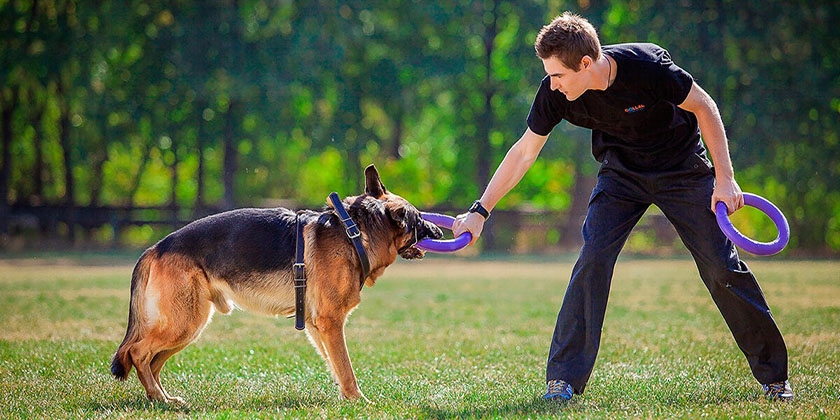
- the form of training is game-based;
- the exercises are repeated several times, giving the animal the opportunity to rest;
- first the command and only then the “reward”, but immediately, so that it is clear what it was received for;
- a word can be accompanied by a gesture;
- If an order is not followed, it cannot be repeated; you must use a leash or your hand to force the person to do what is required;
- you should accustom the child to a specific word, without adding accompanying ones (for example, quickly, come on);
- a command word cannot be replaced with a similar one, for example, lie down to lie down, stand to stand;
- commands should be clear, loud, but not shouting;
- the lesson should be concluded with an assignment that you learned better and faster than the others;
- it is necessary to create a calm environment, interesting conditions;
- It is better to conduct the first lessons in a familiar place, later it can be changed;
- Irritability and bad mood of a person prevent the animal from tuning in.
A dog is genetically programmed to obey the pack leader. It's important to teach it that in a human pack, a child or an elderly person will be in charge.
How to teach basic commands
It's best to start with commands that will be needed for further training. These include "Come!" and "No." Once a dog has mastered these, it's easier to stop it, prevent unwanted behavior, and call it to you. Once it has learned the command "Heel!", the animal will remain with its owner under any circumstances, and upon hearing "Stay!", it will unquestioningly go to its pen or to the mat.
"Come to me"
This is one of the most basic commands to learn—it allows you to control and guide your dog. Initially, a leash, which allows for a certain amount of freedom, is essential. During a walk, when the dog is a short distance away, call its name to get its attention, then firmly and calmly say, "Come!" With your right hand, gesture toward your dog's thigh, showing a treat (or toy), which is given when the dog complies.
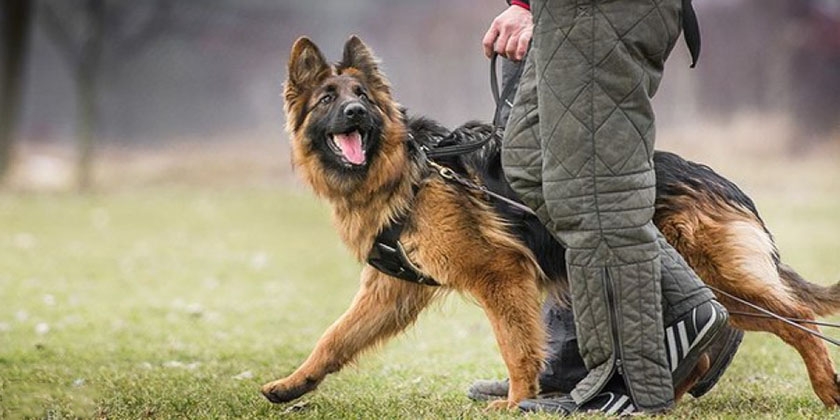
If the dog disobeys, pull it with a leash and only then give a treat. Later, words can be replaced with gestures.
"Ugh"
This is a no-no command; it should be pronounced strictly and clearly so that the animal understands the difference between something pleasant and something forbidden. The use of special collars with a minimal electric charge or a water pistol is acceptable. The leash length should be approximately 5 meters.
While on a walk, when the dog shows interest in something forbidden, say "No" in a stern voice and, while continuing to walk, tug on the leash. You can also use a deterrent of your choice. Stop near the forbidden spot and give the dog a treat. You can practice this exercise at home.
You can't give a treat immediately after the ban - the dog won't understand why it was given a treat.
"Near"
Mastering the skill is best accomplished after the active activity has ended, so the "student" is undistracted. The leash is shortened and the command "Heel!" is clearly given, repeated and sharply tightened when the pet moves away from your leg. A treat is given as a reward. After a while, the leash is removed and the skill is practiced without it, accompanying the command with a hand gesture.
"Sit"
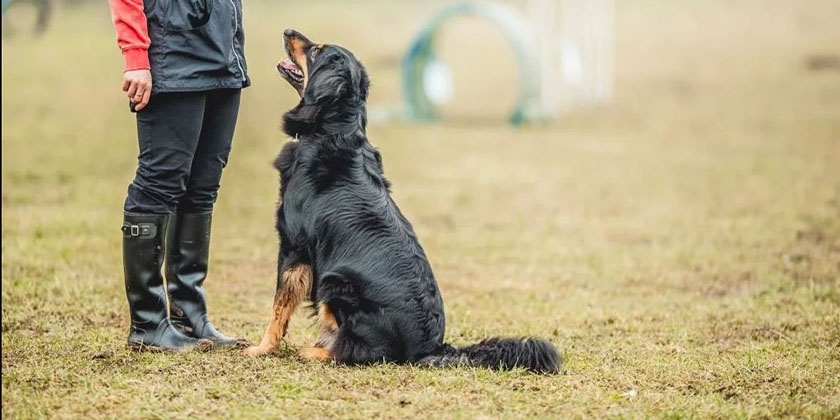
To train the dog, a short leash is required. A favorite treat is offered to the dog to sniff, then raised above the dog's head and a command is given. If successful, a treat is given; if unsuccessful, the command is repeated. Once the command is understood, the dog can practice without the treat—just say the rewarding words.
"Lie"
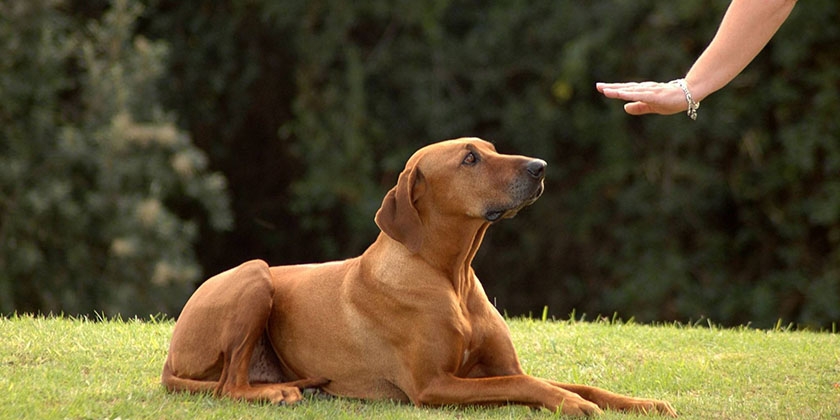
Begin practicing this exercise after mastering the previous one. The leash should be short. After giving the command, press on the animal's withers with your right hand and tug the leash downwards, lowering your hand so that the dog understands what is being asked of it. Once mastered, you can remove the leash and sharply lower your palm with the command.
"Stand"
Training begins with taking the starting position—standing to the right of the dog while it's lying down (or sitting). Pull the leash or collar upward, and with the other hand, lift the dog's belly while giving the command. Later, use the gesture of raising the right arm, bent at the elbow at a right angle, from the hip upward.
"Walk"
After taking the dog out for a walk, unfasten the leash, say "Walk!" and point in the direction with your hand.
Give it to me
The training begins in a playful manner, using a toy or familiar object. During the game, when the toy is in the child's mouth, they try to take it away, saying "Give!" A treat awaits upon completion.
Fetch
The exercise begins after mastering the "Sit" command. After commanding the dog to sit, show it a toy, a ball, or some other object. When the dog becomes interested and tries to snatch it, toss the toy aside and say, "Fetch!" accompanied by a sideways hand gesture. A treat is given as a reward for obeying the command.
"Place"
The chosen spot is marked with an object not used in other exercises. After the command "Down!", the object is placed in front of the dog and the command "Place!" is said. Then, after moving a certain distance, the dog is called back and then instructed to return. Upon hearing "Place!", the pet should return to the object. The accompanying gesture is a downward movement of the palm of the right hand from the waist down.
"Fas"
This exercise begins at 6-10 months of age, when the previous commands have been mastered. Upon hearing "Attack!", the dog must attack the target. The requirement is that the animal is stable and physically healthy.
With regular training, your dog will quickly learn commands and enjoy performing them and interacting with you. Furthermore, spending time together fosters psychological connection and understanding of your owner's tone and mood.
Read also:
- How to train a husky at home
- Training old dogs
- How to stop a dog from pulling on a leash during a walk


Add a comment