
How to induce vomiting in a dog
Situations where a dog swallows something "wrong" are quite common. In the best-case scenario, it might be a small toy, coin, or other small object that will pass on its own without causing serious harm. However, sometimes the swallowed object can pose a real threat to the animal's life, such as a toxic substance.
This is why it's important for owners to know how to induce vomiting in dogs, as delays can be life-threatening. Taking any measures is only practical within the first two hours after a dangerous substance has entered the body. Inducing vomiting after this point is no longer effective—the toxins have had time to be absorbed into the bloodstream and begin to damage the body, so in this case, it's essential to seek immediate veterinary attention.

Content
When artificially induced vomiting is required
In many cases, an animal's body induces vomiting to rid itself of toxins and foreign objects. But sometimes this reflex fails. A person should act immediately if:
- Rodent poison was ingested. Mouse and rat poison contains highly toxic substances that can be fatal to small dogs and cause abnormal blood clotting in larger dogs.
- A weed killer containing arsenic was consumed. You can only tell if your dog has ingested the poison if you witness it yourself. Arsenic poisoning usually has no obvious symptoms.
- The dog ate pills from the owner's medicine cabinet. Various painkillers and anti-inflammatory drugs containing paracetamol are especially dangerous. aspirin.
- The dog drank antifreeze (the substance causes kidney failure).
- There is a large object in the throat that cannot be removed on its own.
Caution: Induce vomiting only if the object does not have sharp or protruding edges.
How to quickly induce vomiting in a dog at home
If there's no doubt that vomiting is necessary, use one of the safer methods. Since each animal reacts differently to certain methods, don't overdo it; proceed with caution. Be sure to adjust for the animal's age and breed—if it's a puppy or small dog, the dosage will need to be adjusted.
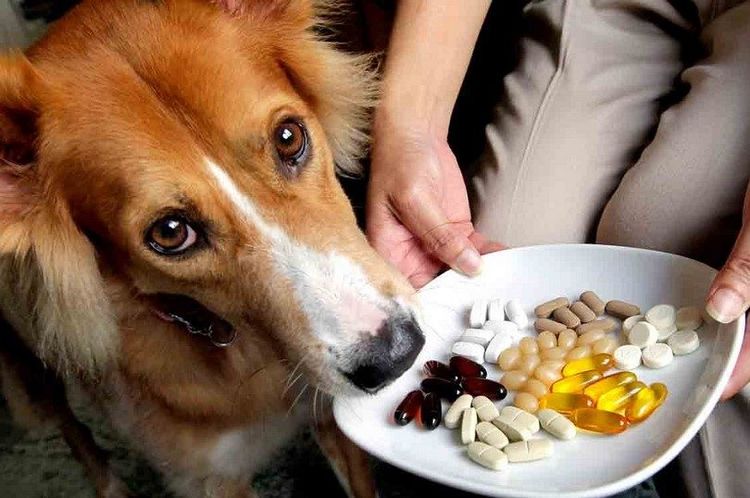
Table salt
Open the dog's mouth and sprinkle about half a teaspoon of table salt on the back of the tongue. Don't tilt the dog's head back—it's only necessary to irritate the taste buds. If there's no reaction, use a saline solution. For an average dog weighing less than 30 kilograms, use 4 teaspoons per half a liter of water. For a larger dog, use 2 tablespoons per 500 ml. Apply the solution through the cheek using a syringe. The dog will usually begin to vomit almost immediately and may vomit soon after. This dramatically reduces the absorption of toxic substances and closes the "gatekeeper," preventing toxins from entering the bloodstream.
Potassium permanganate solution
Prepare a pale pink solution, 0.5 to 3 liters, depending on the dog's size and weight. It's important to thoroughly mix all the granules, otherwise they will burn the mucous membranes of the mouth and esophagus. Use a syringe to pour the prepared solution into the dog's mouth. Nausea usually begins immediately.
Just water
A large amount of plain water (up to 3 liters) poured into the esophagus will also trigger the gag reflex. To reduce discomfort for your pet, it's best to use warm liquid—warm it to body temperature. The effect will be more noticeable if you combine this method with the first one—sprinkling salt on the tongue. This will ensure proper gastric lavage.
Hydrogen peroxide
When using this substance, carefully follow the dosage—only a 1.5% hydrogen peroxide solution is suitable for gastric lavage in dogs; otherwise, it can cause severe mucosal burns, which can be dangerous. Dilute the hydrogen peroxide with water 1:1 and mix thoroughly. For a small dog, 1 teaspoon of the solution is sufficient, for a medium-sized dog, 2 teaspoons, and for larger dogs, calculate the dosage by weight: one teaspoon per 5 kg of body weight. The effect appears in approximately 3-5 minutes. To speed up the process, make the animal walk. If the effect is not visible after 10 minutes, repeat the procedure.

Ipecac syrup
If you have this pharmacy remedy on hand, give your dog 1 teaspoon per 5 kg of body weight. A few drops will be enough for a puppy. It's important that the dog swallows the syrup all at once—this will speed up the medication's effect. Vomiting usually begins within a few minutes. Exceeding the recommended dosage can lead to complications!
Vaseline oil
Regular Vaseline oil can also trigger the gag reflex. Give your pet half a glass of this liquid. Use only pure oil without fragrances or additives. There's no need to worry about overdosing—the substance is safe and has no side effects.
Vaseline and any other oil (for example, salmon) It coats the stomach lining, significantly reducing its absorption properties. Therefore, you can give it to your pet to drink to reduce its exposure to toxic substances.
Apomorphine hydrochloride
This is a special medication that acts directly on the vomiting center. It's the ideal solution for urgently inducing vomiting in dogs. The catch is that it's a prescription-only medication, so it's not readily available in every medicine cabinet. The medication is administered subcutaneously at a dosage of 0.002-0.005 g (depending on the dog's size). Nausea begins within 1-2 minutes and recurs at intervals of 5-6 minutes.
If Apomorphine hydrochloride does not work, re-administering the medication is prohibited!
Tincture of hellebore
An effective remedy that works quite quickly. Give your dog 0.05 to 2 ml of tincture, depending on the dog's weight. It usually takes effect within a few minutes.

What to do after
If you've managed to clear the animal's stomach of a dangerous substance or object, meaning the dog has vomited, don't stop there. It's essential to consult a veterinarian to assess the animal's condition and determine whether there's any threat to its health. Avoid administering any adsorbents prescribed for toxic poisoning, before consulting a specialist. If you know exactly what poisoned your dog, take a small amount of it with you as a sample.
When going to the vet, take a blanket with you - after vomiting, the body temperature drops.
How to induce vomiting in a puppy
Self-medication is much more likely to harm a puppy than an adult dog. Furthermore, young pets are less resistant to toxic substances, so their condition deteriorates much more quickly. Even after successfully emptying the stomach, it's crucial to take the puppy to a veterinarian, as it's impossible to predict the body's reaction to the procedure and the potential health consequences.
To induce vomiting in a puppy, the same methods are used as for adult dogs. However, without special preparation, administering hydrogen peroxide is considered the most accessible and effective method.
When is it dangerous to induce vomiting?
Vomiting can be dangerous for an animal if:
- It is in an unconscious state.
- A large object or one with sharp, protruding edges has been swallowed; if vomited, it will damage the esophagus and other parts of the gastrointestinal tract.
- If there are convulsions, bleeding from the lungs or esophagus.
- The dog is pregnant.
In such a situation, you should immediately contact a veterinarian without taking any measures on your own.
You can also ask our website's staff veterinarian a question, who will answer them as quickly as possible in the comments box below.
Read also:
- My dog is vomiting yellow or white foam: what should I do?
- Why is my dog coughing as if it's choking?
- How to give an injection to a dog


68 comments
Elena
Hello. My toy terrier ate a thin plastic bag two days ago. Some of it came out naturally. This morning he vomited the bag. Then he ate. He feels fine. Should I do anything or just observe?
Tatyana Shmonina - veterinarian
Hello! Get an X-ray to determine whether a foreign body has passed or remained in your gastrointestinal tract.
Elena
My 9-month-old Bichon Frise swallowed a piece of nylon. What should I do?
Daria is a veterinarian
Hello! Wait for it to pass in a couple of days. If vomiting occurs, bowel movements cease, the cat refuses to eat, becomes restless, or shows obvious signs of abdominal pain (squealing, licking, for example), then seek immediate medical attention. However, the nylon sac will likely pass naturally. Monitor the stool. If it doesn't pass, then return to the clinic. However, such an object will be difficult to detect even on an X-ray, making it nearly impossible to determine its location in the intestines.
Maria
Hello. My dog swallowed a popsicle stick. We gave her a weak solution of potassium permanganate to induce vomiting, but it had no effect. Then I added half a teaspoon of salt, and she immediately vomited, and the popsicle stick came out. Please tell me, do I need to see a vet? My dog is feeling well and even ate afterward.
Daria is a veterinarian
Hello! If the foreign object has been completely expelled, there's no need to seek medical attention. If you notice any changes in your pet's behavior or well-being, you should seek immediate veterinary attention.
Olesya
What to do if your dog has ingested some Cavarada beetle poison
Daria is a veterinarian
Hello! You must immediately grab the animal and the poison packaging, which clearly displays the ingredients of the solution/substance, and rush, simply rush, to the clinic. Without the exact name of the poison and other components, it is impossible to provide quality care. Without knowing the toxin, it is impossible to select an antidote or initiate emergency measures immediately. For some poisons, vomiting must be induced immediately. For others, inducing vomiting is strictly prohibited. In some cases, the antidote is administered orally, in others intravenously or intramuscularly. Sometimes a single application is sufficient, while for other poisons, a course of treatment is required, including the animal's stay in the clinic's intensive care unit.
Catherine
Hello, my dog, a Yorkie, is lethargic but eats. He sleeps all day.
Daria is a veterinarian
Hello! There's too little history even for a preliminary diagnosis. Gender, age, vaccinations, treatments (vaccinations, deworming, anti-skin parasites), temperature, has the animal been in contact with other animals? Have ticks been found on the animal or has it visited a forest belt or park area? What about its diet? Natural or commercial food? How long has this condition been present? What else is present besides lethargy? Change in stool? Vomiting? Change in urination (volume, color, consistency)? Change in respiratory rate? Simply lethargy without detailed information won't help in making a diagnosis! Even a tentative…
Daniel
The dog ate a children's squishy, oval, without sharp corners. What should we do? We're all worried now, we came home from work and discovered it was missing.
Catherine
The dog ate something and was acting unusually. We induced vomiting with table salt, and it helped. We went to the vet, and they said everything was fine, thank you!
Daria is a veterinarian
Hello! Dogs should be extremely careful with salt, as there is a risk of poisoning from table salt.
Alena
The veterinarian has been administering an IV drip for three days in a row, but for some reason hasn't prescribed inducing vomiting.
An x-ray showed that there was something in the stomach.
Daria is a veterinarian
Hello! If the X-ray showed a foreign object, why wasn't a gastroscopy performed? The object could be removed endoscopically, or an abdominal operation would be necessary, which is more complicated and would require a long-term, special diet. The treatment strategy for an animal with a foreign object is unclear to me... vomiting might not help and could actually further traumatize the animal, but an endoscope could have been tried. The longer the surgery is delayed, the higher the risk of the object entering the intestines and causing a blockage.
Valeria
The puppy chewed a baby diaper, maybe he ate it, what will happen?
Daria is a veterinarian
Hello! The animal's internal environment will be similar to a wet diaper: it will swell in the gastrointestinal tract. This can cause gastrointestinal obstruction and lead to intoxication. Much depends on the amount consumed. It won't pass on its own. Surgery will be required. Diagnosis will be difficult. It's not guaranteed to be clearly visible on an x-ray; only with contrast. Then it will be possible to assess the location in the intestine where the filler (the gel) has swollen. Giving laxatives is dangerous, as it can lead to volvulus, intussusception, or rupture (with subsequent peritonitis).
Lina
Hello, my Chihuahua puppy ate a cockroach. Was the cockroach poisoned? I don't know what to do.
Daria is a veterinarian
Hello! There's nothing you need to do now. You won't induce vomiting, and even if the puppy was poisoned, it would likely have already been absorbed through the mouth (if the puppy chewed on the cockroach). If it was swallowed, there's a chance the hydrochloric acid will neutralize the pest. All we can do now is watch, but I'm confident everything will be fine and the puppy is in no danger.
Marina
Hello. My 6-month-old puppy ate a human-sized portion of pasta with chicken liver and mayonnaise. Should I induce vomiting?
Daria is a veterinarian
Hello! No, don't worry. He'll digest it. The only thing is, he might have some bowel problems for a couple of days. Just be vigilant and don't let that happen in the future, otherwise he'll develop a habit of stealing food from the table.
Elena
A 1.5 month old puppy swallowed a small rib bone, split in half, 5-6 cm long. What should I do? There are no clinics at all.
Angelina
Hello. My 7-month-old puppy ate some pills. What should I do?
Daria is a veterinarian
Hello! What kind of pills are these? How many? How long have you been taking them? You should have induced vomiting immediately or rushed to the clinic for a gastric lavage!
Elena
Hello! My 4.5-month-old Yorkie puppy ate a 1 x 2 cm piece of thick cellophane. What should I do?
Daria is a veterinarian
Hello! How long has it been since the dog ate the piece of plastic? If it's been more than two hours, then you can simply wait. For the next 24 to 30 days, examine the dog's stool for the presence or absence of the plastic piece. If it hasn't passed on its own after two days, or if the dog develops restlessness, abdominal pain, constipation, or inability to defecate, then pick up the puppy and rush to the veterinarian. Small pieces like these usually pass naturally without any health consequences. However, it's still necessary to monitor them closely.
Tatiana
Hello, my American Cocker Spaniel is three months old. She ate a lot of candied nuts, and her belly was big. She was lying there moaning. I gave her water, but it didn't help (her belly just got bigger). What should I do now?
Evgeniya
Hello, my 4-year-old Chihuahua recently ate a lot of long grass at the dacha. She loves it, but I've noticed some strange behavior before bed. She's started leaning her neck forward when swallowing, making grunting sounds, and even seemed to be choking. I sprinkled half a teaspoon of salt on the back of her tongue, but it had no effect. Later, she started pouring large amounts of warm water into her cheek. After a while, she vomited profusely, expelling a large amount of grass and food. We're currently in the countryside, and the nearest veterinary clinic is a long way off. Please tell me if I've done everything correctly and what else needs to be done to avoid complications. Thank you in advance.
Daria is a veterinarian
Hello! It's good that you induced vomiting. However, be careful with salt to avoid causing salt poisoning (yes, it does happen). Most likely, the dog either cut its mucous membranes on the grass or ate so much grass that it clogged its stomach. As a result, it stopped moving, meaning peristalsis ceased, causing pain. Especially if the grass was long, it could have become tangled in the stomach. For now, it's best to feed the dog easily digestible food in small portions to avoid stomach upset if the mucous membrane is damaged.
Victor
Hello! We have a 5-year-old Dachshund! Yesterday he ate bones and now he can't find his place! He goes to the bathroom normally! He hasn't slept all night and can't find his place! He's vomited twice! What should we do? Should we take him to the vet for surgery?
Daria is a veterinarian
Hello! You should definitely go to a veterinary clinic! X-rays are needed to assess the condition of the gastrointestinal tract, whether surgery is required, or if there's a chance the fragments will pass naturally (if there are only a few fragments). Self-administering laxatives is dangerous, as it can trigger excessive peristalsis, which can lead to intestinal damage.
Gulnara
Hello. My dog ate fiberglass insulation. We induced vomiting with hydrogen peroxide. What else should we do?
Daria is a veterinarian
Hello! This is very bad! The animal will need to be monitored. It's good if the fiberglass doesn't remain in the stomach or move further into the intestines, otherwise this can lead to gastrointestinal bleeding due to microtrauma from the fiberglass. As soon as you notice anything suspicious (vomiting, blood in the stool, bloody discharge, pale mucous membranes, lethargy, loss of appetite, etc.), go to the vet immediately! Surgery may be necessary, followed by IVs. There's nothing you can do at home to help. If you miss the moment, the animal could die slowly and painfully.
Elizabeth
Hello, my 6-month-old Labrador ate a plastic bag outside. What should I do?
Daria is a veterinarian
Hello! You should have induced vomiting immediately! It would have been better to remove the bag from the stomach before it moved further through the gastrointestinal tract. If vomiting was not induced, you should have gone to a clinic with an endoscope within the first hour or two so that the foreign object could be removed as quickly as possible and without invasive surgery. If precious time has been lost, and the puppy has not vomited (and the bag has not left its system), now comes the scary time for you – a time of waiting and observing the animal's behavior and condition.
Evgeny
Hello, what should I do if my dog sits on my sock?
Daria is a veterinarian
If you choose a watchful waiting approach, you assume all the risks. There are two possible outcomes. Either the puppy will pass it naturally (if it's small and thin, the bag will come out with the feces, meaning you'll have to check each one for the presence of plastic wrap), or you'll need abdominal surgery to remove the waste to prevent a blockage or even intestinal volvulus. An X-ray will help determine whether the bag is still in the intestines. Giving laxatives is dangerous, as they increase intestinal peristalsis, which can lead to a volvulus, which can lead to an obstruction. It's important that the puppy doesn't vomit and that it defecates regularly and without problems.
Olga
Hello. My dog ate a dead mouse while out for a walk. We live in a small town, and there are no 24-hour veterinary clinics here. What should I do? Should I induce vomiting? I read online that sunflower oil can induce vomiting. We gave the dog about 1.5 cups of it, but there was no reaction. Now we've given him half a teaspoon of table salt, and so far nothing has happened. What should I do? Please advise. And should I give my dog water?
Daria is a veterinarian
Hello! Why did you add so much oil? Get ready, your dog will soon purge your gastrointestinal tract of feces. Such a large amount of oil should induce a bowel movement (a laxative effect). You should have immediately applied salt or a warm solution of potassium permanganate and simply pressed on the back of the tongue (this triggers everyone's gag reflex). Now all that's left to do is observe the animal. The main thing is to make sure the mouse isn't poisoned (check with your neighbors to see if anyone has been poisoning rodents or spreading rodent bait). If this has happened, take the animal to the vet and investigate (including emergency antidote administration).
Timur
Hello! My German Shepherd is 3 months old. She swallowed a small chicken's paw. Is this dangerous?
Daria is a veterinarian
Hello! Well, a chicken's feet aren't that big =) There aren't really any bones there, so there probably shouldn't be any serious consequences. The bones will likely pass naturally in the stool within 2-3 days (the skin will be digested, but the bones will pass intact). Monitor your chicken's behavior. If vomiting begins and bowel movements stop, then that's when you should definitely be concerned. In the future, try to avoid giving chicken bones altogether. If you use them for soup or porridge, remove them from the diet and throw them away (the chicken won't be satisfied with them anyway, and they pose a significant health risk).
Irina
My 11 month old Giant Schnauzer ate 40 grams of milk chocolate. Is it dangerous?
Daria is a veterinarian
Hello! It's dangerous, but not fatal. Monitor your pet's well-being. If any suspicious symptoms appear, contact a veterinarian. In the future, try to avoid similar situations (hide sweets away). If this does happen, induce vomiting.
Gregory
My miniature Spitz ate a silicone earplug. After 20 minutes, we injected some oil into her ear with a syringe and read this page. We sprinkled salt on the back of her tongue. Five minutes later, the dog started vomiting and the earplug came out. Thank you!
Mark
Hello, my 4 year old beagle ate a bone and we don't know if it was poisoned. What should we do?
Daria is a veterinarian
Hello! Question one: Did the dog grab a bone outside? Question two: Why do you suspect the bone is poisoned? Are there any symptoms of poisoning? The simplest thing you can do is induce vomiting, give activated charcoal and other absorbents to absorb the toxins, and immediately go to the vet at the slightest suspicious symptom. Don't wait for advice or hope for the best, but go to the vet immediately, as in some cases specific antidotes are needed (without them, the animal will die within a few days).
Xenia
Good afternoon. My dog ate a small piece of cartilage from a beef brisket without even chewing it around 10:00 PM.
I felt like vomiting at 5 a.m., but nothing came up except a small amount of saliva. Should I induce vomiting?
Daria is a veterinarian
Hello! You can try inducing vomiting, but proceed with extreme caution. Vomiting can damage the lining of the stomach and esophagus. It's best, of course, to visit a veterinary clinic that has an endoscope to carefully remove the foreign body from the stomach if necessary.
Elena
Hello, my Cane Corso is 1.5 years old. She ate three silicone muffin cupcake molds with the batter inside. We gave her salt and she's drinking water. She's not vomiting. What should I do?
Daria is a veterinarian
Hello! You need to get an X-ray. It's important to rule out intestinal obstruction. Ideally, you should have gone straight to the clinic. They would have induced vomiting and pumped your stomach. Your method isn't very effective. Don't expect it to pass on its own.
Inessa
My 11-year-old Yorkie ate one wet wipe (Tolli Classic, wet toilet paper) behind my back. It's made of non-woven fabric (I don't know what that means) and an impregnating lotion. The packaging instructions recommend throwing away no more than 5 wipes, but he tore them into small pieces and ate them. His stools are already pretty bad. What should I do?
Dasha is a veterinarian
Hello! You should have induced vomiting immediately (within the next half hour). Now you need to observe. If you're having problems with bowel movements, it's advisable to give a laxative, but be careful. Don't let it sit in your intestines for long. Vaseline oil (from a pharmacy, not cosmetics), sunflower oil, or castor oil are a last resort. Duphalac usually works on the second or third day. Make sure the napkin comes out with the feces (at least most of it). Monitor the symptoms. If you notice anything suspicious, rush to the clinic! But you can still observe at home for a day or two—no more!
Guest
Hello. My dog ate less than half of a plastic chicken tray. We discovered it five hours later. Out of fear, we poured saline solution on her because salt on the back of her tongue didn't induce vomiting. All that came out was the food. Should I give her Vaseline, or will it all come out naturally? And what should I do? We don't do X-rays here; the nearest one is 250 km away. My dog is a Dalmatian.
Dasha is a veterinarian
Hello! Be extremely careful with laxatives, as they will increase peristalsis, which can cause intestinal loops to become twisted, especially if they contain foreign objects. If the objects are small, they should pass. If they are large, there may be a problem with bowel movements, and that's when you should be concerned. In general, if your pet starts showing any obvious health issues within 2-3 days (vomiting, lethargy, refusal to eat, or lack of bowel movements), rush to the vet! But you should always be vigilant.
Daria
Hello! My 3.5 kg Chihuahua ate a Golden Key chocolate candy along with the metal wrapper. What should I do?
Dasha is a veterinarian
Hello! Observe your pet for a couple of days: how they eat and how they defecate. If you can induce vomiting (if it's been less than half an hour since they swallowed), do so. If not, then just wait. Everything should pass naturally. If there are problems with bowel movements for several days, then take them to the vet. Otherwise, I think everything will be fine—some of it will be digested in the stomach; the hydrochloric acid will handle it, unless there are any stomach issues. The rest will pass through the intestines. You'll notice some candy wrapper residue in the feces.
Anastasia
The dog ate half a slice of pizza, what should I do?
Dasha is a veterinarian
Hello! It's okay now. Just keep an eye on things. You can give activated charcoal (1 tablet per 10 kilograms of body weight) if you're really worried. Over the next 2 days, vomiting, nausea, changes in stool, lethargy, and restlessness MAY (but aren't always registered). But usually, such "indulgence" goes unnoticed unless it becomes systematic and is given in large doses.
Galina
My 1-year-old Shar-Pei bit off and swallowed my phone earphones (the part that goes in the ears). What should I do? Should I induce vomiting?
Dasha is a veterinarian
Hello! Will you be able to do this within 5-10 minutes of swallowing? If not, then wait. The plug should come out, unless you swallowed a large piece. Be sure to monitor it. If it doesn't come out with your stool within a day or two, rush to the clinic for an X-ray. Don't give a laxative, as this will increase peristalsis and could cause a volvulus or intestinal injury!
Olga
Hello! What if a piece of a balloon with a tail is swallowed?
Dasha is a veterinarian
Hello! If your dog is medium or large, it will most likely pass naturally. However, if your pet is small or even miniature, you should monitor the animal, its behavior, and its condition. If you notice anything suspicious, rush to the clinic.
Elena
Hello! My 2-year-old female pug ate a nylon footprint. What should I do?
Dasha is a veterinarian
Hello! Ideally, see a doctor for an ultrasound or gastroenteroscopy to rule out an intestinal obstruction. Don't give laxatives either. Speeding up peristalsis can only increase the risk of a foreign body getting stuck. Wait for the bowel movement to pass naturally (the nylon won't digest). If nothing passes within a day or two, or the animal begins to feel unwell, immediately take the animal to the vet to rule out an intestinal obstruction and have it surgically removed.
Natalia
My dog is gagging but there is no vomiting. How can I help her?
Dasha is a veterinarian
Hello! We need to figure out the cause of your pet's condition. It's possible there's something stuck in her throat that needs to be removed. It could be hair in her stomach or a foreign object she's trying to vomit. Some cats benefit from drinking water to give them something to vomit. Others require veterinary attention and medication. What other symptoms does your pet have? Could she have been poisoned or swallowed a foreign object (bone, stick, etc.)?
Love
Hello, Daria. Is the website still working? My dachshund is 1.6 years old. A couple of days ago, she lost interest in playing, and the next day, she started trimming her body. She swallows frequently and tries to burp. She's been lying on the bed, the couch, and the floor. Today, she started snoring. The clinic is very far away, and the local vet only works with livestock. What should I do?
Daria is a veterinarian
Hello! Frequent swallowing is a symptom of nausea. Before taking any action, it's important to learn as much as possible about the pet's medical history: diet, maintenance, treatments (deworming, vaccinations), could it have eaten anything? Was it bitten by a tick? What's the stool condition like? Has there been contact with other animals (including wild animals)? What's the rabies vaccination status? What's the body temperature like? Basically, there's no information available about the animal.
Add a comment