
How to feed a kitten without a mother
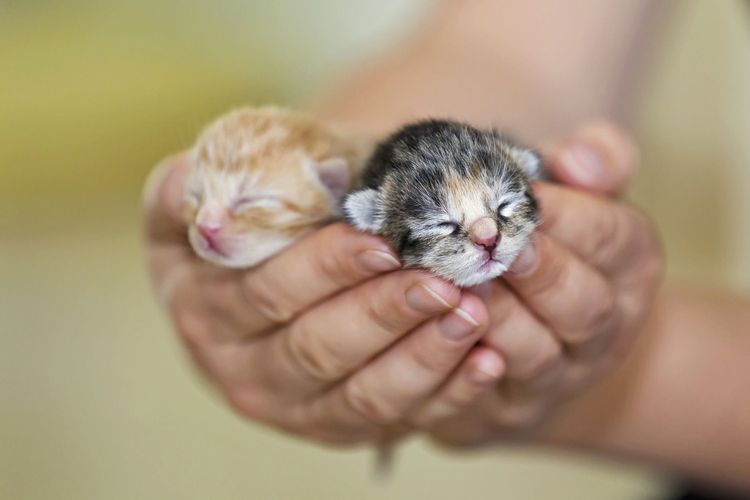
Cats are considered the best mothers, yet some members of this family sometimes refuse to nurse their offspring. Occasionally, an animal dies during childbirth. And in rare cases, a new mother simply doesn't have enough milk to provide adequate nutrition for the entire litter. In all of these situations, without timely assistance from a caring owner, the newborns will simply die.
Content
Care instructions
When raising kittens without a mother, it's important to create the most comfortable environment possible for them. A plastic crate or basin is best, or you can place them in a cardboard box, but you'll need to ensure it doesn't get wet. It's a good idea to line the bottom of the box or basin with a breathable, absorbent material. Since kittens require a warmer environment during their first few days of life, a heater should be placed near the "nest." An infrared heater is ideal. You can also place a heating pad or a hot water bottle wrapped in a towel in the box. The temperature shouldn't drop below 30 degrees Celsius (86 degrees Fahrenheit) during the first week, and at least 24 degrees Celsius (75 degrees Fahrenheit) during the following two weeks. Once the kittens' living conditions are set, it's important to ensure they're getting adequate nutrition.
Feeding rules
If kittens are left without a mother or without her milk, it's best to find a wet nurse (another lactating cat) and place them with her. However, you must ensure that the cat and her kittens are healthy. If this option is not feasible for any reason, a human will have to assume the role of wet nurse.
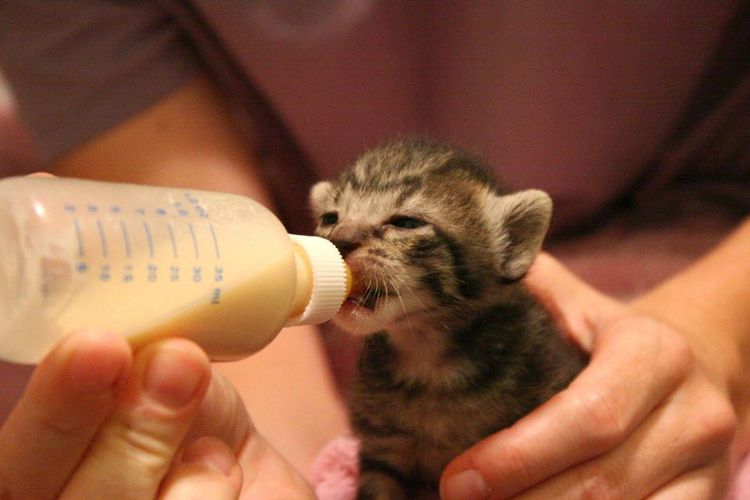
When handling your pet, be patient and gentle, especially if it's just a few days old. For feeding, it's a good idea to purchase a bottle with a nipple from your veterinarian in advance. These often come with ready-made formula. A medical syringe (without the needle, of course) or even a rubber pipette tip attached to a bottle, with a small hole made in it, will also work.
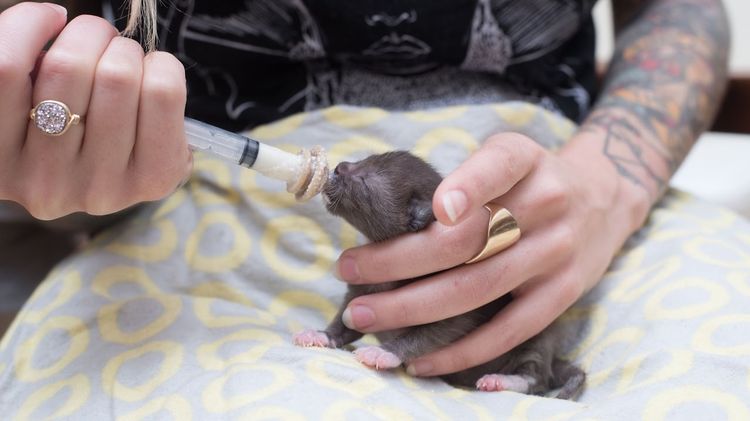
Feeding from a nipple is the most optimal option, as it satisfies the sucking instinct and reduces the risk of aspiration of food into the respiratory tract, which can cause pneumonia.
During the procedure, stroke your baby and talk to him calmly. Afterward, wipe his dirty face with a napkin and hold him upright for a while.
To prevent constipation, massage your baby's tummy at least once a day after feeding. Gently massage it with a clean cloth or cotton pad in circular motions toward the anus. The anus should also be gently massaged; it's best to use cotton swabs dipped in Vaseline.
If kittens do develop bowel problems, there are several proven methods for resolving them, one of which is an enema. However, we do not recommend taking any drastic measures without consulting a specialist, as this could only worsen the situation.
Frequency and portion size
One of the main challenges of raising kittens without a mother is that for the first 14 days of life, they need to feed every two hours. From the third week, the intervals between meals increase to three hours. By four weeks of age, they usually begin to eat on their own.
In the first week of life, babies need 30 grams of food per 100 grams of weight, in the second - 35/100, in the third - 40/100, in the fourth and subsequent - 48-53/100.
It's easy to tell whether kittens are getting enough by their behavior. Hungry kittens are usually restless and don't gain weight well. Kittens should gain at least 15 grams daily.
Overfeeding your pet should never be done, as this can lead to bowel problems. Loose, yellowish stools indicate mild overfeeding. Greenish stools indicate moderate overfeeding. Regular overfeeding will cause the stool to turn gray. White stools, however, indicate a need to see a veterinarian to rule out infection.
Menu
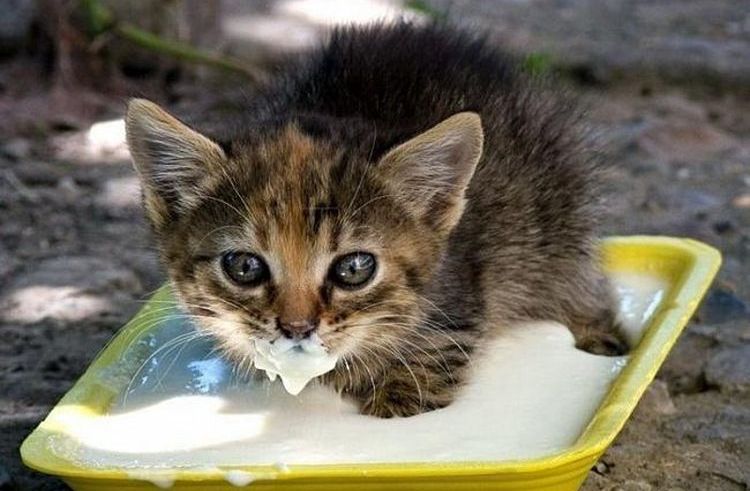
Many owners believe that cow's milk is a great alternative to cat milk. But in reality, the composition cow's milk Kittens' nutrition is very different from that of cats, which is why they often develop allergies. That's why it's best to buy special formulas from pet stores that contain everything a growing body needs.
Mixture recipes
Dry mixes are quite expensive, so not everyone can afford them. In this case, it's possible to prepare special mixtures.
Milk and flour
Dilute 250 grams of 20% natural condensed milk with a liter of warm water. Add a teaspoon of bone meal to the resulting mixture and mix well.
With goat's milk
Mix one and a half tablespoons of goat's milk with a tablespoon glucose (5%). Add 5 grams of dry milk and one gram of vitamin supplements. The complementary food is ready!
Vitamin
Combine 100 ml of milk with 20 ml of 5% glucose solution. Add the yolk, half a teaspoon of vegetable oil, a couple of drops of Tetravit, and a couple of teaspoons of Nutrilon infant formula. Mix until smooth.
Egg
Combine 200 ml of milk, a teaspoon of vegetable oil, 2 egg yolks and a couple of drops of vitamins.
Regardless of the mixture chosen, it should be stored in the refrigerator for no longer than 24 hours. Before the procedure, the food portion should be warmed. The optimal temperature is 38 degrees Celsius.
It's entirely possible to raise a kitten without a mother, with a little patience and care, and the recommendations offered today will only make the process easier.
Read also:
- The cat abandoned the kitten. What should I do?
- How to care for a kitten
- What to do if the kitten doesn’t eat anything?


Add a comment