
How to care for a kitten
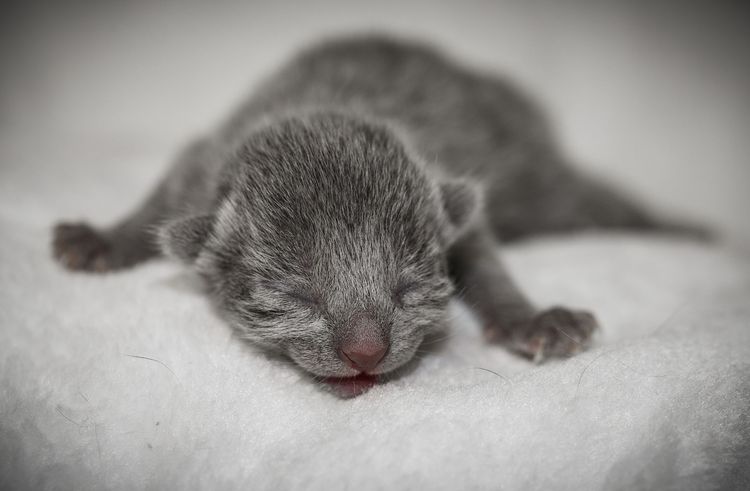
The reasons why a newborn kitten is left without a mother cat can vary widely, from simple abandonment to the mother's illness or death. In such cases, a human must assume the responsibility of feeding and caring for the kitten. These responsibilities can be compared to caring for a newborn baby, so it's important to understand that it won't be easy. The first month of life is the most challenging period, as the kitten's body is practically unadapted to independent life. The key is to arm yourself with patience and helpful tips on the basic aspects of caring for a newborn kitten.
Content
How to care for a kitten yourself during the first days at home
The first few days in a new home are stressful for any kitten. It's important to create a calm and safe environment. Kittens need a separate area where they can get used to new smells and sounds. It's a good idea to designate a small room or corner of the room with water and food bowls, a litter box, and a bed. Excessive attention during the first few hours can frighten the kitten, so it's best to let them explore on their own.
A stable temperature is important for a kitten: avoid drafts and cold. In cold weather, you can place a heating pad or a soft, warm blanket under the bed.
Feeding
A queen's milk can fully meet the nutritional needs of her offspring during the first four weeks of life. However, if newborn kittens are left without a mother for any reason, the first step is to carefully select the right milk replacer.
Important! To choose the right nutrition for newborns, it's important to know the composition of cat milk. It has a higher fat, vitamin, and mineral content than cow's milk, and almost twice the protein content. It also contains taurine, an amino acid essential for cats to break down fat.
Selection of nutrition
If the problem of choosing a diet has caught you by surprise, at first you can use formulas intended for infants, which are diluted with boiled water at a rate of 1.5-2 times greater than the norm indicated in the instructions.
For feeding whole cow's milk is not suitable, as it contains virtually no taurine or other vital nutrients, and can cause digestive upset, diarrhea, and even death. Goat's milk is more similar in nutritional composition to cat's milk, except for its very low taurine levels. When using goat's milk, dilute it with boiled water in a 1:1 ratio and add one quail egg for every 50 grams of the resulting mixture.
The ideal alternative to cat milk is special kitten formulas, available at pet stores or veterinary pharmacies. These formulas closely resemble the composition of cat milk, are enriched with essential amino acids, and do not cause digestive upset or allergic reactions when used correctly. Some manufacturers package the formulas in small, disposable bags and also include bottles and nipples, making them very convenient to use.
Feeding regime
In addition to choosing the right milk replacer, it is necessary to properly organize the feeding process itself without the cat.
An approximate feeding schedule depending on the kitten's age looks like this:
- 1-13 days – every 2-3 hours, regardless of the time of day;
- 14-24 days – every 2-3 hours during the day, 1 time at night;
- 25-35 days – every 3-4 hours during the day, night feedings are optional.
When increasing the intervals between feedings, it should be taken into account that babies are not always able to eat a full portion in one sitting, so sometimes they need to be fed additionally after another half hour or hour.
It is important to monitor weight gain in the first 3 weeks of life: the minimum figure is 5 grams, the optimal is 10-15 grams per day.
Feeding rules
The best option is to imitate the mother cat's behavior: stroke the baby's back and forehead before feeding. This can be done with a sterile cloth, imitating the movements of a cat's tongue to stimulate the sucking reflex and improve digestion. During feeding, you can also use gentle stroking movements and even purr or softly mutter sounds, similar to a cat's purr.
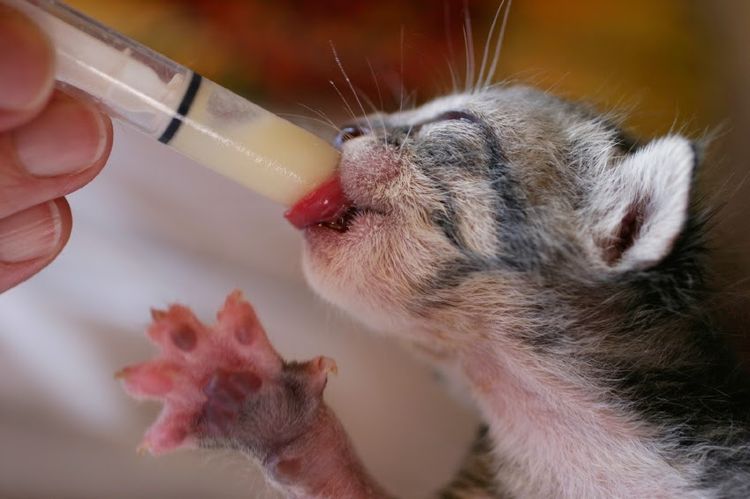
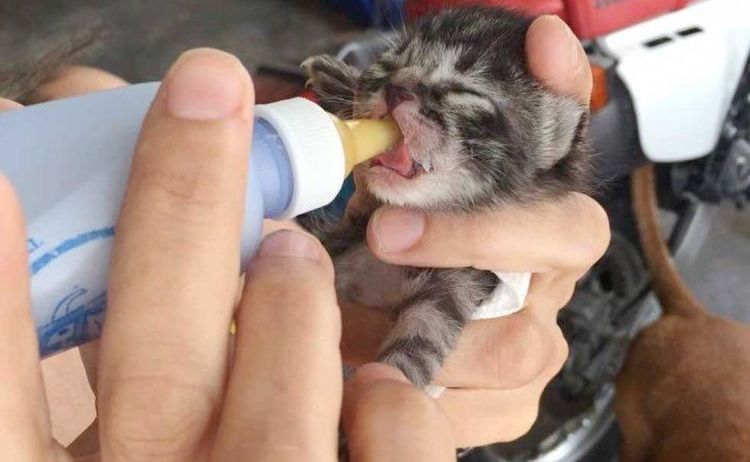
The formula should be fed from a small container using a nipple. If a bottle with a nipple wasn't included with the formula, you can purchase one separately at a pet store, or use the rubber part of an eye dropper with a hole punched in it.
In some cases, you can use a disposable syringe without a needle, but it is not advisable to do this constantly, because:
- Firstly, there is a high risk of choking and drowning;
- secondly, the sucking reflex is weakened, which can lead to digestive problems.
Maintaining a specific feeding temperature is also important: 36-38°C for the first 3-4 days, and 30-32°C thereafter. Feeding food that is too cold can cause digestive upset and hypothermia, which is unacceptable for newborns.
The feeding procedure is as follows: place the baby tummy-down on your lap or on a table, but never tummy-up. Next, carefully insert the nipple into the baby's mouth, holding it at a 45° angle and gently shaking it to encourage instinctive sucking. Continue feeding as long as the baby continues to suck. A full baby's tummy will round out, it won't cry, and it will fall asleep almost immediately. Once it's full, wipe its face and other dirty areas with a cloth soaked in warm water. Then, place the baby in an upright position to remove excess air from the stomach and promote digestion.
Both underfeeding and overfeeding negatively impact kitten development. The key indicator is stool color, which should normally be golden-brown and firm. Possible deviations include:
- yellow liquid – minor overfeeding;
- greenish – moderate overfeeding;
- gray - constant overfeeding (can also be a sign of infection, so in such cases a veterinarian consultation is required).
Lure
In the third or fourth week of life, you can offer milk replacer in a shallow bowl. This is also a good time to gradually introduce solid foods. Introducing new foods begins with minimal portions (literally the size of a pea) and requires constant stool monitoring. Food should be given in a small bowl, leaving it easily accessible. It's also important to ensure free access to water.
As complementary food you can give:
- dairy products (kefir, fermented baked milk, cottage cheese, sour cream);
- minced meat, pre-scalded with boiling water (beef or chicken);
- boiled and chopped vegetables;
- porridge;
- ready-made food with a specialized, age-appropriate composition.
Kittens need to be fed from a bowl several times a day so that by 5 weeks of age they become accustomed to the new feeding regimen.
Arrangement of the place
Once the feeding issue has been resolved, it's important to create a nest for the kitten—a safe, warm, and dry place protected from drafts. For the nest itself, you can use a small, sturdy cardboard box or a plastic basin. Place a waterproof sheet on the bottom, then a soft cloth, followed by a disposable blanket, which should be changed regularly. The bottom should be soft but firm so the kitten can crawl around without getting tangled in the cloth. The box should be placed in a quiet area and kept dimly lit, covered with a lid or a piece of fabric. A soft toy can be placed inside to simulate the cat's presence and provide additional comfort and security for the kittens.
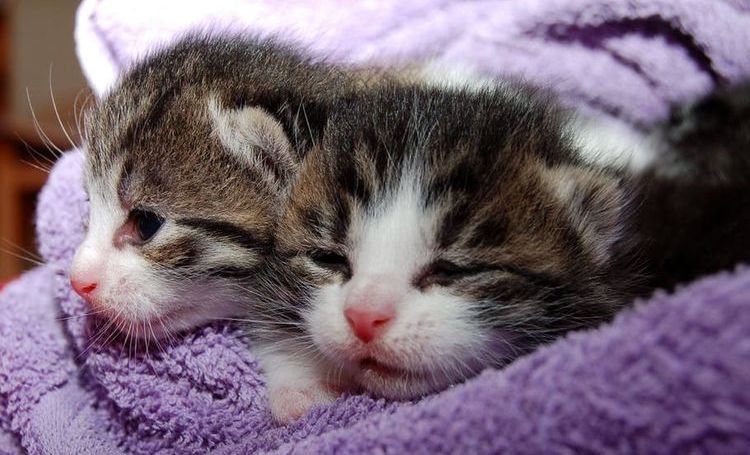
A mother cat keeps her kittens warm by maintaining an optimal temperature and protecting them from hypothermia, so the first step is to ensure the ambient temperature. During the first week, the temperature in the cat house should be between 30-33°C, starting in the second week, between 27-29°C, and gradually increase to 24°C. It's best to have one side slightly cooler so the kitten can crawl there and avoid overheating. To ensure consistent warmth, you can use:
- an infrared lamp (the distance at which it will be suspended is determined using a thermometer);
- Bottles of warm water or a regular heating pad, wrapped in several layers of towels, are suitable for emergency warming at first, as they require frequent changing, which creates additional hassle.
It is dangerous to use electric heating pads or heaters for heating!
During the first two weeks (until their eyes open), kittens will feel comfortable in semi-darkness, so it is also recommended to feed them in dim lighting.
Care procedures
Although feeding newborns requires primary attention, other functions should also be considered. Newborns are unable to empty their bladders and bowels on their own. Therefore, during the first weeks of life, the mother cat constantly licks her kittens. This is necessary not only to maintain hygiene but also to activate the internal organs and systems (intestines, stomach, hematopoiesis) and relax the muscles, which facilitates defecation.
You can do the same with a soft brush or a piece of cotton wool soaked in warm water. Wipe the face and anal area twice a day, and after feeding, gently massage the tummy and anal area to stimulate bowel movements. You should also gently massage the inner thighs near the urethra to induce urination.
When the kitten reaches 4 weeks of age, you can begin gradual litter box trainingTo do this, you need to place it there after each meal. To make it easier for it to enter and exit the litter box, you can trim one side a little.
It's also important to remember to care for newborns' eyes and fur, as they won't be able to wash themselves until closer to the fourth week of life. Their eyes begin to open between the sixth and 10th days, and by two weeks of age, they are fully sighted.
Development shouldn't be forgotten either, as a mother cat interacts with her kittens, teaching them survival skills, hunting instincts, and other important skills. To help the kitten get used to people, starting around the second week of life, you can hold them more often and gradually increase the time spent together. Kittens require very gentle and careful handling, as they are very prone to injury. It's especially important to supervise them around small children.
At three weeks of age, they can hear and see well and are active, so this is a good time for games, encouraging hunting habits, and also preventing unwanted behavior.
Health and prevention
Caring for a kitten on your own is impossible without taking into account veterinary aspects:
-
Vaccination: The first vaccinations are usually given at 8-12 weeks of age, followed by booster vaccinations
-
Deworming: worm medications are given every 3-6 months
-
Flea and tick treatment: especially important for pets that go outside
Regular veterinary examinations help identify problems early. Symptoms that require immediate medical attention include lethargy, refusal to eat, vomiting, and diarrhea lasting more than 24 hours.
Games and socialization
Games help develop physical activity and hunting instincts. Interactive toys, such as fishing rods, balls, and tunnels, are helpful. Daily playtime strengthens the bond with the owner and reduces stress.
Socialization also includes introducing the kitten to other pets and people. This should be done gradually to avoid causing fear.
What not to do when caring for a kitten
Many mistakes are made due to ignorance:
-
Don't bathe your kitten too often - this damages the skin's natural protective layer.
-
Don't share food from the common table: spices, salt, fried foods and sweets are harmful
-
Do not use human shampoos and hygiene products - they can cause allergies
Table: Important stages of kitten care by age
| Age of the kitten | Basic steps | Comments |
|---|---|---|
| 1–2 months | proper feeding, keeping warm, litter box training | It's better to keep it in a separate room |
| 2-3 months | vaccination, training to use a scratching post, beginning of games | adaptation to the house is completed |
| 3–6 months | socialization, regular brushing and nail trimming | active growth, change of teeth |
| 6–12 months | sterilization or castration, transition to adult food | behavior shaping |
How to prepare your home for a kitten
To ensure safe care for your kitten, it's important to remove dangerous objects such as wires, small parts, and household chemicals. Windows should be fitted with protective screens to prevent falls. Flowers that are toxic to cats (such as lilies and dieffenbachia) should be kept out of reach.
Emotional comfort and education
A kitten needs attention and affection. Daily interaction helps build trust. It's important to understand that kittens are active at night, so it's important to plan ahead for their sleeping arrangements so they don't disturb their owners.
Training involves gently discouraging unwanted behavior. For example, if a kitten chews on wires, you can use scented sprays or special protective covers.
Of course, human care for a kitten cannot replace the natural nurturing of a mother cat. But patience, attention, and knowledge of physiological development, combined with unconditional love, will help successfully nurse a kitten back to health, even if it is left without a mother cat.
Read also:



Add a comment