
How to sew a jumpsuit for a dog
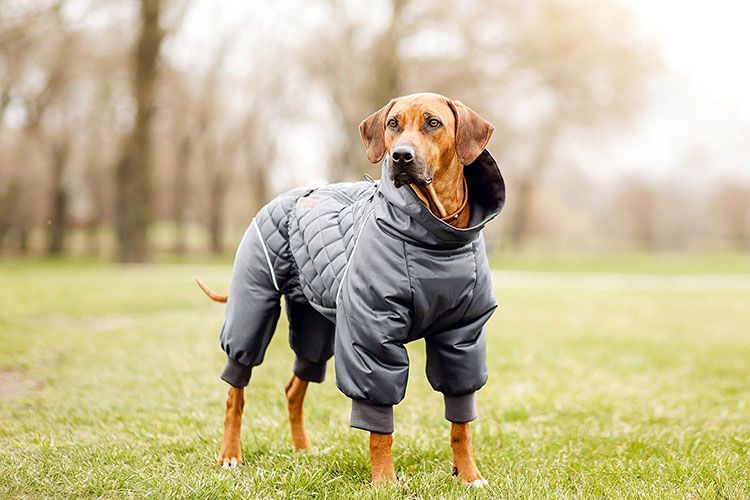
The foundation of a comfortable and practical dog jumpsuit is a well-designed pattern. It takes into account the animal's individual characteristics: height, weight, and breed. If the clothing doesn't restrict movement and allows for normal functioning, the sewing experiment can be considered a success. In this case, the dog won't experience discomfort in a walking suit, which in modern urban conditions has long since gone from a whim to a necessity.
Content
What measurements should be taken?
Even using a good ready-made pattern, the owner will have to adjust it to their pet. Therefore, basic measurements are taken in any case. These will also be useful when purchasing clothes at a pet store. Important: the dog should stand upright to ensure its proportions are not distorted. Achieving this, especially for puppies, is a secret shared by the owners, but there's no other way to sew a comfortable jumpsuit. For measurements, it's best to use a tape measure; it provides the most accurate results. You can also use a tape measure or a piece of string. Read more in our article on... How to change a dog for clothes.
Table with basic parameters
| Measure | How to shoot | Designation on drawings |
|---|---|---|
| Back length | The distance from the withers (collar) to the base of the tail. Measure only when the animal is standing. You can take two measurements: one in a show stance, the other in a relaxed position, and use the average. | DS |
| Height at withers | From the conditional peak point on the neck to the floor. | VH |
| Chest circumference | The tape measure is located just behind the front legs – at the widest point of the body. | OG |
| Distance (width) between the front legs | Measured in a straight "exhibition" position. | Shpl |
| The distance between the front and back legs. | ||
| Waist circumference | In front of the hind legs. | FROM |
| Neck circumference | We focus on the size of the collar. | OSH |
| Forepaw wrist circumference | To check, measure the same parameter for the hind leg and take the average value. | Ozap |
| Length of paws | From the armpits or groin area to the floor. | DL |
Those creating their own pattern should start with the defining measurements: height at the withers and back length. These serve as a guide when setting aside the remaining measurements.
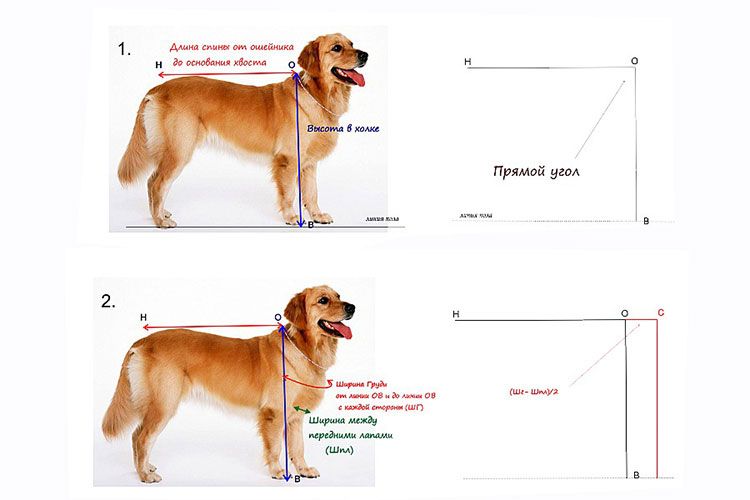
First, a basic pattern is created. It can then be modified as needed to achieve a particular style. Beginners can use the measurements provided by pet clothing manufacturers to help them find their measurements. The appropriate size is determined by the back length.
Key parameters can vary significantly among animals of the same breed. This depends on gender, genetics, and so on. For example, using a general pattern for Jack Russell Terriers without taking your own measurements is impossible.
If a dog's measurements fall between two standard values, consider the larger of the two. Measurements are recorded without allowance for ease. Add centimeters when cutting the fabric, otherwise the garment may end up baggy.
Autumn model
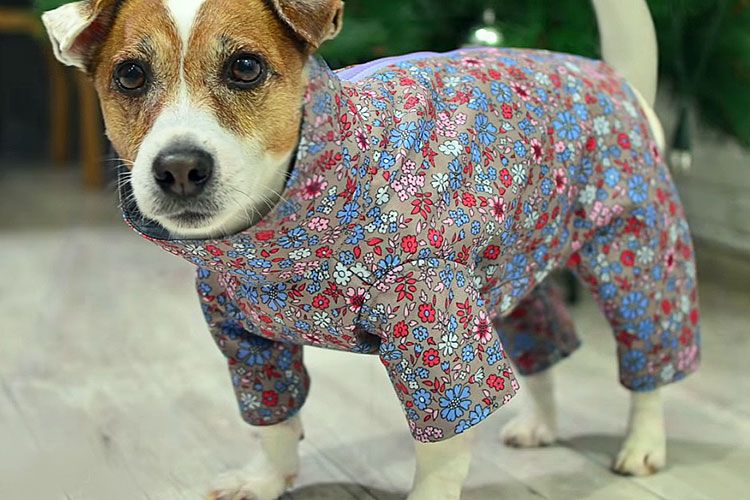
Before sewing a dog jumpsuit for a girl or boy using an unfamiliar pattern, it's a good idea to practice on a sample. This will help avoid mistakes and save fabric and time. Trying on an inexpensive cotton equivalent and observing how your dog moves in it can quickly correct any imperfections, ensuring a perfect fit in the future. Only after preliminary adjustments are the patterns for all the jumpsuit pieces transferred to the main fabric.
Step-by-step pattern construction
The easiest way to construct and sew a pattern is using a grid. You can use graph paper or the back of self-adhesive paper. However, if you don't have anything handy, it's easy to draw the base yourself. The step size is determined individually by dividing the back length by 10, whether it's a Yorkie, a pug, a Spitz, a spaniel, a German Shepherd, or a Labrador. If we're talking about Jack Russells again, the starting point would be 35 cm. Dividing by 10 yields a step size of 3.5 cm per square. All that's left to do is take the original pattern and transfer it to the base, increasing it proportionally.
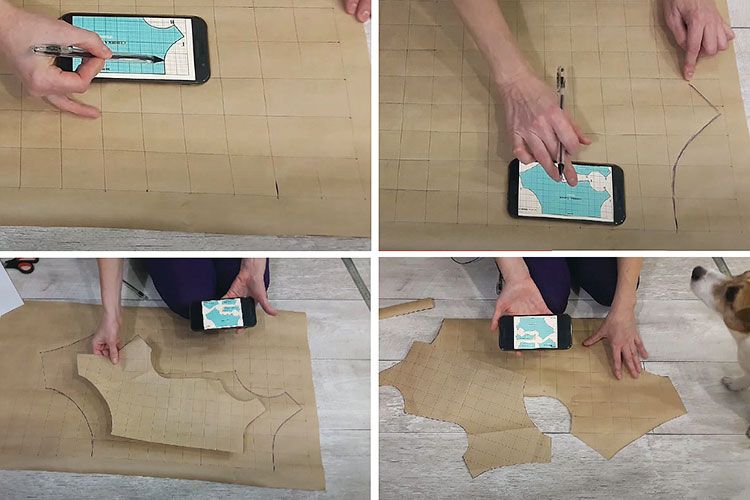
As a result, we should have:
- 2 halves of the back
- 1 piece for the breast;
- 2 legs for the dog's hind and front paws.
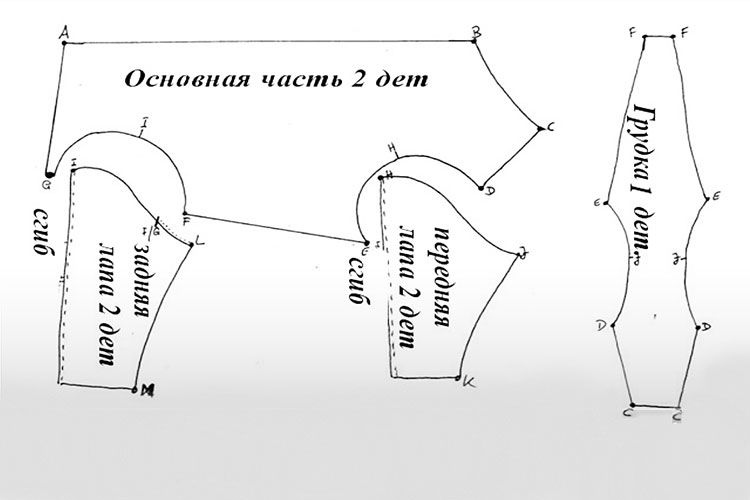
Opening
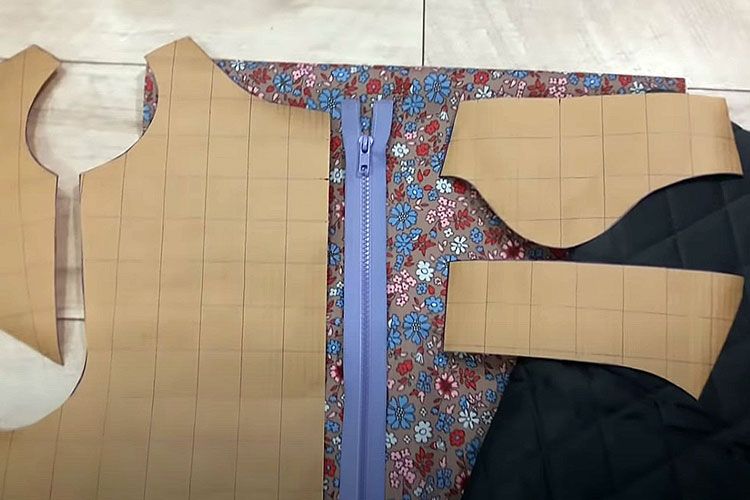
Lay out the prepared pattern on the fabric. It's best to sew a fall dog walker from membrane fabric. It effectively protects from wind and moisture, while also being breathable and retaining heat well. Membrane is especially recommended for smooth-haired breeds, which don't tolerate low temperatures well.
The inside of the fabric is lined with a heat-sealed lining on a single-layer synthetic padding. The jumpsuit fastens with a heavy-duty tractor zipper.
This option is suitable for smooth-haired animals, while breeds with long fur are more comfortable in clothes with buttons.
First, transfer the pattern pieces onto the fabric. Trace them with a pencil on the wrong side. Add seam allowances, the size of which depends on the fabric's flow. For high-quality fabric, 0.5-0.7 mm is sufficient. Cut out the pieces. Leave some extra length for the hind legs; we'll make final adjustments after trying them on.
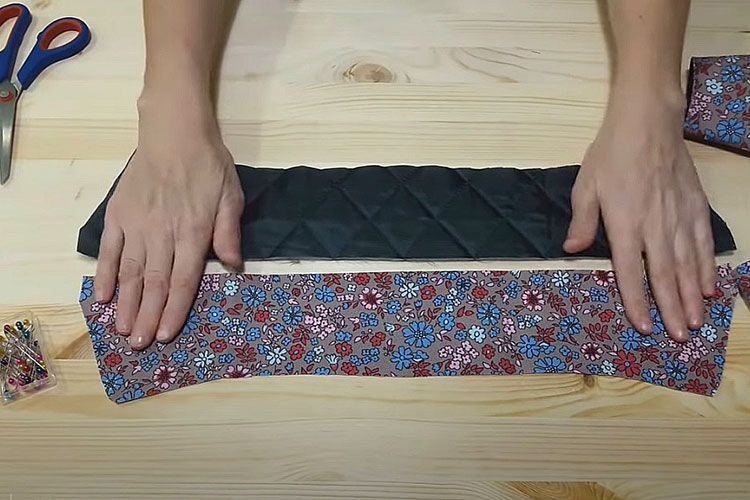
We also cut out the lining fabric. Since its surface is slippery, it's best to pin the paper pattern. Trace the outline with tailor's chalk or a sharpened piece of soap.
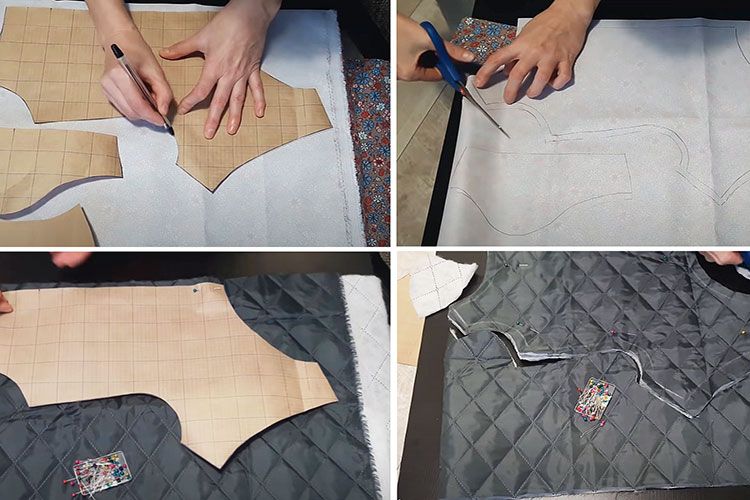
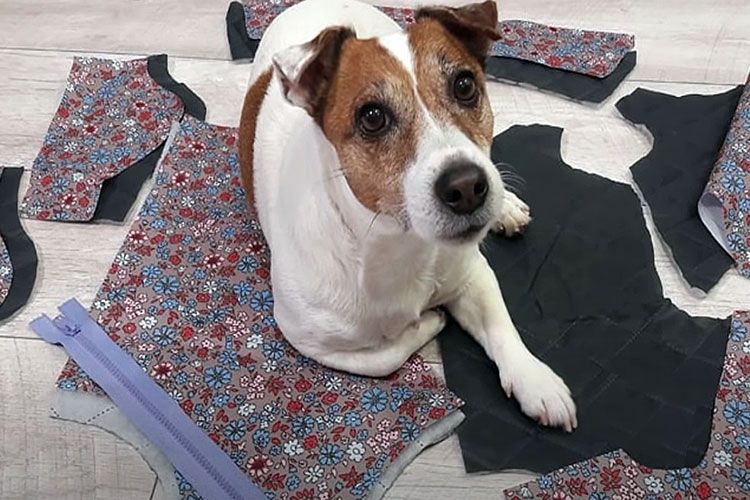
The cutting is complete.
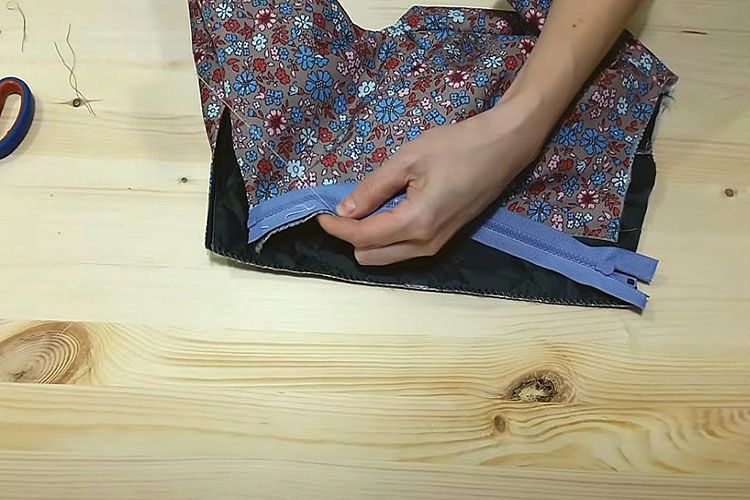
The back pieces will be connected with a tractor zipper.
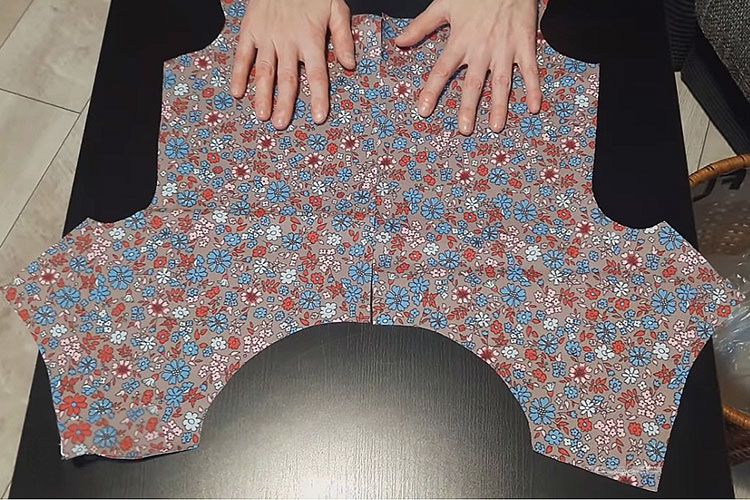
Sewing
Sew the front (chest) and back pieces together. Do this separately for the membrane fabric and lining. After preliminary hand basting, try it on. The more often you check the sewing process, the better the suit will fit. Pay special attention to the armholes of the set-in sleeves. If they're too low, now's the time to trim away excess fabric to prevent chafing as you move.
Place the side seam-stitched membrane and lining pieces face-to-face. Sew them together at the belly. Sew the sleeves together and sew them in place. Turn the garment right-side out. Don't forget to try it on again. Finish the outer sleeve seams with decorative stitching for added strength.
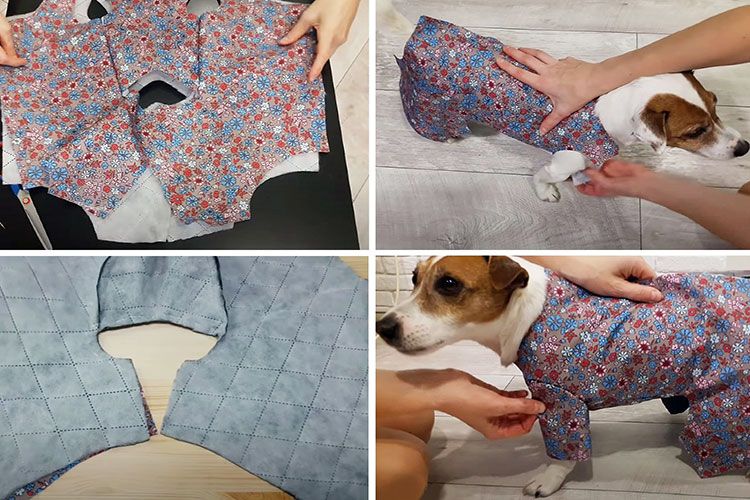
We insert the snake.
As you can see, sewing a dog jumpsuit yourself isn't all that difficult, even for beginners. It only took a little time, and the piece is practically ready.
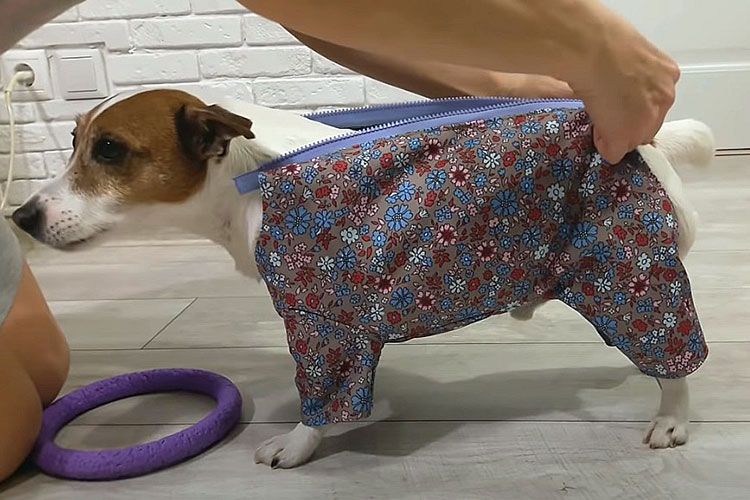
The final step is sewing in the stand-up collar. First, sew the membrane and lining pieces together, leaving the hem open. Fold the jumpsuit neckline inside the collar and stitch it in place.
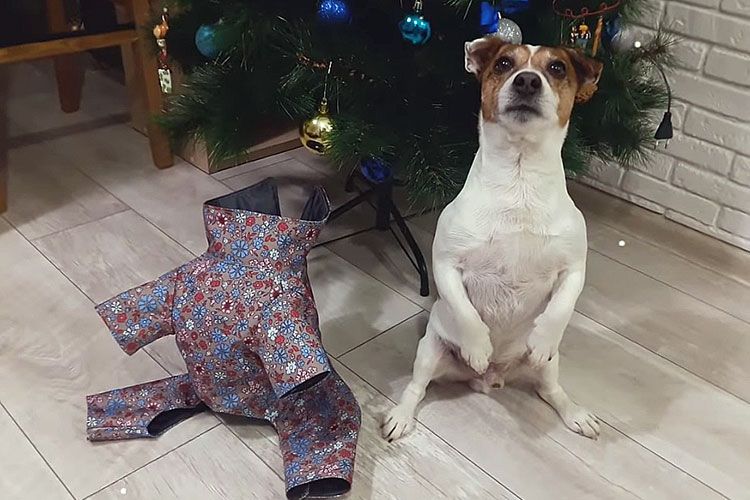
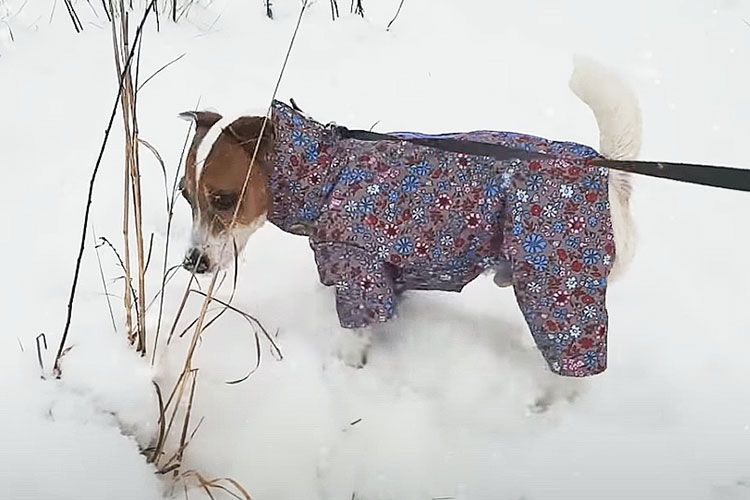
This is what the finished product looks like:
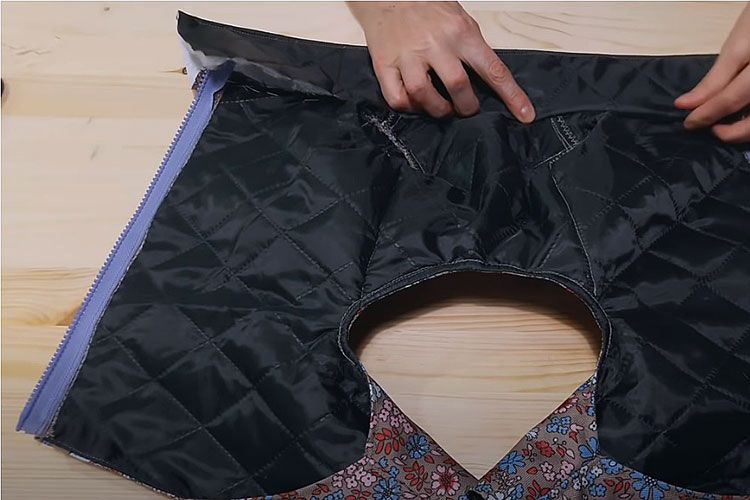
The pattern of this dog jumpsuit is simple, yet the cut is comfortable and allows complete freedom of movement. Thanks to the membrane fabric, the walking suit is suitable for subzero temperatures, yet it's significantly lighter than traditional winter clothing. This option is ideal for active breeds.
Dogs from children
If sewing a full-size jumpsuit isn't feasible, there's an alternative: slightly rework some old baby clothes that the previous owner has outgrown. A toddler's wardrobe is perfect for small breeds like toy terriers, Yorkies, or Italian greyhounds. If you prefer, you can also buy outerwear at a secondhand store, which will be perfect for winter.
For autumn and winter cold, an insulated jacket is best. It's important that it's the right size for your dog's back. It's also best to choose items without small decorative elements that your dog could tear off and swallow, or any metal rivets that could cause injury.
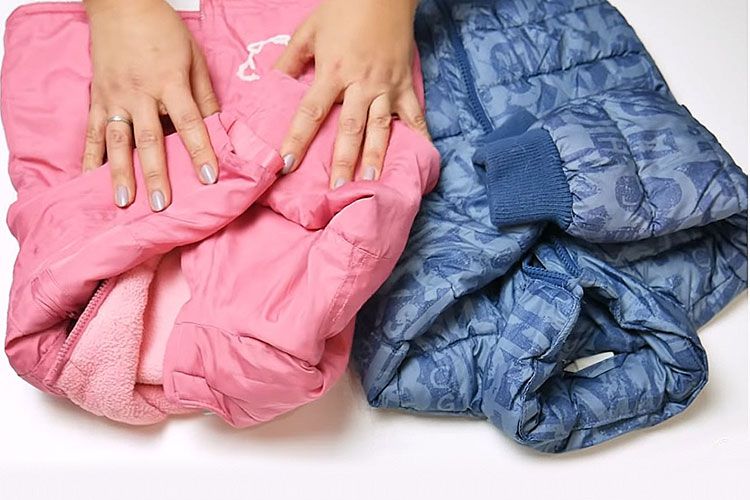
First, we unpick the zipper. We try the jacket on the dog and use chalk to mark the excess fabric on the belly. We trim away any excess fabric so the pattern fits the dog's anatomy. We re-stitch the zipper.
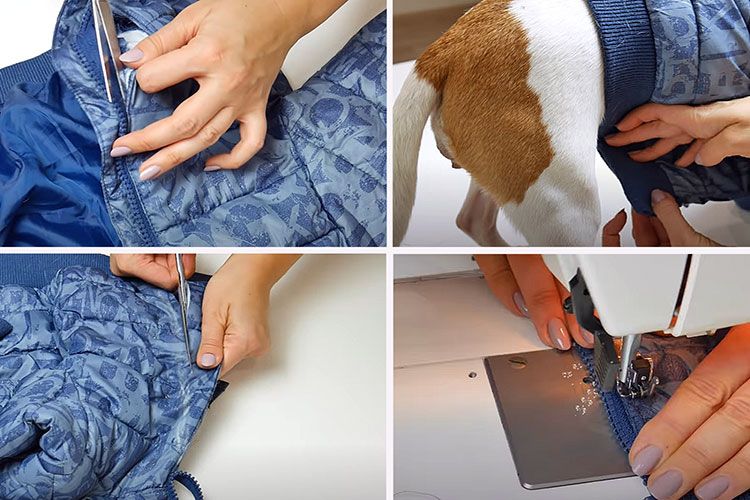
Shorten the sleeves to the desired length. Re-sew the cuffs.
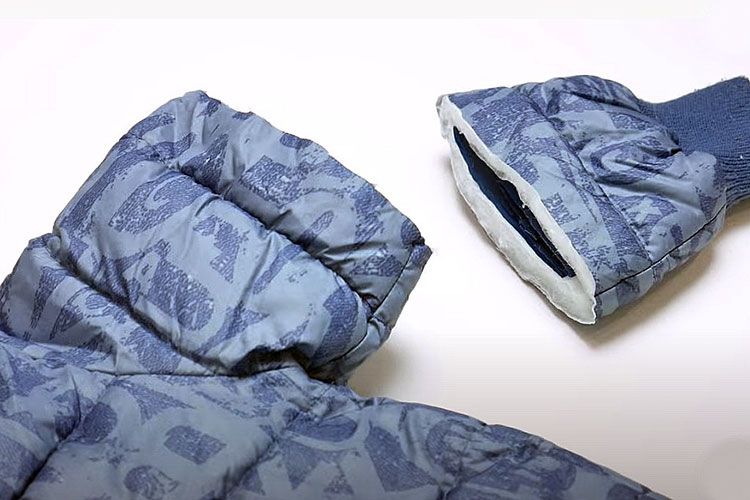
The jacket is ready:
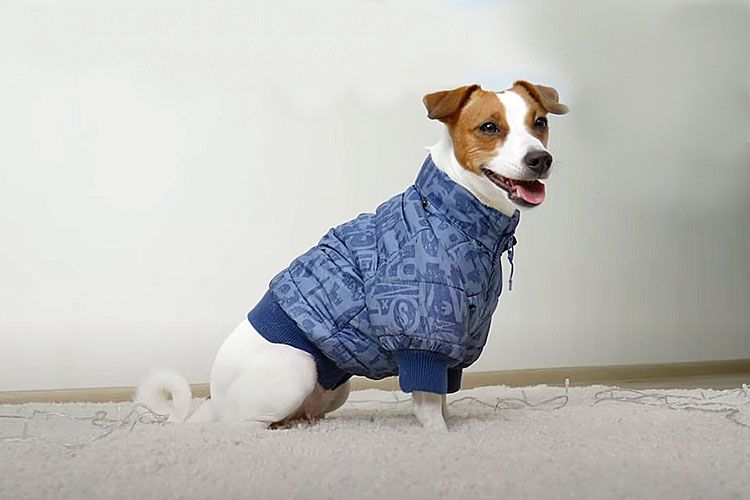
Knitted jumpsuit
Knitting a full-size dog jumpsuit is quicker and easier for those who know how to knit. Besides its unique appearance, its advantage is its elasticity—it's barely noticeable on the body and doesn't restrict movement. Furthermore, seamless patterns don't chafe the skin or tangle the fur. The best yarn is a blend of natural wool (dog wool is also possible) and acrylic. Mohair, cashmere, linen, and cotton are also suitable. Pure wool without additives is undesirable. The resulting garments are rough and can irritate the animal's skin and cause itching. And if the dog tries to scratch, the claws will get caught in the loose loops, causing injury.
Yarn items are great for dry weather, but in the rain they get wet and dirty. A lacy knitted jumpsuit for a dog is more decorative than practical.
A simple model for everyday wear looks like this:
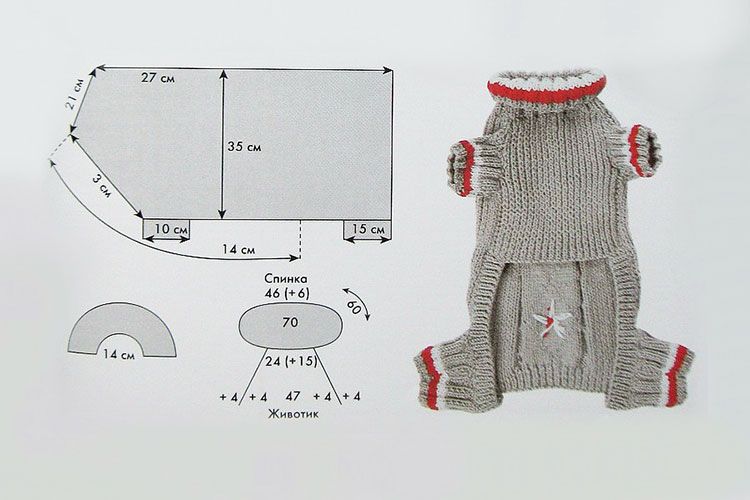
The back and belly are knitted according to the following pattern:
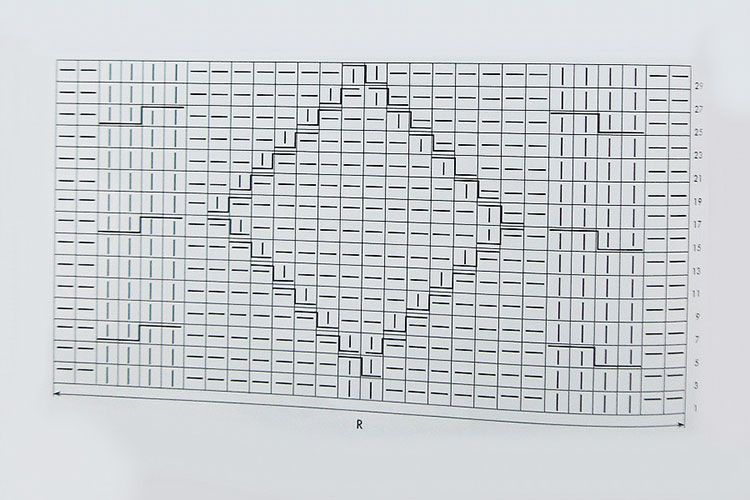
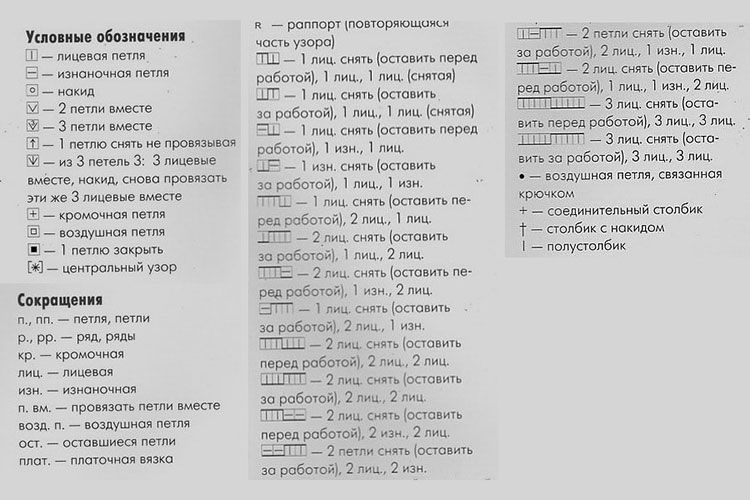
Legend:
Read also:


Add a comment