
How dogs helped people during the war
There are many stories about how dogs helped people during the war. Some are true, some are legend. The truth is that four-legged soldiers really did help people fight the enemy. Who are these heroes?
Content
History of military dog breeding
The idea of using animals for military service was first considered in 1919, when Vsevolod Yazykov, who was developing specialized training methods, submitted a petition to the country's leadership to open a puppy school. His idea was considered for three years, and it wasn't until 1924 that the first military kennel was established. Animals were selected with particular care: expeditions were immediately sent to the Caucasus to study the gene pool and select the best dogs. Geneticists and animal trainers participated. The selected puppies were raised using Yazykov's training methods, but also took into account the work of Pavlov and Thorndike. The popularity of kennels grew year after year. By the start of the Great Patriotic War, dogs were being trained across the USSR for 11 different services. During the war, 168 units were organized that utilized animals.
Orderlies
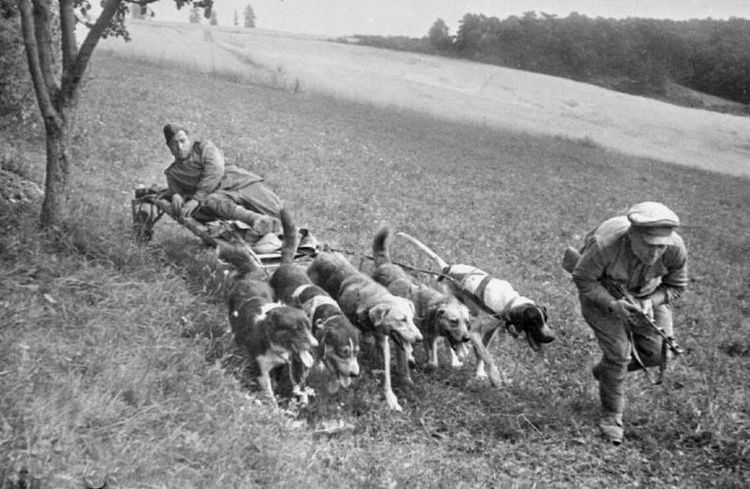
During the Great Patriotic War, dogs aided the wounded and delivered ammunition to their units. These courageous dogs pulled sleds through the snow or pulled special carts. They not only had to follow commands learned in school but also sometimes had to make their own decisions to complete their mission. A dog could reach places where humans could not, even under open fire. A four-legged medic would deliver dressings to a wounded soldier, wait for the soldier to treat his wounds, and then take him to the medical unit. Meanwhile, the dog had to search for the wounded, crawling among the dead on its belly.
If a soldier was unconscious, a shaggy medic would lick his face and bring him back to his senses. During the cold season, the animals' breath and warmth would keep soldiers warm until human help arrived. It's impossible to say how many medic dogs served in the war, as these troops suffered the greatest losses. It's only known that civilians, having learned of the animals' exploits, donated their pets to the army. In total, 15,000 sleds were in service during the war, assigned to 69 separate sled platoons. One of them, under the command of Private Dmitry Torokhov, saved 1,580 people. The dog Bobik distinguished himself in this action.
Demolitionists
By 1935, the Red Army had formed units with dogs tasked with destroying tanks. They became indispensable during the Great Patriotic War. The largest operation was the Battle of Stalingrad, where the four-legged fighters disabled 63 tanks. The dogs also distinguished themselves in the Battle of Kursk: in a single day, the shaggy heroes managed to blow up as many as 12 vehicles. The last reports of tank saboteurs came in September 1943, when 15 tanks were destroyed in battles near Belgorod. After this, kamikaze dogs were abandoned. Despite the success of the operations, there were some mishaps: the dogs began to confuse their own tanks with enemy tanks, and they were not always able to trigger the release mechanism, which then caused the explosion.
The Germans, however, feared the shaggy demolition dogs, as, unlike humans, dogs are harder to spot on the battlefield, and they often approach tanks from behind, where machine gun fire is impossible. To achieve this, the enemy was forced to equip their vehicles with flamethrowers. Summarizing the reports, we can estimate how many demolition dogs perished in the Great Patriotic War: a total of 300 tanks were destroyed this way, meaning at least that many brave four-legged heroes lost their lives.
Saboteurs
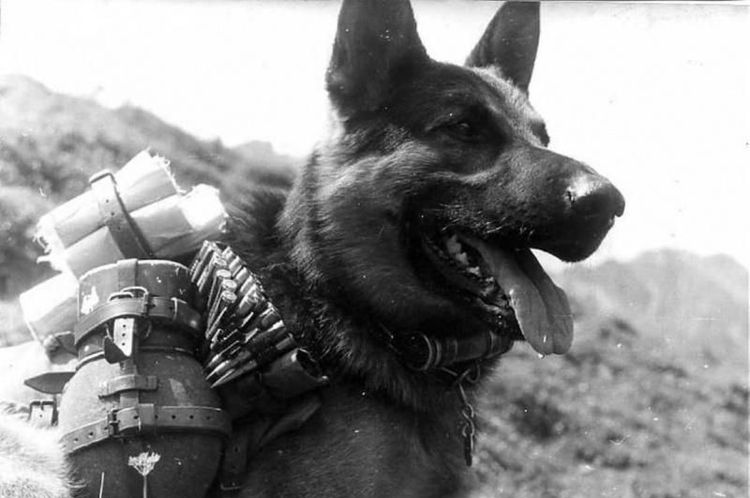
During the war, dogs penetrated enemy lines and blew up railways and bridges. The most famous four-legged saboteur was Dina, a female dog. She was a unique animal, initially trained as a tank demolition expert, then retrained as a miner and saboteur. Dina worked in a group. The animals' mission was to blow up the Polotsk-Drissa crossing, a task Dina succeeded in accomplishing. She was later used as a sapper. Saboteur dogs were often assigned to missions with real combat teams, as the animals helped navigate minefields, led reconnaissance missions, and learned of enemy ambushes. This helped reduce personnel losses. The dog Jack and his handler, Corporal Kisagulov, distinguished themselves in this endeavor. They captured nearly two dozen "tongues."
Sappers
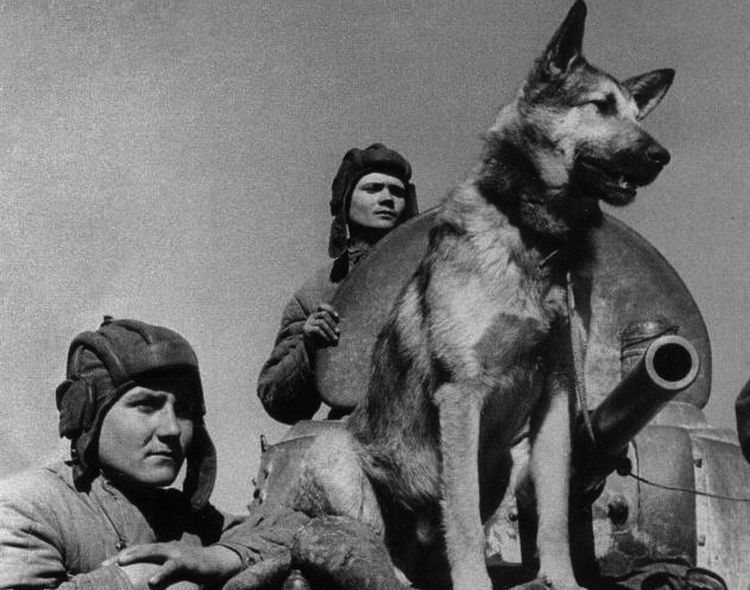
Many have heard of the courageous dog Dzhulbars, who detected 7,500 mines and over 150 shells, for which he was awarded the Medal "For Military Merit." He possessed a natural sense of smell, but was an ordinary mongrel. For a long time, this dog enjoyed success, being used on the most difficult operations, but towards the end of the war, he was wounded. When the decision was made to march troops with dogs during the 1945 parade, Dzhulbars was carried in arms.
Dick the collie was also an experienced mine-destroyer. He discovered 12,000 mines and participated in operations in Stalingrad, Prague, and Pavlovsk. In total, 6,000 animals served in mine-destroyer units, disarming nearly 6 million mines.
Signalmen
They were a real find for the army. Statistically, six shaggy signalers were equivalent to ten men. The animals moved quickly from one point to another, making them very difficult for the enemy to hit. On average, one signal dog was killed per month. However, the animal always tried to complete its mission to the last. For example, a sniper shot Alma's ears and shattered her jaw, but she still managed to carry a packet of documents. Jack, the dog, sacrificed his life to save an entire battalion: he crawled more than three kilometers, wounded, but did not disobey orders. Jack eventually reached his target and died in the arms of his soldiers.
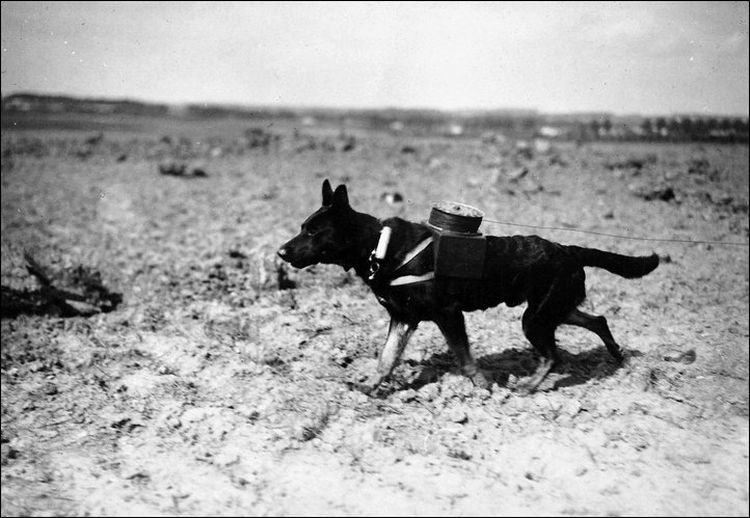
During the war, four-legged signalmen helped deliver approximately 200,000 documents and lay more than 8,000 kilometers of wire.
Watch dogs
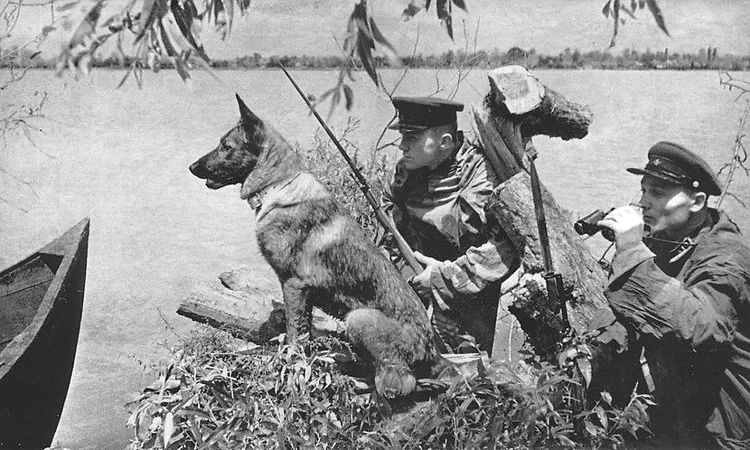
Images of wartime often conjure up in my imagination, with a German Shepherd standing guard alongside a border guard. And so it was: the dogs stood guard and were the first to spot enemy movements. For example, watchdog Agai warned the Germans 12 times about their advance and the capture of our positions.
Read also:


Add a comment