
How to give a cat an injection in the scruff
There are various reasons why a cat may need an injection. While there's certainly an alternative—seeking veterinary care—this isn't always an option, especially in cases of long-term treatment or if the animal is always stressed during trips to the clinic. In these situations, it's helpful for pet owners to know how to administer an injection into the scruff of the neck to avoid harming the animal and minimize discomfort during the procedure. Find out where the scruff of the neck is on cats here.
Content
Preparatory stage
An injection into the withers is classified as a subcutaneous injection. Theoretically, it can be given anywhere, where the skin can be pulled back and folded. However, the withers are the safest place, especially when it comes to so-called "painful" injections. There are a minimum number of nerve endings here, so the animal will feel virtually no pain. Following basic rules allows you to ensure timely treatment for your cat and avoid negative consequences, which most often arise from inexperience and unfamiliarity with the theoretical aspects of the procedure.
Safety rules
To avoid harming your pet, it's important not only to administer medication correctly but also to follow the guidelines for administering medications by injection. These include:
- Sterility. To prevent the introduction of germs through the wound, it is important to perform all procedures with thoroughly washed hands and using sterile instruments.
- Strict adherence to the dosages prescribed by the veterinarian.
- Introduction of substances in compliance with all rules and only in the place indicated by the doctor.
- Use only medications prescribed by a veterinarian, but never self-medicate.
Note! There's no need to disinfect the injection site or clip the hair, nor is there any need to disinfect the needle—it remains sterile as long as it's not touched.
Use of syringes
In most cases, a veterinarian recommends which syringe to use for injections, but pet owners sometimes overlook this information. First of all, it's important to understand that syringes differ only in quality and capacity, but they all work in the same way. Whenever possible, use syringes with rubber pistons, which soften the plunger and ensure smoother administration.
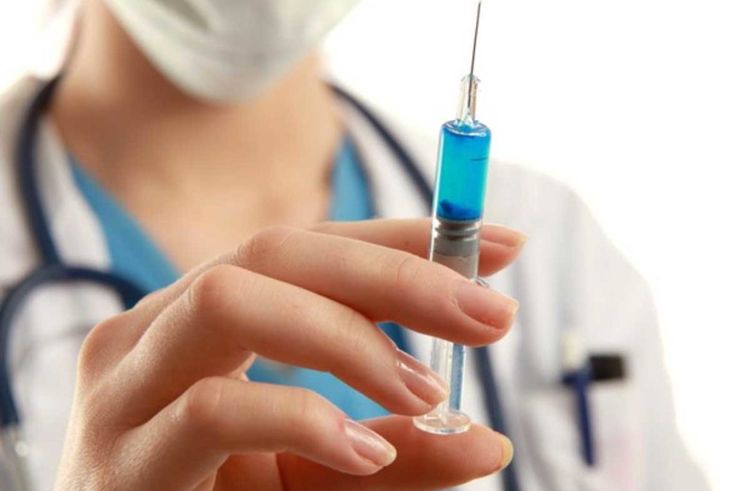
To give a cat an injection in the scruff, you can use:
- Insulin syringe – has a thin needle, a detailed scale of divisions, but has a small volume (up to 1 ml) and is not suitable for oily drugs;
- An injection syringe comes in various volumes and needle gauges, and is particularly suitable for large pets weighing over 5 kg. For cats, it is recommended to choose the smallest volumes according to the prescribed dosage. Alternatively, if prescribing a 5 ml injection, for example, you can use a needle from a 2 cc syringe and administer the injection with it.
The needle must be sterile and new for each injection, as after the first use, microscopic burrs develop on it, making it difficult to reinsert the needle. If you need to administer the medication from the same syringe, use those that come with spare needles (they have different colored caps to avoid confusion during use).
If multiple medications are prescribed for treatment, use a separate syringe for each, unless otherwise directed by your doctor. Never mix solutions. This increases the risk of oxidation of the active ingredients or precipitation, which will negate the effectiveness of each.
It is recommended to draw up 0.5-1 division more solution than the prescribed dose, then lift the syringe up with the needle and tap the plastic barrel, but never the needle itself, to maintain its sterility. This action will cause air bubbles to rise to the nozzle and can be easily removed by pressing the plunger. For subcutaneous injections, it is important to remove as much air as possible from the syringe, but a small bubble will not cause significant harm. Injecting air during an injection is only fatal with intravenous injections or IVs, provided the bubble is large enough.
Rules for the use of drugs
Before administering the solution, it's important to check the name on the ampoule against the doctor's prescription and carefully read the instructions. Even if the medication was prescribed by a veterinarian, you should check:
- whether the drug is suitable for the animal (for example, some drugs for dogs are toxic to cats) and for subcutaneous administration;
Important! Some medications cannot be administered subcutaneously, but only intravenously, due to the risk of tissue burns and the formation of necrotic lesions.
- What temperature should the solution be during administration (some drugs require heating to 38-39°, others should be cool);
- the presence of instructions on the rate and method of administration (some solutions need to be diluted or administered very slowly);
- the need and duration of shaking the vial before filling the syringe to obtain a homogeneous structure of the contents.
The instructions for a medication always specify what the powder or liquid should look like: if this information doesn't match what's in the bottle, the medication should not be used. For example, some medications require strict temperature storage, so they should only be purchased from reputable veterinary pharmacies or directly from a veterinarian.
If one ampoule is intended for several uses (over several days), then its contents should be drawn into several syringes and, with the needles capped, stored in the refrigerator.
Important! The shelf life of some medications is no more than 10-12 hours after opening the ampoule, so storing them in a syringe is not appropriate in these cases. For all other medications drawn up in a syringe, the shelf life in the refrigerator should not exceed 72 hours.
A single injection should not exceed 30-60 ml of the medicinal solution, depending on the animal's weight. If the treatment requires larger doses, they should be administered in several doses and at several points along the spine.
How to give an injection correctly
Giving a cat an injection isn't an easy procedure, especially if it's not their first. It's best not to perform all the preparatory procedures in the presence of the "patient," as animals tend to remember procedures that evoke negative associations. Having experienced the pain of the needle once and the rustling sound of the syringe being unwrapped, your pet will immediately hide the next time.
Preparing your pet
It's easiest to have an assistant assist you during the procedure: one person can hold the cat while the other administers the injection. It's crucial to immobilize the animal at this point, as a sudden jerk while piercing the skin could cause the needle to penetrate deep into the muscle. This can be accomplished in two ways:
- fix in a lying position, holding the paws;
- wrap tightly in a towel, leaving the area open for the procedure.
If you have to perform manipulations without outside help, you need to lay the animal on a comfortable surface and rest the forearm of one hand on the pet’s body, and perform the necessary manipulations with the other hand.
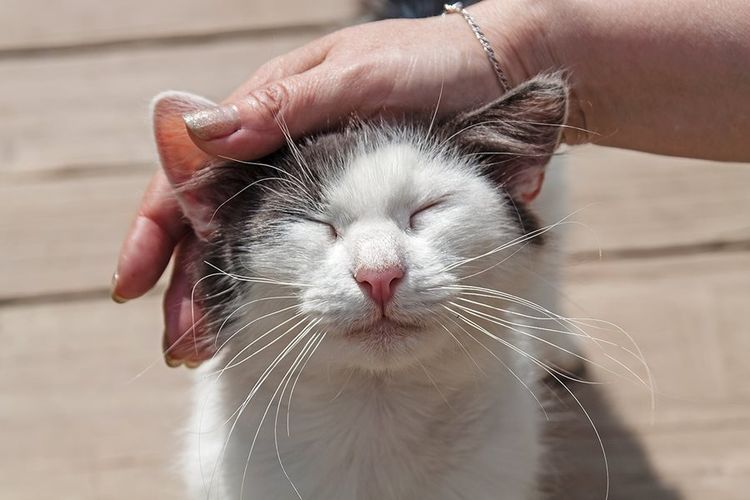
In any case, it's important to remain calm to avoid creating additional stress for the cat. It's best to pet the cat and speak soothingly throughout this process, without showing any nervousness.
Execution technique
Before the procedure, it's important to check the skin around the withers: if there's any damage to the skin, do not administer the injection! In this case, the knee area may be an alternative.
Procedure:
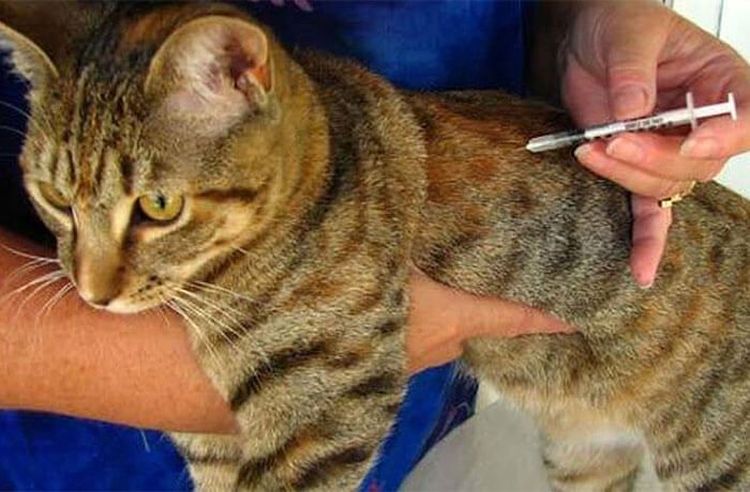
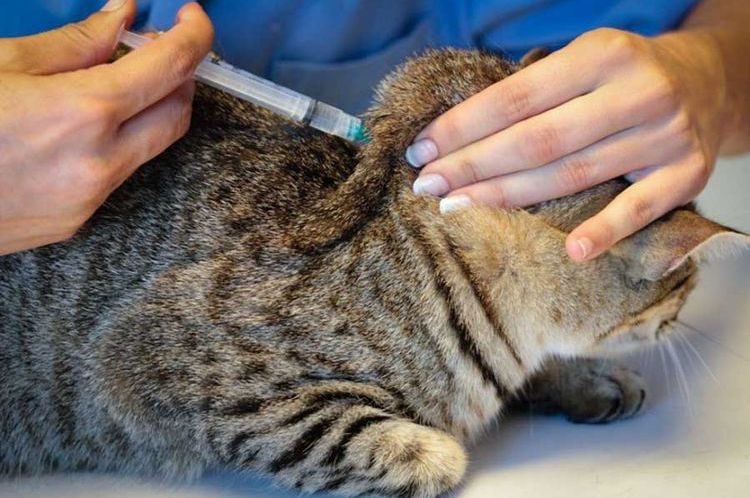
- Use your fingers to form a fold at the withers, pulling the skin up and pressing with your middle finger in the center to create a kind of “pocket”.
- Insert the needle into the base of the fold, directing it along the spine towards the head at a comfortable angle.
- Since the skin here is quite thick, it can be difficult to pierce it, so you should not rush or make sudden movements so as not to pierce the skin all the way through and prick the solution into your fingers.
- If your pet is too tense and the needle moves with resistance, you need to slow down the movement so as not to bend or break it.
- When the tip has passed smoothly to a depth of about 1 cm, the medicine can be administered: subcutaneous injections are administered slowly (0.5 ml/sec).
- While injecting the solution, palpate the skin: if it becomes moist, the solution has penetrated directly into the skin, not into the subcutaneous tissue. In this case, deepen the needle and begin injecting the solution again. If the procedure is performed correctly, the fur at the puncture site should remain dry.
- Once the full dose has been administered, carefully remove the needle without releasing the skin fold.
- Gently rub the skin at the injection site.
- If blood appears, wipe the skin with a clean cloth, but if it continues to appear within half an hour, apply cold to the area and consult a veterinarian about further action.
- After the procedure, you can give your pet a treat and be sure to praise him.
The key during the procedure is to set aside hesitation and understand that the need for treatment outweighs any compassion for your pet. However, the appearance of lumps and swellings that don't resolve within 2-3 days, or any changes in your cat's behavior, should prompt a visit to the veterinarian.
You can also ask our website's staff veterinarian a question, who will answer them as quickly as possible in the comments box below.
Video tips from a veterinarian:
Read also:
- How to properly give an injection to a cat?
- Antibiotics for cats
- How to take a cat's temperature at home


Add a comment