
How to vaccinate a dog at home
Breeders' experience suggests that situations vary, and today we'll discuss how to vaccinate your dog at home, what you need to know, and the best place to administer the vaccine.
Content
Vaccination at home: pros and cons
Before discussing the advantages and disadvantages of the bottom procedure, it's worth clarifying that every pet owner has three options to choose from:
- Vaccination of a pet at a veterinary clinic.
- The procedure is carried out by a veterinary clinic doctor at home.
- Self-vaccination with a drug purchased from a veterinary pharmacy.
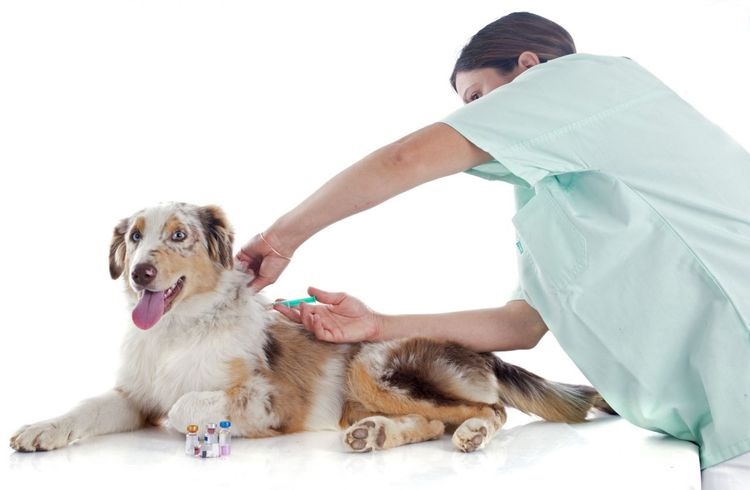
The advantages of the second option are undeniable: there's no need to take a small, fragile puppy to a clinic, where sick animals are brought daily (including those infected with the very diseases the vaccination is designed to protect against). Naturally, this service will cost more than in-person vaccination.
When considering the third option, it is worth considering the following important factors:
- When traveling abroad, such vaccination will not be taken into account, since there will be no wet stamp from the veterinary clinic confirming the procedure next to the vaccine stubs pasted into the passport.
- When taking responsibility for vaccination, you need to know how to prepare a puppy for its first vaccination, where to give the injection, how to inject the vaccine into a dog, and what the possible consequences may be.
- Modern vaccines require strict adherence to storage and transportation rules.
- Vaccines can cause allergic reactions, and if this is a puppy's first dose, it's impossible to predict. A veterinarian is prepared to help the puppy in this situation, but owners often overlook the possibility of such a dangerous side effect.
When is vaccination indicated?
Vaccination is a mandatory preventative measure aimed at maintaining the health of an animal. Vaccination protects the body from the destructive effects of the most dangerous microorganisms that can lead to the death of a pet:
- paramyxoviruses (causative agents of carnivore plague);
- coronaviruses, rotaviruses, parvoviruses (causative agents of viral enteritis);
- parainfluenza viruses;
- hepatitis viruses;
- bacteria of the genus Leptospira (pathogens of leptospirosis);
- Rabies virus.
Important! It's safest to entrust your pet's treatment to a qualified professional. At home, especially if you're unexperienced, you could harm your dog.
The vaccine does not provide a 100% guarantee of protection against these infectious agents, but if the dog is exposed to the disease, it will either not become ill or will experience a milder form. After the introduction of a weakened infectious agent, the body develops immunity to the disease, which helps prevent serious complications. Furthermore, the likelihood of infection is significantly reduced.
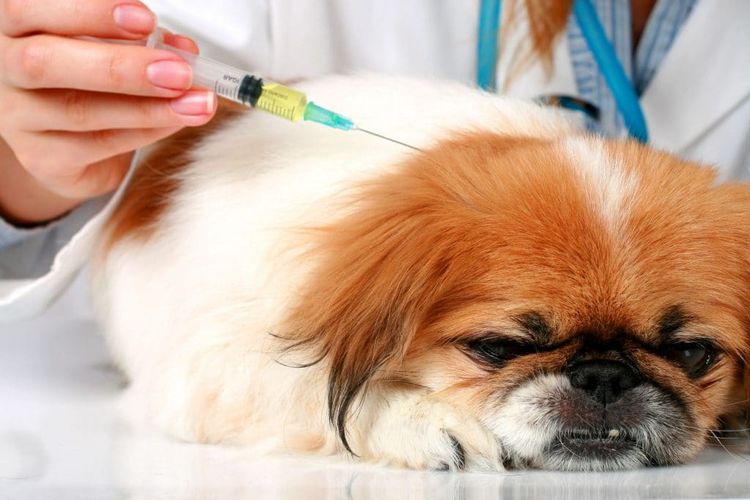
Puppies aged four weeks and older, as well as adult dogs that have not previously been vaccinated, are subject to vaccination. All vaccinations are recorded in the dog's passport, indicating the dates and dosages.
Note: In many countries, vaccinations are a mandatory requirement for keeping an animal.
Vaccination schedule
Puppies receive their first comprehensive vaccination at 8-9 weeks of age. This is when the immunity they receive from their mother begins to wane, and it's time to begin activating their own immune system. Typically, the first vaccination requires a booster dose (either once or twice, depending on the vaccine used).
Important! A repeat injection is administered with the same vaccine, 4 weeks apart.
The dog then needs to be vaccinated every year. It's best to vaccinate the animal in the same month, but veterinarians allow slight staggering of the vaccination schedule if necessary. If the annual injection is missed, immunity will not be maintained, and two doses of the vaccine, separated by four weeks (as in puppyhood), will be required to reestablish it.
Most schedules recommend administering the rabies vaccine at 12 weeks of age, with subsequent doses repeated once a year.
Vaccination rules
To perform this procedure, it's best to consult a veterinarian, who will advise you on the correct vaccine selection, its components, dosage, and administration schedule. If this isn't possible, you'll need to vaccinate your dog yourself.
The most important and fundamental rule for administering a vaccine is that your pet must be healthy. Therefore, it's recommended to consult a veterinarian who can perform a thorough examination of your dog.
The second rule is deworming and eliminating fleas and ticks. The animal's fur, if necessary, is treated with special insecticides. Deworming is carried out according to the following protocol:
- Administration of an anthelmintic drug.
- After two weeks, repeat the administration of the deworming agent.
Then the vaccination is carried out as follows:
- Vaccination two weeks after the second anthelmintic injection.
- Revaccination after 21 days.
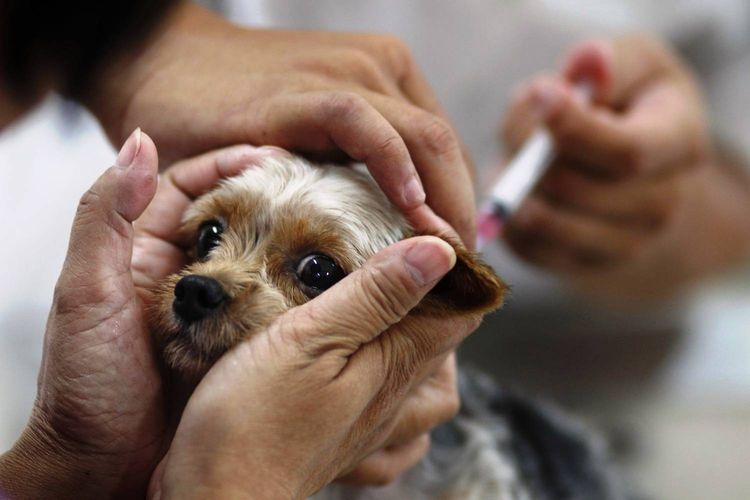
The third rule includes quarantine before and after vaccination. It's essential to limit the dog's contact with other animals and even people as much as possible. Avoid walking in public parks or training areas. If a puppy is undergoing the procedure, it's best to keep it indoors for the entire period.
Contraindications:
- the presence of any disease;
- deep exhaustion;
- helminthic invasion;
- teething in puppies;
- ear cropping (vaccination is not given two weeks before and after cosmetic surgery);
- pregnancy and lactation period.
Vaccine delivery
If the vaccination is administered in a medical facility, the owner doesn't need to worry about transporting and storing the medication. Clinics typically source vaccines from reputable pharmaceutical companies. Staff must strictly adhere to the medication's storage requirements and expiration dates.
When purchasing a vaccine yourself, it's best to familiarize yourself with the proper transportation methods in advance. You can find this information in the online package insert or ask at the pharmacy where you'll be purchasing it. If handled improperly, the vaccine will quickly lose its potency and become ineffective.
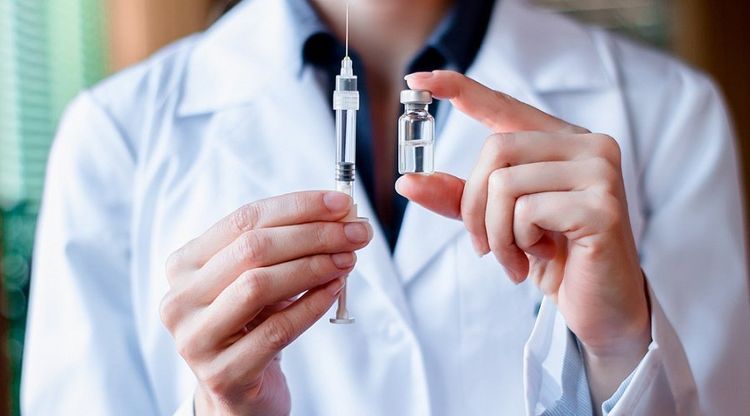
A cooler bag will be required for transportation. Therefore, it is necessary to prepare one in advance and freeze the cooling element. At home, the medication is stored in the refrigerator.
After the first vaccination, you should save the packaging from the drug, since during revaccination you will need to use exactly the same medicine.
You can self-administer any vaccination except the rabies vaccine. It is administered only at a veterinary clinic, and a special note is made in the passport. Since the disease is particularly dangerous for both animals and humans, it receives special attention. Information about the procedure is compiled into a special registry and transmitted to the state animal control service.
How to vaccinate a dog
You can vaccinate your dog at a veterinary clinic, have a specialist come to your home, or do the procedure yourself. It's strongly recommended that you do the procedure under a veterinarian's supervision the first time to clarify all the details of handling your pet.
To vaccinate a dog at home you will need:
- A vial of vaccine.
- Disposable sterile syringe.
- Medical gloves;
- Thermometer.
- Baby cream or other lubricant.
- Alcohol wipes.
- An assistant who will restrain the animal.
Procedure
Before the injection, the dog's temperature must be measured rectally with a thermometer. Lubricant should be used to facilitate insertion. A normal temperature is considered to be between 37 and 39°C.
First, you need to carefully read the instructions for the drug.
Algorithm of actions:
- Disinfect your hands.
- Draw the diluent into the syringe and pour it into the vial containing the dry vaccine component.
- Shake thoroughly until all dry fraction is dissolved.
- Draw the prepared solution into a syringe.
- Give an injection (read below to find out where it’s best to vaccinate a puppy).
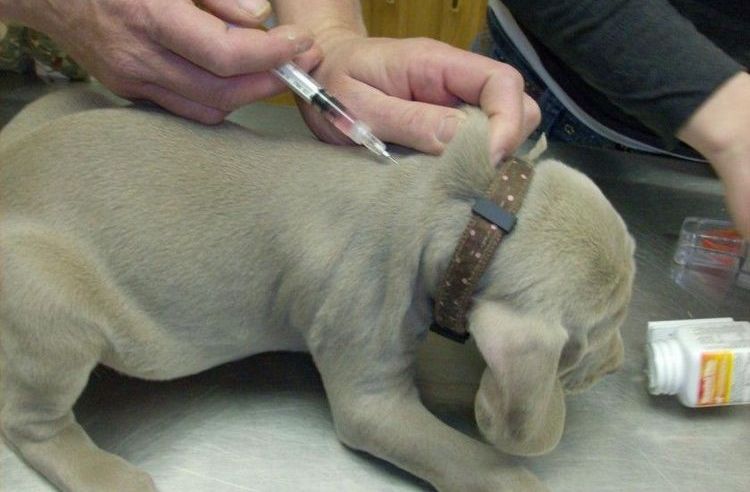
Note: If a live vaccine is used, do not treat the injection site with a disinfectant (alcohol, etc.). This may reduce its effectiveness.
Where to inject the vaccine
For the administration of different types of vaccines, subcutaneous or intramuscular administration methodMost of the combined antiviral vaccines used annually are administered subcutaneously, while the antifungal vaccine is administered intramuscularly.
Thus, to the question of where to vaccinate a 2-month-old puppy, there is only one answer: in the withers (subcutaneously).
For more information on how to administer a vaccine to a dog subcutaneously, see this video:
The sticker from the used vial is affixed to the dog's passport. It is also necessary to record the date of the procedure and set a reminder for the booster vaccination (in 21 days). For the next 10-14 days, the dog should remain indoors to avoid unwanted contact. During this time, it may experience minor discomfort.
Side effects
Many owners believe they know how to properly vaccinate their dogs, but they are completely unprepared for the possible side effects that arise from vaccination.
After the vaccine is administered, the body begins to develop immunity (just as it would if it were actually exposed to the pathogen). Therefore, symptoms such as the following are considered normal:
- lethargy and drowsiness;
- soreness at the site where the dog is vaccinated;
- slight increase in temperature.
Reasons to contact a veterinarian include symptoms such as recurring diarrhea or vomiting.
Read also:
- Hexacanivac vaccine for dogs
- Dog Vaccination: Vaccination Schedule
- Quarantine after rabies vaccination for dogs


Add a comment