
How to give a dog an enema at home
Many pet owners know that this procedure is effective for constipation and is widely used in both human and veterinary medicine to clear the intestines of feces. But few know how to properly administer an enema to a dog at home, what solutions can be administered to animals, and, most importantly, how to avoid harming the pet while trying to help.
Content
Indications for the procedure
Before we explain how to give a dog an enema at home, we recommend that you familiarize yourself in detail with the indications and contraindications for the procedure.
A veterinarian may recommend giving your pet an enema in several cases:
- for constipation (to soften stool);
- before surgery, some examinations or childbirth (to cleanse the intestines);
- in case of poisoning (to speed up the elimination of toxins);
- for the administration of certain drugs.
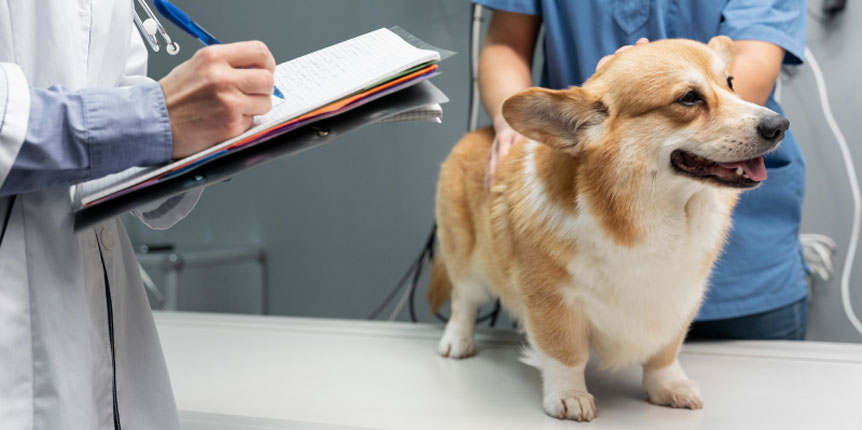
In most cases, an experienced veterinarian will administer an enema to an animal in a clinical setting after an examination, ruling out contraindications and accurately determining the cause of the identified problem.
Contraindications
By performing the procedure at home (without a preliminary examination), you can't completely rule out contraindications, don't know the animal's intestinal condition, and don't know what exactly caused it. All these factors increase the risk that the procedure could harm your pet, as enemas for dogs have a wide range of contraindications.
Veterinarians warn that enemas are contraindicated for dogs in the following cases:
- the presence of any acute inflammatory process in the body;
- intestinal obstruction (regardless of the cause);
- intestinal bleeding (blood in stool);
- dehydration (the procedure may worsen the condition);
- any damage to the intestines (inflamed areas, cracks, ulcers, perforations);
- the presence of parasites (an enema can accelerate the spread of worms);
- neoplasms in the intestine;
- kidney and liver diseases;
- high blood pressure;
- presence of tachycardia;
- heart failure.
That's why, before attempting the procedure at home, it's crucial to find out whether your dog can receive an enema at all and what's causing the bowel movement problem.
Important! An enema for constipation in dogs is an emergency measure. This procedure should not be performed frequently, as it can disrupt normal intestinal motility, lead to dysbiosis, and damage to the mucous membrane.
To normalize bowel function, it is necessary to choose the right treatment so that such an unpleasant symptom as frequent constipation goes away.
Solutions for administration
Microclysters
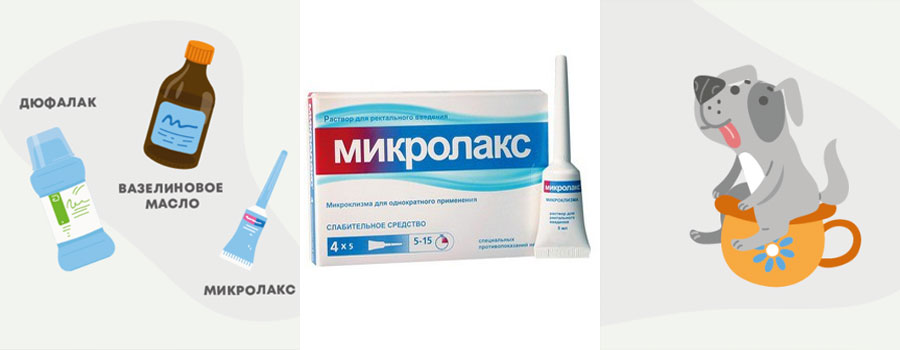
Veterinarians most often recommend using ready-made veterinary microenemas, in which the dosage of the active ingredient is calculated based on the weight of animals, whether large, medium, or small breed. This minimizes the risk of unwanted side effects, especially in small-breed dogs.
At your veterinary pharmacy, you can find the following well-proven options:
- Microlax;
- Lactusan;
- Lactulose;
- Duphalac.
Owners often wonder whether the ready-made enemas sold in human pharmacies are suitable for dogs. Veterinarians warn that administering human medications to animals can be dangerous.
Risk factors:
- the presence of components toxic to animals;
- dosage inconsistency.
Aqueous solutions
Also, depending on the indications, various solutions can be used for cleansing or softening enemas:
- You can cleanse your intestines with regular boiled water, cooled to body temperature;
- a saline solution (1 teaspoon of salt per glass of water) will help cope with constipation by drawing fluid from the body into the intestinal lumen;
- soda solution (1 teaspoon of soda per glass of water) reduces colic and intestinal spasms;
- an oil solution with vaseline oil, glycerin or fish oil (1 tablespoon per glass of water) softens the stool and makes it easier to pass;
- Decoctions of oak bark or chamomile reduce inflammation;
- A weak solution of potassium permanganate or furacilin is used as an antiseptic.
Please note! When administering solutions, follow the recommended volume for your animal's size. The optimal temperature is 30°C.
|
Category |
Weight |
Volume of injected fluid |
|
Puppies, miniature dogs and cats |
up to 5 kg |
30 – 50 ml |
|
Small breed dogs |
5 – 10 kg |
50 – 100 ml |
|
Medium-sized animals |
10 – 20 kg |
100 – 200 ml |
|
Large breed dogs |
20 – 40 kg |
200 – 500 ml |
|
Representatives of giant breeds |
more than 40 kg |
500 – 1000 ml |
Please note that for a very small dog or mini-breed puppies weighing up to 3 kg, the volume of solution may be less than 30 ml.
Tools
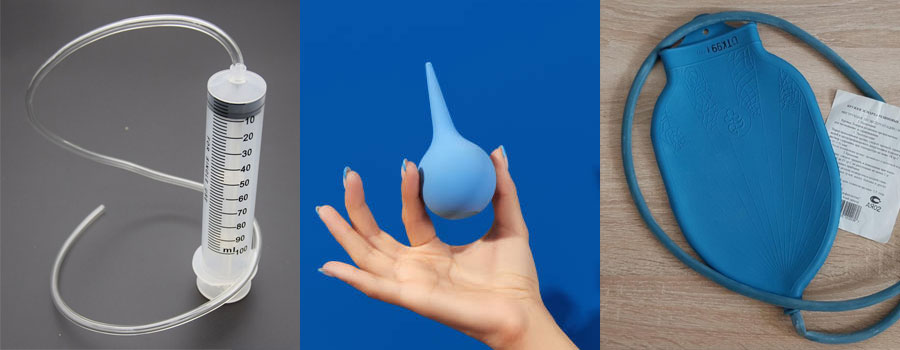
Obviously, enemas for small and large breed dogs are performed using different devices, since the volume of liquid administered is very different.
- For the smallest pets, the procedure is done using a small syringe without a needle;
- For medium-sized animals, the optimal choice would be soft syringe with a rubber tip;
- For large dogs, a classic "human" one is suitable Esmarch's mug.
Carrying out the procedure
If your veterinarian recommends giving your pet an enema at home, you'll need: a solution, the right equipment, gloves, a container to collect the bowel contents, and a partner to assist you (especially if you're planning to perform the procedure on a large dog). The procedure itself isn't considered complicated, and knowing how to give a dog an enema means you can easily perform the entire procedure at home.
It is recommended to perform the procedure in the bathroom, since after the solution is administered, the dog will not be able to control the act of defecation, and you will definitely not have time to take your pet outside to empty the bowels.
The algorithm for giving a dog an enema at home is quite simple:
- Prepare the procedure area and everything you need.
- Fill the instrument (or prepare a micro enema).
- Put a collar or harness on your dog (for easy fixation) and a muzzle (not every pet will be calm about this procedure).
- Lay the dog on its side, pet it, and soothe it. It's important that the dog doesn't resist too much, as this can damage the mucous membrane.
- The person administering the enema should wear gloves. Their task is to insert the tip to the required depth (1 cm for puppies and small dogs, 2 cm for medium breeds, and up to 4 cm for large breeds) and slowly introduce the solution (or contents of the micro enema) into the intestines.
- Next, it's advisable to give the liquid time to distribute throughout the intestines and work on the stool. For this to happen, the pet should lie down for about 10-15 minutes (in practice, however long it takes; the effect usually occurs sooner).
- Most often, defecation begins as soon as the dog gets up on its feet, so it is necessary to think about where this will happen from the start, or be prepared to clean up after your pet.
For cats and dogs, the procedure is performed approximately the same:
What could go wrong
Although the procedure is not complicated and is usually successful, every owner should know which symptoms require taking the dog to the clinic as quickly as possible.
- If the solution doesn't pass through when administered (a blockage is felt, and water leaks out), the procedure should be stopped immediately and a veterinarian should be consulted immediately, as there is a risk of intestinal obstruction.
- No bowel movement after an enema. This symptom may indicate excessively hard stool or other problems that cannot be addressed without professional help.
- Defecation has occurred and there are traces of blood in the stool. Internal bleeding can be very dangerous, so this symptom requires a mandatory examination of the animal.
Conclusion
In some situations, an enema is necessary for a dog, but if performed incorrectly or without taking contraindications into account, it can be dangerous for the animal. Therefore, the best solution is to contact a clinic, where a veterinarian will conduct an examination, make a diagnosis, and, if necessary, perform a bowel cleanse and any other procedures necessary to resolve the problem.
Read also:
- My dog has yellow stool: why and what to do
- Green poop in dogs: causes and what to do
- Dogs Vomiting Undigested Food: Why and What to Do


Add a comment