
How do dogs give birth?
Dogs carry their puppies for an average of 63 days. The gestation period can vary slightly depending on the individual breed, but usually does not exceed 67 days. A normal pregnancy should result in a successful birth. Every dog owner should be aware of how dogs give birth, as the mother may require assistance during the birthing process. Furthermore, it is important to prepare for the birth by providing the necessary conditions for the dog and the future litter. Childbirth is quite stressful for a dog, so it should take place in a familiar, calm environment, without the presence of strangers. Any negative factors can delay or stop labor.
Content
Harbingers of labor
In order not to miss the onset of labor, especially in cases where there was confusion with the mating date or mating took place a couple of days after ovulation, in the last periods of dog pregnancy It is necessary to monitor the appearance of signs of labor. These include:
- lowering of the abdomen, enlargement and softening of the loop - 7 days before whelping;
- prolapse of the uterus, arching of the back, increased frequency of urination – 4–5 days;
- temperature reduction to 37°C – within 24 hours;
- loss of appetite, increased excitability – 12–18 hours.
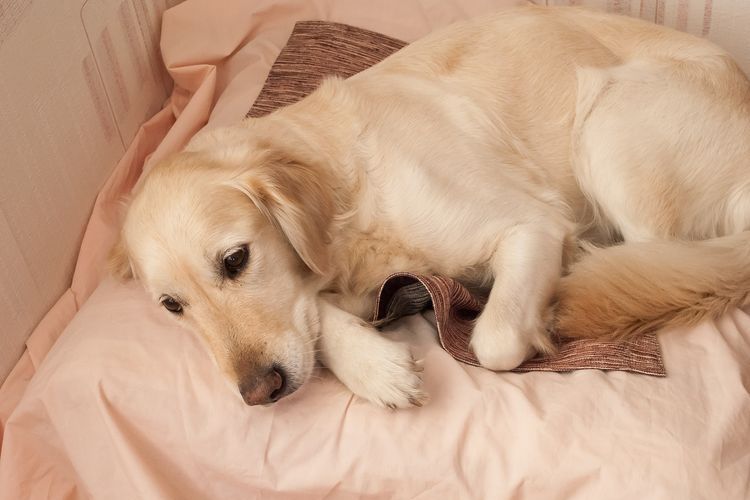
Immediately before the birth, dogs begin preparing the nesting area. Some try to find privacy, while others, on the contrary, try to be close to their owner, seeking their support.
Important! One of the key indicators of a pregnant bitch's health is her body temperature. For 10 days before the expected whelping, it is measured rectally three times a day. The day before whelping, it drops by 0.5–1.5°C, and returns to normal immediately before labor begins.
If labor does not occur within 48 hours after the temperature drops, this may indicate primary uterine atony, which requires the help of a specialist and, as a rule, a cesarean section.
The process of childbirth
Childbirth in dogs is conventionally divided into 3 stages: in the first, the cervix dilates and the birth canal opens, in the second, the puppies are born, and in the third, the placenta comes out.
First stage
With the onset of labor and the appearance of uterine contractions, the dog's behavior usually changes:
- she becomes restless, breathing rapidly;
- refuses to eat, and if he eats something, he burps it;
- looks at his sides, licks the loop.
In addition to changes in behavior, characteristic symptoms of the first stage include:
- periodic tension and relaxation of the loop;
- the appearance of mucous discharge from the vulva;
- relaxation of the abdominal wall.
One and a half to two hours before whelping, the bitch begins to ask to go outside, as she needs to defecate and urinate, as well as move around to stimulate labor. During the first stages of labor, she can still be taken outside, but after that, it's best to avoid walks to prevent her from whelping outdoors. This is especially true if the owner is witnessing a dog giving birth for the first time and may not be familiar with all the signs and subtleties of the process.

Gradually, contractions become more frequent and intense, and the puppies begin to move toward the cervix. At this time, the sensations can be extremely painful; the dog may whine, glance at the loop, and periodically freeze, staring at one point and listening to the processes occurring within.
Over time, muscle tremors appear, redness of the eyes, hardening of the abdominal walls. The dog is unable to lie down, rolls over from side to side, and licks its nipples and scrotum. When moving, the hind legs tense, the tail drops, and the back hunches.
When the reflex contraction of the abdominal and uterine muscles begins, aimed at pushing the fetus out of the uterus, the dog assumes a comfortable position. Large-breed females usually give birth lying on their sides, while Spitz dogs most often give birth in a sitting position, with their paws tucked to the side, or standing with their tail held out to the side. From the moment of the first contractions, the puppies should begin to emerge within two hours.
The second stage
The appearance of a sac of water, amniotic fluid, or a puppy in the vagina indicates the beginning of the second phase of whelping. The sac usually bursts spontaneously or is ruptured by the mother, after which the fluid it contains is released and provides lubrication to the birth canal (in other words, the pregnant woman's water breaks). However, the sac may disappear without rupturing. It is strictly forbidden to attempt to hold it in or pierce it forcibly.
The first puppy is born within 20 to 60 minutes, usually quite easily. However, the emergence of the head can cause severe pain for the bitch. This process is especially painful for a first-time mother, as this is her first time giving birth and her vaginal muscles have not yet experienced such stretching.
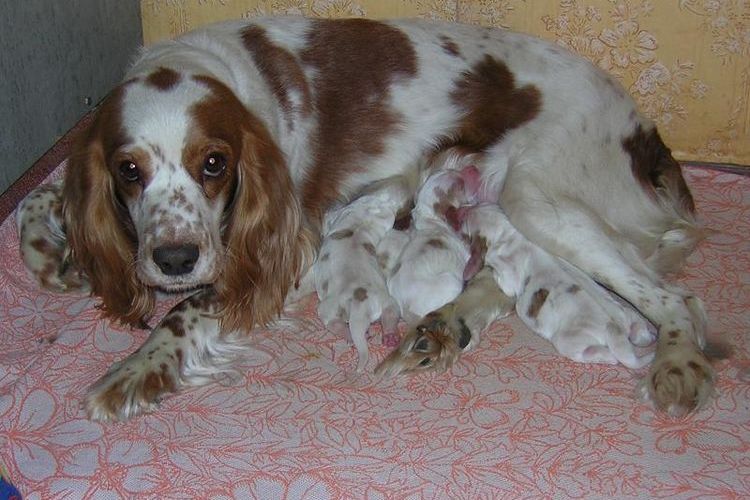
Normal delivery only occurs if the puppies are positioned longitudinally. In this case, the puppy will walk:
- in case of cephalic presentation, the front legs and muzzle come out first;
- In breech presentation, the hind legs and tail appear first.
In both cases, the puppy's back is positioned parallel to the bitch's spine and moves along the upper vaginal wall.
The mother ruptures the amniotic sac, in which puppies are often born, chews the umbilical cord, and then licks the newborn to stimulate it. It's best if the mother does all this on her own, but it's important to monitor her behavior. If she chews the umbilical cord too vigorously, she can harm the puppy. If her maternal instinct is absent or multiple puppies are born quickly, the mother may focus on one puppies, neglecting the others. In these situations, the owner's assistance will be needed.
During a normal birth, puppies are born one after another, every 15 to 40 minutes, but can be born as quickly as 2 hours apart. Typically, 4 to 5 puppies are born within 6 to 7 hours. Multiple births take much longer.
The third stage
Labor concludes with the delivery of the placenta. In dogs, this phase is not precisely defined, as there are multiple placentas and they can be expelled at different times, including during the second stage. Therefore, it is important to carefully observe the dog giving birth to ensure that all placentas are expelled, the number of which should correspond to the number of puppies born. It is important to keep in mind that identical twins develop in a single placenta, but with two umbilical cords. The placenta may not be expelled after each puppy; in this case, it will be expelled with the next one or after all of them. All placentas should be expelled within a maximum of six hours after the completion of labor. If they remain in the uterus, the dog may experience a greenish discharge throughout labor, which is considered normal.
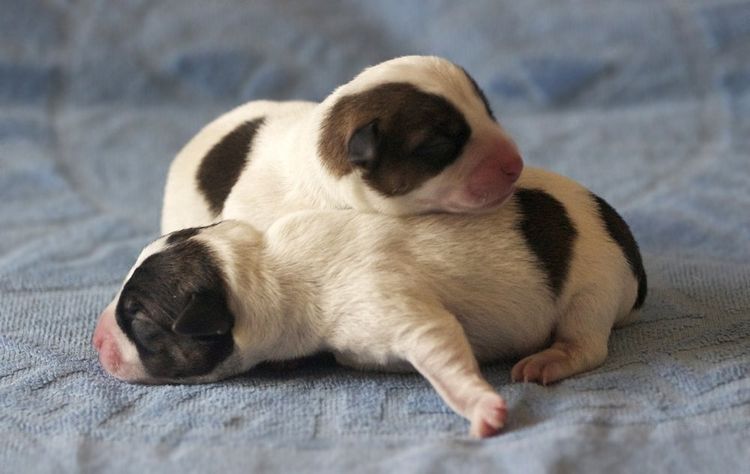
The mother usually eats the placenta immediately, which naturally stimulates further delivery. However, it's best to preserve all the placentas in cold water and then feed them to the mother one by one. This will help control their number and prevent the mother from overfeeding with protein, which can cause diarrhea in the first few days after birth. This is especially true for toy breeds.
Important! Because Chihuahua dogs Mothers usually give birth to more than one puppy, and they shouldn't be allowed to eat all the afterbirth at once. Otherwise, they'll develop digestive problems.
During a normal labor, there's no need to interfere. Simply observe and offer assistance if needed. You can also soothe her, gently massage her abdomen, stroking from her chest to her limp, and give her a little warm water.
Helping a dog give birth
Any manipulations with a whelping dog are carried out with gloves to prevent possible infection through fetal fluid or blood.
Assistance to a dog during labor may be required in the following situations:
- if you need to help a puppy that is stuck in the birth canal - when the paws appear, press the perineum down, wait for the head to emerge, grab the puppy by the scruff and pull lightly, but only during the next contraction;
- If the dog does not pay attention to the newborn, immediately open the amniotic sac, clear the mouth of mucus with a syringe, rub the puppy with a soft cloth, cut the umbilical cord (if the baby came out with the placenta) with blunt scissors 2 cm from the belly for small breeds and 4 cm for large breeds;
- If the puppy has been in the birth canal for a long time, which has led to a disruption of the respiratory function, the same manipulations are carried out as in the previous case, but if the puppy does not start breathing, then additionally a chest massage and artificial respiration into the mouth and nose through a napkin are performed, calculating the amount of exhaled air based on the volume of the puppy's lungs;
- If blood is coming out of the umbilical cord, pinch it with your fingers for half a minute or tie it with a thread 1 cm from the abdomen, and also pour hydrogen peroxide, iodine, brilliant green or a dark solution of potassium permanganate over it.
Important! You can clear mucus from a newborn puppy's mouth without using any tools. To do this, gently hold the puppy between your cupped hands, supporting the head with your fingers, and then quickly lower your hands. Repeat this movement several times, wiping the puppy's mouth and nose after each.
After the puppy has come to its senses, it is placed under the mother's care for licking and then placed on the nursing surface. Before the arrival of the next puppy, it is advisable to transfer the previous ones to a box with a heating pad.
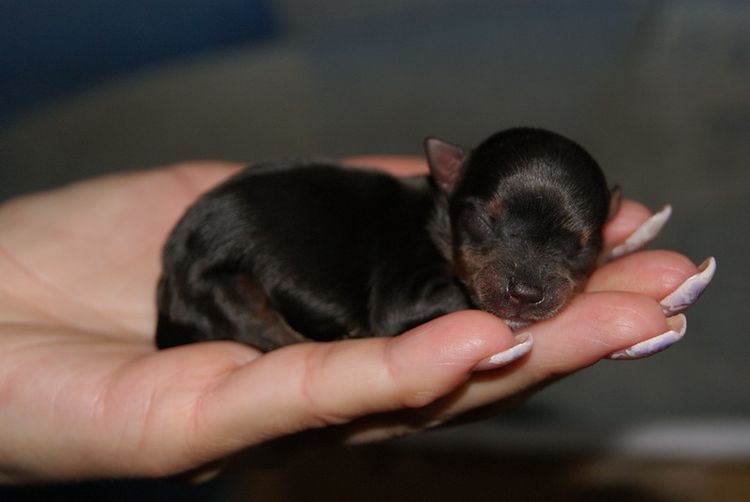
Possible complications
When placentas remain in the uterus longer than the prescribed time, this can lead to the development of inflammatory processes, which can lead to serious complications. The frequency and color of postpartum discharge may also indicate negative consequences. After birth, a reddish-brown bloody fluid will be discharged from the dog's vulva for some time, at intervals of 1.5 to 2 hours. This fluid increases during nursing. These signs of uterine cleansing are normal and should not be a cause for concern.
You should seek veterinary help in the following situations:
- the appearance of blood or dirty green fluid before the birth of the puppies;
- exceeding the gestational age;
- malpresentation of the fetus;
- complications with the birth of the first newborn;
- strong contractions without delivery for more than 2 hours;
- failure of the puppy to appear within 30 minutes after the water breaks;
- severe restlessness or lethargy in the bitch after the birth is complete;
- the appearance of puppies at intervals exceeding 2 hours;
- discrepancy between the number of delivered placentas and the number of puppies born;
- the appearance of stillborn, very small or very large babies;
- fever in dogs;
- absence of discharge from the vulva after completion of childbirth.
If the bitch's previous births were complicated or she is giving birth for the first time, a veterinarian's presence is highly recommended. They can correct a transverse presentation, perform massage to induce labor, administer any necessary medications, properly resuscitate the puppy, perform a cesarean section if necessary, and perform other procedures.
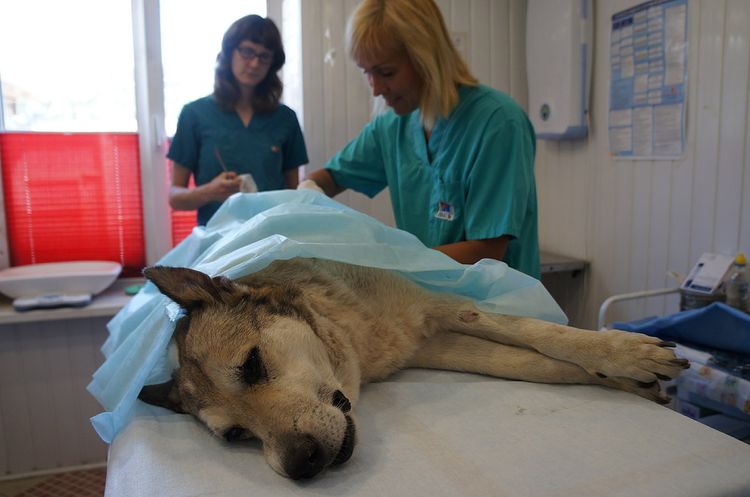
When performing a whelping without a veterinarian present, it's important to confirm the birth process is complete and all puppies have been delivered by palpating the mother for any remaining fetuses. If palpation is insufficient to obtain reliable results, consult a specialist. It's also a good idea to call a veterinarian even if the birth was successful. They should professionally examine the mother and the litter to rule out any complications and provide any necessary recommendations for the future.
Read also:
- Mating dogs: when and how to mate
- How to tell if a dog is pregnant
- How long does pregnancy last in dogs?



Add a comment