
How do cats give birth?
At seven months, a cat is already sexually mature and ready to breed. However, veterinarians advise against rushing into breeding and to wait until the cat is at least a year old. This will help avoid any unfortunate consequences and ensure the birth of healthy, well-fed kittens. However, the health of the offspring largely depends on how smoothly everything went. the process of childbirth.
Content
What to prepare
A cat's pregnancy lasts an average of 65 days. The natural culmination of pregnancy is birth. While it's generally believed that this process occurs instinctively, human assistance is sometimes necessary.
It's important to prepare for your pet's birth. Stock up on everything you might need in advance. Here's a list of essentials.
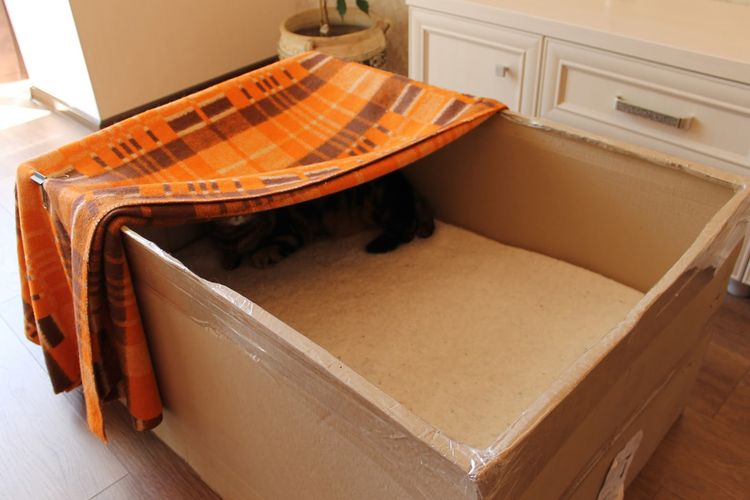
The box in which babies will be born
It could be a small cardboard box A crate made from small appliances. If you can't find anything suitable at home, special containers are available at pet stores. It's a good idea to line the bottom of the box with a blanket or paper towel; you'll need to change them during the birthing process. A bowl of water and food should be placed nearby, and a litter box should be easily accessible. The nest should be shown to the cat before the birthing moment, so the mother feels comfortable in it.
First aid kit
Although animal birth is a normal process and typically requires no human intervention, sometimes things don't go as planned. In this case, keep a first aid kit on hand with any medications you might need during the process, including:
- calcium gluconate (intensifies contractions, facilitates the process, improves lactation, restores calcium balance);
- oxytocin (stimulates labor);
- Vaseline oil (to lubricate the vagina to facilitate the passage of a large fetus);
- syringes;
- bandages;
- scissors;
- threads;
- sterile gloves;
- tweezers;
- disinfectants.
Veterinarian's phone number
Not every owner can provide the necessary assistance to their pet in labor. That's why it's essential to keep your veterinarian's phone number handy for emergency consultation.
Harbingers of labor
It's important to know at least the approximate date of conception to calculate the day your pet will become a mother. As the due date approaches, you should create the most comfortable conditions for your pet, try to keep it away from other pets and small children, and ensure it doesn't leave the house or apartment. Otherwise, you'll have a long search to find where the offspring were born.
Kittens rarely survive premature births. If your cat hasn't given birth within 75 days of conception, take her to the vet immediately!
Typically, a cat's personality changes a couple of days before the birth. She becomes restless, thoroughly licks her genitals, and begins looking for a secluded spot, sometimes hiding in a closet or under a blanket. Don't scold your pet; instead, show her the conditions you've created specifically for this occasion.
However, not all expectant mothers are so mindful. Some, especially those expecting their first litter, don't realize what's happening until the very last moment. Fortunately, though, an attentive owner can always recognize that kittens will be arriving very soon, literally within a day or two, by the following changes in their pet:
- enlargement of the mammary glands and secretion of colostrum;
- vulvar enlargement;
- lowering of the abdomen;
- decrease in body temperature by 1-1.5 degrees;
- loss of appetite;
- active movement of kittens in the womb, which is noticeable even with the naked eye when the expectant mother is sleeping or resting;
- passage of the birth plug;
- water drainage.
How to help an animal
Stray cats have stronger instincts than purebred cats. This is why labor is often easier for stray cats; the owner simply needs to be present to show love and care. However, sometimes, assisted labor is necessary. Reasons for this may include:
- Mild contractionsIn this case, gently stroking the pregnant woman's abdomen is recommended. Inserting a small amount of Vaseline into the vagina can also help. An intramuscular injection of oxytocin at a dose of 1-3 units is also considered an excellent labor inducer.
- The fetus is large relative to the birth canal. Lubricating the vagina with Vaseline may help. You can try to slightly widen the passage with your fingers and pull the kitten out. If this doesn't work, a cesarean section will be necessary, which we strongly advise against attempting on your own if you're inexperienced.
- Two kittens are stuck in the birth canal. The fetus is malpositioned.
- Congenital pelvic abnormalities. In the last three cases, only an experienced veterinarian can help, as surgical intervention is unlikely.
If you are unsure of your own abilities, do not try to help the animal yourself; it is better to contact a specialist.
After the kittens are born, the new mother begins to lick them; if this does not happen, the owner should wipe them with a napkin.
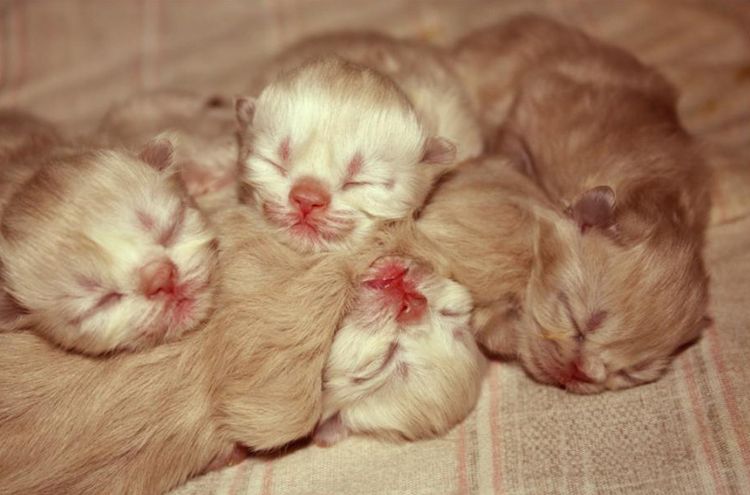
Cats typically chew their babies' umbilical cords themselves, but not all. Owners of such careless cats will have to cut the cord themselves. To do this, first tie it with thread 4 centimeters from the kitten's belly and carefully cut it with scissors, thoroughly disinfected.
Another problem kitten owners sometimes encounter is a cat refusing to feed them. Place the kittens next to the cat; perhaps instincts will take over. Otherwise, you'll need to stock up on cat milk replacer and patience, as feeding the little ones is a responsible, 24-hour process.
Read also:
- Why can't a cat give birth?
- How many days does a cat's pregnancy last?
- How to tell if a cat is giving birth: key signs


2 comments
WomensNews
The third and final stage of labor is the separation of the placenta, which is expelled spontaneously a few minutes after the kitten's birth. Many owners may not be aware that cats typically consume the placenta. Furthermore, such a "meal" can cause gastrointestinal upset in new mother cats.
Dasha is a veterinarian
Unfortunately, the placenta doesn't always pass on its own. There's a condition called retained placenta. Although it's not common, it does happen. Therefore, it's advisable not to leave a kitten giving birth alone. Firstly, you'll be able to intervene promptly and provide the necessary assistance. Secondly, you won't miss the birth of the placenta. And thirdly, you'll be able to prevent the placenta from being eaten. Indeed, the placenta can cause gastrointestinal upset. If even one placenta hasn't passed after the kittens are born, you should seek veterinary help. Otherwise, it can rot in the uterus, leading first to endometritis and later to sepsis.
Add a comment