
How to deworm a cat at home
People who are getting a cat for the first time often have a very vague understanding of pet care. One of the first and most important questions new owners face is deworming. How to deworm a cat, how often to do it, what side effects are possible, and what to look out for—all these topics inevitably raise a lot of doubts and worries.
We suggest taking a thorough approach: below you'll find detailed and clear answers to the most frequently asked questions about how to properly and safely treat worms in cats.
Content
- 1 How to deworm a cat at home
- 2 How to use anthelmintic correctly
- 3 Folk remedies for deworming domestic cats
- 4 How often should a domestic cat be dewormed?
- 5 How often should I deworm my domestic cat for preventative purposes?
- 6 Which dewormer is best for cats?
- 7 Is it necessary to deworm a cat before sterilization?
- 8 Diarrhea in a cat after deworming
How to deworm a cat at home
According to veterinary regulations, deworming should only be prescribed by a specialist. The doctor relies on test results that reveal the specific parasites present in the animal's body and the affected organs. Furthermore, the veterinarian considers the effects of specific medications on specific types of helminths and, based on this, selects the most effective and safe treatment regimen.

However, people often have to deworm cats at home, without qualified help. And the first thing you need to know if you find yourself in a similar situation is a list of medications suitable for deworming pet:
- Pratel.
- Drontal.
- Troncil.
- Milbemax.
- Polyvercan and others.
This is just a short list of medications suitable for deworming a cat at home. Below you can find the best deworming products, but now we'll cover the nuances of using these medications.
How to use anthelmintic correctly
For preventative purposes, this modern medication is administered once. It's best to perform the procedure in the morning. No preparation is required.
If deworming is of a therapeutic nature, the drug is administered twice, with an interval of ten days.
A cat needs to be dewormed if vaccinations are planned. This should be done ten days before the procedure.
The medication is also given to pregnant cats three weeks before lambing and the procedure is repeated five weeks after the birth of the offspring.
Deworming medications are not used on young kittens under three weeks of age.
Folk remedies for deworming domestic cats
Various folk remedies can also be used for treatment and prevention. The most popular among breeders include:
- Sugar solution. If your pet refuses to drink sugary water, you can give it to them with a syringe.
- Fennel or chamomile infusion. This infusion should be given to cats instead of water.
- Onion water. To make an infusion, you'll need an onion and a glass of boiled water. Chop the onion into the water and let the mixture sit for one day. Give this water instead of regular liquids. The recommended duration of this home "treatment" is seven days.
- Tansy infusion. To make the decoction, you need a tablespoon of flowers and a cup of boiling water. Let the infusion steep for one hour. Give the cat three times a day, one hour before meals.
- Wormwood tincture in alcohol. Dosage: 10 drops twice daily, one hour before meals.
- Carrot juice enema. Apply once daily. Duration: seven days.

Important! This home remedy for deworming a cat is for informational purposes only and is not a call to action. All cats are different, and each animal has its own unique body characteristics. It's quite possible that the home remedy that cleared your neighbor's cat of worms won't be successful in your case. Worse, your pet could suffer food poisoning or gastrointestinal upset.
How often should a domestic cat be dewormed?
Some cat owners believe that indoor cats don't need deworming at all. They argue that there's no way for an animal to become infected. However, this is a common misconception. Worm eggs can be transferred to a cat through dust alone. They can even be brought into the home from outside on the soles of shoes. Food can also be a source of infection. This is especially true for cats whose diet consists of natural foods.
In general, it's necessary to deworm a domestic cat. But how often depends on the situation.
How often should I deworm my domestic cat for preventative purposes?
For preventative purposes, deworming begins in male and female cats when they reach one month of age. This can be repeated three times a year. For an indoor cat, this is a normal interval. If the cat is an indoor cat but occasionally goes outside, the frequency of deworming can be increased to once a month.
Important note! After your pet turns one year old, it's sufficient to administer deworming medication twice a year for preventative purposes.
As you understand, all the given timeframes are relative. Much depends on the cat's environment, care methods, breed characteristics, and so on. Furthermore, the detection of parasites immediately disrupts scheduled deworming. A sick cat should be dewormed immediately. Remember, the medication kills live worms and does not affect worm eggs. Therefore, after ten days (the maturation period for worm eggs), the young generation of parasites should be "finished off" with a new dose of deworming medication. The dosage should be the same in both cases.
Which dewormer is best for cats?
The debate over the best deworming medication for cats never ceases. The debate centers on the effectiveness of various medications, the likelihood of counterfeit products, and the high price of deworming medications for cats.
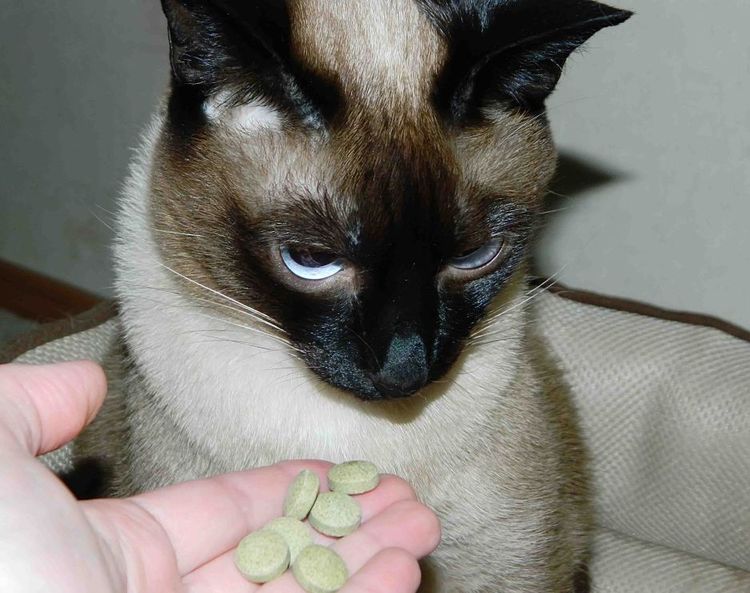
These are all significant factors, of course, but the crux of the matter lies in the degree of harm to the animal's body. After all, every cat owner wants an effective and safe remedy for their pet. Let's look at the most popular anthelmintics on the veterinary market:
- Milbemax – reviews are overwhelmingly positive. Its main drawback is its narrow spectrum. It's an excellent dewormer for indoor cats, but outdoor cats might want to consider something stronger. It also shouldn't be given to kittens under 1.5 months old.
- Prazitel, Prazicid, and Drontal are all popular, but weak, narrow-spectrum medications. They might not cure a cat found on the street. But that's not the main drawback. The downside of these medications lies in their popularity. They are often counterfeited, and counterfeit products are often of poor quality and toxic, which can kill a cat. However, Drontal is a deworming medication for pregnant cats, which is a definite plus.
- DirofenThe tablets gained popularity due to their versatility and effective use. However, the medication is not given to kittens under 1.5 months of age.
- Profender. As with the previous treatment, it is not suitable for small cats. The product is applied as a spot-on treatment. The effect is good and quite gentle. The amount of product to apply is calculated based on the pet's weight.
- CaniquantelOne of the most gentle medications. Due to this property, it is prescribed even to small kittens as young as three weeks old.
When purchasing any of the above-mentioned medications, be vigilant. The market for counterfeit anthelmintics is booming. Ask sellers for product certificates and don't hesitate to inspect the packaging before purchasing. Remember, a high-quality anthelmintic for cats won't be too cheap. Also, avoid buying medications from unreliable sources, such as classified ads or underground passages.
Is it necessary to deworm a cat before sterilization?
Deworming your cat before spaying is crucial. As soon as you decide to spay your pet, begin preparing for the unscheduled deworming immediately.
Please note that you should deworm your cat no earlier than ten days before the scheduled spay. However, if you dewormed your cat less than a month ago, there is no need to repeat the procedure.
Diarrhea in a cat after deworming
People often hear that antiparasitic medications cause diarrhea in cats, poisoning, and other illnesses, including death. Naturally, every medication is toxic to some extent, but the main problems arise not from the chemical components of the product, but from incorrect dosage or the wrong choice of medication. Diarrhea in cats after deworming is a different story altogether. Typically, diarrhea is caused not by the medications, but by dead, decomposing parasites. And for the cat, diarrhea in this case is a natural way of clearing the intestines of dead worms.
You can also ask our website's staff veterinarian a question, who will answer them as quickly as possible in the comments box below.
Read also:


7 comments
Larisa
Hello! Our kitten is 6 months old; he arrived here a month ago. Today, I stroked his back and tail and found two white worms (like noodles) on my hands. They were moving. They were probably roundworms. What should I do? How can I treat them? The kitten hasn't had any vaccinations since birth. Thank you.
Daria is a veterinarian
Hello! Examine your pet thoroughly! Are there any wounds? Look under the tail and the folds beneath the tail. There won't be any roundworms on the skin. Take your pet to the vet. If it's just roundworms, any anthelmintic for kittens will work (be it praziquantel, praziquantel, drontal, milbemax, or others). But examine your pet very carefully!
Love
Hello. My cat suddenly started vomiting heavily at 1:00 AM. She first threw up undigested food, then passed a thin, round worm about 8-10 cm in her saliva. She has been vomiting for about 14 hours now, and it's now bloody, but not scarlet, more like a brownish color. I've read a lot online, but I still don't know what to do. This morning, she tried to eat, ate some boiled bass, just the meat, and vomited about half an hour later. Then she vomited more saliva mixed with digested blood. I've been monitoring her, and she hasn't developed a fever. She's been lying calm for three hours now, even though she let me sleep for three hours this morning, and then it started all over again. Could you tell me if the vomiting stops, or if I can deworm the cat? Of course, it won't be right away.
Dasha is a veterinarian
Hello! If your cat has diarrhea, it's not recommended until the stool problem resolves. Vomiting can be treated with deworming (use a product for both flatworms and roundworms for more reliable results). Be careful with freshwater fish (they may also be parasitized). How often do you deworm? Remember to deworm every three months, even if your cat doesn't go outside. If the infestation is severe, deworm twice, separated by 10-14 days. If you notice any further alarming symptoms, consult your veterinarian for an IN-PERSON EVIDENCE. Monitor your pet's condition for the first 24 hours after deworming.
Julia
Hello!
Please recommend the best dewormer for my indoor cat. She's 11 years old and doesn't go outside. The last time she used a dewormer was probably six months ago.
And the second question: my cat follows me around for no apparent reason, sits on my lap, looks me in the eyes, and meows. How can I tell what she wants? She constantly climbs into my arms.
Dasha is a veterinarian
Hello! It all depends on what parasites you want to treat (just tapeworms, or a wider range of intestinal parasites) and the price range (some choose cheaper options, especially for a cat that doesn't walk, while others splurge and opt for expensive products like Drontal/Milbemax and others). It's also important to consider the animal's health. Weakened cats are prescribed certain medications, while stronger, healthier cats can benefit from stronger options.
Dasha is a veterinarian
Regarding behavior: something might be bothering your pet. It could be pain, or maybe she's just feeling unwell (what other symptoms could there be?). My cat, before I started giving her anthelmintics, also meowed constantly: at night, in the morning, and in the evening, constantly licking herself (but she's feral and won't be picked up at all). But after the deworming, she became much calmer, sleeping nearby, and letting me pet her. But I did give her Drontal (my cat is 10.5 years old, spayed, eats Hill's for spayed cats, and I'm confident in her health, so I calmly gave her a whole tablet of Drontal for cats). The next morning, there was a little surprise in the litter box, even though I regularly deworm her, and she doesn't go outside (that's what it's like to bring her in on your shoe). So, decide what you want: more expensive, cheaper, stronger, or weaker. You can take your cat to the vet for an in-person examination. After the examination, he or she will tell you which medication is best for her (she may be very thin, or she may be well-fed).
Add a comment