
How to train a dog to sleep at night
Many new pet owners face the problem of their pet's restless sleep and nighttime activity. Naturally, the dog can disrupt sleep for the entire family, creating a certain amount of discomfort. In this article, we'll explore why these issues can arise and how to train your dog to sleep peacefully at night without disturbing other family members with its activity.
Content
Sleep standards for dogs
On average, an adult dog sleeps about 14-16 hours a day, but the optimal duration of the rest period is different for each animal and can vary depending on parameters such as:
- age (for example, puppies sleep 20-22 hours a day, while older dogs sleep only 10-14 hours);
- size (as a rule, a St. Bernard or Shepherd requires more time to rest than a Spitz or York);
- level of physical activity (the more active, the longer the periods of sleep);
- satiety (it’s always more difficult to fall asleep on an empty stomach);
- ambient temperature and weather (like people, dogs may feel sleepy during rainy periods and be more active on warm, sunny days);
- health condition;
- emotional state.
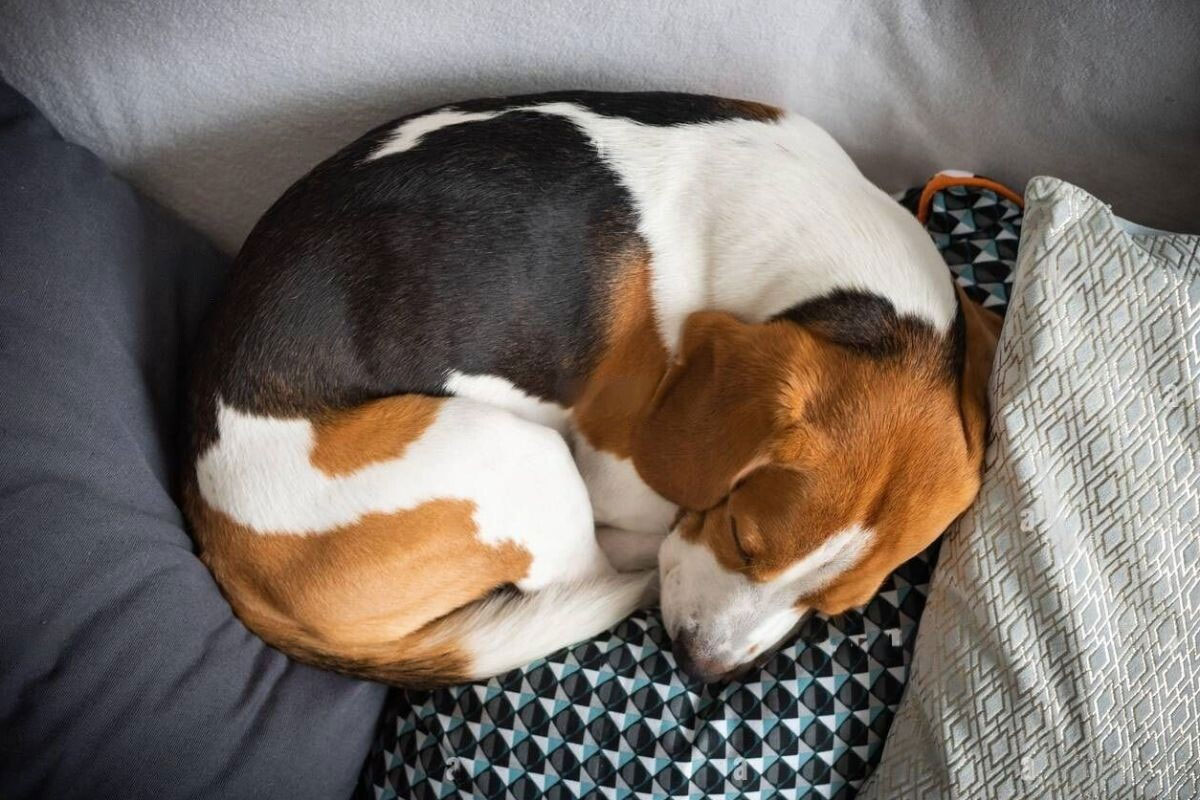
Sleep disturbances in dogs are indicated if the pet:
- does not go to bed after turning off the light in the room;
- sits on a bed or lies down, but does not fall asleep;
- sleeps very lightly (wakes up at the slightest rustle);
- is active (walks back and forth around the apartment, scratches with its paws, chews on toys, tries to wake up the owners).
Reasons for nocturnal activity
To understand how to put a dog to sleep, it is very important to understand what is preventing the animal from sleeping or causing anxiety.
The reasons why an adult dog or a small puppy doesn't sleep at night can be physical or psychological. Putting together all the factors identified by dog trainers, veterinarians, and animal psychologists, we get the following list.
Physiological causes of sleep disturbances
A dog may have trouble sleeping at night if:
- wants to eat (the reason is familiar to those who are trying to reduce the animal’s weight for medical reasons through diets or by limiting the amount of food);
- feels physical discomfort (she is simply uncomfortable being in the designated place);
- suffers from pain of any localization (the dog cannot tell that something hurts, and in most cases will not whine or otherwise demonstrate the problem);
- has a disease that affects the animal's nervous system and causes insomnia.
There are many ailments that include sleep disturbances as a symptom, so the first thing you should do is check your pet's health by visiting a veterinarian. If you notice that your dog isn't just awake at night, but is exhibiting dangerous symptoms (such as rapid or heavy breathing, light-colored mucus, or loss of coordination), a visit to the vet should be made immediately.
Psychological causes of sleep disorders
Like people, dogs may not go to sleep if they feel psychological discomfort or emotional imbalance.
So, it can be difficult to calm a pet and make it lie down if it:
- worries about the owner leaving (separation anxiety);
- is happy about the owner's late return and wants to play;
- feels an emotional uplift after a visit from guests;
- is experiencing stress after some incident that caused severe fear or pain;
- is afraid of something (for example, being in an unfamiliar house).
Please note! Psychological causes of insomnia can only be diagnosed after medical issues have been ruled out. Therefore, it's essential to take your dog to the veterinarian first and only after their approval proceed with the treatment methods described below.
How to train a puppy to sleep at night
If you're bringing home a baby under three months old, you should gather your strength in advance and prepare for several sleepless nights. Finding yourself in a wonderful home without a mother, the person they've known since birth, and the siblings they've been surrounded by, the baby is guaranteed to be anxious, waking up frequently at night, "calling for Mom," and searching for her.
Caring breeders, who know exactly how to easily train a puppy to sleep peacefully at night in a new place and not whine when alone, usually provide a small cloth with each new puppy that retains the scent of its "nest." Placing this simple gift in its new place will make the puppy feel much more at ease.
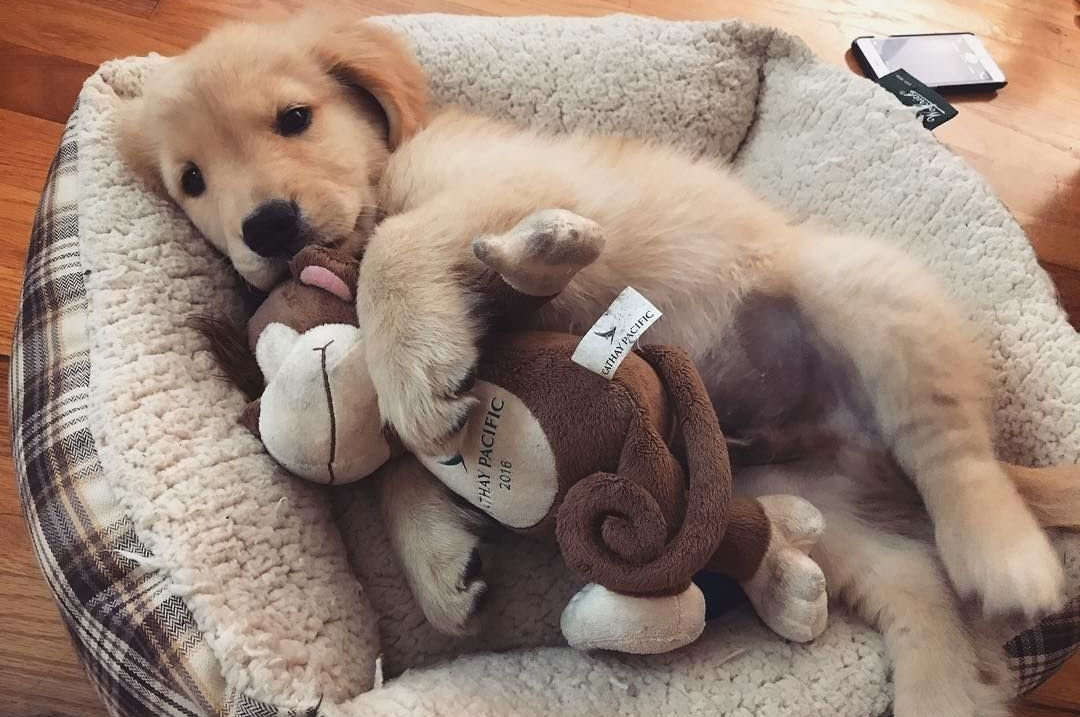
Another way to make your puppy comfortable is to give him a large stuffed animal or a warm heating pad that he can snuggle up to at night, just like he snuggled up to other puppies at home.
Of course, there's always another option: putting the puppy next to you. But if you're not prepared to sleep with your dog forever, you shouldn't do this during the first few days of his arrival. Training your puppy to sleep in his place will only take a few days of persistence and patience, whereas weaning a dog off your owner's bed will be much more difficult and time-consuming. We wrote about this in more detail in the article "How to stop a dog from sleeping on the bed".
So, let's summarize what to do if a small puppy won't let you sleep at night:
- Tire your baby out thoroughly with games, communication, and walks.
- Feed your dog a large meal shortly before bedtime (water should be available to the dog at night).
- Create a comfortable place (if possible, with the smell of your baby’s home and a soft toy).
- Create a calm atmosphere in the room (dimmed lighting, no noise or loud sounds).
Important! If your puppy comes at night and tries to get your attention, don't react. Once you've achieved your goal, your puppy will reinforce the unwanted behavior, perceiving your gentle affection as a reward for his nocturnal activity.
How to train an adult dog to sleep in one place
If sleep problems occur in an adult animal, it is especially important to understand why the dog is not sleeping at night and, if possible, eliminate the underlying cause of insomnia.
Experienced dog handlers give the following advice:
- Create the most comfortable corner for your dog, where it will feel comfortable and safe.
- Increase your pet's physical and mental activity.
- Try to exhaust your dog physically and emotionally in the evening.
- Teach your pet the “place” command (but don’t use it as a punishment).
- Feed a large meal before bed (the digestion process makes you sleepy).
- Try to remain calm (the dog looks at you and easily reads your emotions, associating your experiences with the night period).
- Don't scold your dog for being active at night; it may not understand the reason for your sudden aggression.

We also invite you to share your experience by leaving information in the comments about how you managed to train your puppy or adult pet to sleep at night and what caused your nocturnal activity.
Read also:
- How to stop a dog from chewing shoes
- Why do dogs bark and attack cars?
- How to stop a dog from chewing wallpaper


Add a comment