
How to potty train a dog outside
Many new dog owners ponder how to potty train their dog outside. We offer a detailed look at the specifics of potty training and understand the most common causes of problems that arise at different stages of a pet's development.
Content
Optimal age
The first question that arises for owners who have recently acquired a pet is at what age is it best to start toilet training outside.
Important! The optimal age to safely walk your puppy outside is after the vaccination program has been completed and the required quarantine period has passed. We recommend reading the article "When and what vaccinations should puppies receive?".
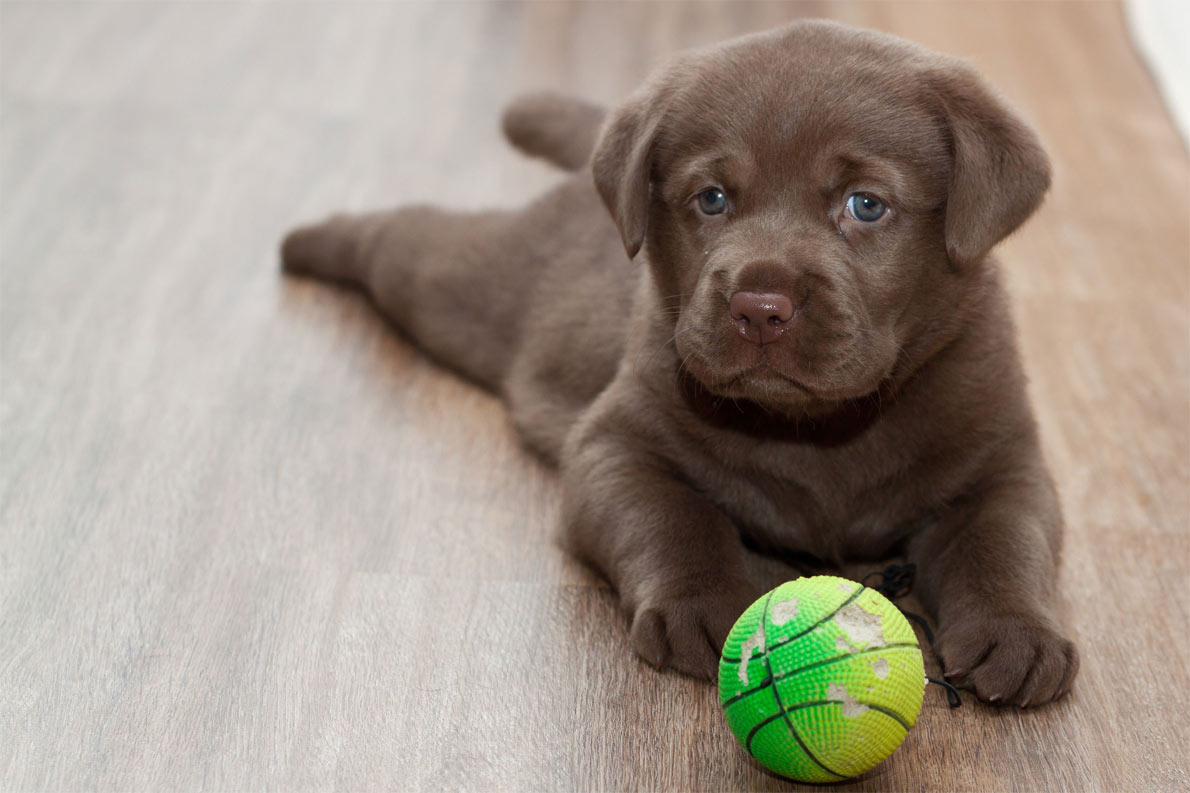
Until the puppy's mandatory vaccinations are complete, their entire world is their apartment. Even if you have a country house, you shouldn't take your puppy, whose immune system is fragile, out into the grass. Veterinarians and experienced breeders recommend actively introducing the animal to the idea of their indoor toilet during this period. diaper Or a litter box. It's also a good idea to teach the dog to go to the toilet "on command," which will help quickly communicate the owner's wishes. This can be any special word, such as "do it," which should be repeated each time the puppy settles into the litter box. Learn more about... How to potty train a puppy Read the materials on the website "Usatiki".
Thus, for most babies, their first walk in life may take place closer to 4 months, but if the vaccination process is delayed, the pet may not leave the house or apartment for up to six months.
Tip! The sooner you start potty training your puppy outside the house, the easier the transition will be. Owners have found that weaning an adult dog from going to the bathroom indoors is much more difficult. It will be even more difficult if time is wasted and the growing dog develops the habit of spraying indoors.
So, we've figured out that the optimal age is the 4th month of life, although with patience, even an adult pet who has never been outside before can understand that it is possible and necessary to do "its business" outside.
Tray or street
As a puppy, your dog will go to the bathroom significantly more often than as an adult. If you're not prepared to walk your dog 5-6 (and sometimes more) times a day, then it's best to opt for a universal solution—both a litter box and outside. The main task during the growing stage is to teach "don't shit" in the wrong place.
If you remove all the diapers from the house and suddenly start explaining to the puppy that he now needs to relieve himself outside, even a previously well-behaved puppy may start peeing in the wrong place. And he won't do this out of spite, but simply because he doesn't understand where he should relieve himself in the house anymore, and he hasn't yet learned to ask to go outside.
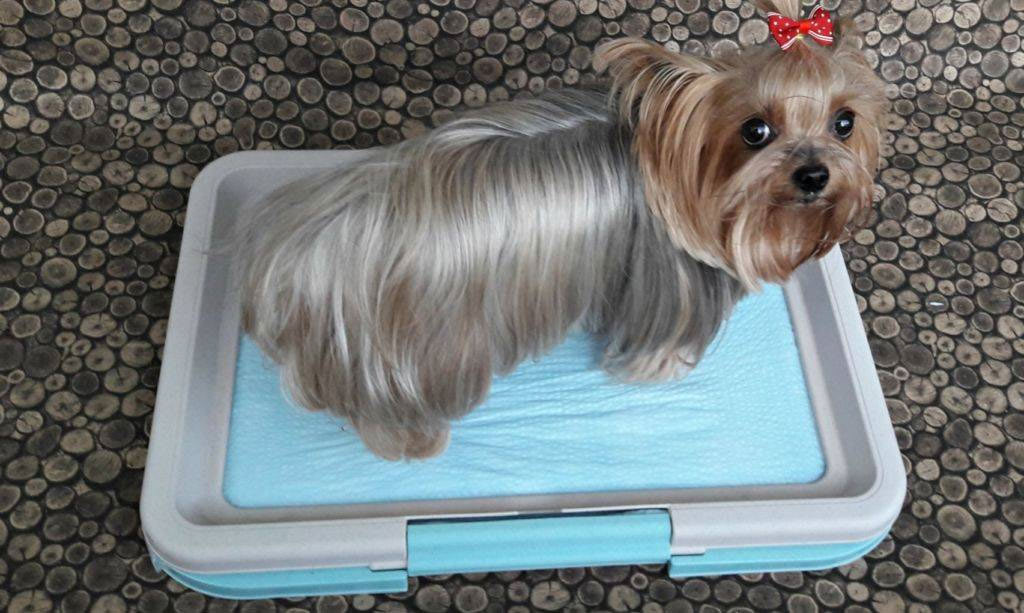
As a rule, with age, most dogs that have enough time outside will give up the diapers on their own, but as a “safety net” option, it’s worth keeping the indoor toilet, especially if this is the first stage of training them to go outside.
On an ongoing basis diaper or a tray should be provided for a dog if:
- your little "mini" (the body characteristics of the smallest breeds are such that even an adult dog cannot tolerate 6-8 hours between walks);
- you work and do not have the opportunity to walk your pet 3 times a day;
- there are health problems that do not allow the dog to take such a long break (with many diseases, the dog will be forced to relieve itself very frequently).
By the way, there are reusable diapers, which you can read about on this website.
Training algorithm
When the time comes to learn to do its business outside the house or apartment, take your puppy out for walks more often, aiming for it to go potty. It's worth mentioning right away that there's no one-size-fits-all advice, as every animal is different. Some adapt easily to these new norms, while others stubbornly try to "bring everything home," viewing the outdoors as purely a fun activity.
This is where the previously learned command will help, indicating to the puppy that the owner is asking him to go to the bathroom "on the grass." Experienced breeders also offer the following advice:
- Establish a strict walk schedule. At first, your puppy will definitely not ask to go, as it's easier for him to pee on a pad or simply in a secluded spot. But if walks are frequent and long enough, the puppy will quickly learn to tolerate them.
- The first walk should be immediately after waking up, but no later than 7:00 a.m. Only adult dogs can hold their walks longer in the morning, and not all of them.
- If you want to completely eliminate the need for a toilet in the house, you need to walk your puppy 5-6 times a day, gradually reducing the number of walks to 3 or even 2 as an adult.
- Pay attention to your pet's preferences. Outdoor dogs also prefer certain toilet spots, so try to adhere to this ritual.
Tip! There's a "golden" rule: babies need to go to the toilet after napping, eating, or playing actively. Use these little tricks, trying to catch the "right moment" and rewarding every "opportune moment."
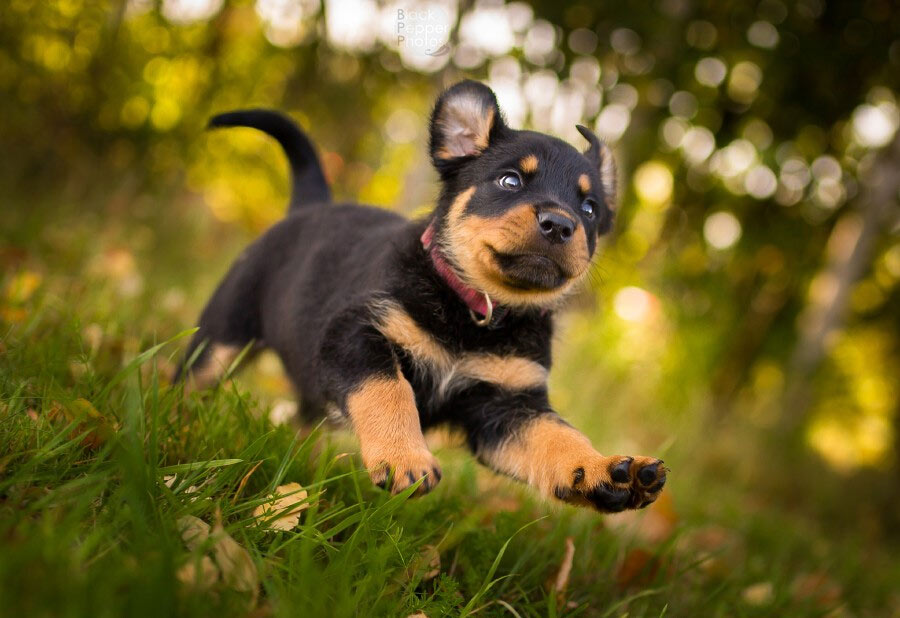
Naturally, a certain negative reaction should be added to this if the child manages to pee in the wrong place at home.
Refusal to walk outside
There's also a category of puppies that, regardless of how long they're out for a walk, will "carry" everything home to a comfortable diaper (or simply to a secluded spot).
There may be several reasons for this behavior:
- Fear. First walks can be scary for a puppy, as there's so much new and unknown around. It may take a few days for the dog to feel more confident outside.
- Emotions and many distractions. During the training phase, try to walk in areas where there are no other animals. This will help the dog focus on the world around him.
- Lack of activity. Inactive puppies don't need to go potty as often, so it's best to start a walk immediately after a long nap, without letting the puppy eliminate on the pad.
- Carrying your puppy for walks. This is a common practice with many small dog owners. Allow your puppy to explore the world without being picked up for as long as possible.
- A strong bond with the pad. This problem often arises when training an adult dog to go outside. While this is a good thing, as it ensures there won't be any mistakes at home, it also means the pet won't want to do anything outside. A "pad trick" can help. You can take the dog's usual toilet outside, encouraging him to do his business on the pad, but outside the house.
Important! Remember that to achieve the desired results, whether training a puppy or an adult dog, regular walks and "successes" outside, as well as patience on the part of the owner, are essential.
It's also worth keeping in mind that "mistakes" at home aren't always the dog's fault. If puddles appear frequently, and your pet goes to the bathroom several times a night, it's worth consulting a veterinarian for a health check. This can often be a symptom of various kidney problems in dogs.
Puberty
Owners often complain that a healthy, outdoor-trained pet begins to pee indoors. It's important to distinguish between "regular puddles" and "marks," which are noticeable and can be left by both male and female dogs.
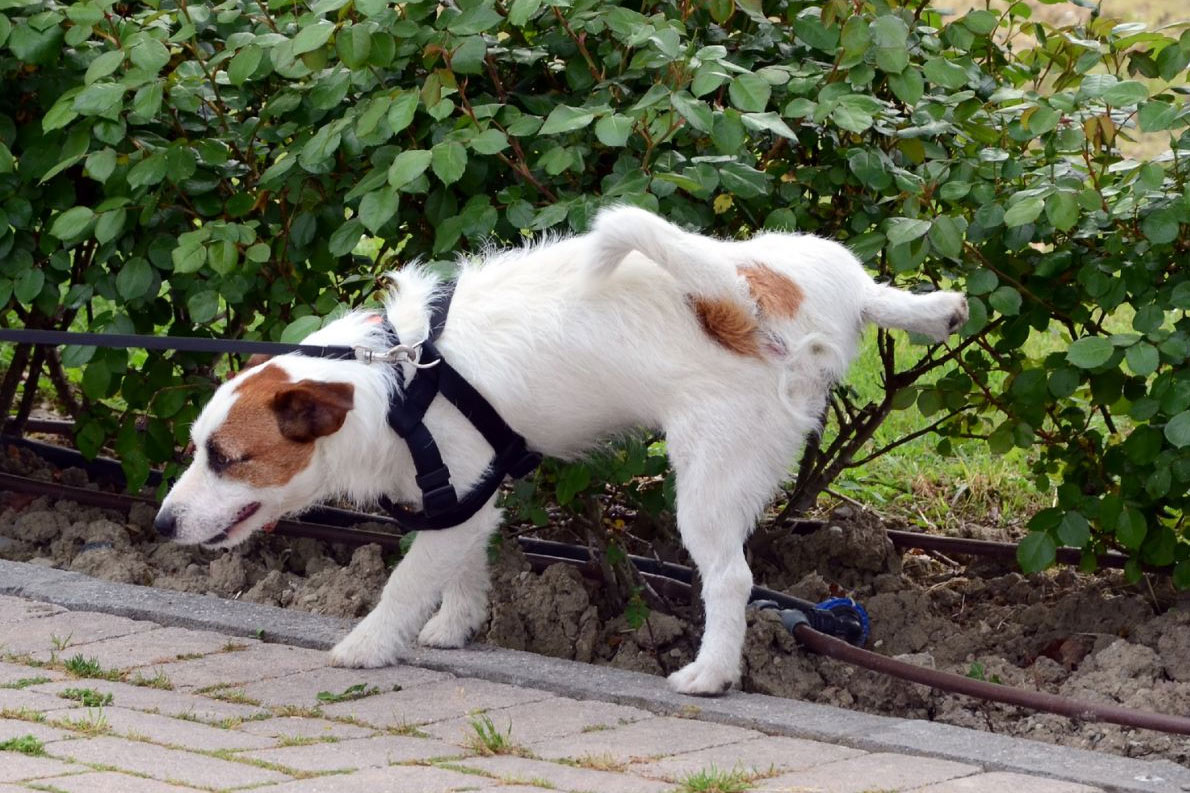
There may be several reasons for a dog marking at home:
- insufficient walking;
- unformed habits (this type of behavior needs to be corrected immediately; if the habit becomes ingrained, it will be extremely difficult to break);
- the presence of a "walking lady" somewhere nearby;
- presence of a competitor in the house (apartment);
- the appearance of a new (stranger) person in the house.
Girls who regularly "do their business" outside may leave "surprises" during or before the start of their heat period.
What to do with an adult dog
An adult dog that simply hasn't been trained to go potty outside in the past is a more challenging task, but it can be trained. Spread newspapers all over the floor, then leave only those the dog has used. Take them outside, place them on the grass or snow—the dog will quickly understand what you want. Over time, the indoor trips will stop.
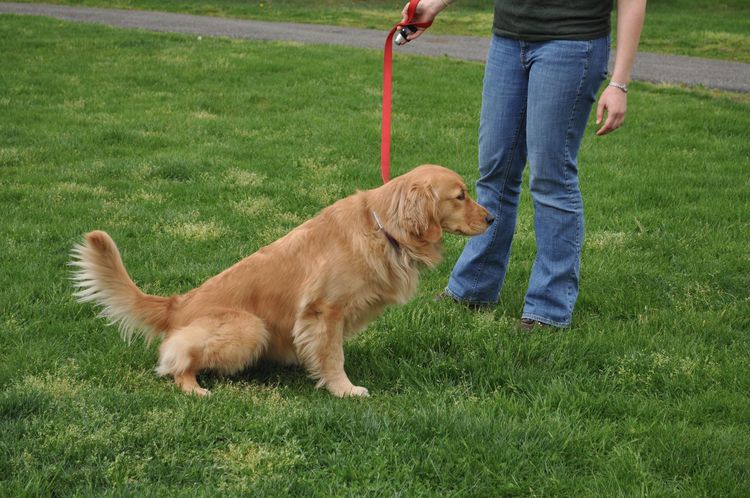
Sometimes toilet problems become a problem for adult animals as well. If your dog has always defecated outside and suddenly starts doing so indoors, especially more frequently, you should consult a veterinarian; this could indicate an infection. Don't be surprised if your dog goes to the bathroom indoors if it's not walked regularly—a three-a-day schedule is essential; twice is not enough.
It's also important to remember breed characteristics. Some animals may intentionally wander around the house to prove something to their owner, or out of spite. When training a dog of any age, avoid violence to avoid building anger. If the animal doesn't understand you and doesn't complete the task, seek a different approach, and with time, you'll be able to achieve your goals.
Read also:
- Walking the dog correctly
- Dog carriers: what types are there, how to choose one, and where to buy one?
- We are accustoming the dog to its name


Add a comment