
How to train a dog to use a litter box
Before getting a puppy, responsible owners research specialized websites, purchase toys, and stock up on food. But as soon as a new family member arrives, the question arises: "How do I potty train my dog?" While it's true that those living in a private home can let their puppy outside at any time of day, if the apartment is on the ninth floor, potty training can be a major challenge. Experience shows that potty training is entirely possible.
Content
Choosing a Litter Box for Your Dog
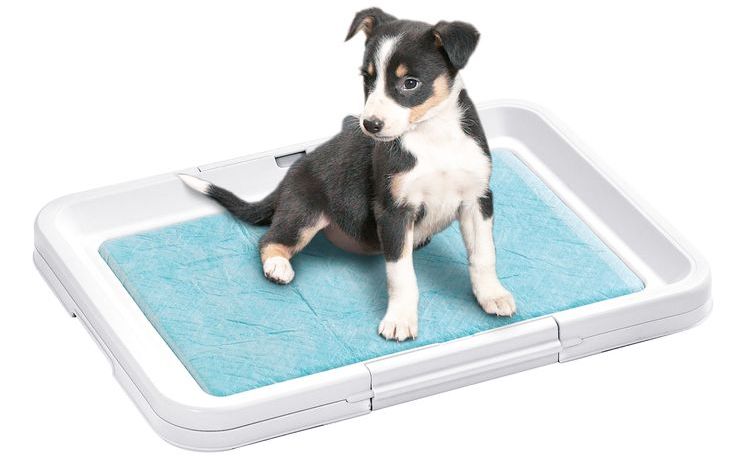
Since it's easiest to train a dog to use a litter box in an apartment during the very first days, it's best to purchase the necessary equipment in advance. The most common mistake is buying a litter box designed for cats. This is because dogs don't need to bury their excrement, and a deep box with filler It can be used as a sleeping place. A regular, flat box with low sides is best. More advanced models are available at specialty stores, which will make the training process much easier.
Trays with artificial grass covering
This option is excellent for potty training an adult dog. Unlike puppies, adults already clearly understand that grass is the proper place for relieving themselves.
If your pet doesn't like artificial grass, you can start by purchasing a meter of natural grass rolls from a gardening store. The natural scent will attract your pet.
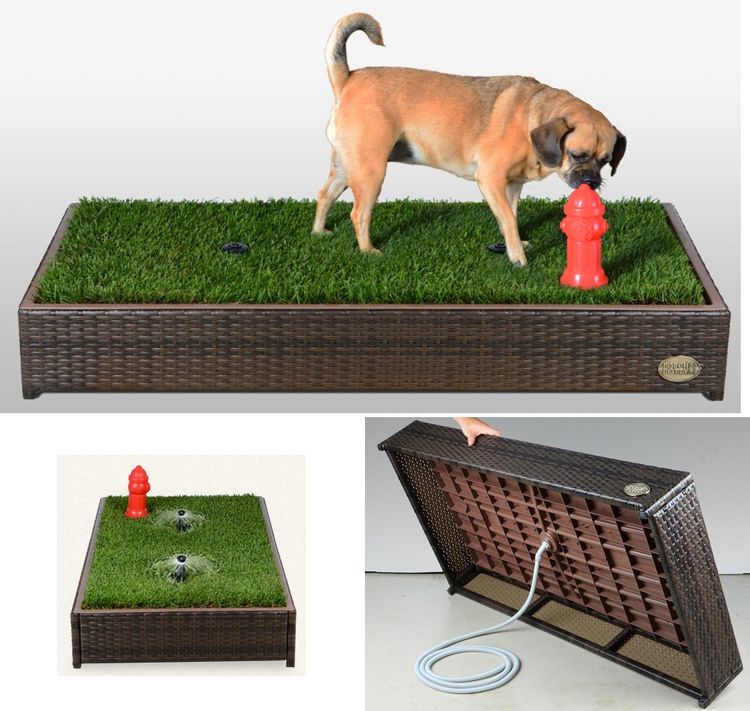
You can also buy a special spray with a special scent at a pet store that will mark the artificial grass as a toilet.
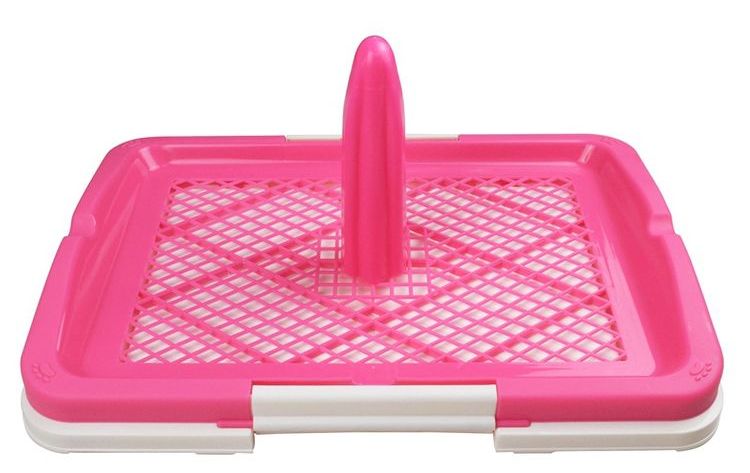
Pallet with a column
For male dogs, it's a good idea to purchase a flat area with a central post. To teach the dog that, unlike other vertical furniture and decor elements in the apartment, only one post is allowed to "mark," take the toilet outside. After the dog urinates on the "special" post, it should be returned to the apartment. It's best not to wash the post for the next few days. Its own scent will be the best signal for the dog.
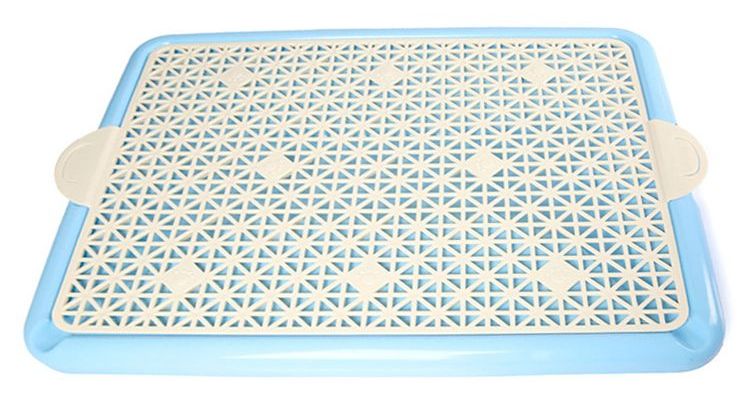
Flat toilet with grate.
This option is suitable for female dogs of small breeds. Initially, you can place a piece of natural turf underneath, but gradually the animal will learn to eliminate directly on the grate.
It's also worth considering the optimal location of the litter box. Dogs aren't as clean as cats, but at the same time, they're unlikely to want to relieve themselves right next to their bedding or food bowl. Keeping the litter box closed in the bathroom isn't a good idea either, as the animal needs access to the toilet at all times (and keeping the door to such an intimate area open all the time is unlikely). A hallway or balcony is the best option.
Tip! If the apartment's space doesn't allow you to place the litter box and toilet in separate rooms, you can set up boothThe animal will be quite happy to relieve itself in a nearby tray.
Basic rules for toilet training a dog
Since it's impossible to housetrain a dog overnight, it's essential to stock up on special veterinary-grade diapers for the initial training period. Don't worry about your dog becoming lazy and not wanting to retrain—puppies are very reluctant to eliminate on their own. It's also important to follow certain rules daily.
- Train your puppy to a certain schedule.
By arranging feedings at regular intervals, you can roughly estimate when your pet will need to go to the toilet. It's best to place young puppies on the litter box 15-20 minutes after eating, while adults should be placed on demand.
- Don't forget about praise.
As soon as the animal uses the litter box (even with the owner's help), it's important to give it a treat, a toy, or to express approval through your behavior. The pet must understand what's expected of it.
- Monitor your pet's behavior.
At the beginning of the training process, you'll likely have to take your dog to the litter box yourself. Therefore, it's important to observe your pet's behavior. It's time to go potty when your dog starts sniffing corners and furniture legs and circling restlessly around the room.
How to behave if the dog does not use the litter box?
Be prepared for the training process to take several weeks. Naturally, during such a long period, some mishaps may occur. It is strictly forbidden to hit or "poke" the animal for defecating outside the litter box. The pet will develop a fear of the process itself, and instead of going to the designated area, the next time the dog will seek out a hidden corner. All that is required of the owner is to thoroughly remove traces of urine and feces using a special enzymatic cleaner.
Tip! Since dogs like to relieve themselves in places that already smell of their urine (especially males), you can wipe up any mess in the wrong place with a special pad and place the cloth in the tray. Chances are, next time your dog's nose will "lead" you to the correct spot.
To litter train a dog, you need patience, cleaning supplies, and pads. Consistency and praise will help teach your dog to eliminate in the right place.
Read also:


.jpg)
Add a comment