
How to house train a dog
When getting a guard dog, owners expect it to live outdoors, either in a crate or a kennel. However, there are times when a dog flatly refuses to enter the kennel. Forcibly driving a dog into the kennel and locking it there, hoping it will eventually acquiesce, or punishing it for disobedience is unwise; such actions will only cause stress and worsen the situation. It's important to understand the reason for your pet's reluctance to live in the kennel, try to address the underlying issues, and gradually acclimate it to the outdoors.
Content
Why doesn't the dog want to be in the kennel?
There are various reasons why a dog may categorically refuse to enter its kennel, even in bad weather. Here are the most common ones:
- Your pet inherited the kennel; another dog lived there before. The scent of the "stranger" may still linger, which can cause irritation and discomfort for many animals. The solution is simple: thoroughly clean the kennel and replace the bedding.
- A "home" can be uncomfortable because it's too small or too large. A cramped kennel will leave a dog's paws or head constantly sticking out, while a small dog will feel cold and uncomfortable in a huge kennel.
- A dog that previously lived in a city high-rise and then moved with its owners to a country house or dacha will not immediately agree to trade its familiar soft sofa in a large, spacious room for a mat in a "small" kennel.
- If your dog was previously homeless and was then adopted and lived happily in a city apartment for some time, your pet may feel that it is no longer needed and is being thrown out onto the streets again.
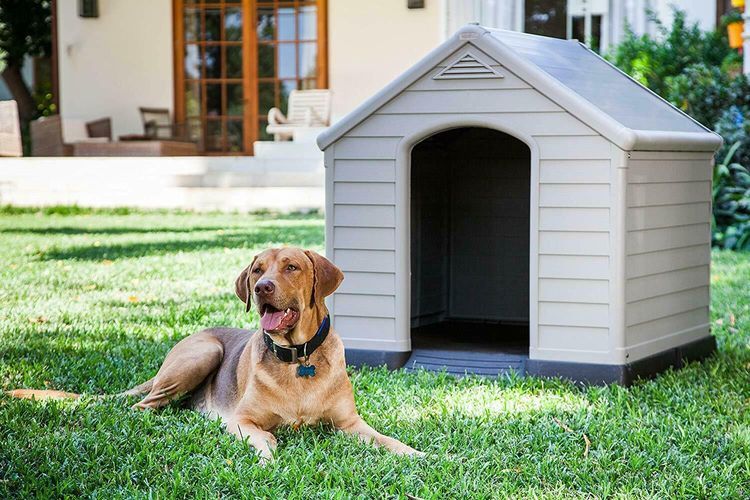
There are dog breeds whose purpose is to be companions, to live alongside humans. These breeds include the Dalmatian, beagle, Labrador. They are not suited for life outside the home; housetraining them and using them as guard dogs is useless and inhumane.
Setting up an outdoor shelter for a dog
When building a dog house in your yard, the first step is choosing the material and calculating the dimensions correctly. Wood is the most common choice for a dog house: it's durable, easy to work with, and has excellent thermal insulation properties. Its only drawback is its relatively short lifespan. Plastic is also an option; it doesn't rot, doesn't require painting, and is easy to clean. Metal is not recommended for a dog house, as it conducts heat well, potentially causing your dog to overheat in hot weather, while a metal house will be too cold in winter.
The entrance to the kennel should be one and a half times the height of the animal, and the roof should be securely protected from precipitation. If necessary, the walls of the structure can be insulated with foam or felt, and to provide thermal insulation for the floor, the house can be placed on legs or a wooden pallet.
It's a good idea to provide bedding inside the doghouse. Hay, straw, reeds, or wood shavings are commonly used (but not sawdust, which is fine as dust), as they retain heat well. While this type of bedding can harbor parasites over time, it can be easily replaced. Using an old jacket, mattress, or blanket as bedding is not recommended, as the fabric quickly becomes damp, requiring frequent drying and airing.
Choosing the right location for your guard dog's home is also important. The kennel should be located close to the house, so the dog can see people entering and leaving. The location should be well-lit, but not completely exposed to direct sunlight; ideally, under a canopy or tree.
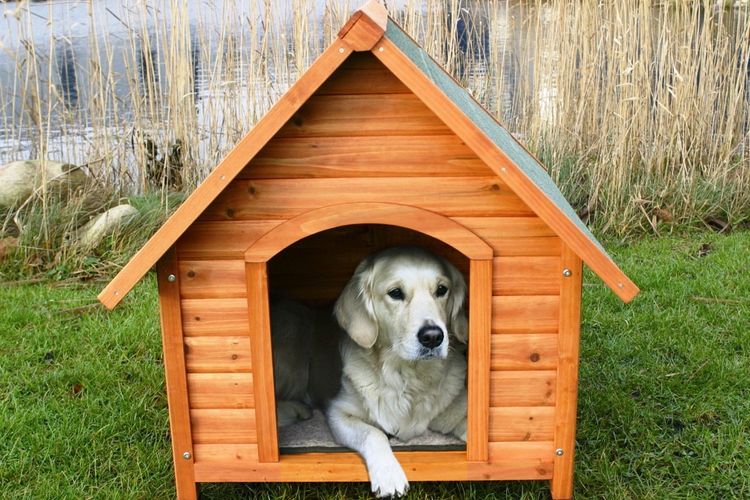
How to train a dog to live in a kennel
Every dog has its own personality and preferences. If your dog only comes into its kennel when it's raining or snowing, and even sleeps outside in fine weather, there's no need to do anything. A kennel is designed to protect from the elements and heat. But if your pet stubbornly ignores its home despite the extreme conditions, try giving it time to adjust and help it acclimate to its new surroundings.
It's best to acclimate your dog to a kennel or crate during the warmer months, as spending long periods outside in winter can be stressful for your dog.
At first, it's recommended to leave the dog outside the house near the kennel for half an hour or an hour, but bring it inside at night. You can put a couple of the dog's favorite toys or an old T-shirt of the owner in the kennel so the animal smells familiar. Even brief visits to the kennel should be rewarded with praise or a treat. Your pet will quickly learn that living in the kennel is pleasant, and frequent interaction with its owner will reinforce positive emotions.
Dog breeders know that the younger the dog, the easier it is to acclimate it to a crate or kennel. Older animals, who have lived in city apartments for many years, have difficulty adjusting to a new home, especially one located outdoors. Pedigree also plays a role in adaptation time: guard dog puppies adapt to a kennel very quickly.
Read also:


Add a comment