
How to potty train a puppy using a pad
When deciding to get a dog, it's important to understand that your pet will require a lot of attention. Your four-legged friend not only needs to be fed regularly and properly groomed, but also needs to be trained. One of the key, yet most difficult, steps is training the dog to relieve itself in a designated area. This process typically requires patience, consistency, and time from the owner.
Content
Options for setting up a dog toilet
There are three main ways to set up a dog's toilet. The appropriate option is chosen based on the owner's personal preferences, as well as the animal's breed, age, and temperament. If the puppy was acquired from a breeder, using its familiar toilet layout will help it adapt more quickly to the new environment and simplify the training process.
For large dogs, walking is often the only option for relieving themselves. This isn't very comfortable for the owner, so before adopting a large-breed puppy, this issue should be discussed with the owner of the animal's parents.
One popular type of dog litter box is a litter box. Made from a plastic tray with sides, it's convenient to use, easy to clean, and aesthetically pleasing. It can be used with litter, artificial grass, or a pad. This type of litter box is well suited for puppies and small dogs.
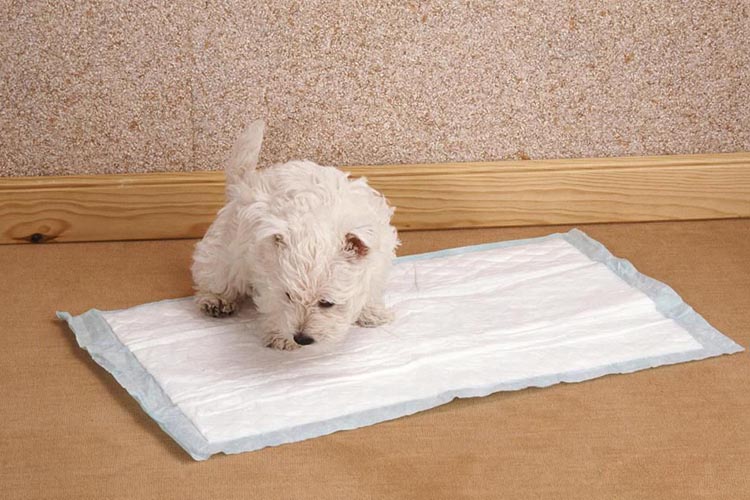
A universal toilet option for dogs is a special pad, a multi-layer absorbent pad. This hygiene product is suitable for animals of any size and can be used both continuously and periodically when the dog is unable to go outside: during travel, during illness, or during the post-operative or post-natal period.
Types of diapers
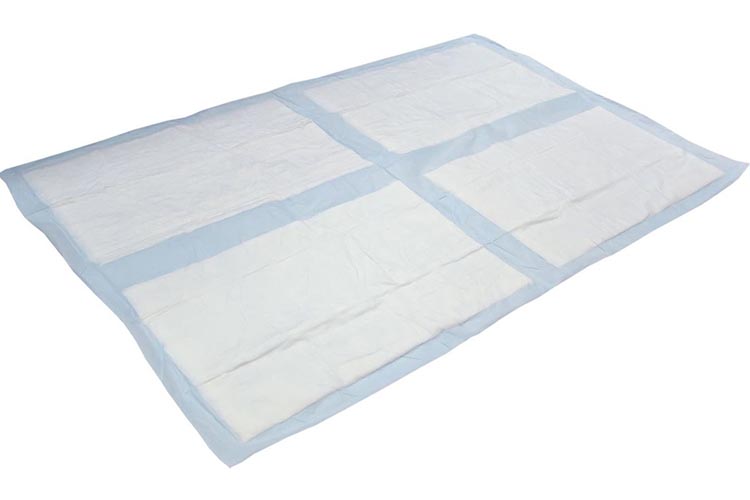
The dog diaper works on the same principle as diaperIts outer layer, usually made of a soft semi-synthetic material, is highly permeable to moisture, while the bottom layer is waterproof. Between the outer and inner layers is a filler, most often cellulose, activated carbon, or gel-like polymer granules. The litter mat can hold up to 3 liters of liquid, and even then, its top surface will remain dry.
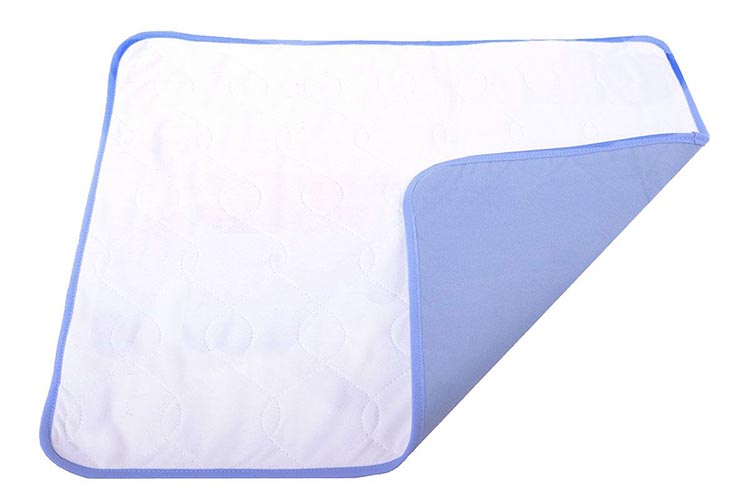
There are two types of dog pads: disposable, which are thrown away after use, and reusable, which are washed with warm water, dried, and reused several times. A wide range of these products is available today, with prices varying depending on the type, softness, and size. For example, 30 disposable pads measuring 60x60 cm, made of hypoallergenic material, cost around 500 rubles. reusable diaper 40x60 cm costs 200–220 rubles.
Among the types of hygienic dog diapers, the following are popular: Talismed, Magic Pet, Peligrin, U-TEK, and All-Absorb.
How to potty train a dog using a pad
The sooner you start training your pet to use a litter box or a pad, the sooner you'll achieve the desired result. With puppies, this is much easier than with adult dogs, who already have established behavioral habits: retraining is always more difficult than teaching. But in any case, you should start training your dog to use a pad from the very first day it comes home. This training involves much more than simply "introducing" the puppy to a personal toilet area by poking its muzzle into it.
During the "adaptation" period, it's best to remove soft flooring from all rooms. Puppies often choose soft flooring for their bowel movements, and if a puppy manages to pee a couple of times on a soft, comfortable, and urine-absorbing carpet, it will be very difficult to break the habit.
It's best to choose a toilet location based on your dog's preferences (if possible). Typically, this is near the entryway, under the balcony windows, or in the bathroom. If this "shared choice" isn't possible, it's a good idea to initially restrict the puppy's access to a designated area with a special pen or construct a barrier from improvised materials.
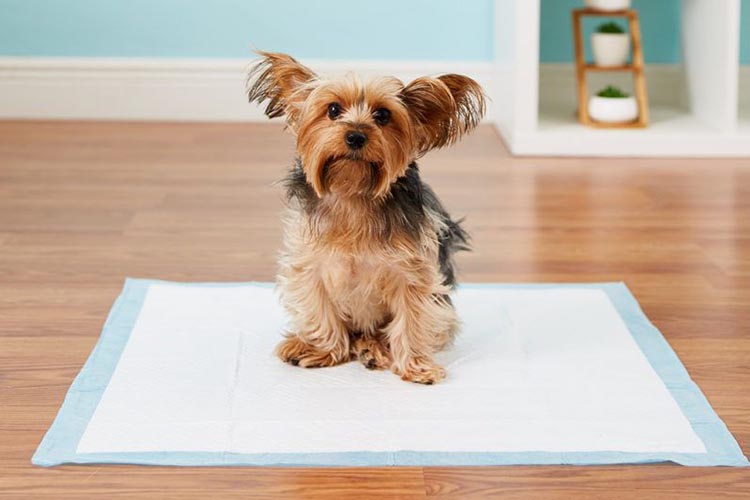
The height of such a barrier should be such that the puppy cannot jump over it, but a person can easily step over it. There should be nothing soft in this fenced area except a litter pad. The dog will naturally choose this pad rather than the bare floor for its natural needs.
If the new resident of your apartment has unlimited territory and access to all rooms, during the potty training period, the puppy's owner will need to learn to recognize when it's time for their pet to go potty. Typically, this occurs after meals, sleep, and active play. The little dog will become restless, squatting, whining, and intensely searching for what it considers to be secluded corners. If these signs are detected, the puppy should be quickly taken to the designated area.
The psychological factor is especially important in the process of toilet training a puppy. Dogs are very sensitive to their owner's emotions. Therefore, remember to praise your pet after every successful toileting session, and if you notice a puddle on the floor, explain in a moralizing tone that they did something wrong. Never show aggression, such as yelling at the dog or hitting it. This can have serious psychological effects on the animal, ranging from developing an inferiority complex to a severe disorder such as coprophagia (eating one's own feces).
Potty training a puppy by month
Toilet training is a gradual process that depends directly on the puppy's age. It's important to consider your pet's physiological needs and not push them beyond their capabilities.
House training a 1-month-old puppy
At one month of age, a puppy is not yet able to control its urination and defecation. It can relieve itself anywhere, and this is normal. Scolding or punishing your pet is not recommended—this will only slow down its adaptation.
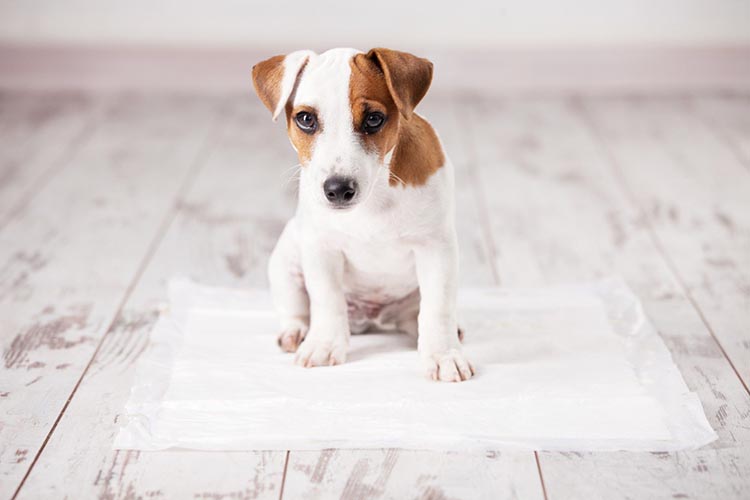
To begin potty training, it's recommended to remove rugs, newspapers, and other soft objects from the floor that the puppy might mistake for a toilet. The floor surface should be non-slip; if necessary, cover it with an easily cleanable surface. Place the pads in several places around the room, preferably near walls, furniture, doors, or windows, avoiding drafts. It's helpful to observe where the puppy most often goes to the toilet and place the pad there. At this stage, it's acceptable to cover most of the space with pads.
House training a 2-month-old puppy
By two months, the puppy begins to relieve itself less frequently, and training becomes more deliberate. Some of the pads are removed, leaving them only in designated areas. It's important to monitor the puppy's routine: most often, the puppy needs to go to the toilet after sleeping, eating, and active play. If the puppy persistently chooses an inappropriate spot, it can be treated with a special deterrent spray, after thoroughly washing the floor without chlorine. Placing food and water bowls in "off-limits" areas can sometimes help. Mistakes are acceptable at this age; they are not punished, and successful attempts are always praised.
House training a 3-month-old puppy
At three months, a puppy is already capable of remembering rules. It is regularly placed on a pad after naps, feedings, and playtime. Any "mistakes" are immediately cleaned up, eliminating the odor with special products. If the puppy is caught in an inappropriate place, it is carefully transferred to the pad. You can use a urine-scented wipe placed on the puppy's bedding to reinforce the association. Shouting, punishing, or poking the puppy with your nose is strictly prohibited—this causes fear and interferes with learning.
Special means
Veterinary stores sell special products that will facilitate the process of training your dog to relieve itself in a designated area. The first category includes deterrents, the smell of which is very unpleasant for dogs. These can be used to discourage dogs from urinating on the carpet or leaving a puddle under the sofa. The second category includes products with a scent that encourages dogs to relieve themselves in the designated area.
Examples of anti-odor products designed to discourage dogs from defecating in inappropriate places include Mr. Fresh, Antipis, and Antigadin. Popular sprays in the second category include Savic PUPPY TRAINER, Baldecchi, and Simple Solution.
Training aids
The process of housebreaking goes faster with the use of special dog sprays. They come in two types: scented and repellent. These products help either attract a puppy to the toilet area or, conversely, designate areas where it is forbidden to relieve itself. Attracting sprays are usually applied to the puppy's pad twice a day and allowed to sniff. The scent encourages the puppy to choose that area rather than the floor. Repellent sprays have an unpleasant odor, so the treated areas remain clean.
The right product is usually selected through trial and error, as there is a wide range of such sprays. If necessary, consult a veterinarian or animal behaviorist to select the most effective option.
The use of such devices is not mandatory. Much more important is the owner's consistent efforts to help the pet understand where it is allowed to relieve itself.
There are cases where a dog that has successfully completed the "young fighter course" and regularly uses a pad for toileting stops using it and urinates anywhere. This behavior may be caused by an underlying medical condition, so the first step is to take the dog to the veterinarian. However, if the pet is healthy, the behavioral disorder may be triggered by puberty, when the animal experiences the need to mark its territory. In this case, the owner will need to increase the number of walks outside to allow the dog to satisfy this instinct.
Read also:


Add a comment