
How to litter train a male or female cat
When bringing furry pets into the home, it's important to think through and organize all household details: where and what to feed them, how to quickly train an adult cat to use a litter box, etc. Owners need to be mentally prepared for the fact that training can take quite a long time, often due to stress from the animal's new environment.
If a cat previously familiar with using a litter box comes into the house, it will quickly figure out where it is in the new apartment. However, with cats adopted from a shelter or found on the street, difficulties may arise. However, a calm, confident, and patient owner will make the training process as quick and comfortable as possible.
Content
Peculiarities of training an adult animal
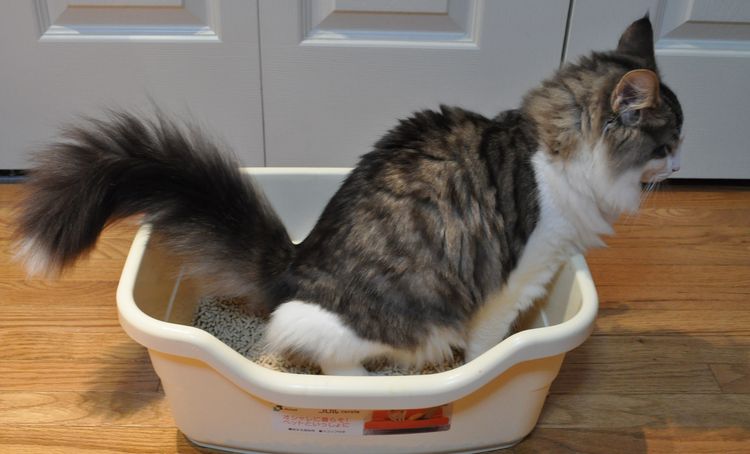
Cats are naturally capricious and fussy creatures, and they are very delicate and meticulous when it comes to their litter box. Hard-to-reach corners are ideal for their litter box. Therefore, it is recommended to close off areas under cabinets, armchairs, or behind sofas during the cat's adaptation period. It is a common misconception that training an adult female cat to use a litter box is easier than training a male cat, but this is not true. Provided the cat is spayed, there are no significant differences.
Every cat has its own personality traits that must be taken into account when litter training. Difficulties often arise with adult cats, who have already developed certain toilet habits. For example, a cat accustomed to living outdoors may consider almost any bush or other hidden place a toilet.
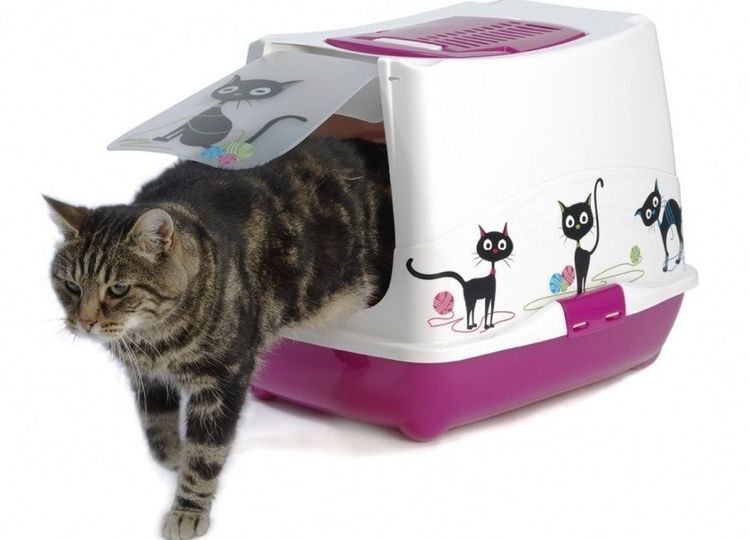
One of the important criteria for the location of the litter box is its accessibility to the animal. The most suitable locations are considered to be the bathroom in the apartment, as well as an insulated loggia. It is not recommended to install a litter box in the hallway or kitchen, as this is inconvenient and unhygienic. However, there is one exception: if the cat chooses a specific location. closed type toilet, in the form of a house, then it can be left in almost any room, including the hall.
During the adaptation period, it's advisable to limit your pet's range to one room. This is because they'll likely want to mark their new territory, making potty training more difficult.
How to choose a litter box and filler
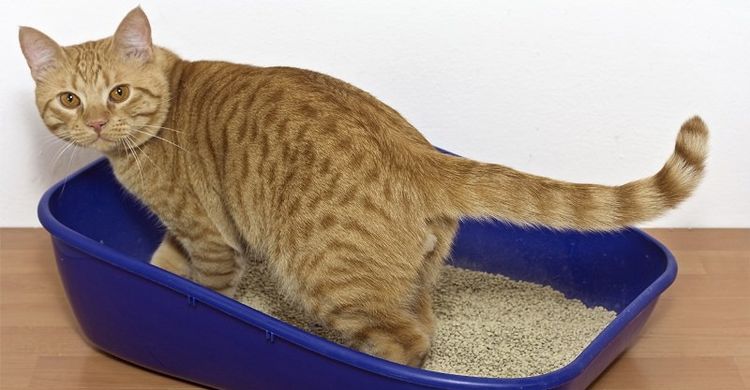
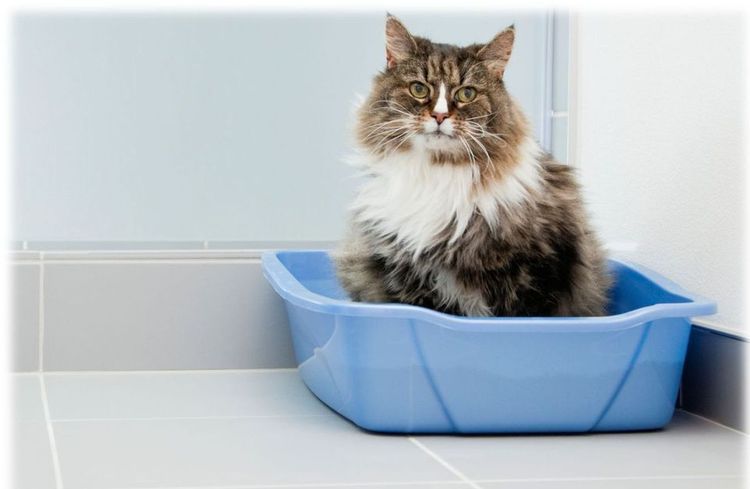
It's difficult to determine in advance what type of litter box an adult cat will prefer. Generally, plastic litter boxes with high sides (at least 10 cm) are recommended. You can ask previous owners about their cat's litter box setup or ask shelter staff for advice.
The width and length of the litter box should be appropriate for the cat's size, allowing it to safely bury its waste. High sides will help keep the apartment clean and prevent litter from spilling.
A litter box is better for a cat in terms of psychological comfort. The roof and walls completely conceal the animal during intimate activities. However, this type of litter box may be less convenient for owners, as the boxes are difficult to clean. However, they do have special filters that absorb unpleasant odors if the litter box isn't cleaned promptly.
One of the most common types of litter boxes is a plastic box with a special removable mesh liner. Whether it's suitable for a particular cat can only be determined through trial and error. Some cats will avoid using a litter box with used litter, lest their paw pads get wet.
Don't underestimate the role of litter. Sometimes it accounts for 95% of the success of the training process. For animals from the street or shelters, wood or mineral litter is most often suitable, rather than silica gelChoosing a familiar formula will help train a stray cat to use a litter box faster.
Important! When changing filler types, do so gradually, mixing the new mixture into the old one to avoid a sudden transition.
Step-by-step training algorithm
Animals often intuitively understand the purpose of a litter box. If this doesn't happen, they need help. To quickly train an adult cat to use a litter box, first of all, you need to abandon even the thought of physically harming it.
Cats are naturally very intelligent and can easily understand their owner's tone of voice when they're upset with their behavior. Therefore, poking their muzzle into a puddle or a mess on the floor is clearly incorrect behavior, which will only exacerbate the animal's stress and make the training process more difficult and time-consuming.

So what steps should you take to litter train an adult cat as quickly as possible?
- Watch your pet closely during the first hours and days of its arrival in the apartment. Typically, animals begin to feel the urge to relieve themselves soon after eating. They become restless and begin looking for a secluded spot. Signs may also include sniffing corners and scratching the floor with their paws. At this point, pick up your cat and take it to the toilet, and if successful, be sure to praise it for its good behavior.
- If the moment has passed and a puddle of urine or feces remains on the floor, it should be collected and transferred to the litter box. If the cat was adopted from outside, it is recommended to sprinkle its urine with sand and then transfer the collected mixture to the litter box. This will help the cat locate its waste area by smell. The floor should be immediately thoroughly washed with a strong-smelling detergent, a mixture of water, vodka, and vinegar, or water with a few drops of citrus essential oil.
- If your pet is stubborn and relieves itself in an area completely unintended for this purpose, you can leave the litter box there temporarily. However, once the cat begins regularly urinating and pooping in it, the box itself should be carefully and smoothly moved toward the area originally intended for its placement.
- It's not recommended to leave shoes on the floor, as their scent can inadvertently trigger a pet to mark. Strong odors of laundry detergents or other chemicals also repel cats.
- If a cat previously lived in the apartment, it's important to thoroughly clean the area where its litter box was located. A new pet can recognize this scent even after several years, meaning it may want to mark its territory.
- To assist in litter training an adult cat, special sprays are used to encourage it to go to the toilet in a specific location. There are also repellent scents designed to treat previously marked areas of the apartment.
If, despite following all the recommendations, the pet continues to defecate throughout the apartment, it's important to rule out any underlying physiological issues. This behavior may be caused by inflammatory processes in the reproductive or urinary tract. Cold and off-season periods are the most favorable for inflammation to develop. Once the underlying condition is treated, the soiling problem may resolve on its own.
Read also:
- Possible reasons why a cat has stopped using the litter box
- How to litter train a kitten
- How to adapt a cat to a new home or apartment


4 comments
Natalia
I've been fighting with my cat for a year. I bought a new litter box and keep an eye on him, but when I watch him, he jumps out of the box and when I'm doing my business, he does his business on the floor. I don't know what to do anymore and how to train him.
Daria is a veterinarian
Hello! Perhaps you don't like the litter. Some cats are very picky about litter (it smells, it's too hard, and it's uncomfortable for their paws). The litter box may be too shallow or, conversely, with too high sides. Perhaps it's too short. You're probably cleaning the litter box with chemicals, and it smells. Sometimes you don't like the place where you stand (it's a high-traffic area, and cats need peace and quiet). Areas where they defecate should be washed with special deterrent solutions (available at veterinary pharmacies). If the cat isn't neutered, it's a form of marking. It's possible that they're taking revenge for something. Don't punish the animal; analyze the situation. But a year is a long time.
Oksana
Good morning.
I have a problem with my cat.
My husband, knowing I wanted a cat, brought a baby cat home through some "friends" in the neighborhood. She's not even a year old yet, maybe eight or nine months old. She's a scared, downtrodden, and very thin creature. She refused to eat, slept near the balcony, hiding (there are blinds there), and occasionally drank water. She arrived on September 5th. Currently, she sleeps with us on the bed, lets us pet her, cuddles, purrs, and responds to her name. She doesn't eat very well. Her appetite is on and off. She has mood swings.
Sometimes you can really tell she's not feeling well. A ton of fleas—one big flea. Drops, a collar...they can't get rid of them yet...we don't want to wash her, so as not to scare her even more. She's still skittish. She's disoriented—she jumps over shadows, knocks her head over real obstacles. She lands on her side while jumping...She goes to the toilet in one place, not the potty, although she digs and buries it like all meowers. After such a trip, she hides, feeling guilty.
Questions…
How to get rid of fleas without causing psychological trauma by washing her in the bath.
How to treat scratched areas from fleas.
How to train to use a litter box.
What deworming medications are suitable for a young cat with a weakened immune system?
She has worms. Pet stores, as usual, recommend the same medication. I read reviews, and they say cats are sick from them.
Please help me if possible.
Daria is a veterinarian
Hello! Regarding fleas: there are special combs with fine, long teeth. Comb your cat; fleas and their larvae will get stuck between these teeth, where they attach themselves to the fur. Comb out as much as possible. Save some money and buy a GOOD flea treatment: a collar and some drops or spray. Constantly wet clean your home, including flea treatment.
The skin will heal on its own once the fleas disappear and the diet is restored.
Regarding worms: you need to know what your local veterinary pharmacies offer. I could dictate medications, but yours doesn't carry them. So what are they suggesting? Any medication, even the most expensive, can be harmful to an animal. Individual intolerances are possible. Alternatively, you could find topical drops that will kill not only fleas but also intestinal parasites (though they won't kill all of them, they'll certainly kill most of them, allowing for a full deworming treatment in a month).
As for litter box training, it's a case-by-case matter. You can place the litter box in the area where she defecates, so she gets used to it. The litter may be off-putting (especially if it's not sawdust or sand, but sophisticated hydrogel granules that swell). They will have a strong odor unfamiliar to your pet. Try adding sand or at least compressed sawdust. Let her get used to the litter box itself. Although, after a month, your pet should have gotten the hang of it. Treat the area where she regularly defecates with special products to eliminate the odor and discourage her from going there again.
Add a comment