
How to train a cat to use a scratching post?
Training a cat to use a scratching post is perhaps the second most important aspect in raising a pet after litter trainingThis is the only way to protect wallpaper, sofas, and other furniture from sharp cat claw marks. Typically, the breeder (the mother cat's owner) does both before selling the kittens, as kittens are much more willing to imitate their mother and learn from her.
But if the question arises of how to train a kitten to use a scratching post, it is necessary to pay attention to several important nuances.
Content
Why do cats scratch furniture and wallpaper?
Cats sharpen their claws and damage furniture not to annoy their owners, nor for fun or play. This method removes the callused portion of the claw, cleans it, and keeps it healthy and sharp. Another function of this procedure, dictated by nature, is marking territory. Special glands secrete a secretion through the paw pads that only the cat's nose can detect. Furthermore, after sleep, cats need exercise, so they cling tightly to something and stretch, thus stretching their muscles. Sharpening their claws is a natural habit in every cat, whether a lion or a domesticated cat.
The most suitable age to train a cat to use a scratching post is childhood, because the older the animal, the more difficult it is to fight its established habits.
How to train a kitten to use a scratching post?
So, you've got everything your kitten needs in your home, including a scratching post. How do you get your kitten used to the post? How do you get them to scratch their tiny, but very sharp claws on it? The most important thing is to introduce the post to your kitten on its very first day in the house.
You can attract the kitten's attention to the post through play, teasing it with a feather or string by running it along the upholstery. Kittens are very playful, so scratching posts with balls or various toys attached to them make the process much easier. As soon as the kitten begins scratching its claws on the post, praise it and reward it with something pleasant—petting it, accompanying the contact with affectionate words, or giving it a treat.
In addition to training your kitten to use a scratching post, you should also make it clear to them that scratching other objects in the house is strictly prohibited! To do this, at the slightest attempt to dig their claws into furniture or wallpaper You should raise your voice to draw the cat's attention and gently pat its paws, perhaps with your fingers, as it's about to scratch the upholstery. The key is not to hit it, but to make it clear that such behavior is unacceptable. A regular spray bottle can also be a good aid in the educational process—by discreetly spraying the cat, you'll instill in it the idea that scratching the furniture is a "heavenly punishment." However, don't get too carried away—water is a severe punishment for them.
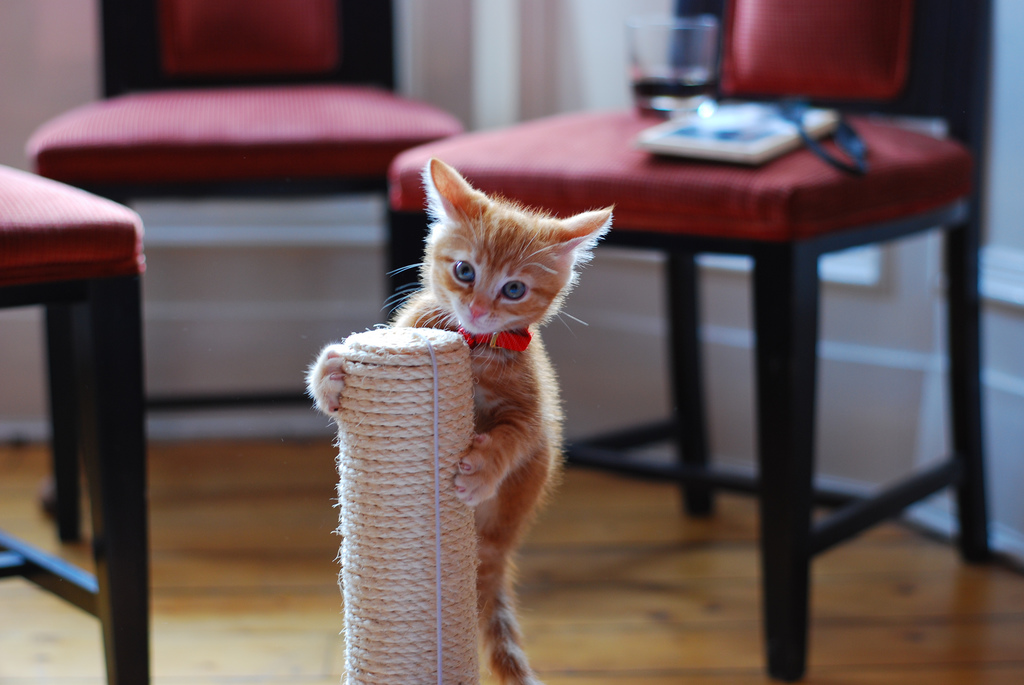
Cats are very intelligent animals and quickly understand what's expected of them. With patience and positive reinforcement every time the kitten sharpens its claws on the scratching post, you can see results within a week.
How to train an adult cat to use a scratching post?
Things are a bit more complicated when the owner is faced with the problem of how to train an adult cat to use a scratching post. After all, you'll have to somehow explain to the animal that it's no longer allowed to scratch the furniture or carpet, and draw its attention to the new, unfamiliar object. This requires persistence and cunning.
What should you pay attention to when choosing a scratching post?
The first step is to choose the right blanket so your pet will love it. Several important details will help you choose the right option:
- The cat's favorite way to sharpen its claws (this could be a particular corner, horizontal, or vertical surface). Based on this, a scratching post in the form of a post, mat, or corner is selected at the pet store.
- Stability of the scratching post—a model with a heavy, wide base is ideal. If it shifts or suddenly falls under the cat's weight, the animal will become frightened, which is unlikely to help with training an adult cat to use a scratching post.
Cat claw sharpening structures are very diverse, and a play structure with various platforms, shelves, tunnels, and hanging toys is an excellent choice. A multi-tiered scratching post will be a favorite spot for your cat, as it offers a high perch for sleeping, playing, and sharpening its claws. While such a scratching post is quite expensive, it will help preserve your home's decor and save you money on new furniture.
Where to place a scratching post?
Initially, the best location for the scratching post is the spot your cat already likes to sharpen its claws. Initially, the sofa or corner of the wall should be covered, or, if possible, the cat's access to these areas should be completely restricted.
Do everything you can to attract your pet's attention to a new piece of furniture like a scratching post. How do you train your cat to scratch there? First, call your pet to the post or entice it with a game. Place its paws on the surface and gently press them so that the cat extends its claws into the upholstery. Speak to it kindly, praise it, and give it its favorite treat. It's unlikely that your cat will understand what's going on the first try, so be patient and repeat this process several times a day. Every time your pet tries to scratch in an inappropriate place, pick it up and take it to the scratching post. Run its paws over the post again, teasing it with a toy to encourage it to extend its claws into the upholstery. And reward it each time for the correct response.
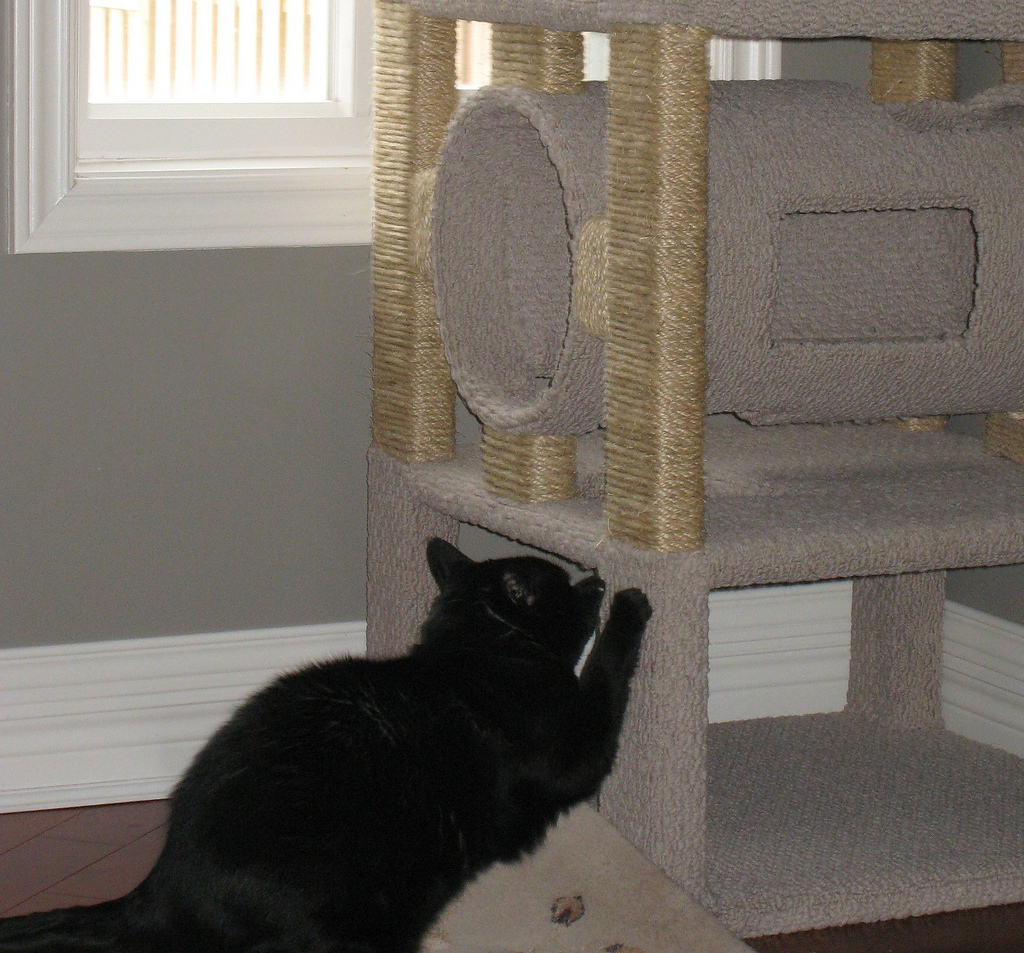
Over time, once the problem of how to train your cat to sharpen its claws on a scratching post has been solved and the correct habit has been developed, gradually move the scratching post to the place you previously chose for it.
If your cat lives in a large house, it's best to get several scratching posts and place them in different locations. One of them should definitely be placed near the area where your pet sleeps or spends most of its time.
How else can I attract the cat's attention to the drap?
If you're still struggling with the dilemma of how to train your cat to use a scratching post, try treating the post with catnip (Catnip cataria). Cats love the scent of this plant—it's sold in pet stores, both dried and in sprays, and is used to attract them. A sharp citrus scent can also help repel your pet from your sofa or wallpaper. A few drops of lemon juice applied to your cat's favorite scratching spots will keep them away for a long time.
The key to this is persistence and consistency. Don't expect success on the first try. Remember, you can achieve your desired result with a little patience and kindness.
Read also:
- Master class on making a scratching post
- Dog diapers: how to train
- Cardboard scratching post for cats


Add a comment