
How to house train a cat
The question of how to housetrain a cat has become rhetorical for many cat owners. Having brought home a tiny, meowing bundle, you're confident the kitten will live by your rules. But it's not to be—the sweet little one almost immediately begins to demonstrate its independence. You create what you consider a wonderful, cozy corner for it, but it ignores all your efforts and settles into a tattered box on the balcony, settling at the foot of your bed at night.
You can resign yourself to the rules your pet imposes. Or you can insist on your own and train this cheeky creature to behave properly using proven methods.
Content
- 1 How to house train a kitten
- 2 What to look for when choosing a house
- 3 Owner-Tested Training Strategies
- 4 Tips on how to train your cat to sleep in a house
- 5 Table: Strategies for Arousing Interest
- 6 Delayed Sleep: A Smooth Transition to Sleep
- 7 Adaptation for kittens vs. adults
- 8 What actions should be avoided?
How to house train a kitten
Kittens aren't as likely to be affected as adults. If you create a comfortable environment for a kitten, it will be happy to settle into a cozy, soft home. The velvety fur will remind it of its mother's warm crib. Once settled into its home, the kitten, even as an adult, will spend its time relaxing in its own personal living space.
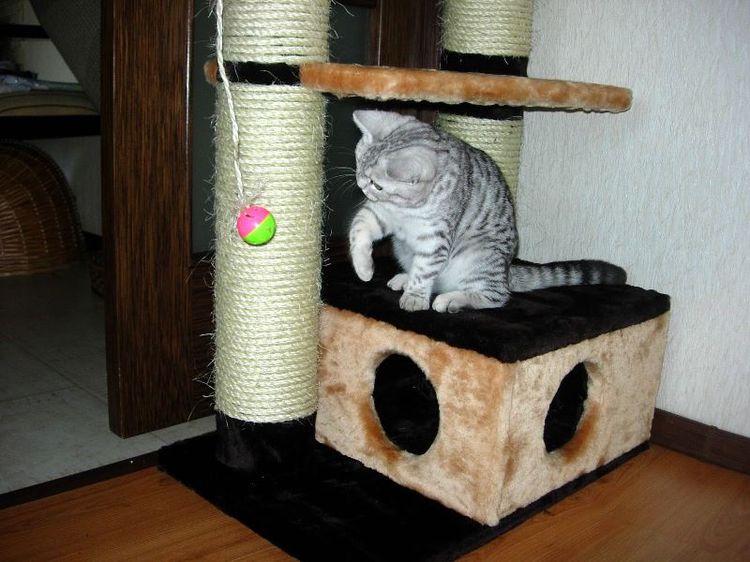
Problems typically arise with adult cats. Convincing them that a crate is the best option is difficult. The most successful breeders follow these principles:
- create comfort;
- stimulate interest;
- ensure the stability of the cat's new home.
By following three rules, you can quickly accustom your cat to an unfamiliar place.
What to look for when choosing a house
| Parameter | Why is it important? | Recommendations |
|---|---|---|
| Size | So that the cat can lie on its side and turn freely | Minimum +10–15 cm to the pet’s body length |
| Materials | Safety and comfort | Wood, durable fabric, natural fillers |
| Smell | Cats' sensitive sense of smell | Avoid new strong odors, ventilate the house |
| Sustainability | There should be no wobbling or creaking. | Check the strength of the connections by laying them on the mat |
| Ventilation, exits | Access to fresh air and easy evacuation in case of fright | Make 1-2 loopholes on both sides |
| Installation level | They love closed spaces at viewing level | High on a shelf, radiator, or scratching post |
Owner-Tested Training Strategies
1. Location near your favorite spot
Place the house near a desk, TV, or window—anywhere your cat already feels comfortable. This helps the house become an extension of her territory.
2. Create coziness with scent
Place a familiar blanket or T-shirt inside—cats will recognize the scent as part of themselves. Using catnip or valerian will also stimulate interest.
3. Joint games and training
Use a fishing rod or ball to lure your pet right into the house - the teaser hidden inside evokes a slight, exciting reaction.
4. Positive reinforcement
Every entry is an opportunity to praise, scratch behind the ear, and give a treat. Over time, the house will become associated with a safe and pleasant place.
5. Quick adjustments and patience
If proximity to the litter box, kitchen, or heating isn't suitable, try other locations. You can adjust the settings repeatedly until you find the ideal spot.
6. Reception for stubborn adult cats
Open the door of the playhouse slightly and place a toy or favorite treat inside. This will minimize stress when leaving the familiar environment.
Tips on how to train your cat to sleep in a house
To become a respected caregiver for your pet, you need to learn to think like a cat. When it comes to creating comfort, we mean comfort from your pet's perspective. Just like people, different animals have different preferences. To understand your pet's needs, experiment by moving the house to different locations: closer to a window, next to a radiator, or on your bed. Once your pet gets used to the home, you can place the house wherever is most convenient for you.
If you love your pet, you know what it prefers. A toy, a blanket, a pom-pom torn from a hat, and other trinkets your cat loves should be placed in its house. This will attract its interest and encourage it to visit. Your persistence will soon yield the desired results.
Structural stability is an important consideration. A cat won't live in a house that wobbles and is prone to falling over. If the cat's home isn't stable, it won't attract the pet, but rather repel them.
When training cats, be patient and unfussy. Give them time to settle in, give them attention, and reward their visits to the house with treats, affection, and kind words. Cats are smart, and underestimating them is a mistake. The feline family, a headstrong family, loves freedom. You need to find a way to get your cat to make the decision to move into the house on its own.
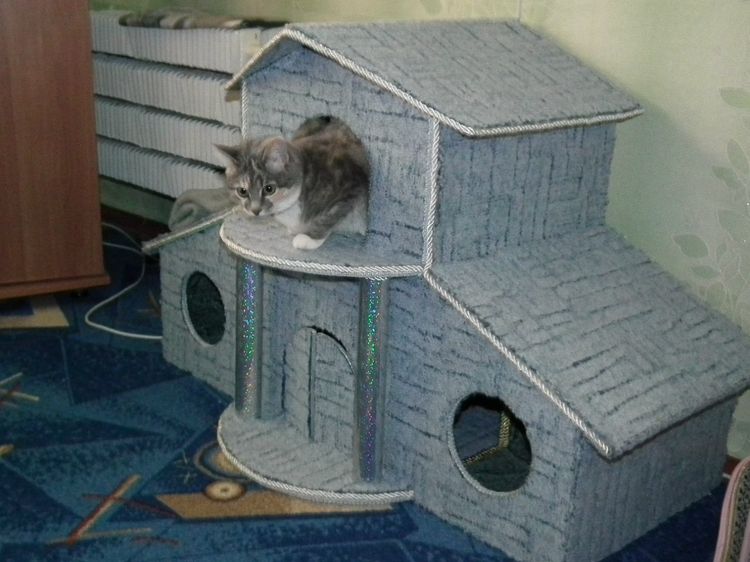
Knowing how to train a cat to sleep in a house, you can teach it other rules as well.
Table: Strategies for Arousing Interest
| Target | Method | Why it works |
|---|---|---|
| Engage curiosity | Place a toy or treat inside | Natural cognitive stimulation |
| Create a scent attraction | Lay down an item with the cat's/owner's scent | Improves the perception of a familiar space |
| Convenience and accessibility | Set up a cat house in the cat's resting area | Minimizes stress |
| Provide positive reinforcement | Rewards upon entering are a treat + affection | Strengthens the connection between the house and pleasure |
| Maintain comfort | Check for any cracks or loud noises, stability | Eliminates external irritants |
Delayed Sleep: A Smooth Transition to Sleep
Once the cat gets used to coming in during the day, start the night with her too:
-
Place a pillow there and put on some pleasant scents.
-
When the cat begins to rest, gently move closer inside.
-
After a few days, slowly move the cat into the house at night - be sure to give her affection and a treat in the morning.
Adaptation for kittens vs. adults
-
Kittens: They get used to it more easily and quickly—it's enough to set up the house before the pet arrives. They treat it as their center.
-
Adults: It takes time, especially if you're used to sleeping under a bed or on a couch. On average, adaptation takes two weeks to a month with regular practice.
What actions should be avoided?
In addition to the rules, there are also some dos and don'ts when housetraining cats. The following should not be done:
- Use force. By forcing your pet into the house, you encourage reaction, not action. The cat may completely and irrevocably fall out of love with the home prepared for it;
- Break your cat's old habits. Consider how to create conditions inside the house that the cat is accustomed to.
If you've tried everything and nothing works, try catnip spray. This secret weapon often works. Your kitty won't be able to resist its magical aroma.
Read also:


Add a comment