
How to help a cat give birth at home
"Only cats are born easily," goes the well-known proverb. And indeed, in most cases, the natural birth of kittens is relatively easy and requires no outside intervention. However, this doesn't mean you should leave things to chance—during labor, your pet will greatly benefit from the help of an attentive owner, who should also know what to do in case of complications. So, how do you help a cat give birth?
Content
Preparation
Pregnancy in cats lasts an average of 2 months (63 days). The normal duration of this period is considered to be 59-70 days.
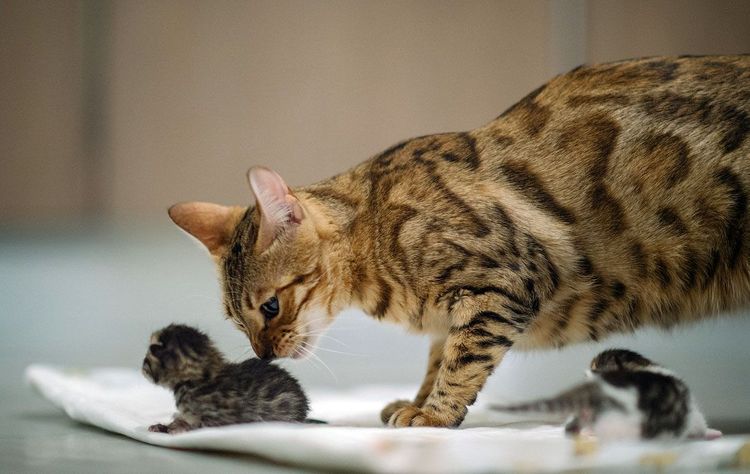
To ensure a calm and successful birth, the furry mother's owner needs to take certain measures in advance:
- Arrange a home visit with your veterinarian if necessary. Be sure to check with them if they offer phone consultations.
- If your pet has any health problems, consult a specialist: it might be better for her to give birth in a veterinary clinic.
- Before the birth, arrange a place for your pet and prepare everything necessary (more on this below).
- In late pregnancy, do not allow your cat to jump on high objects - with a large belly, she becomes clumsy and can easily fall.
Place for childbirth
The birthing area for the mother cat should also be prepared in advance. This could be a house from a pet store, a cardboard box, or even a cabinet drawer. It's important that it's sufficiently enclosed and spacious, but not too large—the expectant mother should feel safe and able to nurse her kittens without worry.
Place the "birthing room" away from drafts, bright lights, and doors; it should be secluded and darkened. Place a small mattress on the bottom of the box or crate, then cover it with plastic sheeting, and then place a regular baby blanket on top.
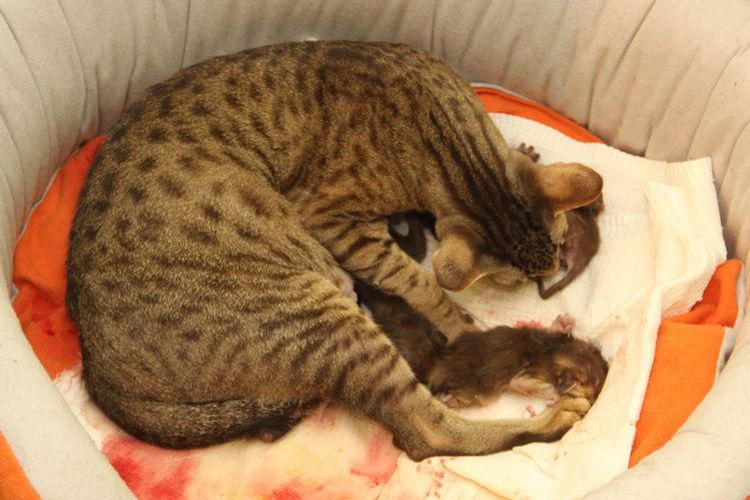
Cats often choose their own birthing location. If you don't approve of this choice, you'll have to constantly move her to a specially prepared location. To allow your pet to get used to the shelter, it should be prepared as early as possible.
Necessary tools
Before assisting your cat in labor at home, make sure you have the following items on hand:
- clean diapers or rags;
- clean gauze;
- petrolatum;
- scissors;
- thick threads;
- warmer;
- antiseptic for treatment;
- clean pipette;
- a separate nest for newborn kittens (for example, a small box);
- cat carrier;
- the phone number of a 24-hour veterinary clinic or your veterinarian.
Please note! You may need to urgently call a veterinarian to your home or transport the mother cat to the clinic yourself. Please have your phone and the cat's carrier ready for this.
How to deliver a baby correctly
- A few hours before the birth, the cat will begin to act restless: pacing, fidgeting, meowing loudly, digging in the box, and refusing food. Many animals during this period try to stay close to their owners, as if seeking their support. At this stage, your task is to pet and reassure your pet.
- The first sign of labor is contractions, during which the cat will breathe with her mouth open. She may give birth in a sitting position (crouched on her hind legs) or lying on her side. In a normal labor, the kitten is born within an hour of the onset of contractions. Read also about How long do contractions last in cats? on our website.
- Kittens can be born at intervals ranging from 10 minutes to 2 hours. If your pet is having trouble giving birth, consult a veterinarian.
- Remain calm throughout the entire process: animals tend to sense their owners' moods. Avoid interfering unnecessarily; instead, soothe your pet with a gentle voice and gentle petting.
- If the contractions are weak, you can help her: use gentle movements to stroke your pet’s stomach and back.
- Typically, after the kitten is born, the mother bites through the amniotic sac and gnaws through the umbilical cord. However, if it's her first birth, she may ignore the newborn and be preoccupied with herself. In this case, you need to intervene. Carefully rupture the sac and release the kitten. Then, remove mucus from the lungs using a clean pipette. You can also turn the kitten upside down, grasping its body and head, and gently shake it to allow the fluid to drain. When the newborn begins to breathe, cut the umbilical cord with antiseptic-treated scissors 2-5 centimeters from the abdomen and tie it with thread. The end should also be treated.
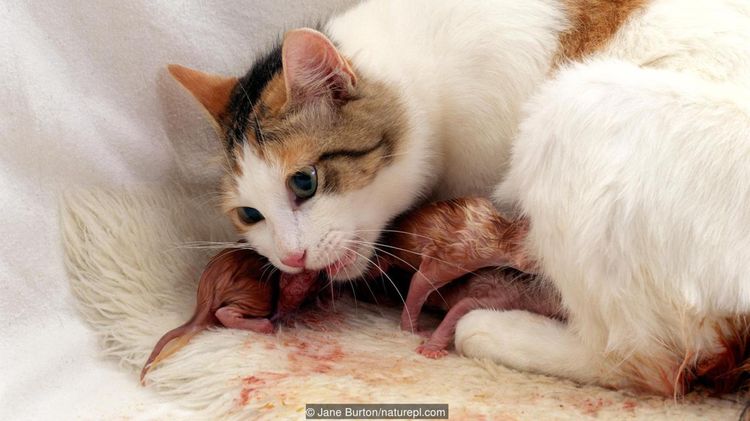
- Wipe the kitten with clean gauze and place it on the mother's belly so that it can suckle milk - this will not only allow the newborn to be satisfied, but will also stimulate the further process of labor in its mother.
- Kittens that have already eaten and been licked should be placed in a separate soft nest with a heating pad where they will sleep. Beforehand, dry all the kittens thoroughly with a clean cloth.
- Count the number of placentas produced by each newborn. Cats typically eat them, but it's best to allow your pet to eat no more than one or two, otherwise she may experience an upset stomach.
Please note! If there are fewer afterbirths than kittens, be sure to consult a veterinarian – a placenta retained in the uterus can cause inflammation.
- The end of labor is usually noticeable by the mother's behavior: she calms down and begins to nurse her newborns peacefully. You can also gently palpate her abdomen to determine if any kittens are still there.
- Remove soiled diapers, tidy the box, and provide complete peace and quiet for the mother and kittens. Keep other pets away from them, including the kittens' father, if he lives with you—the cat may harm the newborns or even eat them. Place a bowl of water, a litter box, and food for the mother cat near the nest.
Possible complications
If a kitten is stuck, do not allow the mother to bite through the amniotic sac—inhaling in this position can easily suffocate the newborn. Lightly lubricate the kitten with Vaseline, wrap it in gauze, and, after the next contraction, gently pull on the kitten's body or the skin on the back of its neck, gently rocking it from side to side. Avoid pulling on the kitten's legs—their limbs are still very weak and may not hold up. Before pulling, tuck the protruding leg into the birth canal to prevent dislocation.
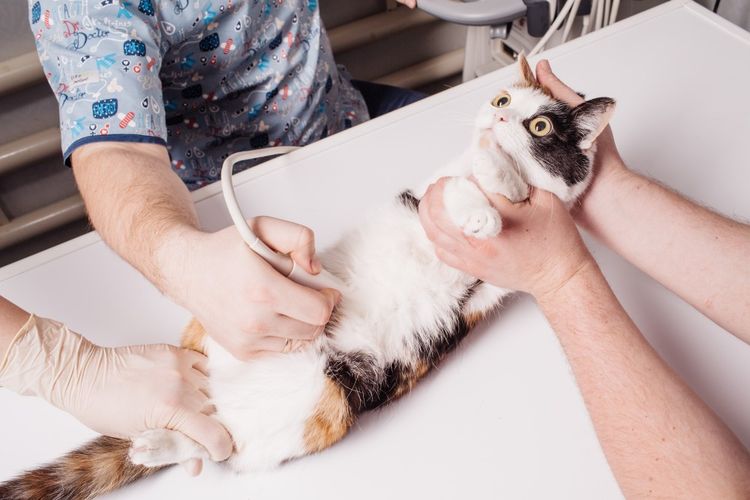
Even a skilled owner who knows how to assist a cat during labor at home may be unable to cope if complications arise. Urgent veterinary attention is necessary in the following situations:
- the kitten is stuck in the birth canal and cannot be born;
- the contractions last more than an hour, but the baby is not born;
- weakness, irregular breathing and heartbeat, apathy are observed;
- profuse purulent or bloody discharge appeared discharge, unpleasant odor;
- body temperature is higher or lower than normal (37-39.5 degrees);
- The number of placentas differs from the number of babies born.
Most furry friends give birth safely, but if something goes wrong, stay calm and don't panic. Try to help your cat by taking her to the vet promptly or calling a vet to your home.
You can also ask our website's staff veterinarian a question, who will answer them as quickly as possible in the comments box below.
Read also:
- How many days does a cat's pregnancy last?
- How to tell if a cat is giving birth: key signs
- How do cats give birth?


6 comments
Elena
Good afternoon. My cat is bleeding and can't seem to give birth. She's meowing. She can't find a place to give birth, even though everything is set up for the birth.
Daria is a veterinarian
Hello! Any bleeding should be taken to a clinic and examined by a veterinarian. This is especially true if the animal is about to give birth, especially if it's the first. There's a risk of complications.
Ilona
Good afternoon. My cat had a scheduled mating with a male cat, and today she started having some bloody discharge. She's not having contractions, her breathing isn't rapid, and she's calm. This is her first birth. Should I take her to the vet or is this normal?
Daria is a veterinarian
Hello! How long has the pregnancy lasted? How many days have passed since mating? In any case, if this is the first birth (either for the animal or for you), it's always necessary to examine the animal in person. Also, check for any detachments or intrauterine deaths of kittens. Slight bloody discharge can also be a sign of labor, as the cervix is preparing to open. Each case is individual. What's normal in one case may be abnormal in another. Therefore, it's always important to monitor.
Xenia
Hello! Could you please advise? My cat is having her first kitten five hours ago, and she's been having contractions for a while now. She's completely calm, not even meowing, but now the contractions are becoming more frequent, every 2-3 minutes.
What can I do and how can I help her? Unfortunately, I don't have any money for the vet, or rather, I don't have a penny at the moment. (((
Dasha is a veterinarian
Hello! How can you advise such a thing without seeing the animal? You need to see a vet immediately! She might just be tired, which is why she hasn't given birth in a while, or maybe her contractions have stopped. Perhaps the kitten is positioned awkwardly, preventing her from delivering it. It might be very large. In that case, only a C-section will help. Giving medication to intensify contractions will only lead to uterine rupture and the animal's death! Don't have the money? Borrow it, and sign a receipt at the clinic stating that you'll bring it back later. There's always a way out. But you shouldn't abandon a defenseless animal without help or try to save it yourself using medications suggested online.
Add a comment