
How to properly care for a puppy
In most cases, a dog is purchased when it's still a puppy. Bringing such a pet into the home is a great joy, but also a great responsibility and a considerable amount of work. After all, almost all of a dog's basic skills and character traits are formed during the first six months of life, and it's up to the owner to ensure their dog grows up healthy, obedient, and happy. Those who are getting a puppy for the first time should know how to care for, feed, and train it.
Development
Before getting a puppy, you need to create safe conditions for it to stay in your home. Your little pet will be exploring the world around them, sniffing and chewing everything. Therefore, you'll need to make breakable objects, containers with household chemicals, and trash cans inaccessible, and try to hide any wires. You can temporarily cordon off part of the room where it will live with a low barrier.
It's best to place the dog's resting and sleeping area where no one will disturb it; it should be cozy and draft-free. You can let your pet choose a sleeping spot in a corner and place its bed there. Since a puppy initially lacks self-control, it may relieve itself uncontrollably, so the bedding will need to be changed frequently, or better yet, buy disposable or reusable absorbent diapers.
When bringing a puppy home, you should ensure it is free of fleas or worms. Fleas can be detected visually by parting the dog's fur in several places. The presence of worms can be determined by conducting a stool test. To get rid of blood-sucking insects, it is recommended to bathe the pet in a special flea shampoo; treating puppies with medications intended for adult dogs is not recommended. Worms can be eliminated with the anthelmintic medication "Pirantel." A couple of drops of this medication are sufficient for a small dog: the dosage of the suspension is 0.1 ml per 1 kg of the animal's weight.
Nutrition
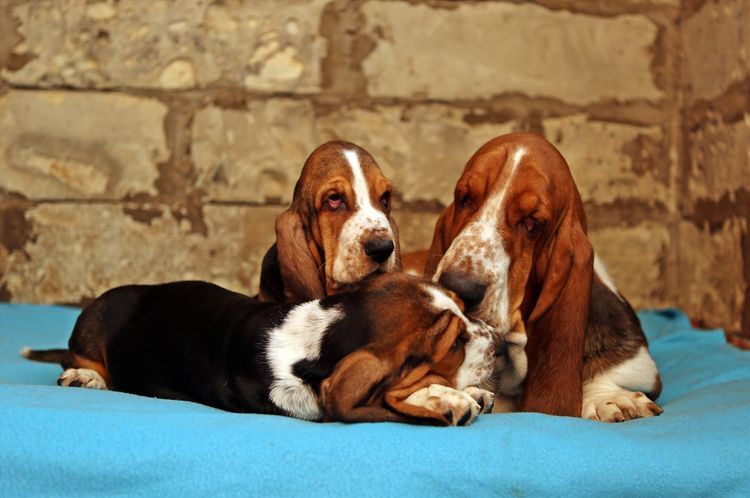
The puppy should have its own food and water bowls, preferably metal, and they should always be in the same place. Fresh water should be available in the water bowl at all times, and food should be added only immediately before feeding.
During the first months of life, puppies are fed 4-6 times a day, then the frequency of feedings is gradually reduced. Thus, from 10-12 months of age, 2-3 times a day is sufficient. According to experts, the optimal daily food volume for a puppy is 5% of its body weight. However, each dog's body needs are individual and can be easily determined empirically.
If your puppy eagerly devours everything you put in front of him and calmly moves away from the bowl, then the portion is calculated correctly. If your dog quickly swallows everything in the bowl and then licks it for a long time, hoping to find more food, it's not full, and the amount needs to be increased. If your pet begins eating after much deliberation, eats little, and has no appetite, this is a sign you're overfeeding. However, such cases are rare, as most dogs are prone to overeating as puppies.
Until 3 months of age, it's best to feed a puppy natural food. Their diet should include raw or cooked meat, fish (boneless!), eggs, cereals, fermented milk products, and cooked vegetables. At least 70% of their diet should be protein. From 4 months of age, they can be transitioned to high-quality dry food, but it's best to steam it first.

Feeding dogs of any age food from your table is a no-no! It will upset their digestion and disrupt their nutrient balance, inevitably leading to health problems. Therefore, any attempts by a puppy to "beg" for treats from the table should be stopped early.
Hygiene and care
One of the most important aspects of dog care is regular veterinary visits for preventive examinations and vaccinations. Puppies receive their first vaccination at 1.5 months of age, the second 2-4 weeks later, and the remaining vaccinations are administered according to the WHO-approved schedule.
It's not advisable to take very young puppies for walks; this can be done when they're at least 1.5 months old. Walks should be short but frequent, every 2-3 hours, and generally take about an hour a day. Young animals are full of energy, and to channel it effectively, it's a good idea to buy your pet plenty of toys. Dog toys should be safe so your dog can't bite off parts and swallow them.
It's recommended to bathe dogs with shampoo once every one to two months. The water should be warm, but not hot. It's best to wash their paws, belly, and butt after every walk. Dogs also need brushing. Short-haired dogs only need a soft brush every few days, while long-haired dogs should be brushed with a slicker brush and a special long-tooth comb.

Puppies may develop mucus and crusty discharge in the corners of their eyes. This should be removed with a swab soaked in strong tea or a boric acid solution. It's recommended to clean their ears once a week using a cotton swab. If your dog lives in an apartment, their nails will need to be trimmed occasionally, but this procedure is unlikely to be necessary until they're a year old.
Upbringing
Dogs are intelligent animals and are highly trainable. Their key personality traits develop between the ages of a few months and a year. During this time, the animal establishes its status within the pack, that is, within the family. The puppy learns the basic rules of community life, which it is required to follow, and which stipulate that it can do whatever it wants: for example, chewing shoes or lying on the owner's bed is taboo.
One of the main challenges in raising a puppy is toilet training. A puppy will begin to control its urge to defecate and urinate at 3-4 months of age. Until then, after sleeping or eating, it should be placed on a litter tray or a special "doggie" pad. If possible, the pet should be walk more often, then he'll be able to relieve himself outside. Every time he does this, be sure to praise him. But if your dog has misbehaved and made a puddle in the apartment, you need to let him know that this is wrong by giving him an angry reprimand.
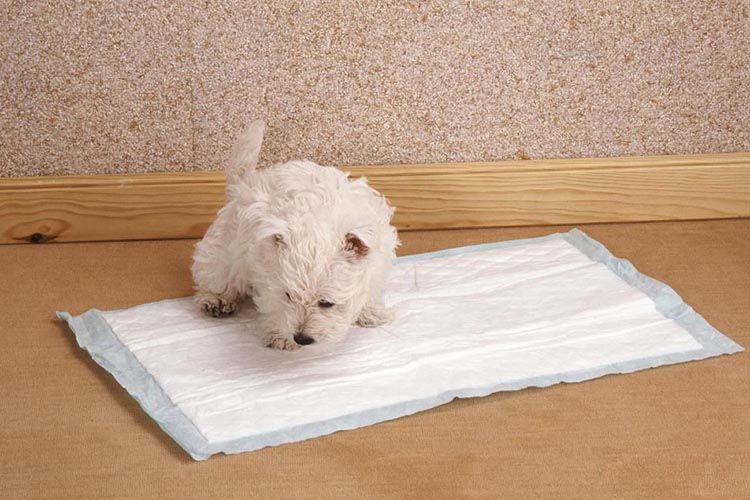
Yelling at a dog or using physical punishment is unacceptable - stress has never been a motivator for correct actions.
You can start fully training your dog when it is older than 6-8 months, but teach a dog to follow basic commands It's worth starting at an earlier age. From the first day a puppy comes home, it should be called by name; it will quickly learn it and begin to respond to it. The minimum commands a 3-4-month-old puppy can perform are: "Stay!", "No!", and "Come!" These should be stated clearly and precisely, without variations: the animal will not understand if, instead of the already familiar "NO!", it hears "Drop that nasty thing!"
With some effort and patience, you can raise a loyal and obedient pet who will be happy to feel like a full member of the family, and who will consider the owner the leader of the "pack," possessing unquestioning authority.
Read also:
- How to potty train a puppy using a pad
- When do puppies open their eyes?
- Up to what age is a dog considered a puppy?


Add a comment