
How to set up a dog's ears
A dog's ears should be positioned naturally for its breed. Puppies of most breeds are born with folded ears, but some develop erect ears as they age. If this doesn't happen, and the puppy has erect ears, correction is needed, either by consulting a specialist or by erecting the dog's ears at home.
Content
Which dogs need ear picks and why?
According to FCI standards, erect ears should be present in the following breeds:
- Doberman;
- Australian Cattle Dog;
- basenge;
- husky;
- like;
- Yorkshire and Scottish terriers;
- Spitz;
- corgi;
- Russian Toy;
- Belgian, German and Swiss Shepherds.
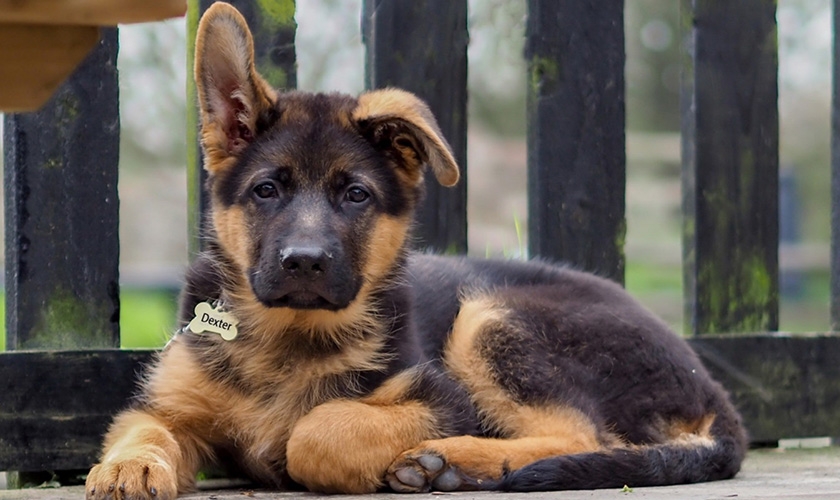
These dogs require ear erection both to ensure compliance with international canine standards and to prevent health problems: when positioned vertically, the ears are better ventilated, reducing the risk of hearing problems.
At what age should a dog's ears stand up?
Puppies of different breeds lose their lop ears at different ages. Huskies' ears start to stand up as early as 1.5 months, terriers' ears start to stand up at 2.5 to 3 months, and shepherds' ears start to stand up at around 4 months.
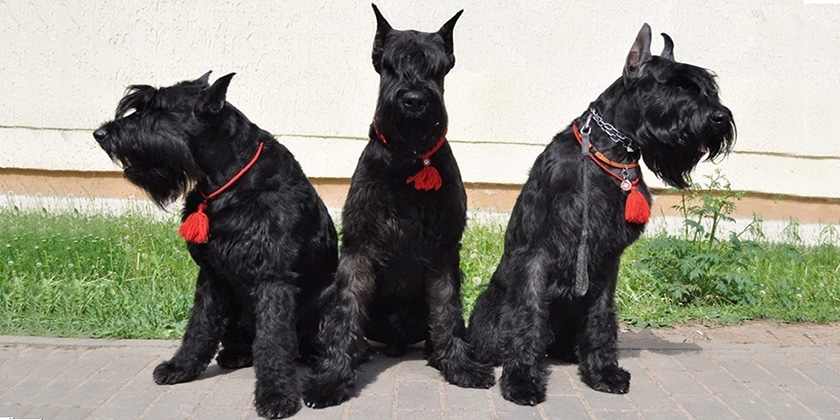
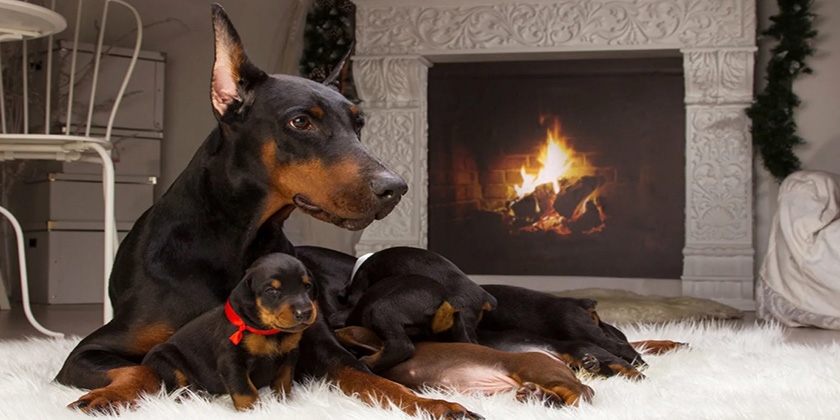
Some dog breeds whose ears don't stand upright on their own must first be cropped and then set. These breeds include Dobermans, Pinschers, and Giant Schnauzers. Cropping is performed under general anesthesia between the ages of 2 and 5 months.
What is needed for ears to stand up on their own?
The shape of the outer ear is created by cartilage tissue, which contains collagen and elastin. Various vitamins, minerals, and amino acids are needed for their synthesis. These substances are obtained through food, but during the puppy's growth period, they are primarily used for bone formation. Therefore, to ensure erect ears, a puppy needs proper nutrition.
When feeding a natural diet, the diet should consist primarily of animal products: meat, fish, and dairy. If your dog eats commercial food, it should be holistic or super-premium. It's also advisable to purchase special nutritional supplements containing vitamins and minerals. Veterinarians speak highly of Beaphar complexes. Volmar, Canina, Kalcevit, Canvit, Polydex, Stride Plus, ExcelTo raise the ears, it is recommended to add edible gelatin to the puppy's food.
An additional measure for ear positioning is massage. This procedure can be performed several times a day, and your pet will appreciate it. Grasp the ear at the base with two fingers and use kneading motions to reach the tip, gently pulling the ear tissue upward.
But if, despite all your efforts, the puppy's ears still remain drooping, you will have to artificially set them using various hard or soft structures.
Methods of ear setting
Today, ear correction using "taping" is a widely used method. Soft constructions are typically used for small dog breeds, while more rigid constructions are used for larger breeds.
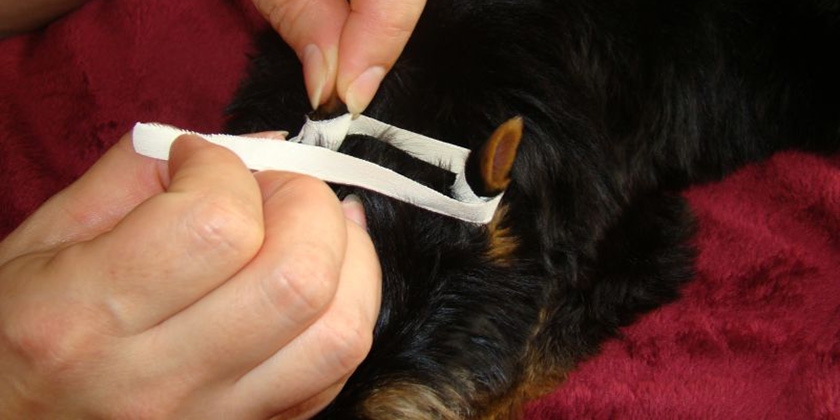
Soft gluing option
The method is not at all complicated:
- Shave the hair off the ears so as not to cause pain to the dog when removing the sticker;
- wipe the ears inside and outside with an antiseptic (chlorhexidine or alcohol solution);
- stick a piece of adhesive tape (preferably hypoallergenic, “breathable”) to the inside of the ear;
- Place a small patch cut from cardboard or a soft plastic bottle over the adhesive tape so that it covers the weak spot of the auricle;
- secure the patch with a second piece of adhesive tape;
- On the lower part of the ear, stepping back a centimeter from its edge, make a circular adhesive bandage with adhesive tape, which will act as a guide; there is no need to pull the bandage too tightly;
- To prevent the puppy from trying to remove the sticker with its paw, you can put a protective collar on it.
Hard gluing option
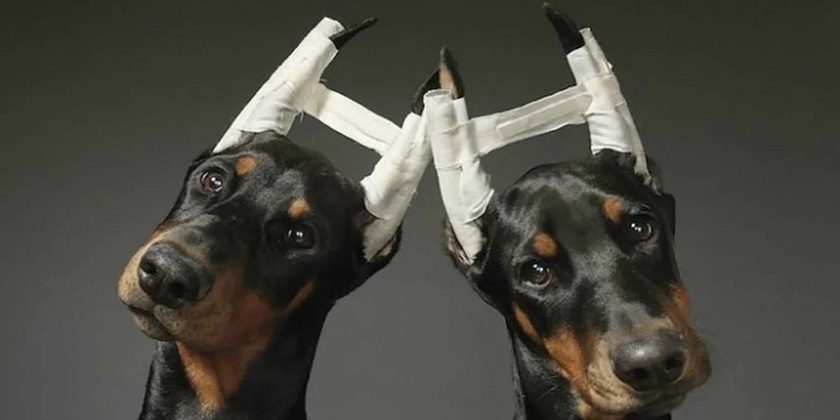
Instead of soft, thin cardboard, use popsicle sticks, foam curlers, or other improvised means as earplugs to hold the dog's ear in the desired position without damaging the auricle.
Ear-setting devices, including ear inserts and crowns, are available for purchase at specialized stores. Ear inserts are made of soft material, provide excellent ear support, are easy to attach and remove, and are comfortable for the animal. A crown is a metal frame that attaches to the dog's head and serves as a base for the ears.
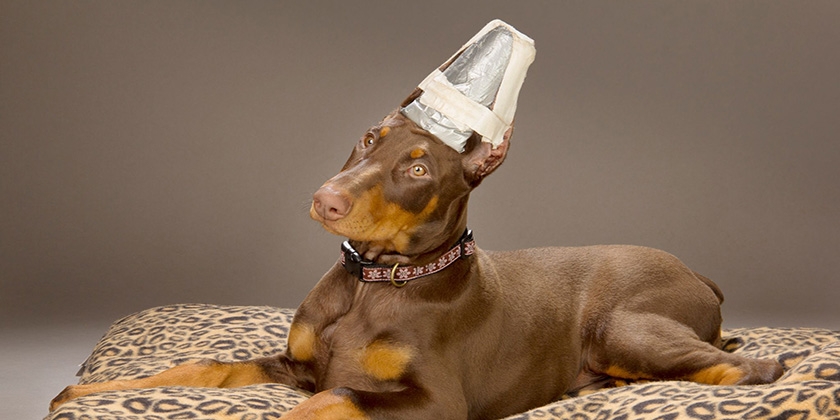
For some dogs, wearing this corrective structure for just a few weeks is enough for their ears to “stand up,” while for others it will take time until their baby teeth have completely changed.
Plastic correction
The cartilaginous tissue in dogs' ears develops during the first year of life. Veterinarians believe that if the ears haven't erected by this time, massage or taping are unlikely to help. However, it's quite possible to "straighten" an adult dog's ears with plastic surgery. This method of correcting lop-earedness is 100% effective.
Several methods are used to surgically correct the auricle:
- Implantation of donor cartilage tissue. The disadvantages of this method include the complexity of the surgery and the risk of implant rejection.
- Removal of excess skin. Two arcuate skin incisions are made on the inner side of the auricle. The skin between them is then removed, and the cartilage flaps from these areas are sutured to the main ear cartilage.
Read also:
- How many ribs does a dog have?
- How to stop a dog from pulling on a leash during a walk
- What is the significance of a dog's tail?


Add a comment