
How to trim a cat's hair at home
Grooming a cat at home requires a careful and gentle approach. This can be a significant challenge for the animal, so it's important to proceed calmly and consistently to minimize stress. With proper preparation and following basic rules, you can groom your pet's coat yourself without going to the veterinarian.
Content
Why do people shave cats?
With the arrival of summer, many owners consider grooming their pets, especially those with long-haired and very fluffy breeds. During hot weather, owners believe that removing hair will make their cats more comfortable and make daily grooming easier.
The main reasons why cats are shaved or clipped are usually:
-
desire to ease the tolerability of heat;
-
simplifies skin and coat care;
-
the ability to quickly notice ticks, fleas and other parasites, which is especially important for animals that spend time outdoors;
-
reducing the amount of hair in the house during the shedding season.
It's important to understand that completely shaving a pet's head can also have negative consequences. Even if your pet eventually gets used to the procedure, the skin is left without its natural protection, and the body may be less able to cope with temperature fluctuations and sun exposure.
Sometimes grooming is used purely for decorative purposes. Owners seek to change their pet's appearance, experimenting with coat shape or even coloring with special products. However, such manipulations provide no practical benefit to the cat and often serve merely the person's aesthetic desires.
The most justified indications for shaving are considered to be medical ones. These include:
-
treatment of skin diseases and wound care;
-
parasite removal;
-
the need to remove toxic or hard-to-wash substances from the coat.
In such situations, hair removal is typically performed in a veterinary clinic. The procedure is often performed under sedation, as most cats experience significant stress and actively resist such procedures.
Tools for grooming cats at home
For grooming, well-sharpened medium-sized scissors are most often used—they're suitable for small areas and allow for precise control. Many owners also wonder whether it's possible to trim their cat's hair with clippers. Clippers are indeed considered a safer option, as they reduce the risk of cuts and injuries. However, it's important to keep in mind that the equipment produces noise, which can frighten your pet. Therefore, it's best to choose models with reduced noise levels for a more relaxed grooming experience.
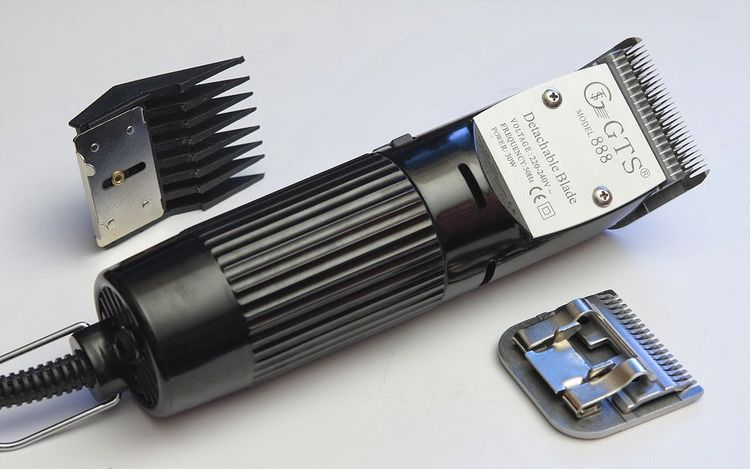
In addition, you will need the following tools and equipment:
- A comfortable comb (preferably with soft teeth that won’t cause unnecessary discomfort to your pet).
- Hydrogen peroxide (if you accidentally injure your cat).
- Scissors (if you decide to use this tool, it is desirable that the scissors have rounded ends).
- A comfortable horizontal surface (such as a desk).
- An unwanted towel that should be placed on your desk (after which you simply pick it up and throw it away).
- Your cat's favorite toy (you can use it to distract the animal from this not-so-pleasant process).
Which clipper is recommended for cutting a cat's hair?
Nowadays, the choice of professional grooming tools for furry pets is vast, and some owners try to save money and buy the cheapest option. This is a mistake: inexpensive trimmers will painfully pluck hairs or burn delicate skin, and such models also wear out quickly.
If you need to remove hair in hard-to-reach areas, we recommend choosing a small trimmer with blades no longer than two centimeters. These trimmers are designed for trimming the face and ears, and they can also be used to remove excess hair under the tail. This is an auxiliary tool needed for a thorough grooming, for example, before a show.
For thicker coats, a powerful clipper with wide blades is suitable, capable of removing even tangles of matted hair from Persians. However, it's important that the manufacturer sharpens the blades thoroughly; otherwise, you'll have to take the clipper to a professional after each use.
Power of the device for Persian breeds The power output should be 45 watts or more. Machines with less power simply won't handle thick fur; they'll overheat and break during the first session. If your pet has short hair, a 20 watt model will suffice.
We recommend purchasing a model with automatic blade adjustment, eliminating the need to replace the blades. The minimum blade length is 0.5 mm (meaning after a haircut with this clipper, the pet's fur will be approximately 0.5 cm long). Buying a clipper with too small blades is dangerous, as it can easily injure your pet if you're inexperienced at home.
The best option is a machine that runs on electricity, as batteries drain quickly, especially if you work for long periods of time with breaks (for example, if you are distracted by conversations and calming activities).
Remember that the trimmer should be as quiet as possible (you can check this when buying by comparing several models) and should also fit comfortably in your hand. Avoid devices made of overly slippery or heavy materials, as this will prevent you from getting a good haircut.
Before purchasing, turn the device on and off several times: it shouldn't get too hot during operation, otherwise you'll have to take constant breaks, which isn't very convenient.
How to trim a cat's hair at home: instructions
Below is the sequence of actions that you need to follow:
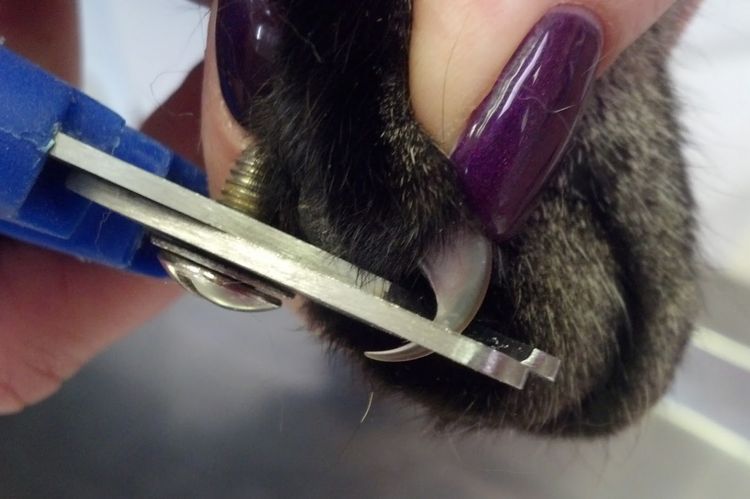
- First of all, shorten the cat's hair claws using special tongs or scissorsDisinfect the tools first. Then, press lightly on your pet's paw pad and gently but quickly remove the claws without damaging the skin. This will help protect you from aggression and scratches while you're grooming.
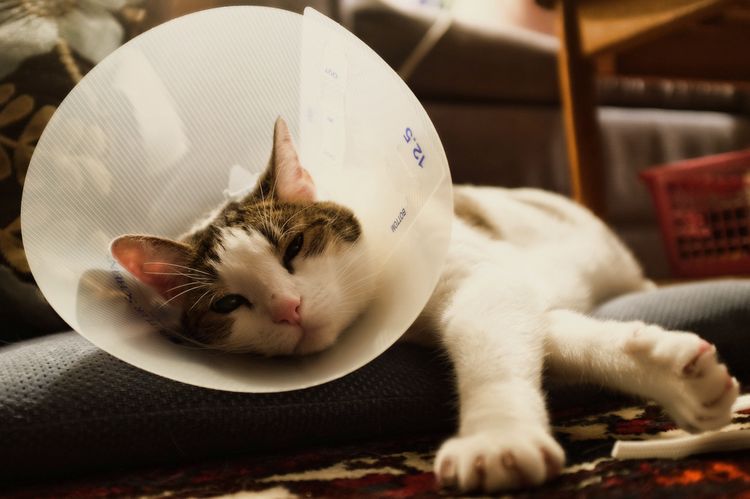
- If this is your first time grooming, it's a good idea to have a second person gently hold the cat's sides. Some cats can be quite aggressive. Veterinary clinics sell special plastic collars for these animals, which help keep the cat's head in place and prevent it from biting. As for the cat's limbs, they will still need to be held.
- Once the cat is positioned on its side and its paws are securely held, you can use the clippers. Begin removing hair from the sides, working carefully and slowly. If the cat senses its owners' agitation, it will also become stressed and begin to struggle and scratch.
- After the flanks, move on to the back and belly. Special attention is given to cats with mammary glands: when using scissors, it's important not to injure this sensitive area, so try to keep the animal as relaxed as possible. You can move with or against the grain of the fur.
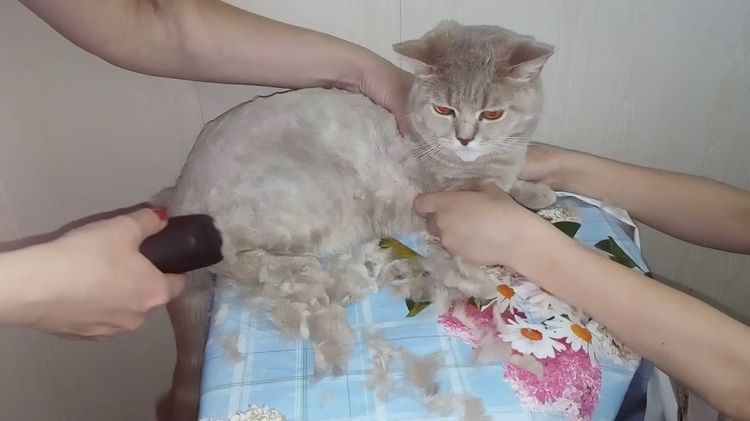
- It is recommended to remove any remaining hairs with small scissors, as sliding the clipper over the animal's skin is not recommended: this causes discomfort and microtrauma.
- During the procedure, gently pull the animal's skin, especially if using scissors. This will prevent cuts.
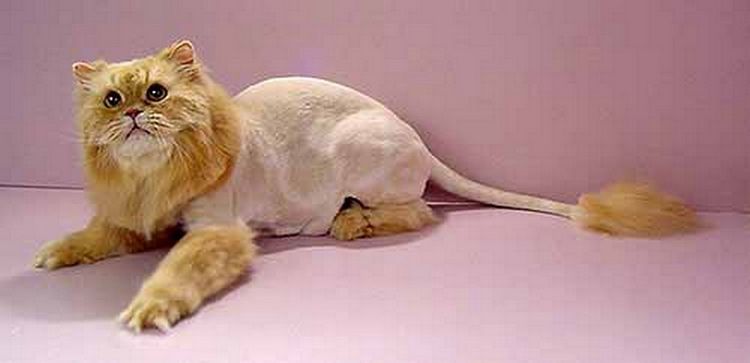
- At home, the tail and paws are usually left untouched, but if desired, you can shave the hair from the tail with clippers, leaving a small tuft at the end (this is an excellent option for show breeds).
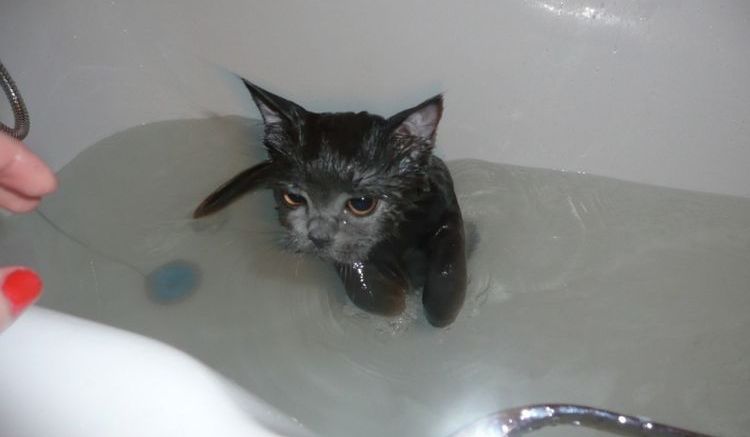
- Finally, wash your cat in warm water, adding a small amount of mild pet shampoo if desired. Next, dry your pet with a hairdryer set to the quietest setting.
So, what should you use for a haircut – clippers or scissors? If you want your pet to look truly attractive and neat, it's recommended to alternate between using scissors and clippers. Scissors simply trim any hair that automatic trimmers can't remove. Trimming long-haired pets exclusively with scissors will be time-consuming, dangerous, and the result may not be as neat.
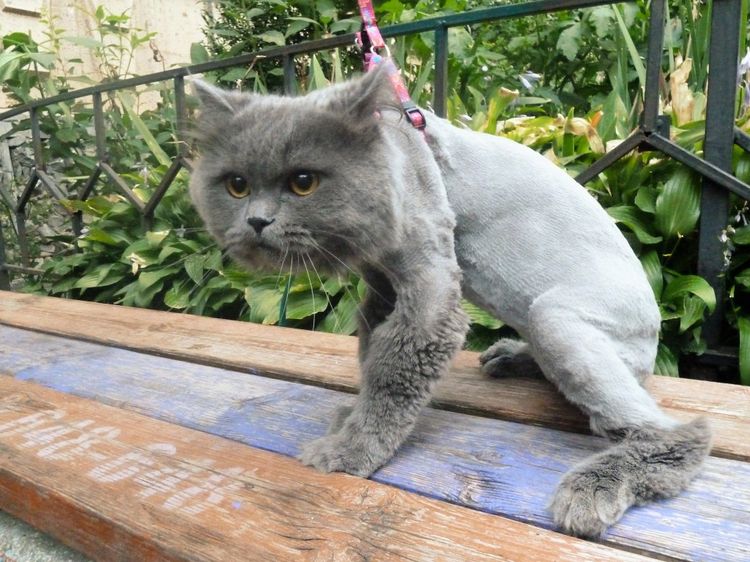
Can you trim wet fur? If you're using clippers, you can use them on dry skin. Deciding to use scissors? In this case, it's recommended to slightly dampen the fur and comb it thoroughly: this will make it easier to remove unwanted hair. Regardless of the breed, don't trim your pet too short (it's best to leave a few millimeters of hair). This will ensure proper thermoregulation and prevent skin irritation.
How often should you trim your hair?
The frequency of this hygienic procedure depends on the cat's breed and coat type. On average, a cat's coat grows back completely within six months. Most veterinarians recommend trimming their pet's coat several times a year for hygienic purposes. If your cat has any hairballs, you can simply trim them with scissors.
Don't overdo it with grooming, as fur is a natural protective covering for many animals, especially in cold weather. If your pet doesn't tolerate scissors and clippers well, it's recommended to entrust this task to a professional: veterinarians at clinics know how to calm an aggressive animal and perform the procedure quickly and with minimal trauma.
It is best to trim long-haired animals before the onset of hot weather, since furry pets do not tolerate high temperatures well.
How a cat changes after a haircut
Be prepared for the fact that after the procedure, the original coat color of long-haired animals will change slightly (it will become slightly darker or lighter). In some cases, the haircut also affects hair growth, either increasing it or slowing it down slightly.
If this hygiene procedure is carried out correctly, the cat's behavior will not change, but if the actions are rough or careless, the animal may experience severe stress, which will subsequently make it more fearful and distrustful of its owner.
What should you do if you accidentally injure your cat?
Sometimes even the most careful actions can lead to injury. What should you do if your cat gets injured? Have iodine or hydrogen peroxide and cotton swabs on hand. Apply a small amount of the antiseptic solution to the cotton swab and gently dab it around the cut to stop the bleeding. You can also press a dry cotton swab against the wound for a few minutes.
Please note: in such an unpleasant situation, don't panic. It's best to calm the animal by quietly speaking soothing words, as you would normally do. During the grooming process, never raise your voice at the cat or talk loudly to your grooming partner, make any sudden movements, or, especially, use physical force (such as hitting, pinching, or other similar actions).
Therefore, grooming a cat at home with clippers and scissors is, first and foremost, a hygienic procedure aimed at maintaining a neat appearance. If you're preparing your cat for a show or other important event, it's recommended to schedule a trim with a professional groomer. In clinics, trims are performed on cats under mild anesthesia or sedation. However, it's important to remember that chronic exposure to such medications can adversely affect your pet's health.
Read also:
- Peculiarities of caring for long-haired and short-haired cats
- How often can you bathe cats?
- Brushing a cat's teeth




2 comments
Anna
Good evening. Could you please tell me what gentle medications I can use to calm my cat before a haircut? He's very aggressive about this, and won't even let me cut out a small mat with scissors. We've clipped him twice: the first time right after his castration (while the anesthesia hadn't worn off), and the second time, four people couldn't hold him back. What can I give him (other than anesthesia, as the vet suggests) to at least remove the mats? Thanks in advance.
Daria is a veterinarian
Hello! Well, you'll need to start early (at least a week before the expected grooming date) because the medications are cumulative. The simplest are homeopathic ones like Stop-Stress, KotBayun, Fospasim, and Glycine. Just don't use valerian, as it only irritates the animal's nervous system. It actually makes it more agitated, making it even more aggressive. Try giving it to your pet for a week and see how it feels. If it continues to resist, you'll have to administer muscle relaxants at the clinic (just use a lower dosage, not the one used before surgery) to calm it down a bit.
Add a comment