
Friendship between a cat and a parrot: is it possible?
Many people, when they get a pet, don't realize they'll soon want another pet, or perhaps even several. And it's best if they're all the same species—cats, dogs, hamsters, and so on. But what if you want both a cat and a feathered friend? Let's take a closer look at how to make a cat and a parrot friends.
Content
Reasons for difficulties
When we talk about the difficulty of such a neighborhood, we're referring to the cat's nature. It's precisely its predatory tendencies that become a problem: imagine a cat hunting small sparrows outside your window—it becomes the embodiment of aggression and the hunting instinct. And when a parrot appears in the house, the cat often can't control itself and tries with all its might to get its prey.
Another cause of conflict between a cat and a parrot can be the bird's aggressive nature – it may attack the feline, constantly dig in its fur, or even peck at an inattentive feline. While such predatory behavior poses no danger, it doesn't delight domestic cats, and a retaliatory blow can result, potentially killing your feathered friend. So what can be done to bring these eternal hunter and prey together?
What can you do to make a cat and a parrot friends?
The most obvious way to get a cat and a parrot to bond is early introduction: the younger the animals are, the easier it will be for them to find common ground. This means that while the kitten is young, you can easily teach it not to be aggressive toward the parrot, as at a young age, your cat views the bird only as a playmate, not as prey.
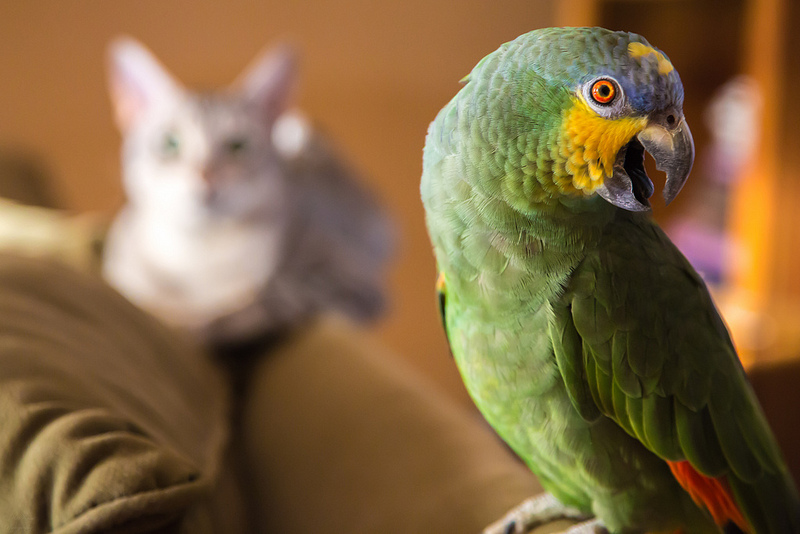
There shouldn't be any problems if you're getting a kitten for a home where a feathered pet already lives. In this case, the cat will perceive the parrot as part of the home and will get along with its new friend fairly quickly.
But what if you want to get a parrot and already have an adult cat? In this case, you'll need to work with the cat to explain that the bird isn't food or prey. There are a few important rules you can follow to help these two different pets get along:
- the first meeting should take place only under your supervision;
- Do not leave your animals unattended at first;
- Be sure to trim your cat's claws!
- Stop the slightest manifestations of anger and aggression from your furry pet.
Let's look at each aspect of these rules to make sure we avoid any problems.
First meeting
When bringing a parrot home, you should introduce it to your cat, but this encounter must take place under your watchful eye. If your cat immediately displays its instincts and tries to catch the bird, you should immediately stop this behavior: grab the cat by the scruff of the neck and say, in a stern, stern voice, "No!" or another prohibiting word your cat knows. But don't overdo it! If your cat feels slighted, it will likely seek revenge on both you and the parrot that is causing the punishment.
If done correctly, the cat will quickly realize you're not happy with its pursuit of the parrot and will give up. If the cat continues to try to catch the parrot, you can leave it in a carrier in the same room where the parrot flies. Over time, the cat will simply get used to the company and won't try to devour your bird.
Animals alone
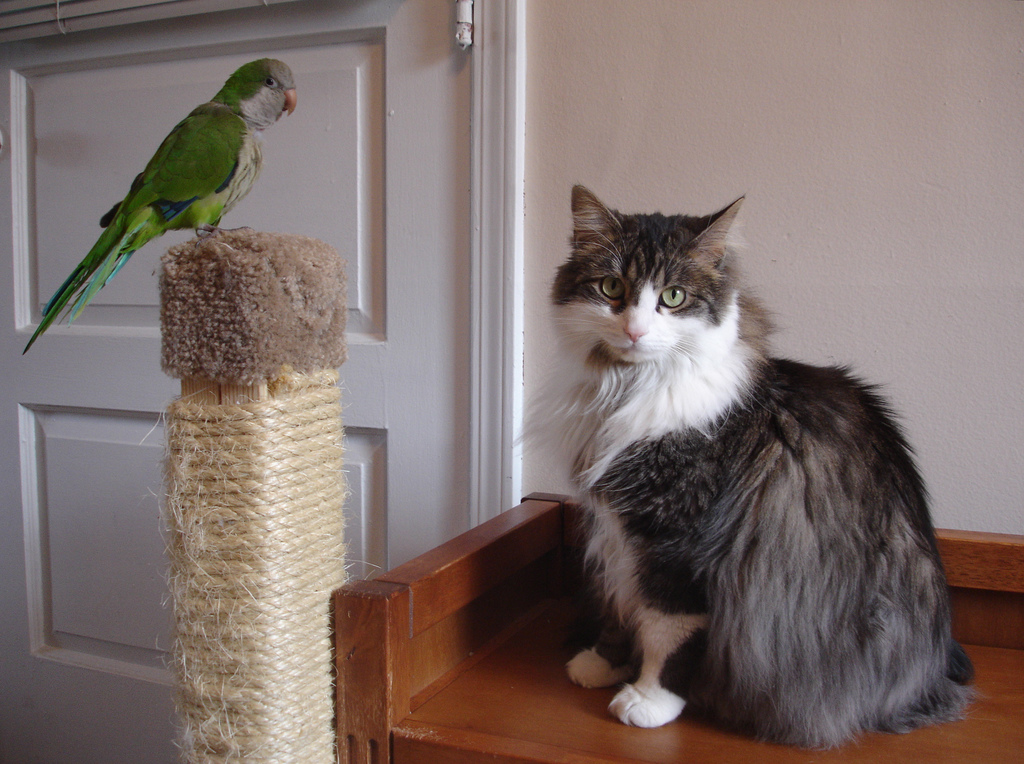
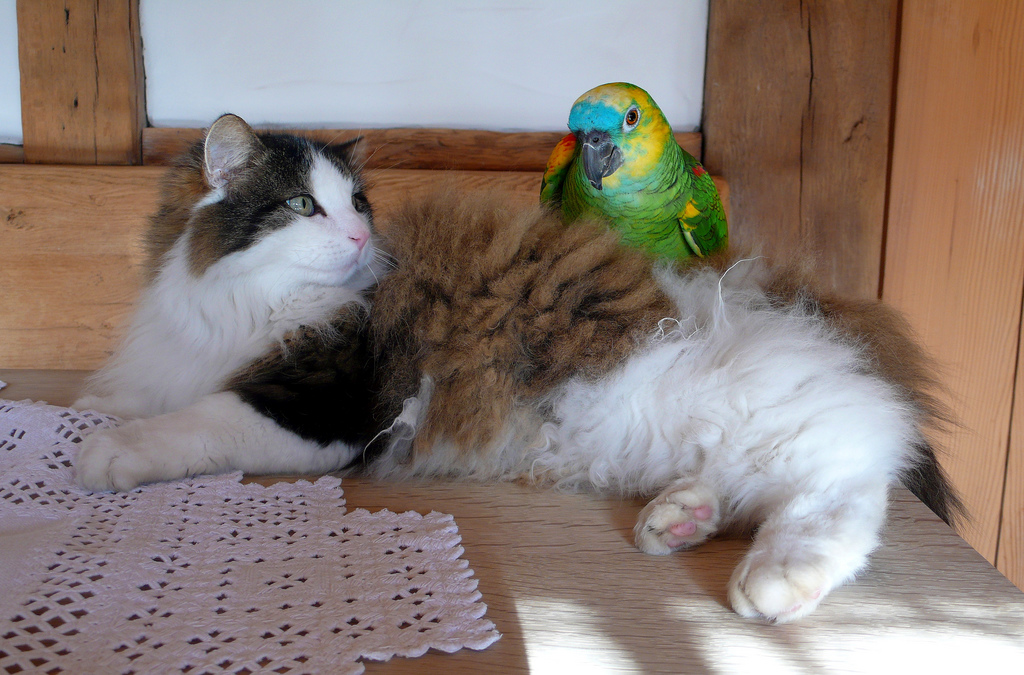
Until you're absolutely sure your pets are getting along, never leave them alone. A cat, even if it's showing affection, can suddenly give in to the urge to hunt and seriously injure or even kill a bird. To prevent this, simply stay near your pets for a while: this will allow you to intercept any attack in time.
Trimming claws
If you haven't yet adopted this healthy habit, now's the time to start: trim your cat's front claws. You can do this with a special nail clipper, available at any pet store. Not only will your cat reduce scratching, but this will also protect your bird from accidental injury. Cats' front claws are very sharp, and even without the intention of doing so, they can injure your bird while playing. Therefore, trimming claws is a very important ritual that shouldn't be forgotten.
Stopping aggression
If you see your cat occasionally trying to catch a bird, you should always be on guard. Once this behavior occurs, it's not going away; it's the very nature of a predator. You should closely monitor your cat's behavior and abruptly stop any hunting attempts with a sharp shout or other action that your cat perceives as an expression of your displeasure.
Hitting a cat is unacceptable! This will only increase its hatred for the parrot, which could lead to disastrous consequences.
All prohibitions and punishments should be administered solely through suggestion—scold the cat or punish it in its usual manner. This way, it will understand that you are displeased with its attempts to offend the parrot, and you will quickly achieve the desired result—making the parrot and cat friends.
That's all there is to say about how to make these two different pets friends. If the described method doesn't produce the desired results over a long period of time, you should consider giving the bird away or not getting one at all. Your cat may have a rather difficult personality, and it's not always possible to convince the predator that it shouldn't hunt prey. But these cases are rare, and often everything goes well – the question of how to make a cat and parrot friends is solved by following all the recommendations, and the result will be pets who can't live without each other.
Read also:
- Hungarian Vizsla (Hungarian Shorthaired Pointing Dog)
- African black-footed cat (ant tiger)
- Catahoula Leopard Dog


Add a comment