
How to make two adult cats friends?
Are you planning to get a second pet, or have you already welcomed a new family member and caused a lot of discontent in your long-time pet? Learn how to make friends and reconcile two adult cats so they don't fight, or who must share territory and the owner.

Content
Should I get a second pet?
If the question of adding a second cat to your home is still being discussed, it's worth carefully weighing the pros and cons.
Important! The biggest mistake is buying a new friend for a "bored" pet who has been the only animal in the house for many years.
In fact, cats don't need constant interaction with other cats. Moreover, an animal that has long felt like the sole master of its territory will likely be displeased by the sudden arrival of an uninvited guest. The reasons for this hostility are obvious: the new inhabitant will likely be perceived as a competitor, encroaching on its owner's territory, food, and love.
If the arrival of a second furry friend is a done deal, then choose the right new friend for your pet.
- Two kittens – the ideal solution. The earlier a new friend is introduced to your pet, the greater the likelihood that a stable, friendly relationship will develop between the animals.
- Cat and kitten – a good option. Maternal instinct often helps establish rapport in such a pair. But keep in mind that this may not work with a cat who hasn't had mothering experience.
- Cat and kitten – a bad idea. In the wild, cats often deal with babies.
- Cat (boy) and cat (girl) - not a bad combination if you plan to breed.
- Two adult cats – is also quite realistic, although some period of adaptation may be required, the duration of which depends on the character traits of each animal.
- Two adult cats – the worst possible outcome. Competition is inevitable, and while neutered animals still have a chance of reconciling, two sexually mature males will turn an apartment into a veritable battlefield.

Basic rules of coexistence
No doubt, when you bring home a sweet and gentle kitten, you imagine how sweetly they'll play, lie under the covers with you, and run to the kitchen at the slightest call... But in reality, things may not be so perfect. The eternal question among breeders about how to make two cats live together in the same apartment has a very obvious answer: eliminate competition and provide each animal with their own space. This can be achieved by following five simple rules:
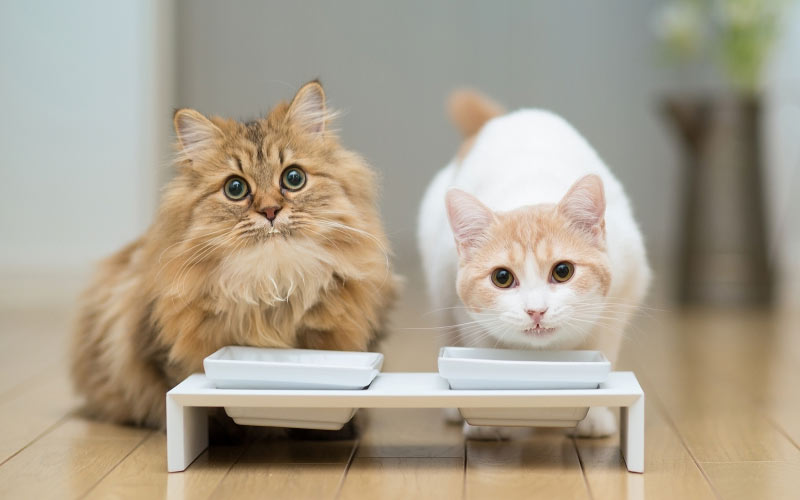
- Each animal has its own set (house, bowl, tray, toys).
- No co-feeding (at least at first). Ideally, feed the animals with their backs to each other (in different corners of the room), or even better, in different rooms.
- To each his own trayMany breeders know how important this is for their pets. Many animals will not approach the litter box if they smell a foreign odor. Therefore, during the acclimation phase, it is recommended to keep the litter boxes separate and to leave some used litter in the litter box of the older pet.
- Respect for the rights of the "mistress of the house"Remember that for the first cat, it's important to maintain her usual rhythm of life as much as possible and provide her with privacy in her favorite places.
- Equal attentionCats are jealous, so don't overly praise or pet the newcomer in the presence of the old-timer, nor scold the owner for any inhospitable behavior.
Stages of dating
So, you've already familiarized yourself with the rules of how to make two adult cats friends, purchased a second set of everything you need, and are ready to give it a try.
Stage #1 – Getting to Know the Smell
During the first few days of a new arrival's arrival, avoid introducing the newcomer face to face with the current owner or owner of the territory. For the first two weeks, it's best to keep the newcomer in some isolation, releasing the cats into common areas one at a time. This solution has several advantages:
- animals will get used to each other's smell;
- the newcomer will be able to explore the new house on his own;
- The old-timer will not feel a sharp infringement of his rights as the owner of the territory, then it will be easier to make friends with the newly arrived cat or male cat.

Stage #2 – First Meeting
Just as there's no universal algorithm for introducing, making friends, or reconciling two cats, there are no clear time parameters for each stage. For some, living behind a closed door for just one week will be enough, while others will express displeasure at new smells even after a month of living together without seeing each other. Observe how the owner or owner of the territory reacts to the scent and voice of the new pet. A variety of reactions are possible: indifference, interest, attempts to respond with meowing, fear, aggression (hissing and a belligerent posture).
Important! Fear and aggression indicate that the animal is not yet ready for direct contact, and introductions should be postponed.
But even a genuine interest in the person hiding behind the door doesn't guarantee a smooth introduction, so it's worth preparing for any unexpected events. Just in case friendship doesn't materialize at first glance, it's a good idea to have a spray bottle of water, a blanket, and thick gloves ready.
Breeders recommend:
- feed the animals well before the meeting;
- conduct the acquaintance in a large room, having first removed everything that could be knocked over and broken;
- do not hold anyone in your arms (for personal safety);
- the newcomer can be brought into the room in carrying;
- the first visual contact should occur at a fairly large distance;
- give animals the opportunity to decide for themselves whether they are ready to take a step towards meeting someone.
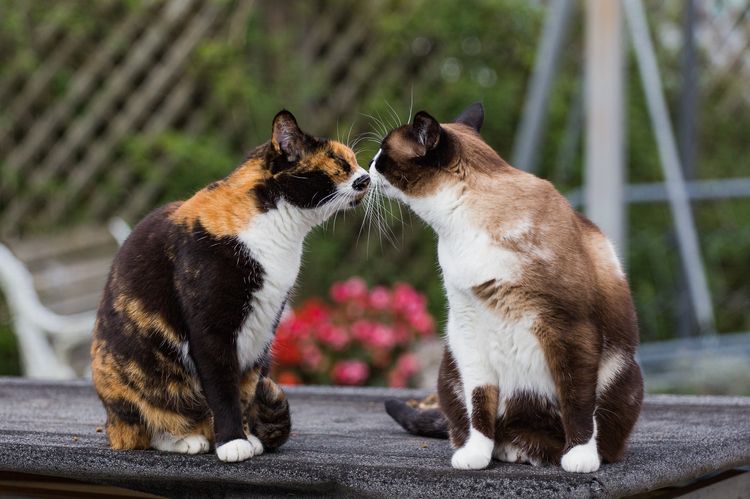
Important! Never push unfamiliar animals toward each other or place them too close to each other.
It is also not advisable to arrange communication through the walls of the carrier, as this will increase stress for the newcomer, who will be locked in a confined space of the box, without the ability to escape in the event of aggression from the old-timer.
In most cases, the first meeting takes a long time. The animals need to examine the stranger from afar, then, having gained courage, approach and get to know him better. Don't worry if the first meeting ends with one of the pets running away or an elderly resident showing indifference. Over time, by increasing the time spent together, you can help them become friends and reconcile, or at least teach them to live in the house without quarrels and fights.
It's much worse if one of the pets displays aggression. After an unsuccessful introduction, it's best to separate the animals again for a while and try again when the stress subsides (no sooner than a week).
Stage #3 – further rapprochement
Once a newcomer has been accepted, he can move freely around the house and has constant access to food, water and tray, the process of establishing relationships between animals will continue. At this stage and throughout the rest of the year, the following will be important:
- compliance with the established hierarchy;
- respecting the boundaries of personal space;
- equal treatment from the owner (without obvious priority to one of the animals);
- joint games;
- reward in the form of favorite treats (necessarily at the same time, but from different palms).

Of course, there are difficult situations. Cats, like people, have different personalities. A sweet and affectionate cat may be unwilling to establish contact with a new inhabitant. In this case, the peace and safety of each pet will depend on the owner's ability to ensure their paths do not cross. However, don't stop trying to bond. Your pet may simply need a little more time.
We also suggest watching a program dedicated to the topic of reconciliation between two adult cats living in the same area:
Read also:
- What is the name for excessive love of cats?
- DIY cat pillow
- Why do cats respond to hissing sounds?
- How to make friends between a cat and a dog in an apartment


Add a comment