
How to choose a muzzle for a dog: which is best?
Continuing the topic of choosing high-quality equipment for your pet, today we'll discuss how to choose the right size dog muzzle based on its intended use and the breed's physiological characteristics, as well as how to choose and buy an accessory without trying it on.
Content
Who needs a muzzle and why?
It's commonly believed that a muzzle is only necessary for large and potentially dangerous dogs, as it's required by regulations for animals in public places (street, parks, or public transportation). However, there are many more situations in which a muzzle is useful and sometimes even necessary, and muzzles for small, medium, and large dogs are available.
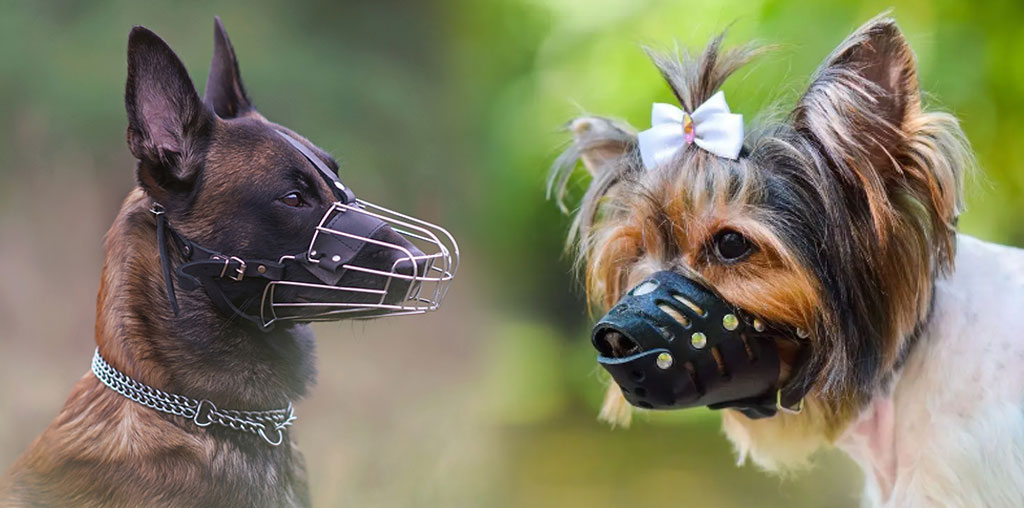
A muzzle is put on a dog so that it:
- could not cause harm to strangers and animals in a public place (requirement of the law);
- don’t pick up anything and everything on the street during walks, because it can be dangerous;
- did not bite in the salon during hair cutting, trimming or claw trimming;
- bit the veterinarian while he was performing medical procedures.
This is why getting used to a muzzle is a mandatory stage of training a puppy of any breed, be it a massive Alabai or a miniature Yorkie.
Canine experts recommend using a muzzle and introducing your dog to it, regardless of whether you plan to use it regularly. If your dog is familiar with the muzzle, it won't experience as much stress when it needs to be used. Dogs unfamiliar with muzzles and those who have never worn one often react with extreme fear or aggression when something is placed on their muzzle.
Types of muzzles for dogs
Which muzzle is best for a dog is the most important question every owner faces after evaluating the variety of models available in stores.
When choosing the type and material of the muzzle, it is necessary to consider:
- animal size;
- level of aggressiveness;
- anatomical features of the muzzle;
- frequency of use (long-term or short-term);
- conditions of use (winter, summer, bathing, drinking water and treats with a muzzle, etc.)
Plastic basket
Main characteristics:
- Material: plastic;
- Dog size: small and medium;
- Purpose: walking, traveling by transport;
- Advantages: lightweight, dries quickly, ventilates well, does not lose its appearance;
- Flaws: fragile, easily broken.
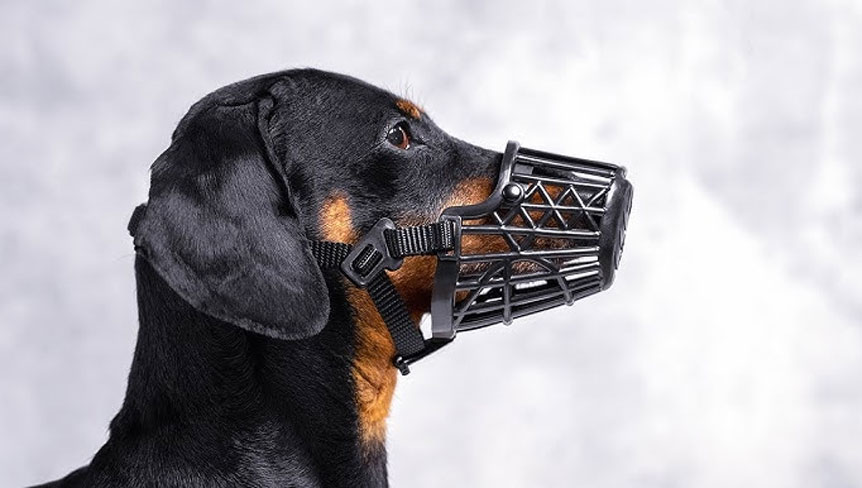
This type of muzzle is most often chosen for small and medium-sized dogs that like to pick up things while out for a walk. Plastic muzzles can also protect others from the teeth of medium-sized mongrels or very large breeds, such as Dachshunds, Spaniels, and medium and large Poodles.
A plastic muzzle can also be purchased for a large, non-aggressive dog. These models are suitable for a phlegmatic Labrador or Laika, but they are not suitable for males of large breeds prone to aggression and dominance, as they can easily be bitten, crushed, or simply torn by the animal's paws.
Silicone basket
Main characteristics:
- Material: silicone;
- Dog size: small and medium;
- Purpose: walking, traveling by transport;
- Advantages: lightweight and durable, dries quickly, is well ventilated, and does not lose its appearance;
- Flaws: costs more than plastic.
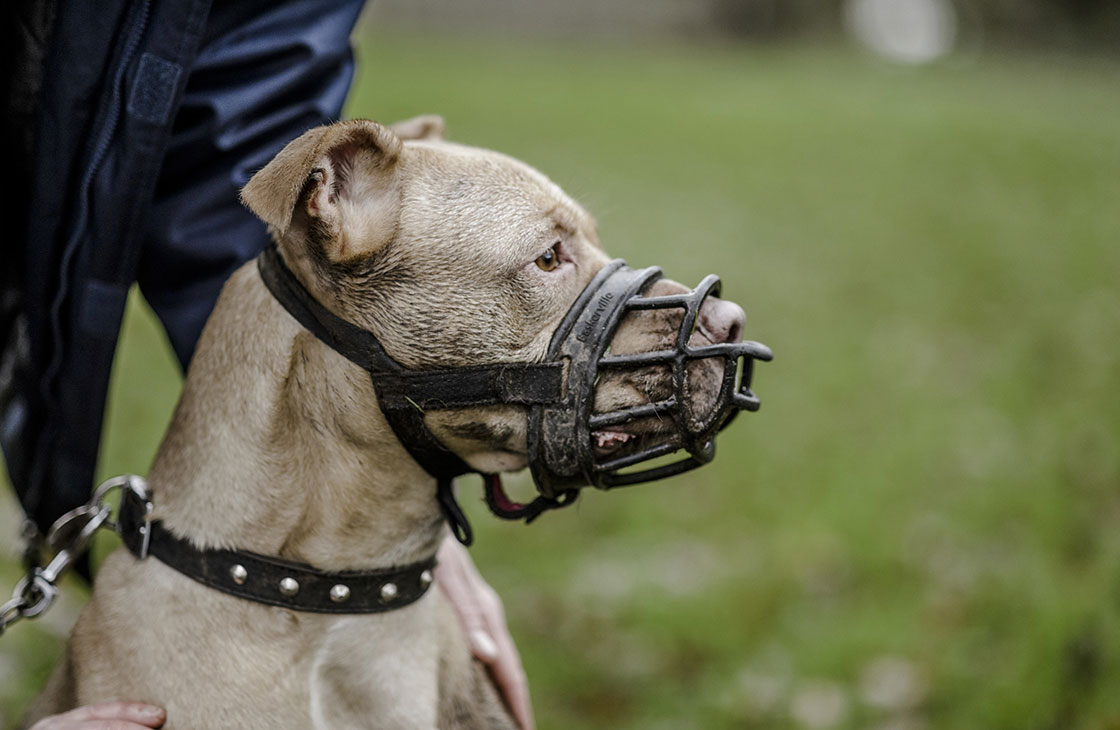
An ideal option for small dogs without behavioral issues. Similar in many ways to plastic alternatives, but more durable and long-lasting.
The most popular models at the moment are the Baskerville models.
Metal basket
Main characteristics:
- Material: metal;
- Dog size: large and giant;
- Purpose: protection from bites;
- Advantages: strength, reliability, durability;
- Flaws: heavy weight, may rust, not suitable for wearing in cold weather.
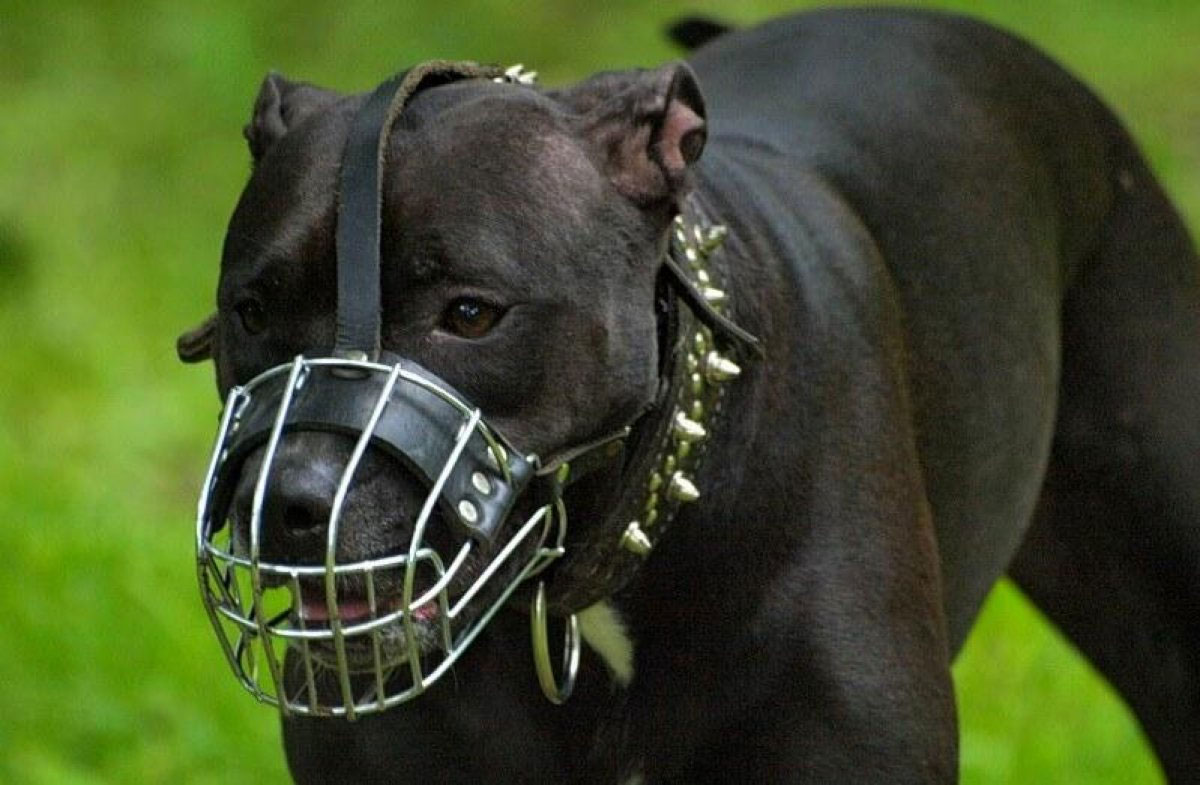
The optimal option for large, aggressive dogs such as Rottweilers, German Shepherds, Alabai, Cane Corso, Staffordshire Terriers, etc.
To prevent a heavy metal muzzle from rubbing or damaging the skin, we recommend choosing higher-quality and more expensive baskets with leather and plastic inserts.
Leather muzzle
Main characteristics:
- Material: Genuine Leather;
- Dog size: medium and large;
- Purpose: protection from bites, not picking up from the ground;
- Advantages: light, can be worn in winter, suitable for brachycephalic dogs (Boxer, Shar Pei, Bulldog, etc.);
- Flaws: It gets wet from saliva or water, can stretch or shrink in size when wet or dry, and in closed models it is difficult for the dog to breathe.
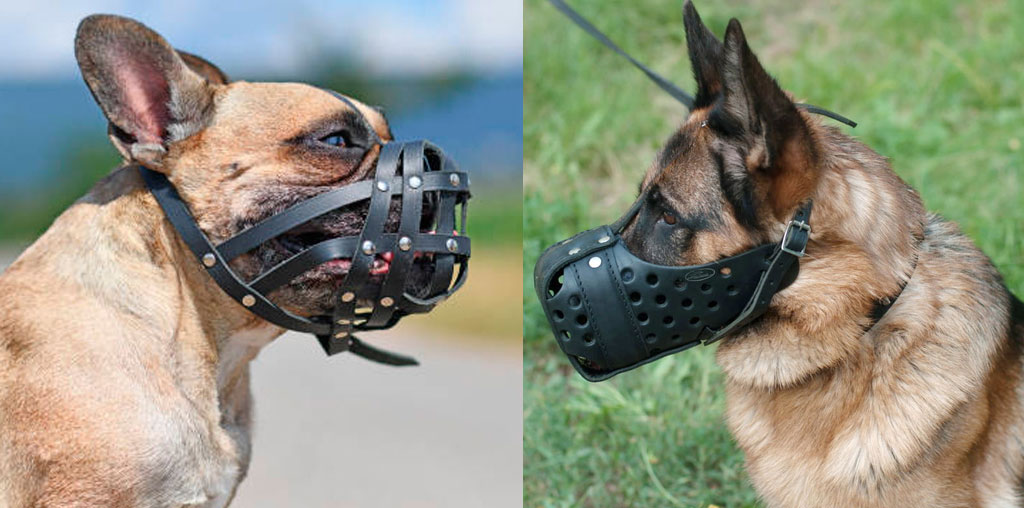
When recommending a dog muzzle, dog trainers often emphasize that perforated muzzles are difficult for animals to wear for long periods of time, but they provide more reliable protection against bites. Mesh leather muzzles are more comfortable for dogs, but in most cases they don't provide sufficient protection against teeth and allow the animal to easily pick up food from the ground.
Silicone "duck"
Main characteristics:
- Material: silicone;
- Dog size: small and medium;
- Purpose: short-term protection against bites;
- Advantages: affordable price, does not interfere with the dog's breathing;
- Flaws: The dog cannot open its mouth and stick out its tongue, so use is only allowed for a short time.
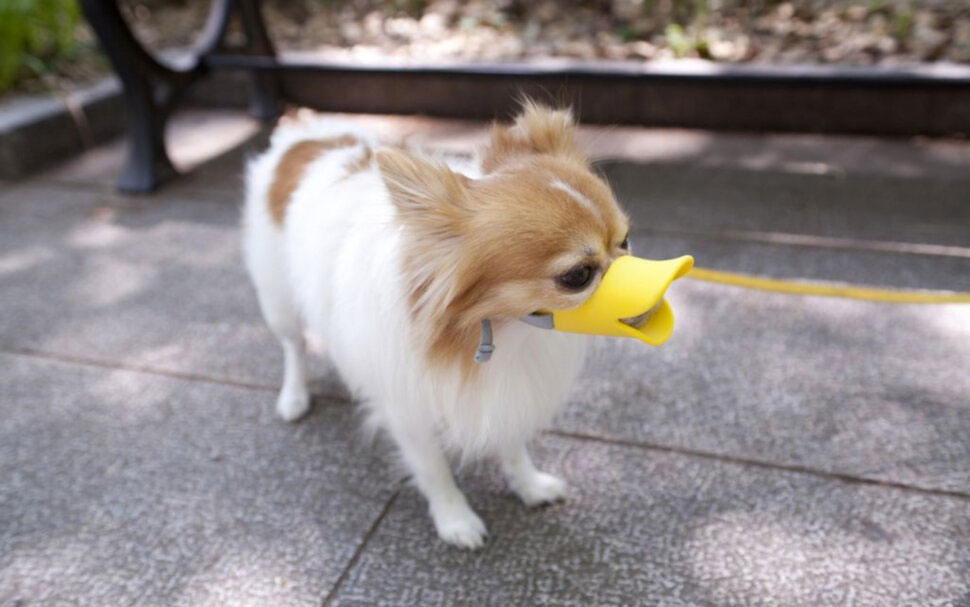
A duck muzzle is a good option for veterinary visits or nail trims for aggressive small dogs. It's not recommended to keep your dog wearing this muzzle for long periods of time (such as during walks, long haircuts, or public transportation), as it prevents the dog from sticking out its tongue or breathing properly through its mouth.
Nylon muzzle
Main characteristics:
- Material: nylon;
- Dog size: small and medium;
- Purpose: short-term protection against bites;
- Advantages: affordable price, lightweight;
- Flaws: the dog cannot open its mouth, does not interfere with picking up from the ground, is not durable.
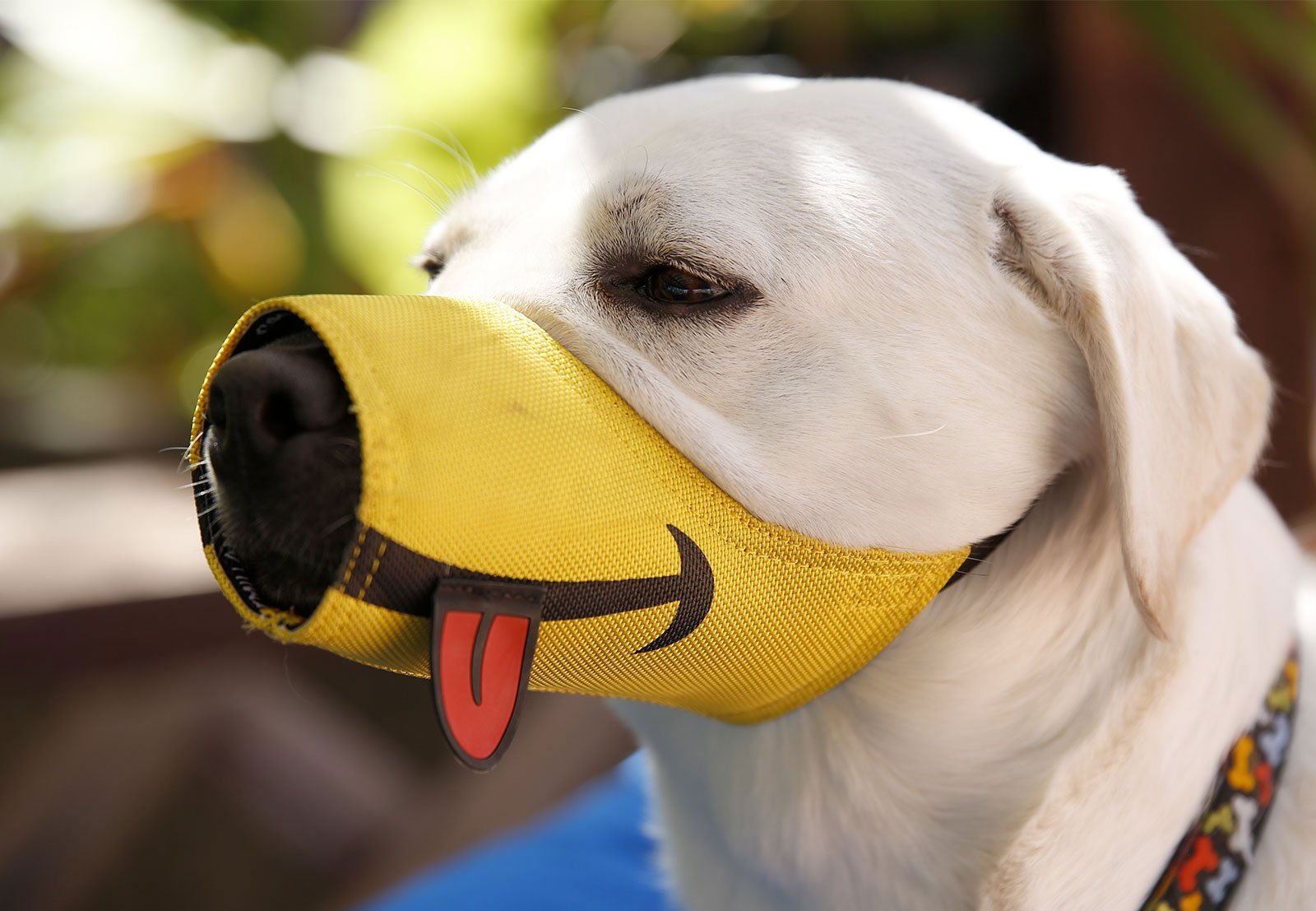
A lightweight nylon muzzle, like the "duck" model, can be purchased for veterinary visits or short-term procedures that could trigger aggressive behavior. Dogs shouldn't wear this type of muzzle for long periods of time, as it fits snugly around the mouth and prevents the dog from sticking out its tongue.
A nylon model must have an open nose hole (mesh can become clogged and make it difficult for the dog to breathe). Mask muzzles for brachycephalic dogs should also have holes or mesh inserts for the eyes.
How to choose a muzzle for a dog
Important! A properly fitted muzzle should allow the dog to breathe freely, open its mouth, and stick out its tongue.
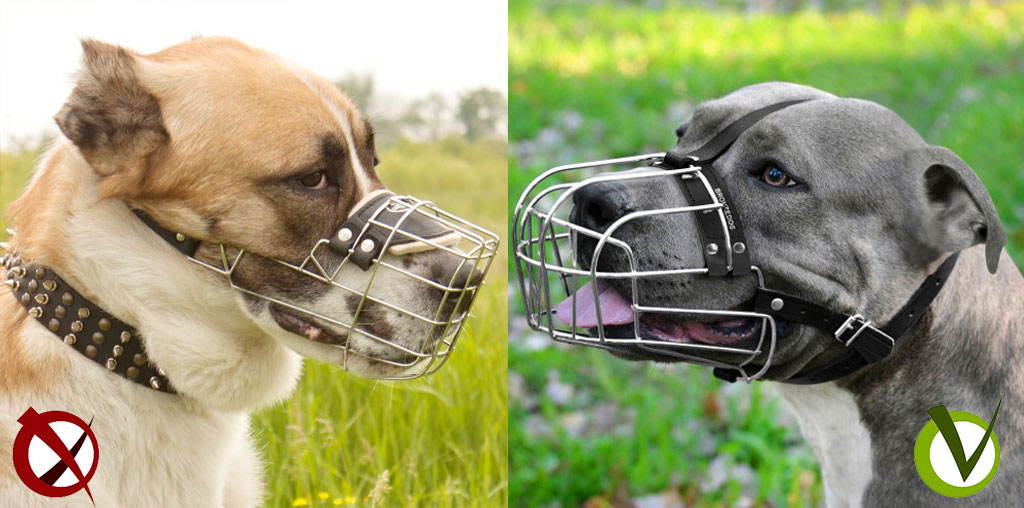
When choosing a model, it is worth paying attention to the following features:
- type of muzzle;
- material;
- fastening features.
It's also important for owners to know how to choose the right size muzzle for their dogs, as they often have to buy this accessory without trying it on.
How to take measurements
When choosing a muzzle, the main parameters are the length and volume of the muzzle, but some manufacturers may provide additional parameters in tables.
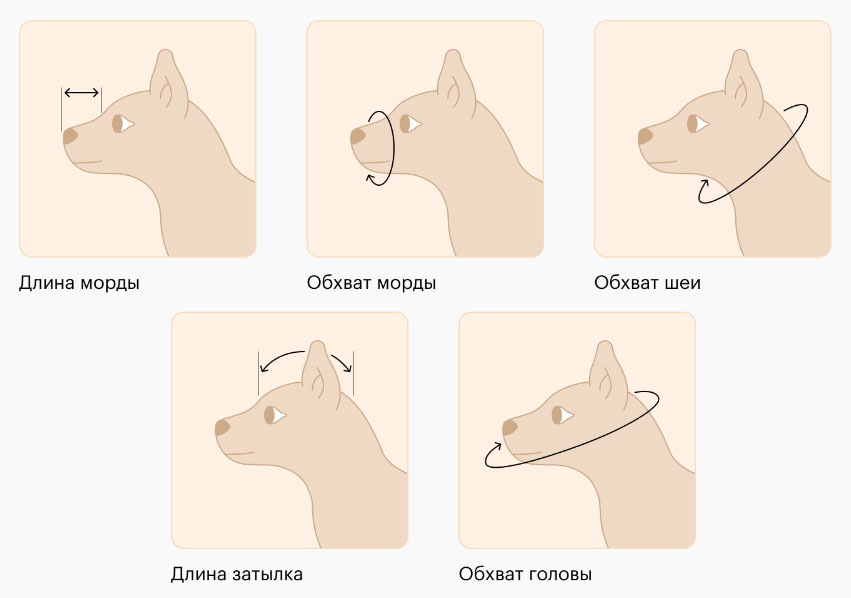
Universal size chart
Not sure how to choose the right size dog muzzle without trying it on, if the manufacturer doesn't provide a sizing chart on their website? Simply use the following universal muzzle selection guide:
|
Muzzle size |
Muzzle length (cm) |
Muzzle circumference (cm) |
Neck circumference (cm) |
|
XS (dwarf) |
7 – 9 |
18 – 22 |
20 – 25 |
|
S (small) |
9 – 11 |
22 – 26 |
25 – 30 |
|
M (medium) |
10 – 12 |
24 – 28 |
30 – 35 |
|
L (large) |
11 – 13 |
26 – 30 |
35 – 40 |
|
XL (giant) |
12 – 14 |
28 – 32 |
40 – 45 cm |
Breed recommendations:
- XS – York, Chihuahua, Toy Terrier, Pomeranian, Pekingese;
- S – Spitz, Corgi, Shelley, Dachshund;
- M – Collie, Spaniel and Setter;
- L – Shepherd, Husky, Malamute;
- XL – Alabai, Caucasian Shepherd, Dog.
Baskerville muzzle size chart
|
Muzzle size |
Muzzle length (cm) |
Muzzle volume (cm) |
|
No. 1 |
6.0 |
22.0 |
|
No. 2 |
7.5 |
26.5 |
|
No. 3 |
8.0 |
28.0 |
|
No. 4 |
9.0 |
31.5 |
|
No. 5 |
12.0 |
35.0 |
|
No. 6 |
13.0 |
41.0 |
Breed recommendations:
- No. 1 - Basenji, Jack Russell;
- No. 2 – Corgi, Beagle, Shiba Inu, Spitz (large), Fox Terrier, Cocker Spaniel;
- No. 3 – Laika, Husky, Border Collie;
- No. 4 – Akita Inu, Collie, Belgian Shepherd, Putbil;
- No. 5 – German Shepherd, Malamute, Labrador, Kurzhaar, Drahthaar, Sennenhund;
- No. 6 – Rottweiler, Cane Corso, Caucasian Shepherd, Great Dane.
Breeders' Advice
How to train a dog to wear a muzzle
Read also:
- Dog Collar Size Chart by Breed
- How to choose a dog leash?
- Top 10 Best Nail Clippers for Dogs and Cats


Add a comment