
How to switch a cat to a different food?
How do I switch my cat to a different diet, and why might I need to? It often happens that the food we buy for our cat isn't suitable. There can be a number of reasons: allergies, nutrient and micronutrient deficiencies, or intolerance to certain ingredients. Finally, it can also happen that a loving owner can no longer afford to provide their pet with their usual diet and is forced to seek alternatives, which is especially relevant during various crises. But such changes aren't always smooth.
Content
Why might a translation be needed?
All animals gradually get used to what they eat. An analogy can be drawn: if a person loves unhealthy food, it's hard for them to give it up, even when they understand their own health is at stake. If it's hard for us to force ourselves to do the right thing, then it's even more difficult with our smaller brothers and sisters. Try explaining to a noble and proud descendant of ferocious saber-toothed tigers that their favorite food will no longer be available. That's a mortal insult! That's why the first thing you need to do is be patient.
All members of the feline family possess an innate cunning, which they will inevitably use to sabotage your plans to change food. You'll likely encounter a "burying" trick, clearly comparing the new diet to litter. Don't forget the pained expression, sad looks, and heart-rending meows—your pet will do anything to appeal to your pity and create the impression of a poor, starving creature. But don't give in to provocation! Reluctantly, stand your ground and switch your cat to a different food.
Another important point is that cats, unlike dogs, are natural-born gourmets; most require a constant change of tastes. And some of the most finicky ones are even willing to go hungry to switch food.
Step-by-step guide to switching to a different food
How to properly transition a cat to a different food? Switching to a new food is always stressful for an animal. How can you do it correctly without harming the animal?
The most effective translation technique
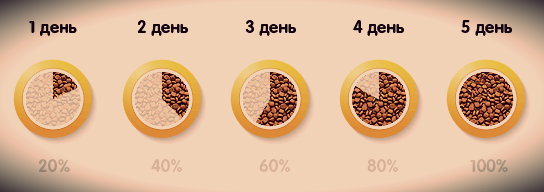
The food change process itself is extremely simple. Ideally, you should allow about ten days for the transition, during which you will gradually acclimate your cat to the new food. During the first few days, mix 25% of the new food with the old one. If all goes well, gradually increase the ratio to 50/50. In the final stage, you can feed three-quarters of the new food. Continue this process until the cat is completely satisfied. If this period drags on, or even worse, if the purring bandit decides to ignore your efforts altogether, then more drastic measures may be necessary.
Let's be clear here: all owners love their cats. But love isn't just about pampering and petting; sometimes it means making difficult decisions and taking on extra responsibility. And that's exactly the case here.
We take it by attrition or useful fasting
If a gradual transition isn't working—your cat eats the old food and leaves the new food in its bowl, or flatly refuses to eat at all—then you'll have to resort to attrition. The most effective method is to put your cat on preventative fasting. And no, we're not cruel or sadistic: this isn't done to torture your pet, but for their health.
If suddenly seditious thoughts arise in your head, pushing you to capitulate into the clutches of a tailed tyrant, then remember - not a single cat has ever died from exhaustion in front of a bowl full of food.
Remind yourself more often that fasting days are actually beneficial for cats, especially indoor and sterilized ones – they can help control excess weight.
The procedure is simple: remove the bowl for 24 hours and don't give the cat any food (even if it begs and complains), then replace the bowl with the new food the next day. Many advise not to embarrass the cat or have the whole family stand around the bowl, expecting a miracle – the proud cat might not appreciate publicly admitting defeat in the battle for food, which could only prolong the transition process.
In general, the duration depends on the stubbornness of the individual feline, but it shouldn't exceed three days—otherwise, it will definitely be harmful. Remember to provide the fasting animal with water during this period, otherwise it will truly become torture.
Ultimately, the result is the same: your pet will eat the new food without a care, despite previously expressing intense hatred and disapproval. The only thing is, when switching to a new diet (especially if it's done for cost reasons), don't ignore the issue of quality.
- Firstly, the diet should contain a lot of meat, because a cat is a predator.
- Secondly, look for probiotics in the ingredients; they'll help with digestion. Phytonutrients (fennel and yucca schidigera) will help eliminate toxins, and a vitamin and mineral complex will provide your pet with the right balance of micronutrients. The Blitz cat food line, featuring chicken, dietary turkey, and hypoallergenic lamb, is excellent in this regard.
Read also:


Add a comment