
How to stop a dog from chewing wallpaper
The question of how to stop a dog from chewing wallpaper can be incredibly pressing for owners of small Yorkies or Chihuahuas, as well as Dachshunds, Spaniels, Alabai, Mastiffs, and other breeds, regardless of size. In fact, a situation in which an adult dog or puppy chews wallpaper, wall corners, or furniture, causing significant damage to the apartment, is quite serious. And obviously, the larger the pet, the more serious the consequences of this "entertainment" can be, meaning action must be taken immediately as soon as you first notice the destructive behavior described above.
Content
Why does a dog tear wallpaper, chew walls or furniture?
To choose an effective method among tips on how to wean your pet from unwanted behavior, it's important to understand why your dog tears wallpaper, what drives it to chew walls, and other forbidden behaviors.
The answer to the question of why your pet started scratching wallpaper, hay, or furniture may be hidden in one of these explanations.
Reason #1 – the desire to chew on something
Typically, an uncontrollable urge to chew begins in puppies during teething. If the puppy doesn't have enough approved toys to satisfy its need to chew, it will begin biting everything within its physical reach:
- furniture legs;
- sofa upholstery;
- corners of furniture sets;
- corners on the walls;
- doors or slopes;
- floor covering.
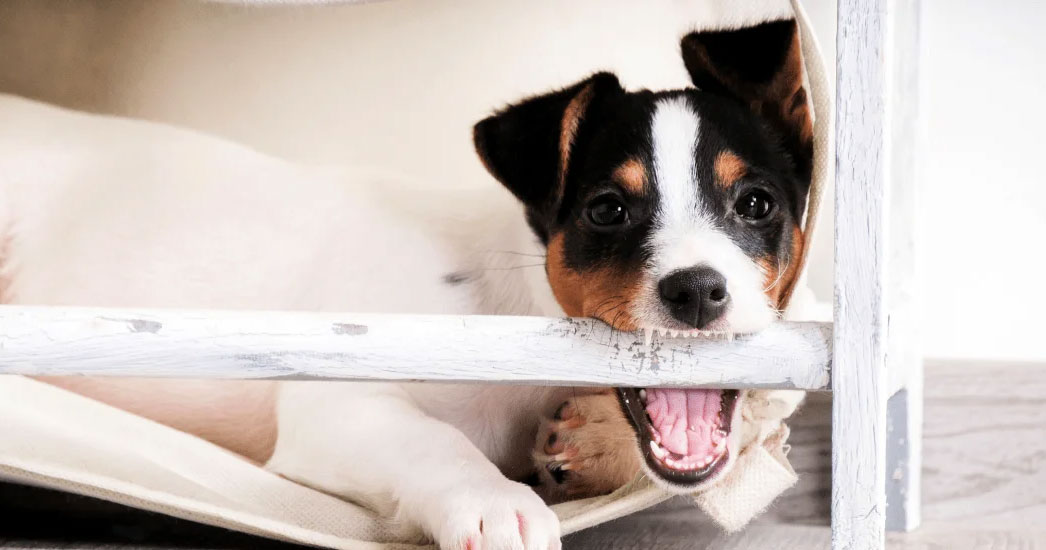
Advice! To prevent the situation from escalating and avoid having to search for recommendations on how to stop your puppy from chewing wallpaper, it's important to provide your puppy with plenty of chew toys. These could include a large beef bone, special chew toys from a pet store, or simply a thick branch with dense, non-splintering wood.
Reason #2 – banal boredom
A dog of any age experiences boredom when its owner is away for extended periods. Unsure of what to do or how to occupy itself during the long hours of solitude, the animal begins to seek out "available entertainment." The situation can be exacerbated by separation anxiety (if the dog is anxious about being left alone and fears the owner won't return).
Typically, dogs begin chewing wallpaper when they can't reach other, more convenient objects. For example, when the animal's range in the house is preemptively restricted when people are away.
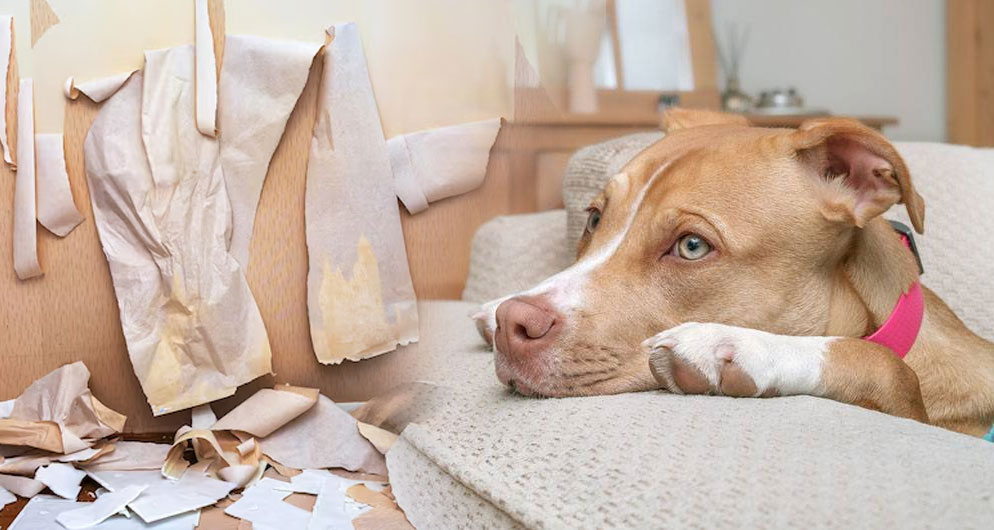
Once they try it, their pet will quickly realize that tearing up the upholstery of a sofa or stripping wallpaper off a wall is quite fun, as this activity satisfies the dog's need for physical and emotional stimulation. Naturally, without proper owner feedback on the puppy or adult pet's actions, this behavior can quickly become a problem.
To prevent this from happening, it is necessary:
- Spend enough time walking and playing with your dog before leaving home and after returning.
- Provide your dog with access to toys so that he has something to do while you are away.
- Do not teach your dog to pull rag toys (or any rags for that matter) so that he does not develop an association between furniture upholstery and such games.
- Train your dog by explaining to it exactly what it shouldn't do and never revoke any previously established prohibitions.
Reason #3 – Severe stress
Any animal's life has more than its share of stressful experiences. Just like people, animals can react to the same situation in completely different ways. For example, severe stress in dogs can be caused by:
- moving;
- the appearance of a child or a new family member;
- the appearance of a new pet in the house;
- prolonged absence of the owner during the day;
- death, illness, or very long absence of the owner (weeks or months);
- severe restriction of freedom;
- cruel treatment.

If the cause of destructive behavior is psychological, then scolding the pet after its return will only make the situation worse.
Remember, you can't scold a dog for something it's already done in your absence. A dog doesn't associate your aggression at a specific moment with something it's done before. You can and should only scold your pet if you catch it directly in the act of doing something undesirable.
Reason #4 – Improper diet
Sometimes owners think that a puppy chews wallpaper for fun, but in fact, the dog is not interested in the paper, but in the layer of plaster underneath.
Interesting fact! This behavior is typical not only of dogs and other animals with calcium deficiency, but also of human children. Toddlers may also chew or lick corners or even start eating sand. It's just that in most cases, it's easier to explain to a child that this is not necessary.
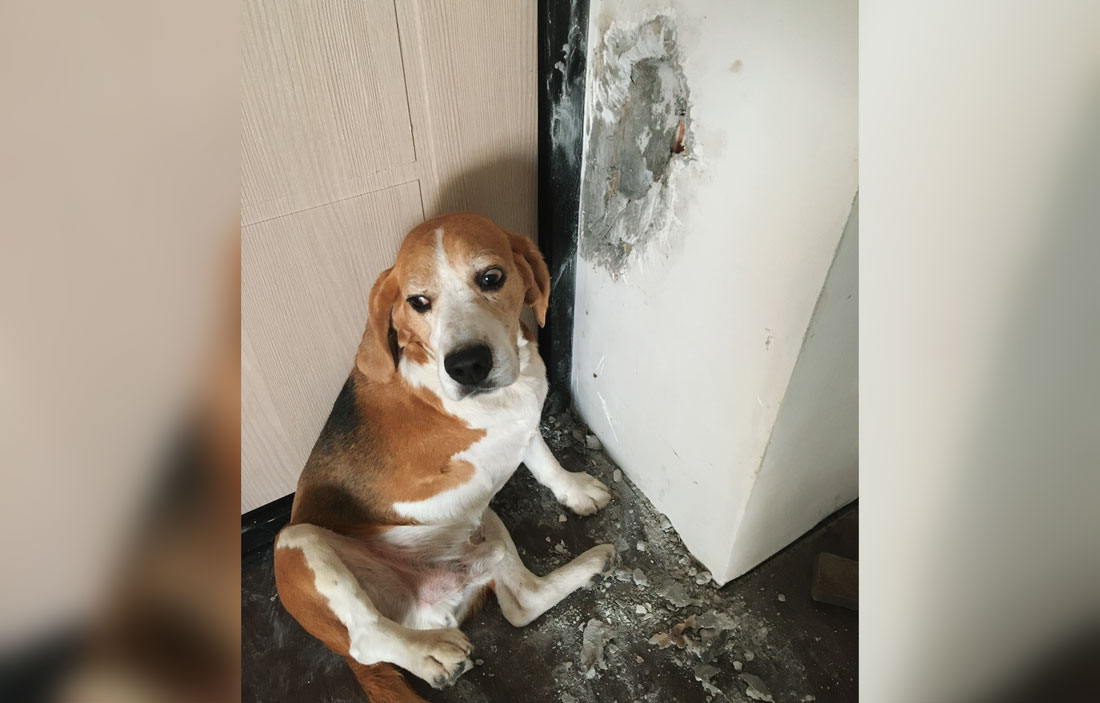
If you notice your pet developing a new, unwanted habit, it's worth getting tests to ensure they're getting all the vitamins and minerals they need for growth and development in the right amounts. If a deficiency in calcium, magnesium, or other essential nutrients is detected, you'll need to work with your veterinarian to develop a proper diet to replenish the missing elements.
Reason #5 – Hunger
Naturally, missing breakfast or dinner won't cause a dog to chew furniture or walls. However, if the animal spends a critical period of time alone, it may try to find satiation in this way.
We will not consider this force majeure option further.
How to stop a dog from chewing walls and tearing wallpaper
As a rule, there's no perfect picture in the world, and no simple solutions to complex problems. Veterinarians and animal psychologists often point to a complex set of factors that lead to the development of bad habits and destructive behavior in dogs. Therefore, the approach to stopping a dog from tearing wallpaper also needs to be comprehensive.
The first thing to do if your dog is chewing wallpaper, walls, or furniture is to visit a veterinarian and ensure your pet is physically and mentally healthy. Only if no problems are found can we conclude that the destructive graying is a manifestation of psychological factors or a bad habit.

To wean your pet from unwanted behavior, you must:
- Increase physical and mental activity.
- Walk more, exercise and spend time with the dog.
- Increase the number of toys that can be chewed.
- Fence off areas where the dog shows particular interest while the owners are away.
- Do not fence off these areas when you are home, but keep an eye on your pet and discourage unwanted behavior using no-knock commands.
- Gently scold the dog when it detects an attempt to “get back to its old ways.”
- Apply repellent sprays to corners, walls, or furniture; you can make them yourself or buy them at a pet store.
- Seek help from a zoopsychologist.
- Take a general training or obedience course under the guidance of an experienced dog trainer.
- Get individual help from a specialist in destructive behavior correction.
We described a wide range of similar products in the article “How to stop a dog from chewing things in the house".
Advice from a dog trainer
For more tips on how to stop your pet from tearing wallpaper, chewing walls, and generally destroying everything in your apartment, watch this video:
Read also:
- How to stop a dog from sleeping on the bed
- How to stop a dog from jumping on people out of joy when they meet them
- Is it possible to punish a dog for disobedience and how to do it correctly?


Add a comment