
How to stop a kitten from biting and scratching
Before you begin training your kitten to stop biting and scratching, you should understand the reasons behind this behavior. Removing the irritant will be key to training your pet.
Causes of aggressive behavior
In most cases aggression Associated with various circumstances that cause discomfort to the animal. These include:
- Malaise. A kitten may be feeling unwell or experiencing pain in a specific area. Therefore, touching them causes additional discomfort. In response to the stimulus, aggressive behavior occurs, manifested by biting and scratching.
- A defensive reaction. In some cases, an animal may be protecting itself and its territory. Cats dislike being touched on the lower abdomen and tail. These areas are particularly sensitive, and few cats allow touching to occur with impunity. The abdomen is not only sensitive but also the most vulnerable. Damage to it can be fatal. Naturally, simple petting will not cause any harm, but instinctively, a kitten will protect this area until it develops trust in its owner.
- Inappropriate play. If an owner plays with a pet with their hand from puppyhood, allowing themselves to be bitten and tugged, then as an adult the cat will continue to perceive human body parts as toys. Also, animals dislike having their face, whiskers, and ears pulled. Subsequent activity is not playful, but the result of irritation. If you tease a kitten in this way, such "games" will soon spiral out of control, and the owner's hand will become a constant target. To prevent this, it's essential to immediately remove the kitten from the hands. biting and scratching hands and legs.
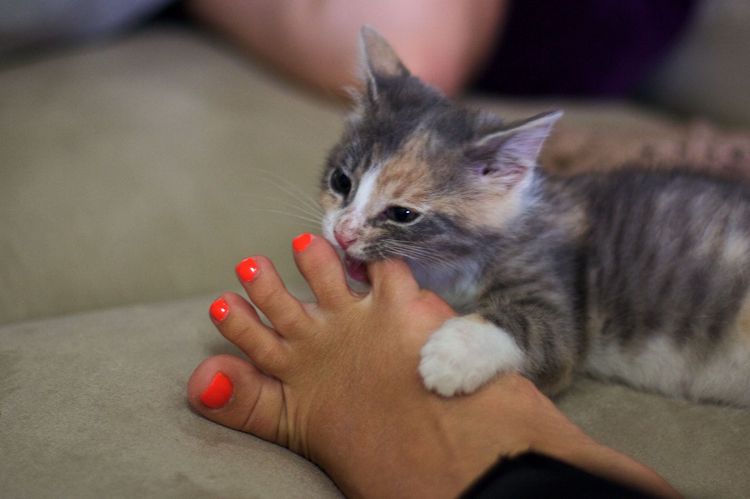
- Hunting instinct. Some kittens have a more developed hunting instinct, which can manifest itself in overactivity and a desire to bite family members, especially when they're unsure. Play more often, allowing them to chase a bow or a sunbeam, or buying them a wind-up mouse.
- Lack of attention. Cats often bite to express boredom and lack of attention. For example, if the owner works long hours and is away from home for long periods, the cat may become offended and bite while being petted (or just because).
- Overattention. Cats also need privacy and peace. If a pet doesn't want attention or gets overexcited during play, aggressive behavior may occur.
- Mistrust of humans. This defensive reaction is common in animals taken home from the street or in kittens weaned early from their mothers. Humans are perceived as dangerous, large creatures to be kept away from. A kitten whose mother cat hasn't yet taught them that humans are a friend and a source of food behaves similarly.
- Gestation and lactation. During pregnancy and lactation, cats often experience behavioral changes. Due to these changes, the cat may become aggressive toward its owner, protecting its kittens. In this case, it's important to be patient and avoid handling the new mother for a while, while continuing to provide normal care.
Biting can also be associated with affection. In the "cat world," it's common to lightly nip the object of affection and devotion. This is a way to show affection. "Lovely" nibbles will differ in intensity from aggressive ones; however, they can still cause discomfort to a person.
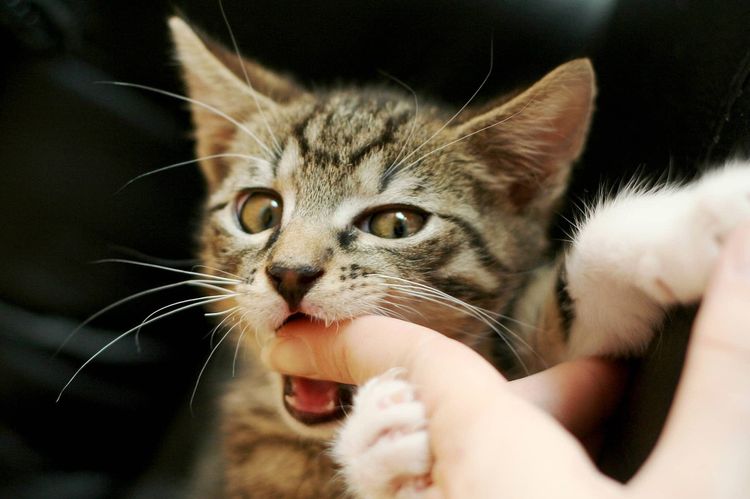
How to stop biting
To stop a kitten from biting your hands, feet, and other body parts, you need to determine the circumstances under which it behaves this way. If this behavior has not been observed before, and your pet also exhibits loss of energy, refusal to eat, or other suspicious symptoms, you should consult a veterinarian.
If the cause lies in the pet's behavioral characteristics, then the following training techniques should be used:
- The owner should discourage the cat from playing with their hands. Alternatively, there are a wide variety of commercially available toys that cats will happily play with. Sometimes, giving them a rustling candy wrapper or bag is enough to completely satisfy their needs.
- Do not allow family members or guests to tease your pet, pull its whiskers or ears, or step on its tail.
- Use punitive measures. They must be applied immediately after each aggressive act. This will help the animal develop a cause-and-effect relationship between bite and punishment. Punishing the animal after or every other time will have no educational value.
Punishment can involve using various stimuli that are unpleasant to the cat, such as loud noises or water. Each time the cat bites, say "No!" or any other word loudly and sternly. It's important to always use the same command. Over time, your pet will understand its meaning, and it can be used as a preventative measure.
Water is also unpleasant for cats, so it can be used as a punishment. Fill a spray bottle with water and keep it handy. It's recommended to use several spray bottles in different rooms to ensure timely punishment.
Don't hit the animal. This will only cause further aggression and fear. The pet will lose trust in its owner and may become withdrawn and run away. The kitten may also start damaging clothes and shoes, scratching furniture and wallpaper, and knocking flower pots and other items onto the floor.

How to stop scratching
To stop a kitten from scratching your arms and legs, you should also determine the cause of the behavior and try to eliminate it. If the kitten scratches while playing, redirect its attention to another object: a ball, a candy wrapper, a sunbeam, or a wind-up toy.
If your pet displays its hunting instincts in this way, punish it with a loud noise, water, or by throwing a towel (or any other thick cloth) over it. The animal will develop a clear, unpleasant association with this behavior, so over time, it will learn to stop doing it.
If an animal scratches or bites a person while they're sleeping, close the bedroom door at night. To ensure your pet doesn't feel uncomfortable, create a cozy sleeping area, such as a box (which cats love) and a soft blanket. Food and water should also be left out.
Read also:
- How to stop a cat from climbing into flower pots
- How to stop a cat from scratching furniture, sofas, and wallpaper
- How to stop cats from climbing on tables


Add a comment