
How to stop a cat from damaging flowers and plants
Quite often, owners of cats who spend their entire lives indoors ask veterinarians and experienced breeders how to stop their cats from damaging flowers and plants. Let's try to understand the cause of this problem and how to solve it.
Content
Why are cats so interested in flowerpots?
A passion for plants and digging in the ground is typical for cats of all breeds, as it is a natural manifestation of instincts inherent in nature.
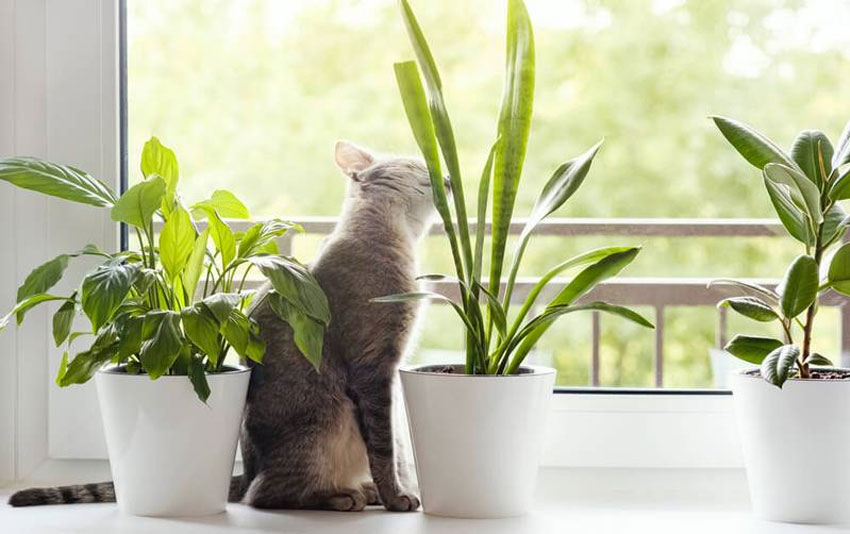
Why does the cat dig the ground and shit in the flowerpot?
A cat with access to the outdoors will most likely choose to relieve themselves outside, digging a small hole for the toilet. A cat that spends its entire life in a city apartment may not have this option, but if it finds a large pot of soil on the windowsill, it will certainly try to dig in it, scatter the soil around, or even defecate.
Important! Don't attribute such actions to a desire to take revenge on the owner, to do something "out of spite" or to ruin a flower. Your pet is driven by simple instinct. The same instinct that enabled you to litter train it.
Why does a cat throw off or chew flowers?
Cats love to climb curtains, perch on windowsills, and stare out the window for hours. The leaves of a nearby plant can be intriguing, like a toy (if you touch a leaf with your paw, it will sway attractively, enticing the cat to hunt and bite).
As a result of such games, a fragile plant can simply be broken, and a small flowerpot can easily end up on the floor.
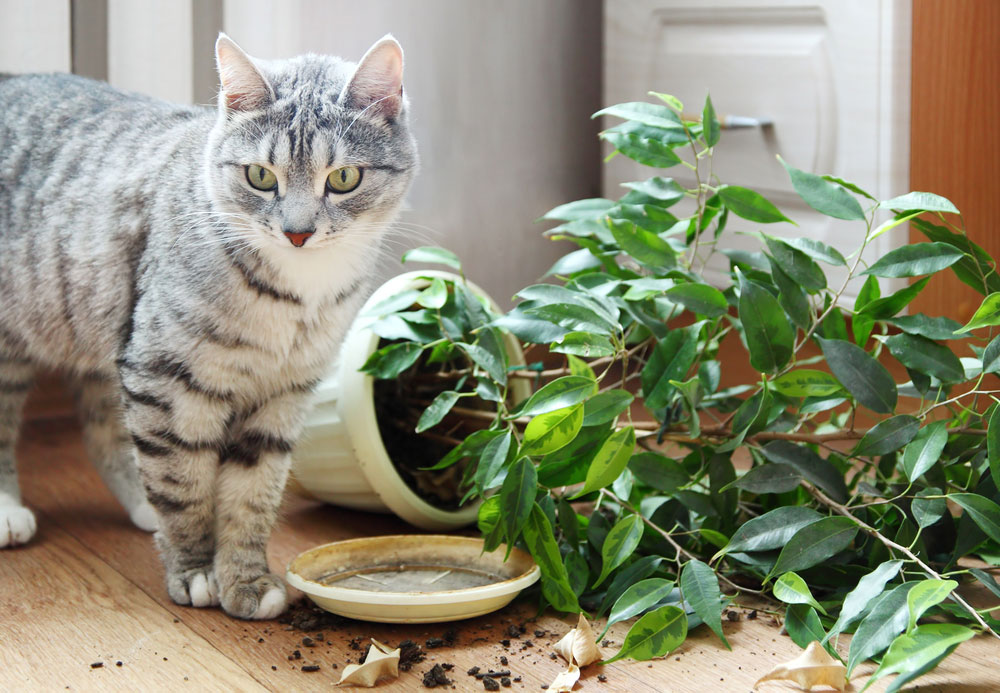
There are also cases where cats simply eat flowers or seedlings they find on the windowsill. Their instincts tell them that there are plants in nature that are good for their teeth and even tasty to chew on (though they don't know that the flowers might be poisonous).
Why is a cat's fascination with flowers dangerous?
While a cat's desire to defecate in the soil under a houseplant and scatter it around the pot only harms its owner's mood, the desire to taste the plant can be dangerous for the pet itself.
Eating the leaves or stems of houseplants can lead to unwanted consequences such as:
- loss of appetite;
- gastrointestinal tract dysfunction (diarrhea, dehydration, inflammation of the mucous membranes);
- severe intoxication (in case of eating a poisonous plant).
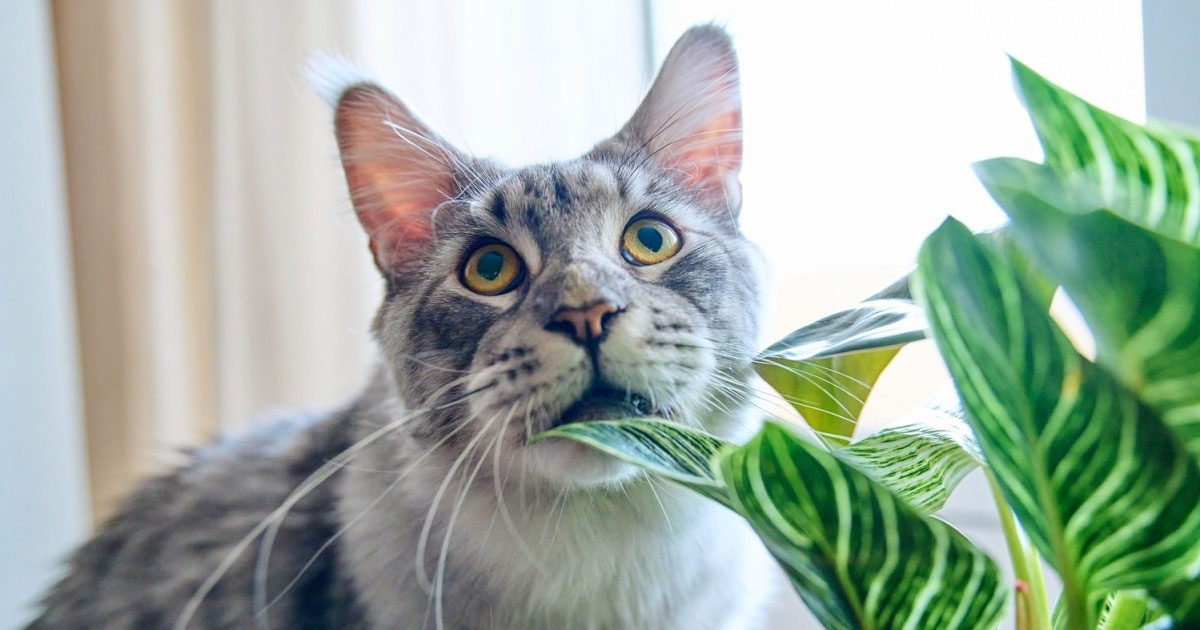
The following houseplants are dangerous even for an adult animal, and especially for a kitten:
- ficus;
- Decembrist (Christmas cactus);
- aloe;
- monstera;
- azaleas;
- haemanthus;
- mother-in-law's tongue;
- geranium;
- hyacinth;
- dieffenbachia;
- aconite;
- asparagus;
- Saintpaulia;
- Gloriosa.
A bouquet given to you can also be dangerous if your pet decides to taste it. Poisonous flowers include: daffodils, chrysanthemums, irises, lilies of the valley, and snowdrops.
How to stop your pet from using potty training
One way or another, the question of how to wean a cat from damaging flowers and plants is a pressing one for many owners, so let's try to find the most effective method, taking into account the pet's interests and factors that might discourage a cat from flowerpots.
Method #1 – Thinking about safe placement
To avoid the hassle of trying to stop a cat from damaging flowers and other houseplants, consider placing flowerpots in a way that will keep your cat out of sight from the first days your kitten arrives home.
- Potentially dangerous flowers should be immediately moved to a room where the cat is not allowed to enter.
- If possible, move the flowerpots from the windowsill to where the kitten cannot reach them.
- Don't place a new flowerpot on a windowsill if you know your pet likes to spend time there, looking out the window.
- If your cat doesn't like to climb or jump on curtains, close the curtains and remove any furniture that would make it easier to reach the windowsill.
Naturally, all of these methods are effective as preventative measures and are aimed at preventing your kitten from becoming interested in flower pots. Next, we'll discuss what to do if your cat has already realized that digging and scattering soil or nibbling on leaves in your houseplants is a fun and enjoyable activity.
Method #2 – scare them away with noise
You can discourage your cat from eating leaves by hanging makeshift rattles on a large flower that will make loud noises every time the animal tries to come into contact with the plant.
An example of such a repellent item could be a small iron can with cereal or metal nuts or a small children's rattle.
Method #3 – Prevent digging
There are several ways to stop a cat from pooping in flower pots:
- Protective palisade made of toothpicks, which are inserted over the entire area of the flowerpot and prevent the cat from digging the ground.
- Metal mesh – advice for owners of large flowerpots or boxes with seedlings (the main thing is to securely fasten the net so that the cat doesn’t tear it off when trying to paw).
- Rustling coatingYou can cover the flowerpot with foil, which will make a rustling sound and simply prevent the cat from crawling in the soil (believe me, scratching the foil will be completely uninteresting).
- StonesCats are attracted to soft soil and the opportunity to dig in it. Place a layer of medium-sized stones in the flowerpot, making them difficult to knock over or toss out. Their cold texture will likely be of no interest to your pet.
- Double-sided tapeMake a cardboard lid for the flowerpot and cover it with double-sided tape. Cats really don't like to touch anything sticky with their paws. Once stuck, they'll definitely not want to do it again.
Method #4 – Repelling with smell
The easiest way to stop a cat from damaging flowers and plants is with a special spray, available at any pet store. Usually, just spraying the area around the flowerpot once is enough to stop the cat from wandering into the off-limits area.
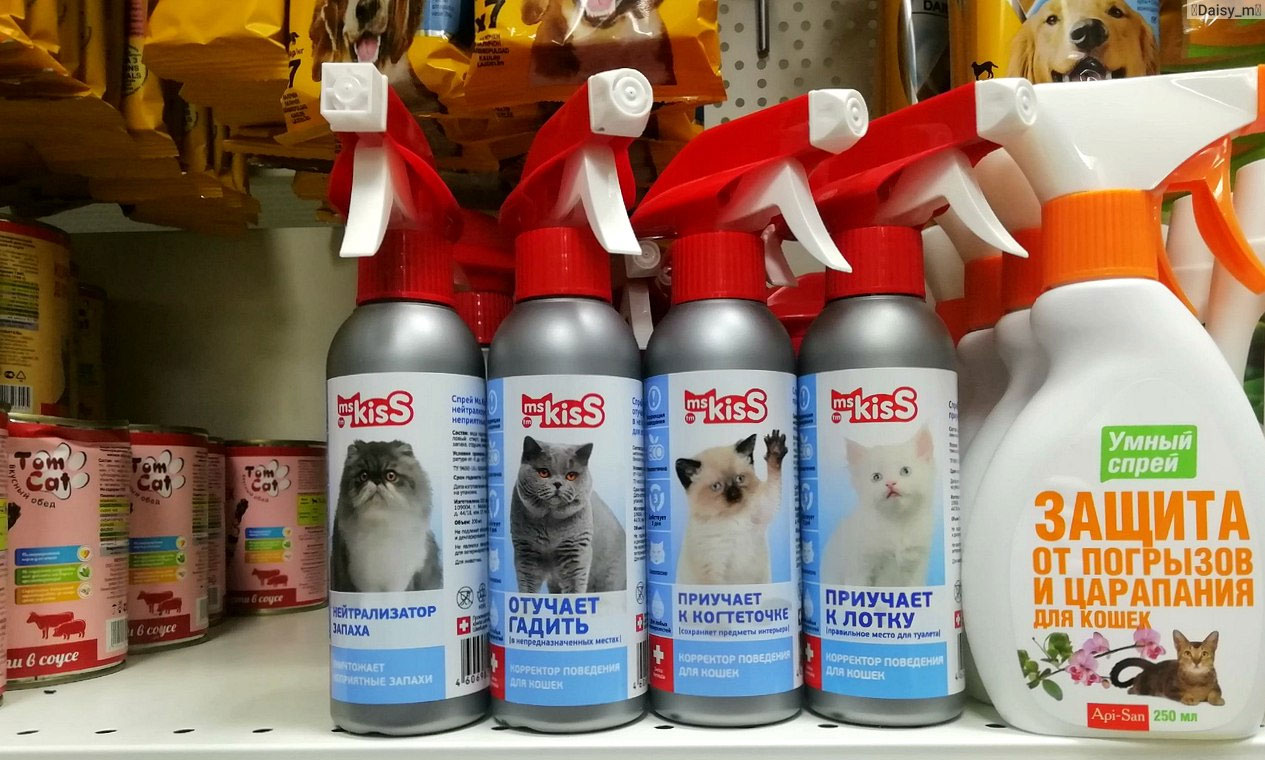
As an alternative to store-bought sprays, we offer solutions that can be easily prepared at home:
- citrus peel tincture;
- table vinegar solution;
- alcohol;
- clove essential oil;
- ground pepper.
Important! These solutions should not be poured directly into the plant's soil! Simply placing them nearby will repel the animal.
Method #5 – Revise your diet
If your cat is obsessively munching on any flowers she can find in the house, it's a good idea to consult a specialist and have your pet's health diagnosed. Cats often show an interest in plants when they have problems such as:
- lack of vitamins and microelements;
- indigestion;
- disease of the gastrointestinal tract.
If, after seeking help, you receive a conclusion that your cat is completely healthy, try revising the animal's diet, offering it healthy greens as an alternative.
Cats benefit greatly from sprouted wheat, barley, oats, licorice, or thyme. You can plant each herb separately at first, then create a mix of the plants they like best.
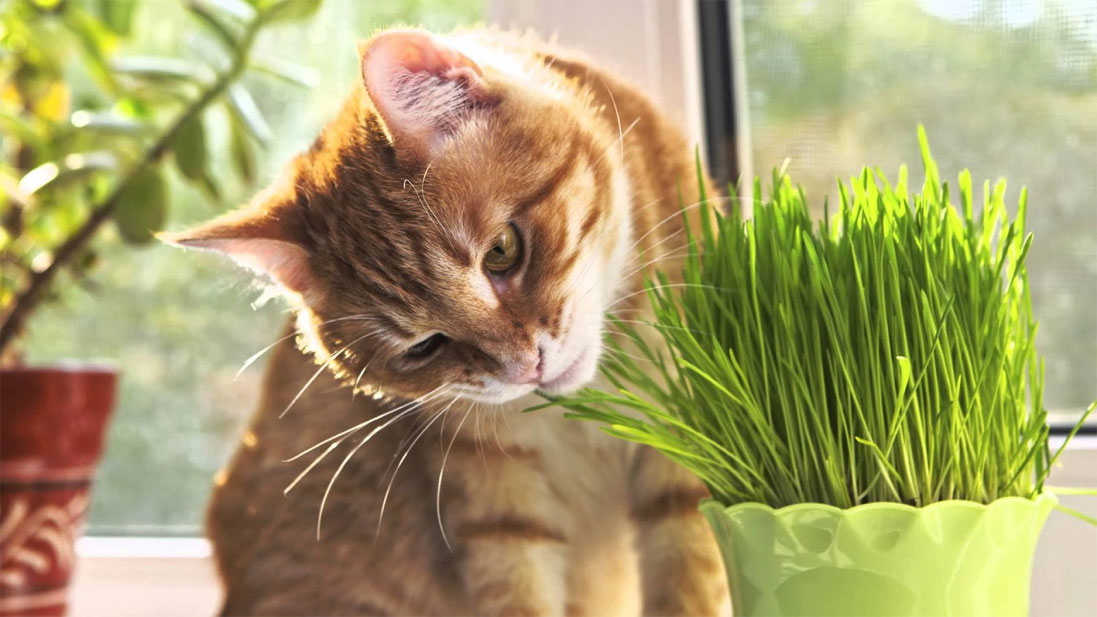
On forums, beginning cat breeders often ask whether they can plant mint or valerian for their cats, as everyone knows they enjoy these plants. In fact, growing them indoors is not recommended. In small doses, they can be intoxicating for cats, but if consumed uncontrollably, they can be harmful to the pet's health, requiring emergency treatment.
Expert advice
We also suggest watching the expert's recommendations on how to wean a cat from climbing flowers, given in this video.
How did you stop your cat from damaging flowers and plants? Share your experience by leaving your recommendations in the comments.
Read also:
- Hyperactive cat: what to do and how to calm it down
- Kitten Eating Litter: Why and What to Do
- My cat has stopped using the litter box – why and what to do?


Add a comment