
How to distinguish a wolf from a dog
Many people note the striking similarities between wolves and dogs, despite their different habitats: the former live in the wild (at most in zoos), while the latter live alongside humans. However, this may only seem so to those who don't know how to tell a wolf from a dog, as these animals actually have quite a few differences, all of them quite significant.
Content
Common features
The wolf and the dog belong to the family of mammals that feed their young with milk and have a number of other common characteristics:
- They are natural predators, regardless of what owners feed their pets.
- They have a similar appearance (applies to some breeds of pets).
- They are sociable animals when in their own environment.
- They are able to produce similar sounds (howl, growl, bark) due to the similar structure of their vocal cords, but they use them in completely different situations.
But despite some common features, these animals have many differences.
Differences between animals
First of all, it's worth noting the obvious difference: the wolf is a wild animal, while the dog is a domesticated animal, characterized by a wide variety of species and significant differences in appearance, sometimes making them completely unlike members of the same canine family. But even those breeds that do resemble their wild relatives have a number of characteristic features that can easily be used to distinguish one animal from the other.
The differences between a wolf and a dog are manifested in the following parameters:
- Size. Wolves are generally larger. Their average weight ranges from 34-55 kg, but males can sometimes weigh up to 80 kg.
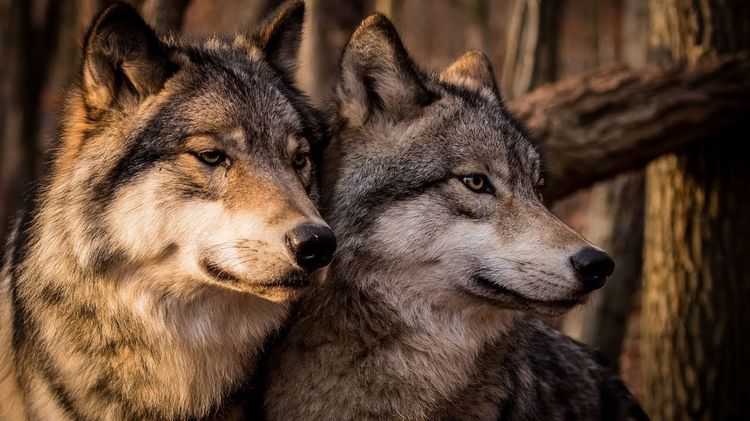
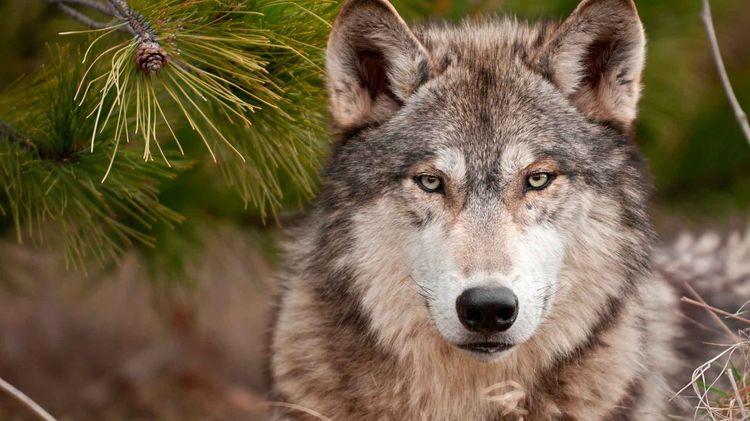
- Head shape and muzzle. The wolf's head resembles that of a German Shepherd, but is more massive and has a more elongated and pointed muzzle.
- Ears. Wolves are simply unable to press their ears against their heads, so they always hold them up. Ears are usually small relative to other parts of the body and are covered with hair on both the outer and inner surfaces.
- Tail. In wild predators, the tail is never curled, held horizontally to the ground or lowered, and always remains virtually motionless. Only domesticated animals typically wag their tails to express emotion.
- Jaws. Wolves have a relatively narrow jaw, which is characterized by its greater strength.
- Eating. Wild predators always eat very slowly because they can choke.
Note! The characteristic moans and whimpers during feeding are associated with the rapid swallowing of food, which causes pain in wolves.
- Locomotion. Wild predators move at a trot, with their hind legs placed precisely in the imprints of their forelimbs. When moving in groups, they follow one another in the tracks of the leading animal in the pack, facilitating travel over long distances.
- Movement speed. Although predators can track prey for days, they cannot sustain high-speed pursuit over long distances (more than 300 m).
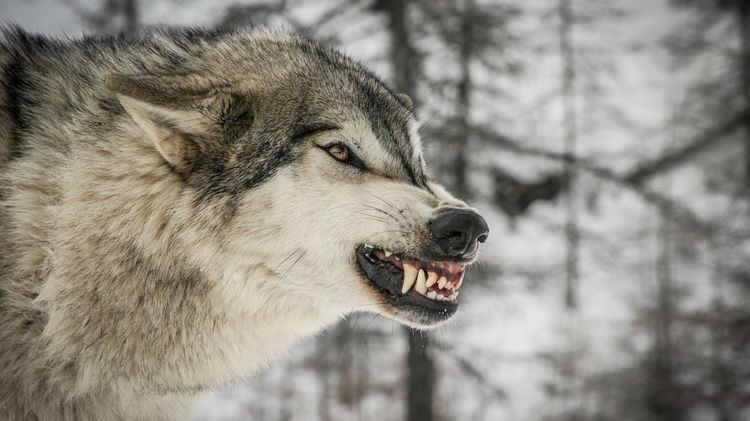
- Attitude to prey. During a hunt or fight, a dog immediately kills its prey, while a wolf seems to cut it into pieces, which is due to the anatomical structure of its jaws. Read also about structure of dogs on our website.
Distinctive features of traces
The differences between wolf and dog tracks are easily visible on soft soil, especially fresh snow. At first glance, wolf paw prints resemble those of a large domestic pet, making it difficult for the untrained eye to determine whether they belong to one animal or another. However, upon closer inspection, characteristic features of wolf tracks can be identified, allowing one to distinguish between these animals:
- Greater elongation compared to dog prints.
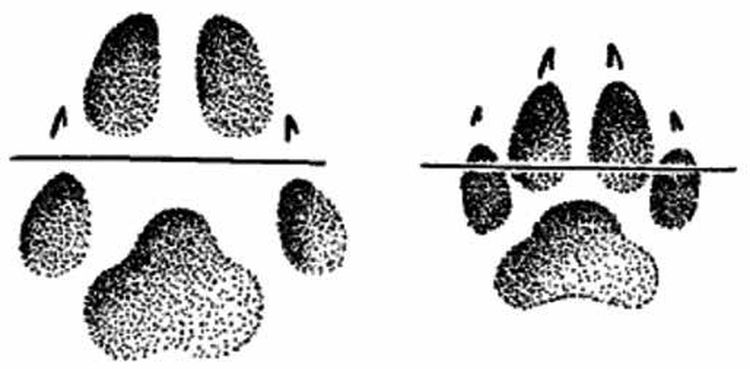
- Greater depth and clarity of claw and toe pad impressions is due not only to their greater weight but also to their stiffer paws and larger claws. A dog's toe pads are more tightly packed (forming a distinctive lump), leaving less distinct marks.
- The prints left by paws during movement are located almost in a straight line (form a line) and the higher the speed of movement, the straighter it is, while dog tracks are always more winding.
- The prints of the two middle toes of a wolf's paw are offset slightly backwards relative to the outer toes, so a twig or imaginary line drawn between them will not overlap either. However, on a dog's track, it will partially intersect them, as can be seen in the photo below.
What are the differences?
Now that we've looked at how to distinguish a wolf from a dog, let's examine the reasons for these differences. They are all linked to two groups of factors:
- Natural ones, conditioned by life alongside humans, have made it possible to domesticate animals and change their behavior, while wild predators still obey natural reflexes and behavior patterns, without which it would be difficult for them to survive in the wild.
- Artificial, related to selection, which resulted in changes in the appearance of animals.
It is domestication and living alongside humans for thousands of years that have formed the basis for the differences we see today between wolves and dogs. Once upon a time, these differences were entirely absent. Wolves remain active at night, while domesticated animals have adapted to the human rhythm of life: they mostly rest at night and are awake during the day. Domesticated animals rarely howl, while their wild relatives do not bark in the wild. However, if captured, the latter are able to adapt to the new environment and use barking as a means of communication.
Interaction with humans
For humans today, dogs are true pets, protectors, and helpers. They are distinguished by their friendliness, obedience, and a number of other individual qualities that distinguish different individuals and breeds. They do not tolerate prolonged loneliness and become very bored when their owners are away for long periods.
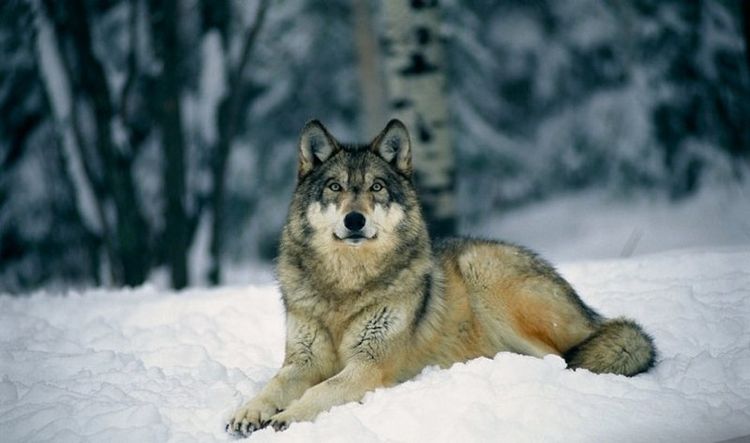
But the same can't be said for their wild relatives, who prefer solitude and don't need constant companionship. They are also highly aggressive. For example, when extremely hungry, the latter can attack an animal or a person without hesitation, whereas domestic animals are reluctant to engage in a fight with a predator, except in defense of themselves or their owners.
Research confirms that dogs are much better at understanding humans than their predatory counterparts. To prove this, scientists conducted an experiment: they placed two closed containers of meat in front of wolf puppies and wolf cubs, using facial expressions and gestures to guide them to the hidden treat. As a result, the puppies, compared to the wolf cubs, understood the clues and found the food faster.
For wolves accustomed to the wild, understanding humans isn't a vital skill. Genetically, they perceive each other as a source of danger, since their encounters usually bode ill for neither. For example, in the forest, humans typically act as hunters seeking a trophy, not new friends.
An amazing video about the friendship between a man and a she-wolf:
Read also:


Add a comment