
How to teach a dog to stand
Continuing the topic of training a puppy at home, today we'll discuss how to teach a dog the "Stand" command, and we'll also examine in detail the nuances that need special attention at different stages of mastering this new command.
Content
The essence of the team
On the command “Stand”, the dog must rise to its paws from a lying or sitting position, or stop and hold still if it is in a standing position or moving.
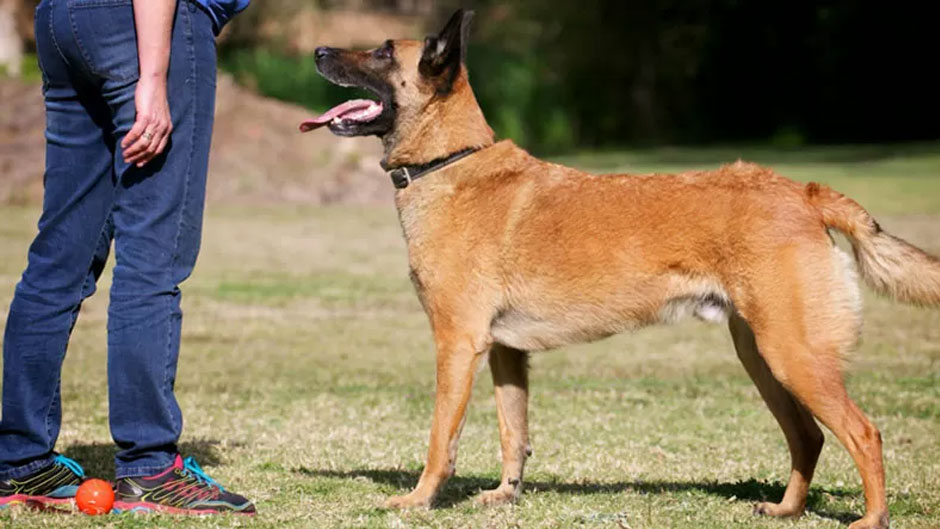
This command is considered "standard." According to the standard, a dog must perform a command based on a hand signal from a distance of 15 meters, holding for 15 seconds.
But teaching the “Stand” command will be useful for any breed of dog:
- If you plan to participate in exhibitions, it is important to teach your pet to remain fixed in the exhibition stand;
- For owners of decorative dogs, knowing the “Stand” command will help during grooming;
- It's worth teaching this command to other pets as well, as there are many situations in everyday life where it's important to prevent a dog from sitting on its hind legs or leaning sideways on its front legs.
Important! The "Stay" command is designed for dogs that have already mastered the basic commands ("No," "Come," "Stay," "Sit," "Down," "Heel," and "Walk"). Dog trainers recommend starting to teach this command when a puppy is 7 months old.
Stages of training
How can you teach your dog to stay without the help of an experienced dog trainer? Arm yourself with patience and your pet's favorite treat as a reward, and carefully read the recommendations below.
To develop the team, an integrated approach is used:
- coercion (a light push under the belly) at the stage of explaining to the dog what is required of it;
- reward (for each command executed correctly).
Important! Training should take place in a calm environment, away from anything that could distract your pet. It's best to train your puppy after a good walk, when the dog has satisfied its basic needs and released any pent-up emotions pent-up in anticipation of the walk. You can also train your pet indoors if it has difficulty concentrating outside.
Team training takes place in several stages:
Stage 1. Practice lifting the body from a sitting position
Experts who explain to owners in training courses how to teach a puppy to stand recommend first teaching the dog to stand up from a sitting position.
To do this, command your dog to "Sit." Once your pet sits, hold it by the collar and, commanding "Stay," gently push up under its belly with your hand until it stands on all fours without taking a step. Once the dog stands without attempting to take a step, praise it and reward it with its favorite treat.
Please note! Most dogs are less enthusiastic about standing than sitting or lying down, so practicing the "Stand" command may take longer than the previous ones.
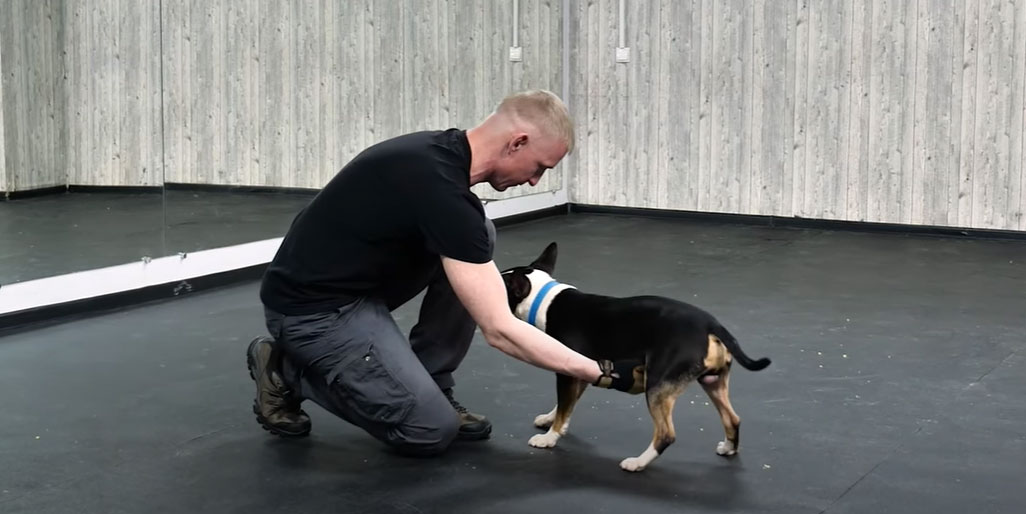
Stage 2. Practice lifting the body from a lying position
You should move on to this stage only after the puppy has mastered raising its body from a sitting position and carries out the command without additional pushing with your hand under the belly.
Command your dog to "Down." When your pet lies down, grab the collar and, commanding "Stay," gently pull upward. If necessary, also push under the dog's belly, raising the body. Be sure to praise and reward it with a treat for correct execution.
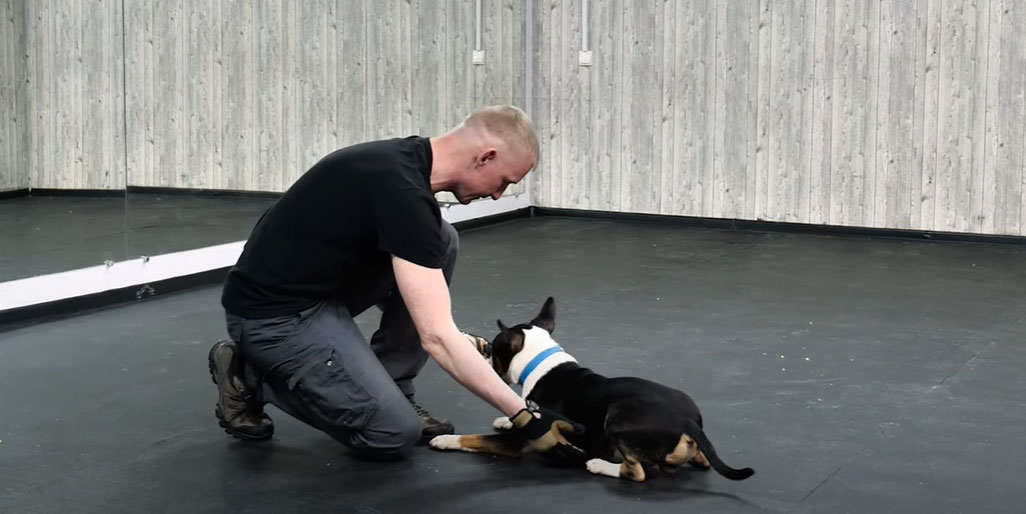
Stage 3. We practice fixation and correct positioning
Once you've figured out how to teach your dog the "Stand" command, it's also important to remember that your pet shouldn't just stand up, but rather remain in that standing position, without attempting to move. The dog should only move on command, "Walk."
It's worth training fixation when the puppy clearly understands that on command he needs to stand up on all paws from a sitting or standing position.
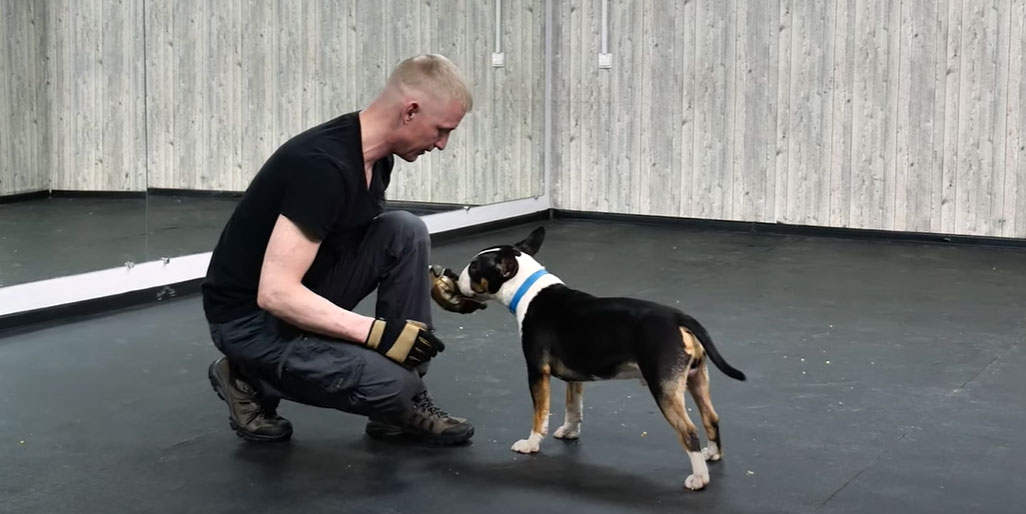
You can read a ton of advice on how to teach a dog to stand still, but how quickly your pet learns a new command depends on many factors—temperament, personality, distractions, etc.
If your pet is a potential show dog, it's important to achieve maximum obedience not only in a calm environment but also in the presence of distractions—people, other animals, and various noises. This practice will help you control your dog in the show ring.
Step 4: Add a gesture
Expert recommendations on how to teach the "Stand" sign command are identical to those you previously used when teaching the "Sit" and "Down" signs. The key is to move on to this stage when your dog perfectly follows the verbal command.
The gesture for the “Stand” command is to raise the right hand, lowered along the body, to a horizontal position with the palm facing up.
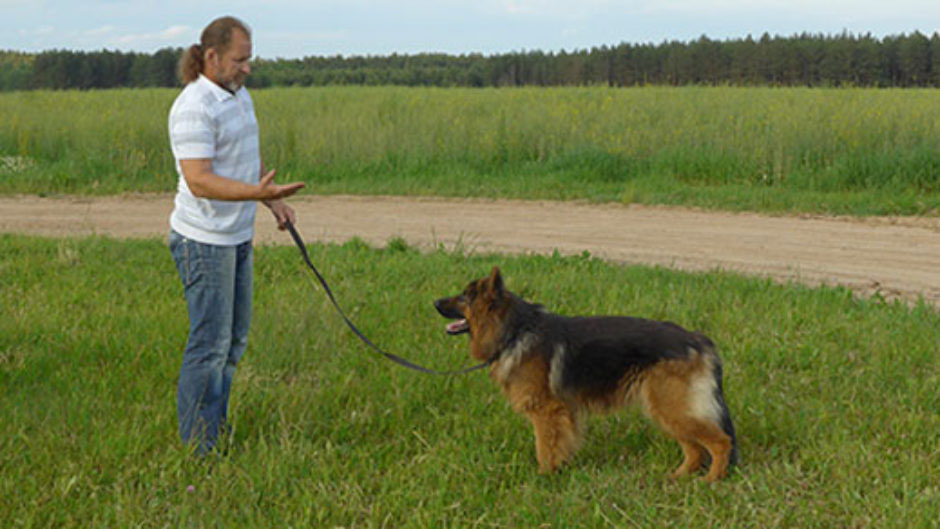
It's best to begin training the hand signal from a short distance, ensuring proper execution and maintaining a standing position. Once successful, you can gradually increase the range of the signal (remember, the standard is 15 meters).
For more information on how to teach your dog the "Stand" command, watch this video:
How to teach a dog to stand
The show stance is significantly different from the basic execution of the "Stand" command, so the two tasks should not be confused.
- On the command "Stand," the dog raises its body and stabilizes itself without falling over. It maintains a comfortable position.
- The show stance has certain standards: the front paws must be strictly perpendicular to the ground, and the back paws must move slightly away, demonstrating a beautiful angle.
Standing in a show stance is not very comfortable for a dog, so practicing this skill begins only after the pet has learned the “Stand” command and has learned to hold a standing position for a while.
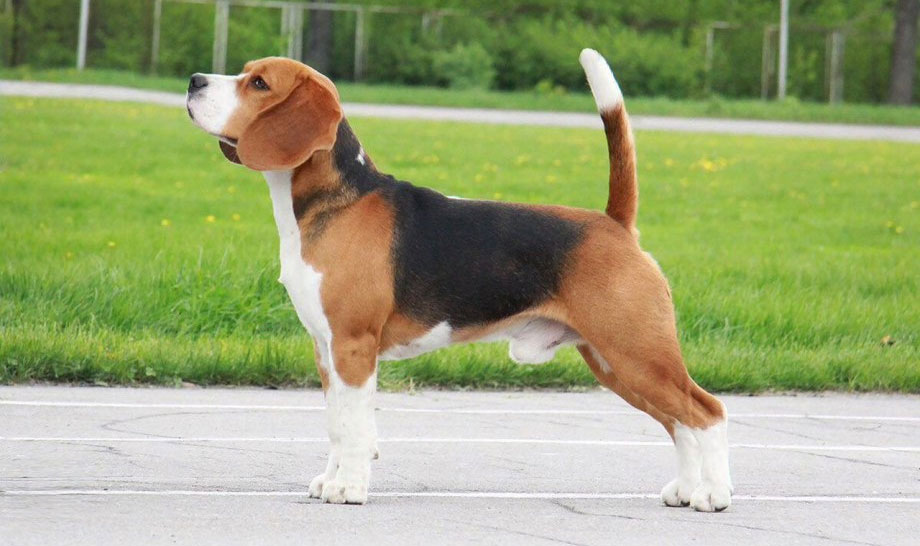
There are three methods of practicing a stance for an exhibition:
- Manually placing the dog in the correct stance. This requires the pet to remain in this position for as long as possible.
- Leaning forward in response to a treat. By the time this skill is mastered, most dogs are already adept at focusing on a treat held in their owner's hand.
- Freely placing a dog in the correct position on command. This is the most difficult technique and can take a long time to master. Unfortunately, not all show dogs master it, despite their owners' best efforts.
Professional handlers warn novice show dog owners that their pets must not only learn to stand in a standing position for a sufficiently long period of time, but must also react calmly to the approach of a stranger and their touch.
For more information on how to train a show stance in different breeds, watch these videos:
Read also:
- How to teach a dog to fetch a stick and other things
- What commands should a dog know?
- How to teach a dog the "Give me a paw" command


Add a comment