
How to teach a dog the "Sit" command
Continuing the topic of proper training for a puppy or adult pet at home, today we'll take a detailed look at how to teach a dog the "Sit" command and what to pay special attention to.
Content
Sequence of learning commands
"Sit" is a basic command in the basic training course and is usually easily understood by dogs, so you can teach both a puppy from 3 months of age and an adult pet to sit on command.
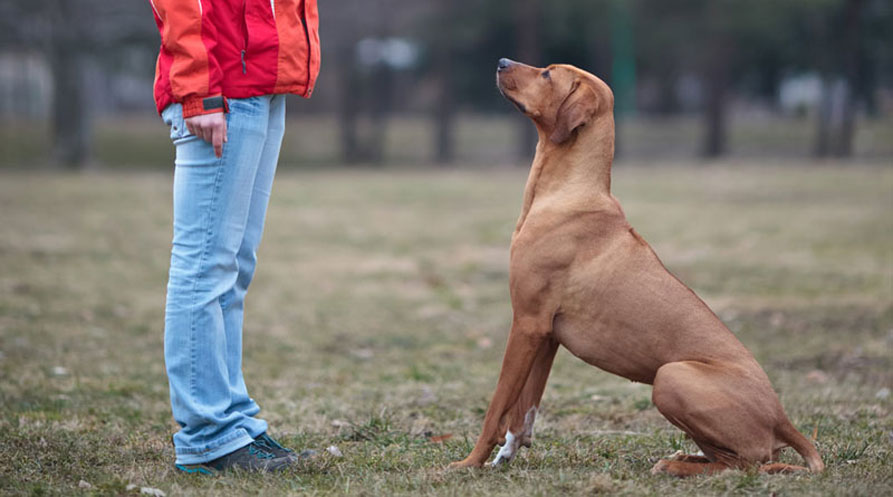
Teaching the "Sit" command usually begins after the pet has mastered the basic, most necessary commands:
- "Fu" (prohibition of action);
- "Come to me" (call to the owner);
- "Place" (moving to the bed).
Important! Learn the commands "Lie" And "Stand" They always start after the dog has learned the basic voice command “Sit.”
The "Sit" command is useful in everyday life not only for service dogs but also for small pets. Obedience training is highly recommended for active hunters, such as Jack Russell Terriers or Dachshunds, and even for small toy dogs like Yorkies, Pomeranians, and Chihuahuas.
Important tips
Owners of service dogs who take a general training course with their pets under the guidance of experienced dog trainers are taught how to properly train their dogs to achieve unquestioning obedience. But if you want to practice independently at home, keep in mind that simply knowing the trainer's recommended steps is not enough to teach your dog the "Sit" command. It's crucial to avoid mistakes that can lead to a variety of undesirable consequences, from disobedience to a complete refusal to participate in training.
From the first day of training, consider these tips from experienced dog trainers:
- Before the lesson, give your dog a good walk to release any pent-up energy.
- At the initial stage, conduct classes in a calm environment without distractions.
- Give a treat only for a correctly executed command.
- Do not interrupt the lesson if your pet is distracted or does not want to follow commands, always ensure compliance, do not end the lesson when the dog wants it.
- Move from the first stage to the next ones only after you have fully mastered the skill.
- Do not force your dog to sit on a dirty or cold surface.
- Do not scold the animal or use brute force.
How to teach the "Sit" command
According to the standard, a dog must sit on its hind legs on the first command, from any position. The command can be given verbally or by gesture (from 15 meters away). The sitting dog must remain in place (not stand up, move from the spot, or change position) for up to 15 seconds.
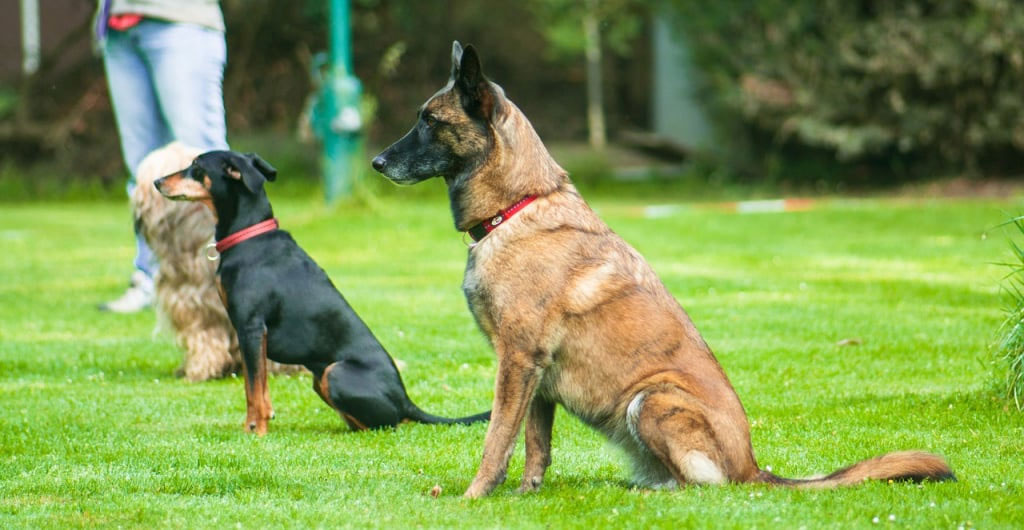
For those who want to know how to teach the "Sit" command to a dog of any age and any breed, here's a universal training algorithm consisting of four stages:
Stage #1. Sit the dog on command
When training a puppy or an adult dog at this stage it is necessary to combine: compulsion (in the form of gentle pressure with the hand on the croup) and encouragement (in the form of a treat when the dog has performed the element correctly).
Sequence of actions:
- Call your pet and interest him with a treat.
- Give the command “Sit” and apply light pressure to the croup while raising the treat over the dog’s head so that the dog automatically sits.
- Praise and treat them with something tasty.
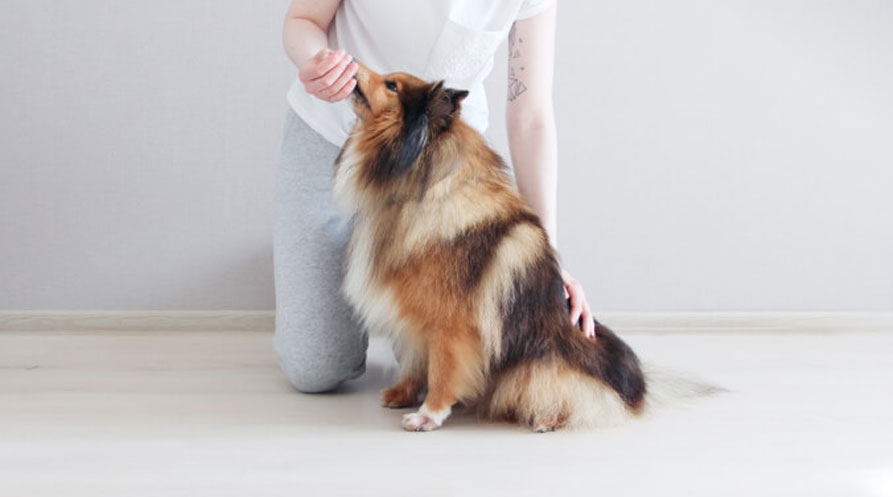
Experienced dog trainers who know how to teach any puppy the "Sit" command assure that after just a couple of repetitions, your pet will easily sit in anticipation of a treat.
From the first training sessions, it is important to teach your pet to sit correctly, without falling to the side.
Stage 2. Endurance training
Teaching a dog to sit is actually quite simple. Initial problems are likely only with mature dogs with strong personalities. However, patience is much more difficult for many dogs. Many active, restless dogs rush to get a treat as soon as they've settled into a stable position.
During the endurance training phase, the dog stops giving treats immediately after performing a command, and instead takes a short pause, initially lasting 3-5 seconds. If the dog jumps up, unable to endure, the treat is withheld and the training begins again, building obedience and then rewarding.
Gradually increase the waiting time. The standard is 15 seconds, but to improve obedience, you can teach your pet to wait 1-2 minutes for a treat without changing position.
Stage 3. Executing a command in any conditions and from different positions
This stage is usually reached when the puppy is 6 months old.
Once your dog has mastered the skill and begins to obey commands unquestioningly at home, you can train it to focus on your owner's commands in the presence of distractions—outside during a walk, on the playground during an active ball game, etc. If your pet enjoys retrieving objects, a toy (a ball or stick) can be thrown as a reward, not just a treat.
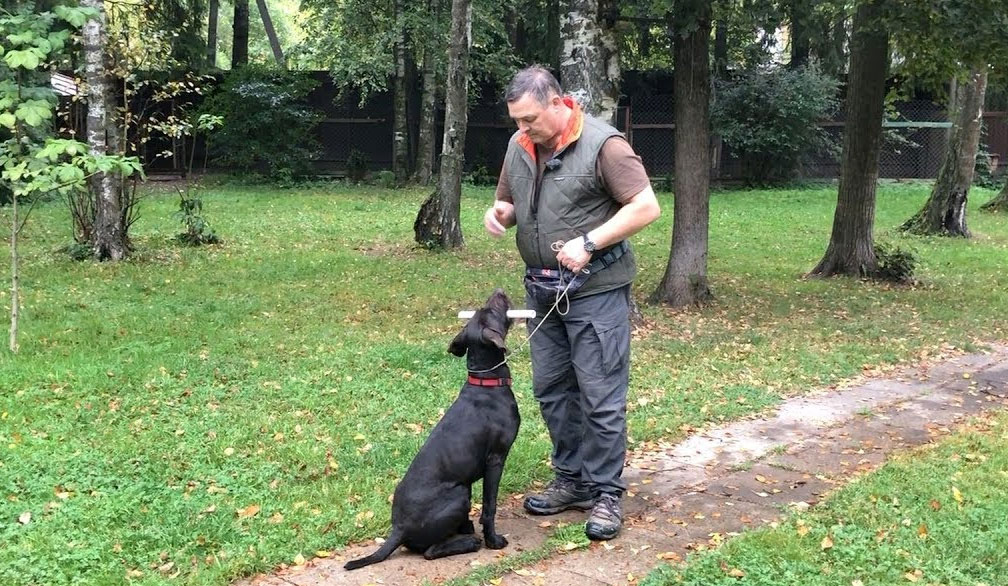
At the same time, it is worth teaching the dog to sit on its hind legs on command from different positions.
Stage 4. Giving a command with a gesture
So, you've trained your pet to sit on a voice command, but for the show ring, you'll also need to figure out how to teach your dog to obey the "Sit" command given with a hand signal from 15 meters away.
Naturally, this stage is the most difficult and should be approached when the dog is old enough and well-controlled outside the home. Usually, puppies master unquestioningly following a hand signal in difficult conditions (outside the home) by 9-10 months.
Sit is a hand gesture in which the elbow is bent and the wrist is raised to ear level with the palm facing forward.
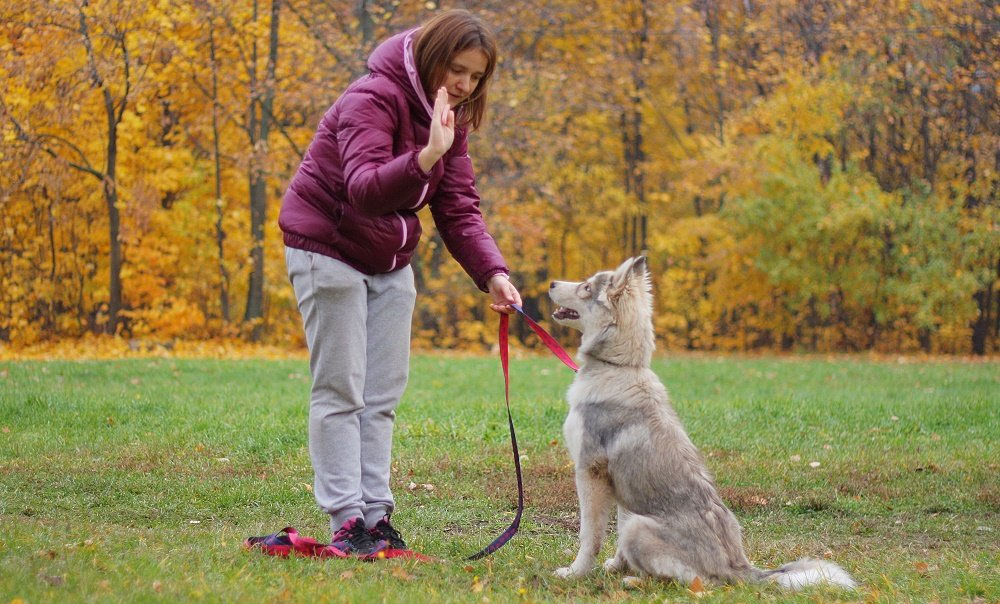
Sequence of actions:
- First, practice executing the command from 1-2 meters away, duplicating the gesture with a voice command that is already familiar to the dog.
- Gradually increase the range of the command.
- Practice performing a gesture command without duplicating it with your voice.
When giving the command from a distance, don't release your dog with the "Walk" command. Teach your dog to wait for your approach and the treat before releasing it.
Questions and Answers
Video tutorial
Read also:
- How to stop a dog from chewing things in the house
- How to teach a dog to fetch a stick and other things
- Dog tricks: a list of the most interesting ones


Add a comment