
How to teach a dog the "Heel" command
Continuing with the training topic, in this article we'll discuss how to teach a dog to walk at your heel on command, the best age to begin training, and the most effective training techniques.
Content
Consistency in training
New owners often wonder how to train their dog to walk calmly next to them during their first walks. Typically, once outside, a puppy can't control its emotions and is eager to explore the surrounding objects and smells. And in the first few months of life, this is completely normal!
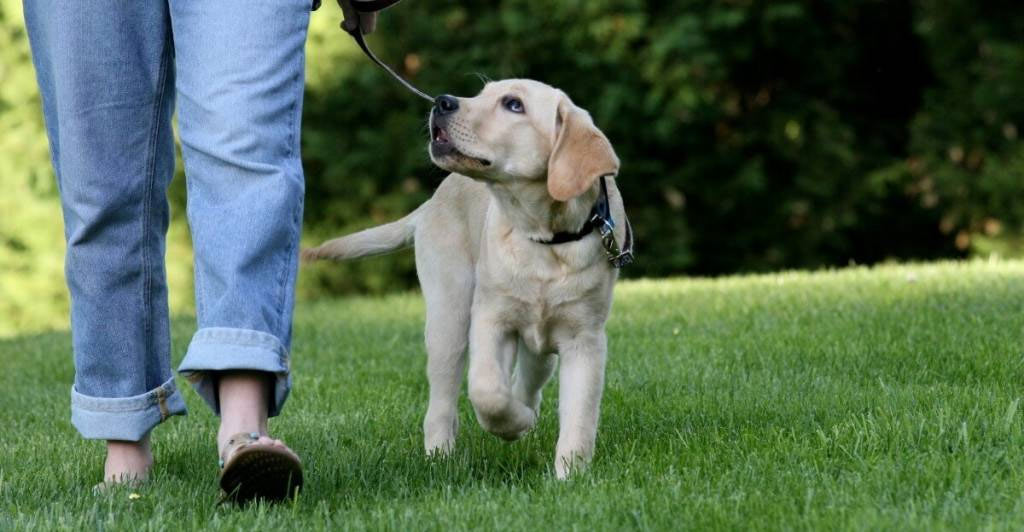
Teaching a dog the "Heel" command isn't exactly the first step in a training schedule. Before you begin practicing walking parallel to your owner's heel, your pet should:
- learn to walk on a leash;
- know: “Come to me!”, “Ugh!”, “No”, “Sit”, “Lie down”, “Stand”;
- be able to concentrate on the owner during classes.
Important! Teaching this command involves strict restrictions, so it will be extremely difficult to achieve the desired results from an active puppy who hasn't learned to give up his immediate desires when asked by his owner.
Optimal age
In view of the above, most dog trainers consider the optimal age for teaching a dog to move alongside its owner to be between 5 months and a year, but only if the dog has previously undergone training aimed at developing obedience and other simpler requirements of the owner.
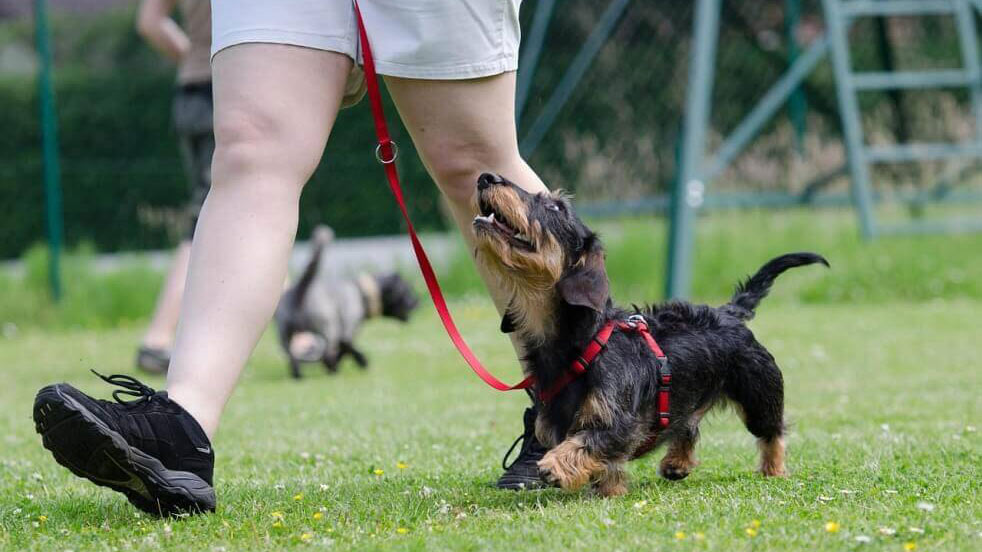
Owners who adopt an adult pet often ask how to teach their dog to walk comfortably and to walk "Heel" if they haven't already. Dog trainers assure that with the right approach, learning to walk correctly, as well as other requirements, can be done at any age. The key is the correct training sequence, as the dog should only move on to walking at heel when it is psychologically prepared to obey its owner's commands, learn to focus on the owner during lessons, and not pull on the leash outside.
Correct execution
Before we understand how to teach a dog the “Heel” command, let’s figure out how to perform this element correctly.
So, on the command “Heel”, the dog:
- stands to the left of the trainer so that the front right paw is next to the left leg;
- when moving, it adapts to the pace set by the person;
- when the trainer stops, sits down;
- If the person makes a turn, the dog moves, maintaining its position relative to the trainer's left leg.
Teaching techniques
Since the "Heel" command is one of the most difficult for most dogs, the training technique itself, the regularity of training, and the patience of the trainer are all important.
Preparatory stage
Before you begin the process of introducing a new command, it's important to give your pet the opportunity to release the emotions that inevitably arise when going outside. Take your pet for a good walk and find a comfortable place for training where it won't be distracted by other animals, passersby, or traffic.
Before teaching your dog to heel, repeat the commands you've already taught it. This lets your pet know the lesson has begun and that your owner expects obedience.
Initial stage
At the very beginning of training, the "Heel" command can be practiced on a regular leash and collar or using a special prong collar (for large breeds). There are also recommendations on how to teach representatives of small breeds to walk close using a lead.
Important! A harness is not a suitable option for this type of training, as it will not allow you to position your pet correctly and prevent it from moving in the wrong direction.
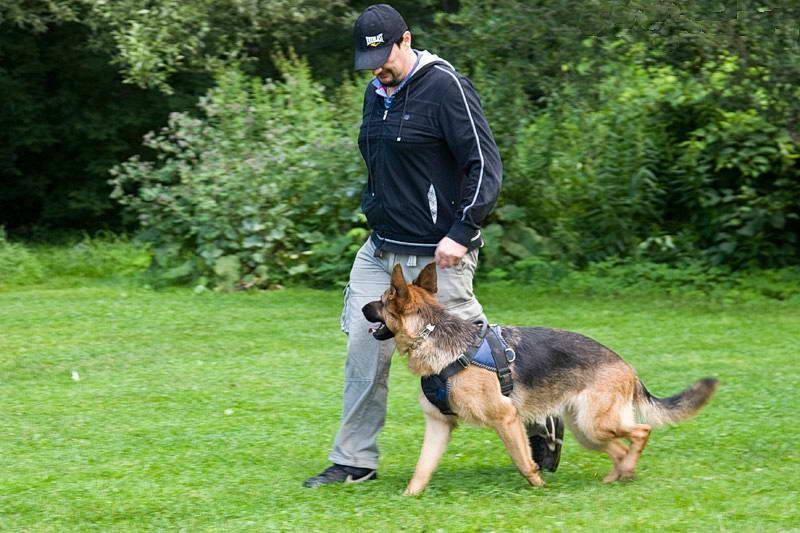
We'll look at a universal way to train a puppy to obey the "Heel" command, regardless of the type of collar used.
Algorithm of actions:
- Call the puppy with the now familiar “Come to me!”
- Place on the left in the correct position.
- Turn your pet's attention to you and say "Heel", duplicating the words with a gesture (a pat on the thigh).
- Begin walking at a pace comfortable for your dog, holding it in the correct position with a leash and collar. Initially, walk only a few steps. It's important to let your dog know exactly what's expected of them.
- After stopping, ask the dog to “Sit” and perform the reward.
Important! Rewards are not given while the dog is moving. Treats are given when the exercise is completed and the dog has performed it correctly. If the puppy pulls while moving, it is restrained with a leash and collar.
Be persistent but kind. Start training with short sessions (10-15 minutes) and gradually increase to 30 minutes. Initially, train away from people and other animals to ensure your pet's maximum concentration. Don't overdo it, as fatigue during training is just as bad as overexertion. Remember, an exhausted pet will have trouble learning. Furthermore, it may develop a negative attitude toward training, which is highly undesirable.
Complicating the elements
Once the initial stage is completed and the animal has mastered the basic skill—moving to the left side at the owner's pace, without pulling on the leash—you can move on to the next steps:
- the ability to maintain the left lane when the trainer changes the pace and direction of movement;
- execution of a command in the presence of distracting factors (in a crowded place);
- training in joint movement when the leash is slack, and later without a leash at all.
Practicing the skill
We've told you how to teach your dog the "Heel" command, but that's only part of the job. After your pet understands what your owner wants, a long period of skill development is necessary. During this period, training should be systematic. It's not recommended to teach new skills during the reinforcement period, but it's important to remember the old ones.
Train daily, striving for perfect execution of all elements. But remember that, just like with people, every day can be different for animals. Not everything may be perfect at the beginning, and after a perfect session "yesterday" or "today," the dog may not perform the element quite correctly, or may not want to practice at all. In this case, it will be enough get your pet to do one or two things correctly and finish the lesson early.
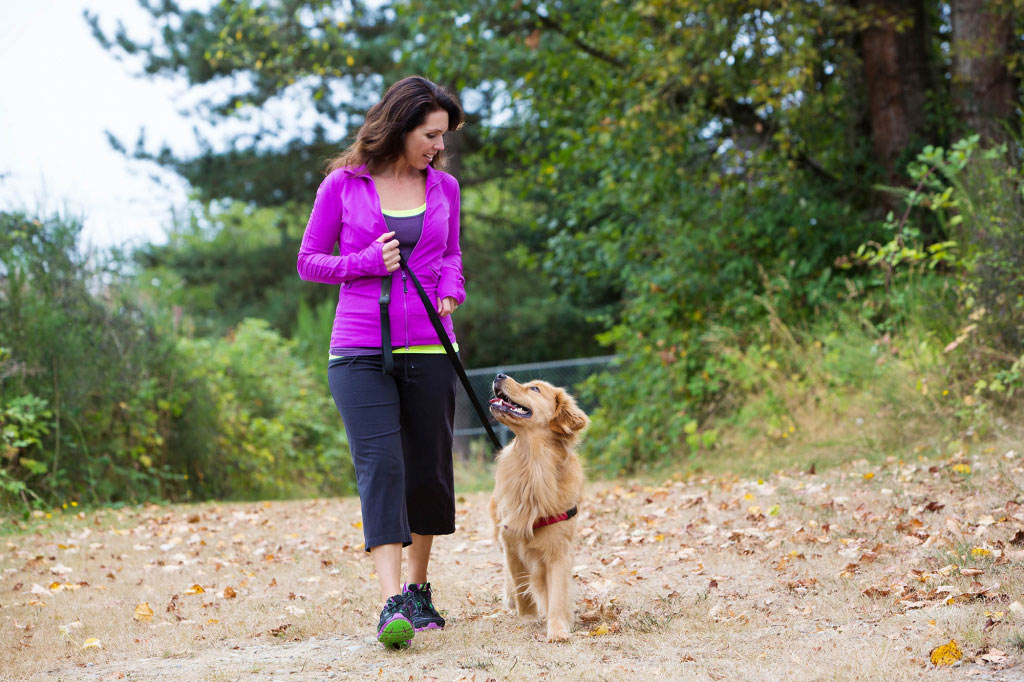
The most common mistakes
Quite often, novice owners trying to teach their dog to walk correctly on command "Heel" fail to achieve the desired result. Dog trainers note that in most cases, this is the owner's fault, as they make a number of mistakes during training. During training, avoid:
- too much tension (especially when using a sling or parforce);
- screaming, strong jerks, a threatening tone in the voice;
- changes in the pace of movement or direction if the basic skill of parallel movement in a straight line has not been mastered;
- prolonging training sessions (the animal gets tired, loses concentration and interest in what is happening);
- the presence of distractions (if your pet’s friends are happily kicking a ball around on the horizon, it’s unlikely he’ll be able to concentrate);
- mixing the concepts of "activity" and "game" (give commands in a persistent voice without unnecessary emotion, do not overdo it with an emotional reaction to correct execution).
Conclusion
It is definitely necessary to train a puppy to walk next to you, regardless of its size, but for representatives of large breeds this skill is extremely important, since without practicing it it will be impossible normal socialization Dogs and comfortable walks. If daily training fails to achieve the desired results, it's worth entrusting the training to an experienced dog trainer, signing up for individual or group lessons. A specialist will tell you what you're doing wrong and help you achieve the desired training progress in the shortest possible time.
Read also:
- How to train a dog to wear a leash and collar
- Training old dogs
- How to teach a dog the "Give me a paw" command


Add a comment