
How to teach a dog the "Speak" command
Most dog breeds offer ample opportunity for command training. This is especially true for puppyhood: the younger the animal, the easier it is to train, a long-established fact. The "Speak" command can be considered a basic one, although it's not part of the General Dog Training Code, and in most cases, training a dog to bark on command is straightforward. It's important to simply demonstrate the logic behind this process, and it will quickly understand what's required. So, how can you teach your dog the "Speak" command and get it to perform quickly?
Content
Detailed instructions
There are several ways to train dogs, and the initial method should be tailored to the animal's temperament. If one method doesn't work, you can try others, iterating until you find the optimal solution.
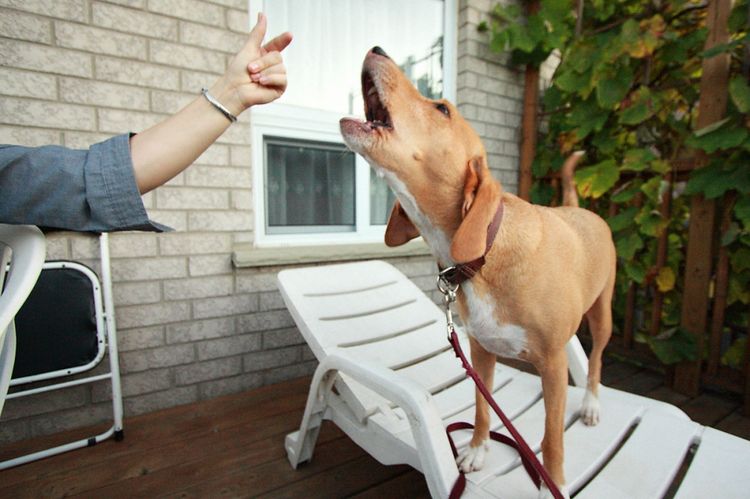
Among the most common solutions are:
- A teasing technique that is suitable for dogs with a choleric or sanguine temperament.
- Catching is a universal method for any more or less intelligent animal.
- Manipulation with the owner - for dogs attached to the owner.
- Guard reaction - for guard dogs.
When considering how to train your dog to respond to a voice command, and weighing the advisability of practicing this skill if it is not absolutely necessary for your dog, there are a few things you should know in advance.
The more active and curious your pet is, the easier it will be to train, and the faster it will master this command. Conversely, melancholic and phlegmatic dogs who are quiet and more thoughtful than physically active will be more difficult to train, especially if they are no longer puppies but adults.
Why learn the Voice command?
"Speaking" is primarily a service command, and in some cases, there's really no need to train a dog to do so. However, for guard dogs, learning this is absolutely essential, and the same applies to hunting dogs. Generally, a dog's vocalization can be justified by the following factors:
- detection of a threat – by a guard dog, guide dog, watch dog;
- detection of game, an object, a person – by search or hunting dogs;
- as a reaction to the removal or approach of the subject of protection - for guard dogs, shepherd dogs.
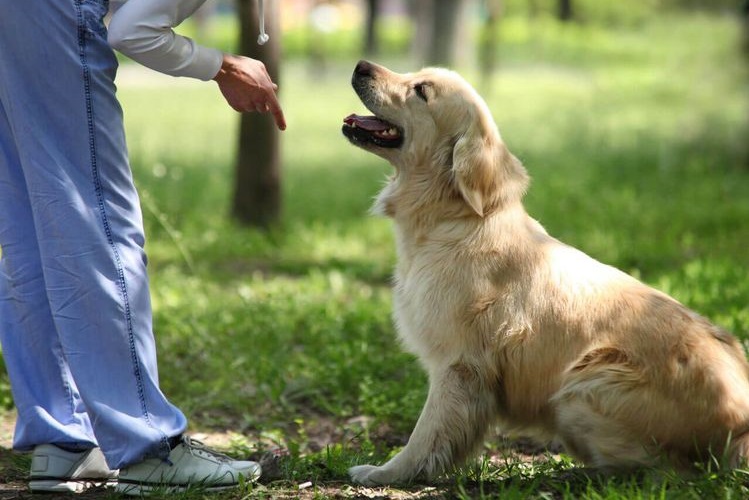
Any dog can be trained to obey this command, if not on the first try, then on the tenth. And if necessary, it's simply a matter of choosing the optimal approach based on the animal's temperament and the purpose of its training.
Methods that really work
You can put the dog on a leash and press it with your foot, leaving it taut, and take it in your hand delicacyA hungry dog with a choleric or sanguine personality will begin to squirm, whine, and demand a treat, and you'll need to wait until it barks. At this point, give the "Speak" command once, and repeat these exercises until the skill is fully established. A young, active dog will quickly learn the connection and learn to bark on command, which is exactly what you want.
You can also catch your dog barking for whatever reason and give him a single "Speak" command, reinforcing it with a treat or affection. If you're going to teach a dog a command not only on the word, but also on the gesture, pose, then these moments will be refined in the future - while in the first case it is worth learning the whole complex at once.
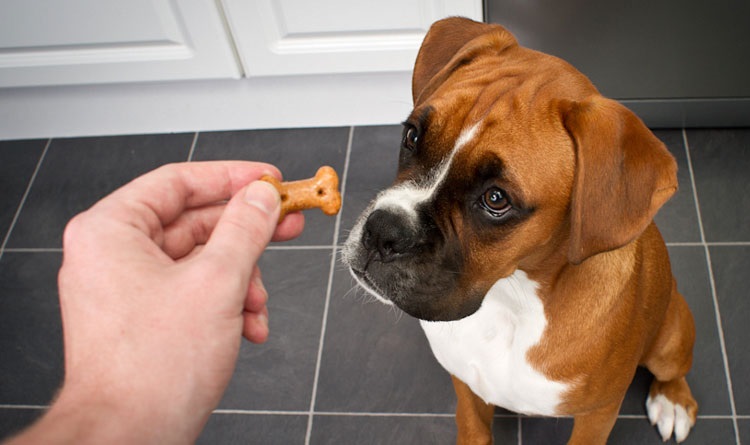
If a dog is strongly attached to its owner, you can practice the command while the owner is leaving and approaching. The animal is simply tied up, the owner leaves, and at a certain point the dog will begin barking. At this point, the owner returns and gives the dog a treat and praises. This method also allows for quick training, with the dog mastering the bond in just a few sessions. However, the puppy or dog's attachment to its owner is crucial.
If two people are involved
If your dog has natural guarding qualities, you can use them to train him. You'll need a partner dressed in a neutral manner and feigning a threat—all you have to do is wait for the dog to bark and reward it. It's best to rotate partners during training to avoid developing a strong dislike for one person, especially if that person is a friend. After all, if your dog dislikes that person, they'll always be under threat when visiting.
Thus, by choosing the best method for your dog, you can teach it the "Speak" command without difficulty. The key is to avoid putting pressure on your dog during training and remember that the command is always given once, without repetition. By organizing the training correctly and consistently requiring your dog to complete the assigned tasks, you can achieve the desired results in a short time.
Read also:
- How to teach a dog the command "Attack"?
- Teaching a dog the "come to me" command
- General dog training course without a trainer


Add a comment