
How to teach a dog the "Give me a paw" command
Commands that dogs can understand are divided into mandatory and optional. The former include commands such as "No!", "Sit!", "Come!", "Stand!", and others, while the latter include "Roll!", "Die!", "Speak!", and similar commands. The latter don't serve any functional purpose, but are necessary for the animal to fully and comprehensively develop. Therefore, experts recommend spending a little time teaching your dog the command "Give me a paw!" So how do you do this correctly?
Content
How will this trick be useful?
Although this command seems unnecessary and impractical, it's not entirely true. A dog owner who knows how to perform this procedure finds it easier to wash their pet when they come in from outside or trim its nails. Furthermore, the training process itself educates the animal and has a beneficial effect on its logical thinking.
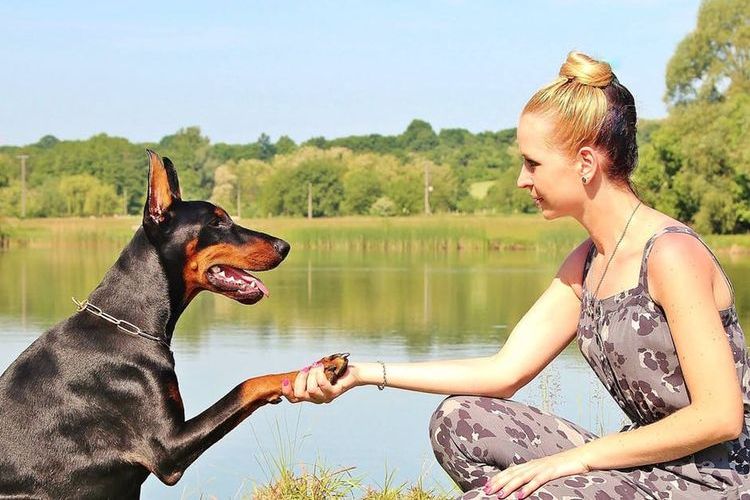
Regardless of whether training takes place in a special group under the supervision of a trainer or is carried out by the owner himself at home, the exercise should be repeated regularly, and in such a way that the animal feels a sense of team spirit and calm.
Preparation: What do you need to know?
Not all owners begin training their pets immediately after they join the family. That's why the question of how to teach a dog to shake hands is relevant for owners of both adults and young dogs. Professional dog trainers note that:
- Any dog, regardless of age, can learn to obey commands, but the optimal time to train a puppy is considered to be 4-5 months, i.e., when the brain is already capable of retaining information for long periods. In practice, the boundaries are blurred – both 2-month-old fidgets and their 2-year-old relatives, who have seen a lot of life, easily cope with the task. Experience shows that adult dogs learn the material much faster, but only when they clearly understand what the owner wants from them. Special courses are available. agility for dogs — check it out here.
- The key to successful training is the consistent leadership of one person—the dog's owner. Since dogs are pack animals by nature, they can only recognize the authority of one "leader." The animal must learn to respond specifically to its owner's voice and obey their will unquestioningly, first and foremost.
- Training should always be approached with a positive attitude, but with a fair amount of persistence. Even stubborn and wayward dogs begin to show progress in the second lesson and will fully master the new command by the third. Less obstinate dogs may only need one evening.
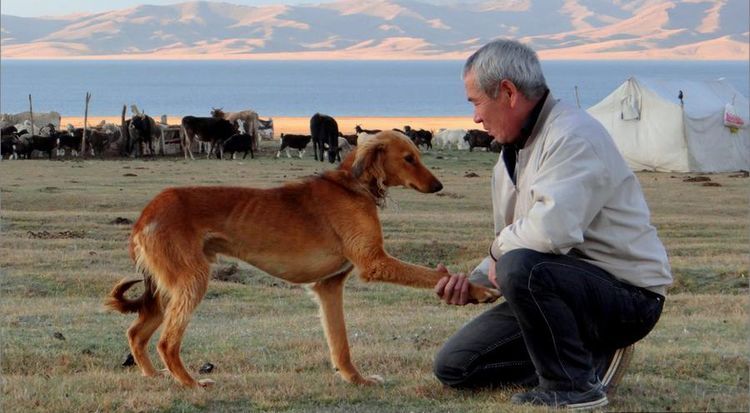
The key to successful training is proper preparation. A person should feed their four-legged friend a good meal a couple of hours before training, take them for a half-hour walk, and finally, relax them right before the lesson with a fun game, a scratch behind the ear, or a pat on the fur.
"Tasty" reward
To begin, the dog should be made to sit by using the curt command, "Sit!" If the animal hasn't yet been trained, apply gentle pressure to its back, near the tail, to help it understand the position it should assume. The distance between the animal and its owner should be small, as they will be reaching for each other quite frequently.
This method, in which treats play a key role, is ideal for young children or adults with a strong temperament. Starting position: the pet is sitting, and the trainer is standing. The trainer holds a fist with a treat in it to the pet's nose to allow the animal to smell the delicious scent.
The dog will instinctively strike the hand, and the person must grab the dog's outstretched limb and hold it there for a few seconds. At the same time, the person must loudly and clearly say, "Give me your paw!" After this, the "student" should be praised and rewarded with a treat, and then the process should be repeated several more times.
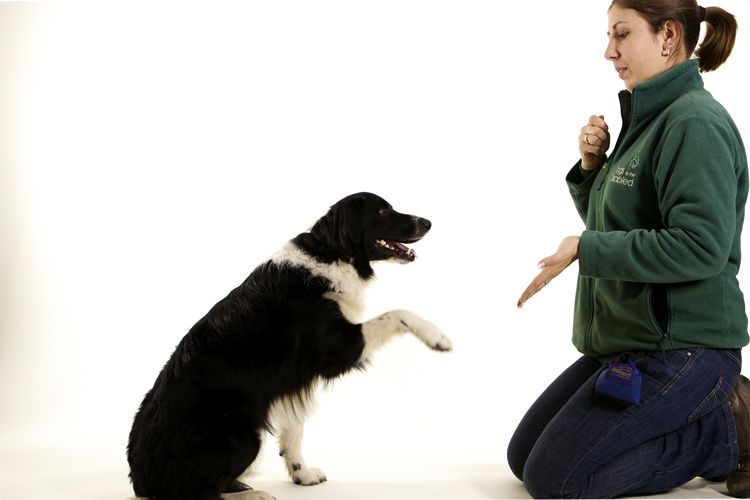
Without a tasty morsel (mechanical method)
Is it possible to train a dog to shake hands without food, and how can this be achieved? The first thing to consider is that this method is only suitable for an adult dog or an active, sanguine puppy who doesn't require additional motivation.
The starting position remains unchanged. The trainer takes the dog's paw, clearly states the command, and praises the animal. After this, there is a short break, and then the approach is repeated.
Important! To avoid injury, the dog's paw should be lifted low off the ground and be sure to bend it like a human elbow, at a right angle.
Of course, this approach will be more time-consuming, but by following it, you will be able to be confident in your pet’s obedience, its ability to obey and learn.
"Give me the other paw."
If the owner has already instilled a basic skill in their four-legged "student," it can be further developed. To do this, the dog is given a familiar command, but after it offers its familiar paw, its remaining "support" is carefully removed and taken into the hand. This position is maintained for several seconds. After just a few attempts, the dog will learn to offer first one paw, then the other.
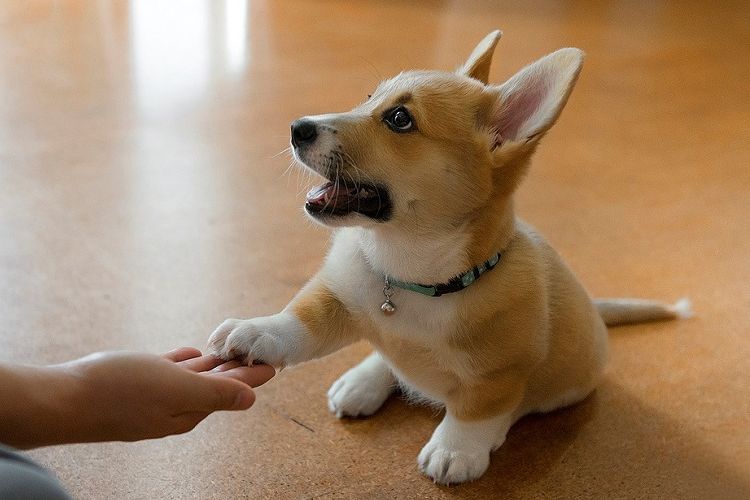
This isn't a standalone command, but a variation of its basic form. This is why pets typically extend one limb or another to a person even when uninvited.
Training recommendations
Pet owners should always remember basic tips that will make training much easier:
- If your pet (especially a young puppy) shows signs of fatigue, hunger, or restlessness, the session should be postponed until he or she feels better.
- A person in a bad mood should not attempt to train an animal, as training that is exacerbated by the owner's irritability will be fruitless. Dog trainers also strictly prohibit punishing four-legged pets with shouting, beatings, or other forms of torture.
- The most common form of the command can actually be modified in various ways depending on what the dog learns best. Sometimes owners even try using something as unusual as "High Five!"
- To achieve success together, you need to maintain regularity in your training and not underestimate the role of at least 30-minute breaks between sessions.
- Five to six repetitions per day are sufficient. However, if the animal becomes nervous or whines, the lesson is interrupted until the next day. The dog may not show any desire to practice at all, in which case it should not be forced.
- It's best to conduct training in a quiet, home-like environment, away from distractions. If a quiet corner isn't available, during warmer months, you can take your dog outdoors—to a park or forest. Make sure the chosen location isn't too crowded.
Once the basic command has been mastered, you can move on to more complex ones, such as saying the task more quickly, asking the dog to hold its paw while it's lying down or standing, or offering a foot, knee, or nothing at all instead of a hand. Holding the dog's limbs in the air will have a beneficial effect on the dog's motor development.
After just 1-2 weeks of systematic training, your pet will master the new skill perfectly and will be able to delight its owner.
Read also:
- How to teach a dog to lie down
- How to teach a dog the "Speak" command
- How to stop a dog from barking


Add a comment