
How to teach a dog commands: a list of commands
Some owners believe that dogs don't need to be trained unless they participate in competitions and shows. But this is fundamentally wrong. A well-behaved and obedient pet is not only a source of pride but also a way to avoid behavioral issues during walks and other situations. This applies not only to large or fighting breeds but also to toy dogs, which can also cause a lot of trouble for their owners, others, and other animals.
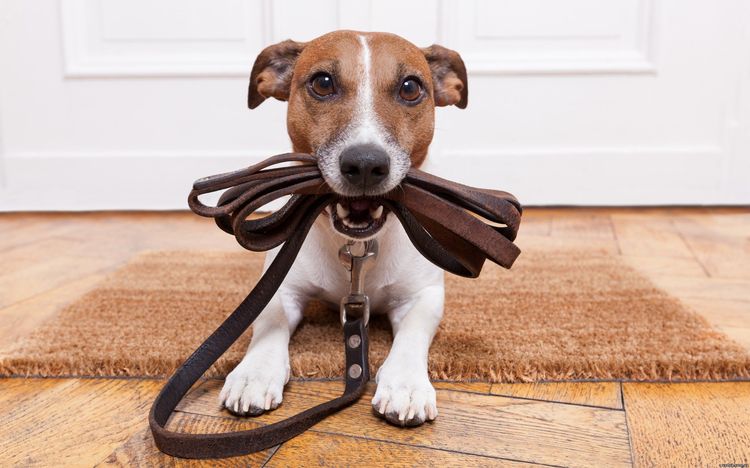
What commands can be taught?
This is more of a rhetorical question, as dogs are highly trainable and, with the proper attention and patience, can master any skill. Some want their pet to retrieve objects, while others require guarding. The most important thing to emphasize is that a dog must respond to its name, hear and obey its owner when given a command or receives a warning signal. There is no single list for non-service breeds, so everything depends on the owner and personal preference. However, there is a list of basic commands that develop agility, obedience, and intelligence in dogs.
"Come to me"
This is a basic command that must be practiced until perfect, as in some cases it can save a pet's life. Initially, it is given when the dog is already running toward the owner, and later, with the use of enticing objects (treats, toys). The command is given in a calm voice from a short distance, and once the trainee has mastered it, the distance should be increased, ideally achieving compliance even when the owner is out of sight (for example, in another room).
You should not use the command “Come to me” before doing things that are unpleasant for the animal (cutting claws, scolding for something, etc.).
"Sit"
Another essential command that allows the dog to stop at the right moment and assume a sitting position. Initially, it is given when the puppy begins to sit on its own, and later on, upon the owner's request after giving the command. To master this, show and let the puppy sniff a treat, then raise it above your head and verbally command it. You can simultaneously assist the animal by gently applying pressure to the sacrum.
"Come" and "Sit" are two of the most important skills that must be learned the first time, regardless of the situation or mood. Without mastering these, don't let your dog off-leash during walks.
"Near"
This skill is useful to prevent the animal from frightening others in public places and to encourage it to follow its owner. It's recommended to begin training when the animal has had enough exercise and is not distracted by external factors. Training takes place on the move, on a leash held 20-30 cm from the collar. The owner moves at a moderate pace and clearly pronounces "Near"If the dog wanders away from your leg or gets underfoot, use a leash and repeat the command to return it to its place, rewarding it with a treat if it succeeds. Over time, you can speed up or slow down the pace, break into a run, or turn to the side, ensuring the dog remains at your leg and moves parallel to you.
"Ugh"
This basic skill requires a complete ban on inappropriate behavior and is useful when training a puppy to stop biting, jumping on people, picking up forbidden objects, or chasing someone. Initially, this skill is practiced on a slack leash, which is jerked sharply when the command is given.
Don't overuse this requirement, lest it turn your dog's life into a series of prohibitions. Repeating it too often risks causing the dog to simply stop responding.
"Place"
The animal must have a clearly designated permanent place and be aware of its location. To train, say "Place" and lure the dog there by showing a treat. When it reaches the designated place, praise it and give it the treat. This command is typically used for undesirable behavior and means something like a human "go away," such as if the dog is begging for food from the table or jumping on guests.
"Lie"
This command isn't used as often as "Sit," but it can also be useful in certain situations, such as at the veterinarian's office when a pet needs to be examined. To train, you can use a treat held in a way that encourages the animal to reach forward and down, eventually leading to a lying position. Another option is to apply pressure to the withers with one hand and place the other behind the front legs after giving the command. paws and push them forward.
It is important to ensure that the dog does not fall onto its side and lies down carefully, stretching out its front legs and tucking its hind legs under itself.
"Stand"
This skill is not only included in the standard list but is also frequently used in everyday life. For example, brushing a dog's fur or dressing it is much easier if it stands upright and doesn't fall to the side. Since this command requires more endurance and concentration, training should not begin before the dog reaches 7 months of age. After saying "Stand," lean over to the dog while it's sitting next to you and lift it to a standing position, grasping its belly with your left hand. After holding it for 3-4 seconds, give a treat and praise.
Give it to me
Upon hearing such a command, the animal must give up the object it holds in its mouth or guards as its own (a bowl or toy) and not allow anyone to approach it. It learns best with toys during puppyhood, so when the puppy grabs the toy, you should firmly say, "Give it!" and take it away. If necessary, you can pet, shake the animal, or pry its jaws open with your free hand while repeating the command. Initially, it's important to return the toy immediately, and over time, increase the delay between the execution and the return of the object.
https://youtu.be/T6Lcq7-vQMQ
Fetch
Although this skill isn't as important as "Come," "Heel," or "Place," it can be taught from an early age to complement your student's abilities. First, seat the student and engage them with an object (a stick, a ball). When they attempt to grab the object, throw it back and say, "Fetch!" This training is accompanied by a gesture indicating the desired object.
"Walk"
Typically used to change activities after completing a specific exercise. The command is straightforward for the animal. The command "Walk" is spoken and the direction is indicated with a gesture. If, after practicing other skills, the dog is released each time with the word "Walk," there will be no need for targeted training.
Give me your paw
This team It doesn't serve any functional purpose, but it will be very useful when it's time to trim nails or wash paws after a walk. To master this useful trickTo do this, sit your pet in front of you and show them a treat clutched in your fist. They'll instinctively try to reach for it first with their tongue, then with their paw. At this point, say, "Give me your paw," and hold the paw in your hand for a few seconds. Then, praise the trainee and give them the well-earned treat.
"Fas"
This command deserves special attention and is mastered only after other orders are carried out without question and immediately. "Fas" This is a defensive yet dangerous skill, so it's best learned in the presence of a professional instructor and no earlier than 6-10 months of age. After the word "Attack," the trainee must attack the target.
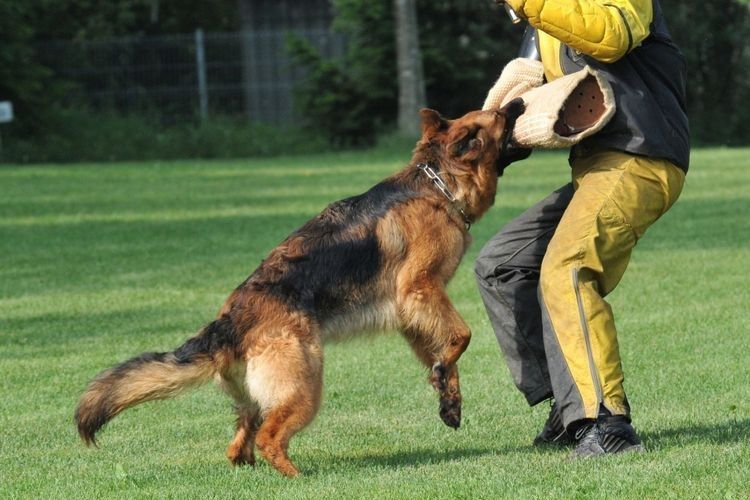
Attention: only a psychologically healthy and balanced dog can be taught the “Attack” command!
Preparation
Before starting training, it's important to understand that no pet is stupid. Of course, it's best to start working with it immediately after the puppy arrives. Starting at three months, you can begin teaching simple skills through play, as the puppy will absorb information quickly. Some believe that animals become dumber with age, but this isn't true—it's more difficult for an adult to absorb new information. However, if the opportunity has passed and the dog has matured, it can still be taught commands at home, provided it's done correctly and systematically, but it will just take more time.
The main conditions for successful training include a confident, loud voice intonation, clear gestures, and sufficient patience, since at first the animal may not pay attention to either commands or gestures.
Choosing a training location
The training location should be a familiar area free of distractions (cars, strangers, and animals). If the location is unfamiliar, give the dog time to sniff the new territory and ensure there are no dangers.
Choosing the time of study
The time for training depends on your daily routine and personal plans, but it's not recommended to train in the middle of the day during the summer. If this is the only possible time, make sure you have plenty of water. Avoid training immediately after waking up or eating a large lunch or dinner. Your last meal should be several hours before training. Before training, it's recommended to give your dog a good walk or run a few laps around the track.
Choosing a treat
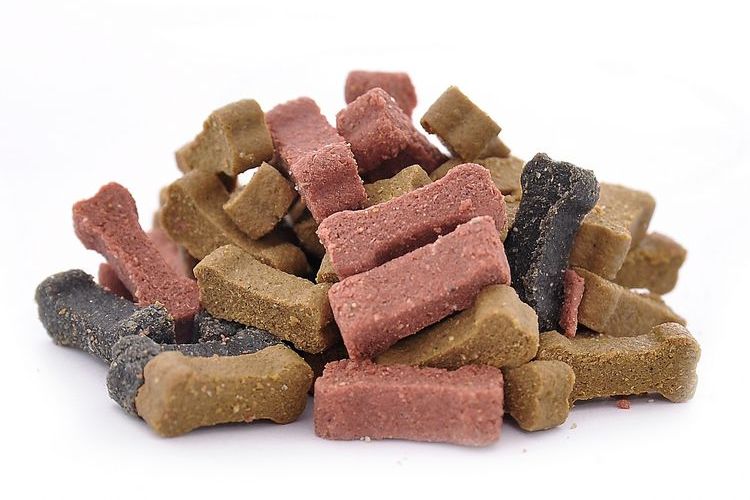
It's important to bring your dog's favorite treats, which will motivate them to obey and follow orders correctly. These could be pieces of cheese, cooked meat, dry food, special biscuits purchased at a pet store, or any other treats.
How to praise correctly
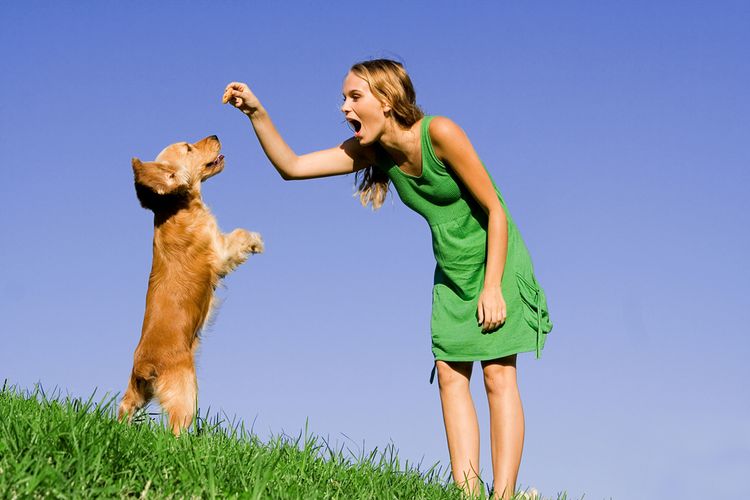
Treats and praise (vocal or stroking) only serve as reinforcers for correct behavior when given immediately after a task is completed. A common mistake is delaying the treat, which may lead to unrelated behaviors. For example, when training the "Come" command, the treat is given as soon as the dog is at your feet, not after it has already approached, sat, or circled around. Otherwise, the reward will be tied to the latter behavior (sitting, licking your hand, resting its paws on your owner, etc.).
Helpful Tips
If you decide to skip the services of a dog trainer and instead train your dog at home, it's helpful to at least know their basic professional recommendations:
- Classes are held daily, gradually increasing the time and number of repetitions. 10-15 minutes is sufficient to begin with.
- The command is pronounced in a stern, serious voice, while praise is given in a softer, more playful voice.
- The command is given once, or at most twice. Multiple repetitions will be ineffective, as the dog will become convinced that it can follow the command ten times, which is unacceptable in critical situations.
- Before giving a command, the pet's name is pronounced, which serves as a kind of signal to attract attention and follow further instructions.
- You must not raise your voice or resort to shouting, and especially not resort to physical punishment if the student refuses to follow instructions.
- Each successful action is rewarded with a treat and verbal praise.
- You can conduct classes in one place, and after successfully mastering the skill, change the location and environment.
If you've become the owner of a new pet, it's important to understand that a change of environment can often cause stress for dogs. Initially, it's important to bond with them, spend more time with them, and feed them only with your own hands to build trust. If you invest enough love, attention, and care in teaching them basic skills, you can have a well-trained pet who will be fiercely loyal to their owner.
Read also:
- How to potty train a dog outside
- How to train a dog to wear a leash and collar
- How to train a dog to wear a muzzle


2 comments
Sergey
Thank you. Of all the sites I've looked at, yours are the best!!! You don't just show what a dog can do: sit, lie down, etc. Instead, you clearly and step-by-step explain the algorithm for each command. Well done.
Sergey
Yeah, right. Everything's great, of course. Accessible, knowledgeable, everything laid out perfectly. BUT. She's a very charming and pleasant girl, and within a minute, I find myself thinking all the information is flying by. And I'm lost in her charm.
Add a comment