
How to draw a sitting cat step by step
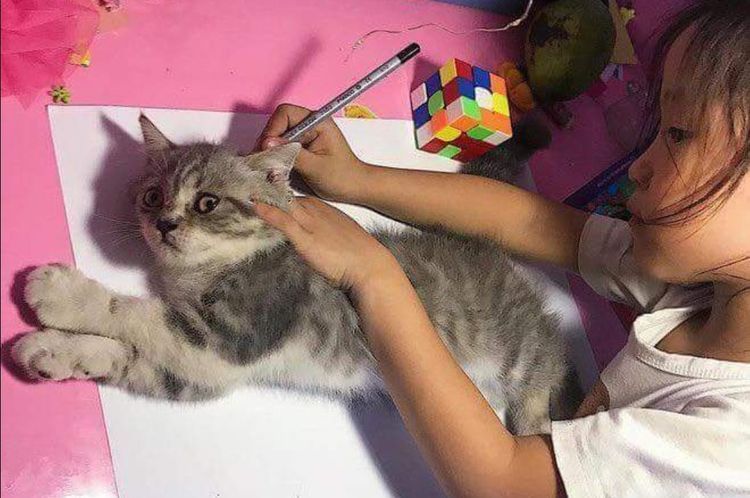
Anyone can learn to quickly and easily draw a sedentary cat of any breed, as there are numerous simple tutorials explaining the process step by step. After learning the basic rules and diagrams, even young children can successfully complete the task, and then decorate their rooms with beautiful images of their favorite pets.
Content
The simplest drawing of a sitting cat
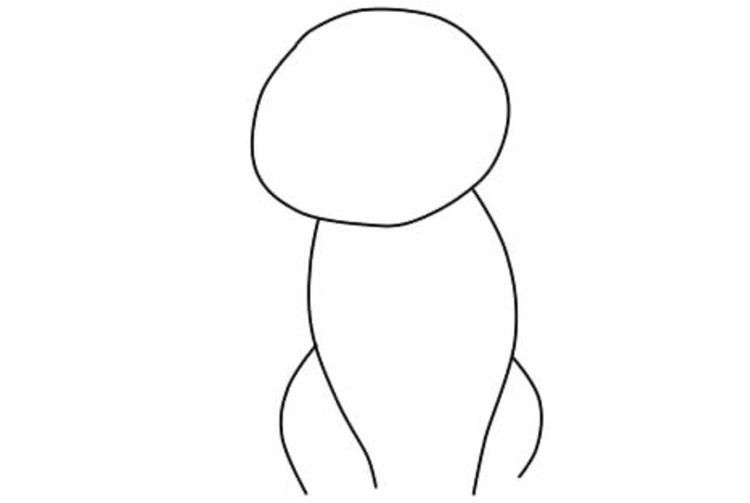
This is the simplest diagram for beginners on how to easily draw a sitting cat. The contours of any drawing usually visually follow the outlines of simple geometric shapes—an oval, a circle, a square, or a triangle. In our case, we should start with a simple circle for the head. It's best to make it slightly elongated on the sides. Draw two curved lines from the head downwards, and from the center, two more semicircular lines defining the outline of the cat's hind legs.
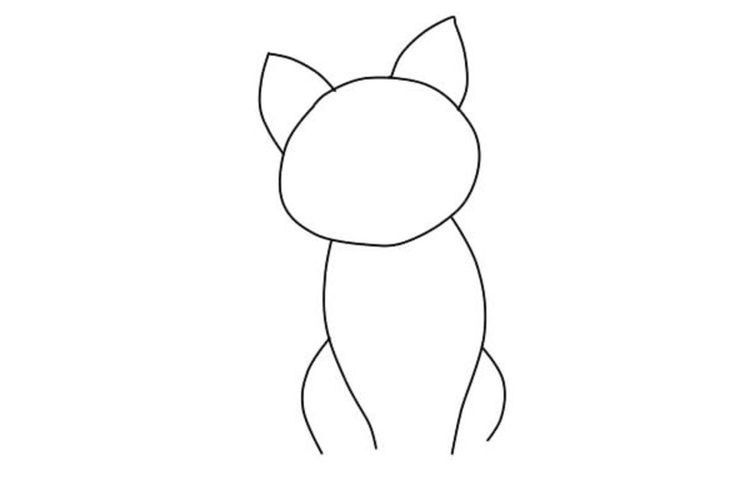
Draw two ears in the shape of triangles on top of the head.
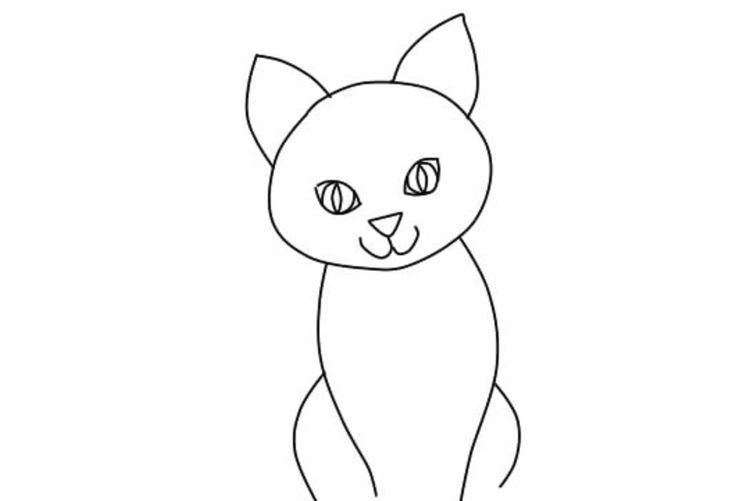
At the bottom of the circular muzzle, draw a triangle—this will be the nose. Two curls extend from it, denoting the mouth. The eyes are located slightly above the mouth, equidistant from the edges. They are typically round, but slightly slanted and pointed toward the edges. The pupil is drawn in a darker color.
Draw the paws with claws and the tail. The tail is drawn from the side. It can be any thickness and length, straight or curved like a crescent, fluffy or smooth.
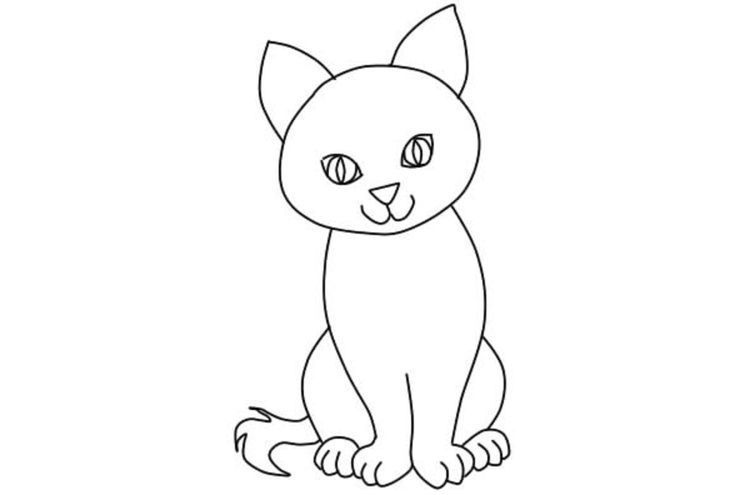
You can draw fur on the animal's paws, ears, and chest to add fluffiness to the design. On the chest, this is a "ribbed apron," on the paws, simple zigzags, and on the ears, repeated inner triangles. Optionally, the cat's image can be complemented with a bow of any size (with or without frills), as well as whiskers and ear tufts. Sometimes children decorate the drawing of a sitting cat with a mouse or a bowl of milk.
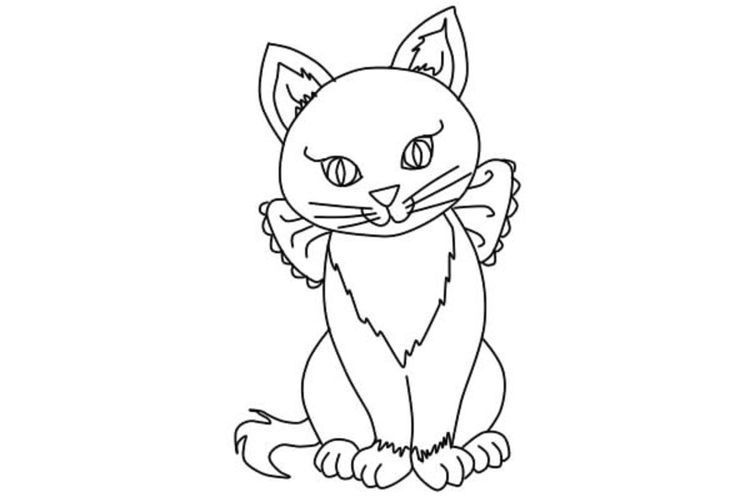
Full-length drawing of a cat
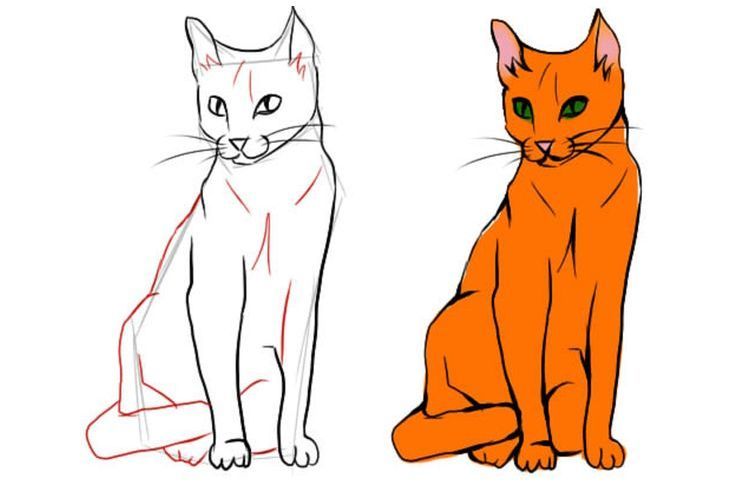
There are numerous diagrams and detailed descriptions of how to draw a sedentary cat step by step with a pencil or paints, and how to correctly draw a beautiful profile of the animal to most realistically depict the pet's image, its personality, and habits.
First, they replicate the cat's proportions, highlighting two main elements: the head and the elongated body with angular sides. The animal's face resembles a rectangle with a pointed bottom. The nose is a standard triangle, and slightly above it are semicircular eyes.
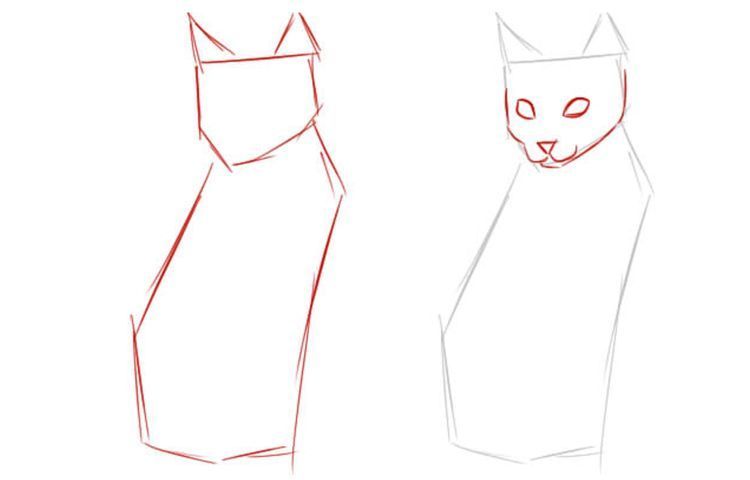
In the second stage, the triangular ears on the head, whiskers, and pupils are drawn. Below in the drawing are the paws with three toes.
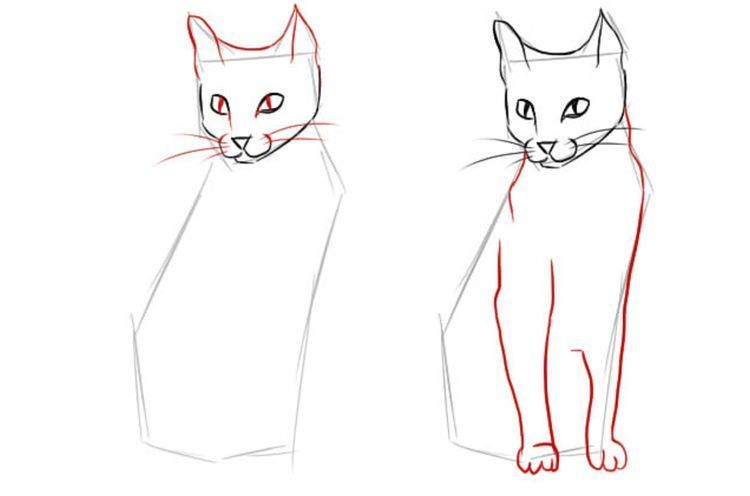
In the final stage, detail the cat's tail, hind legs, and back. Add some touches to the chest and hind legs. Outline the outer contours and, if desired, color the pet. Using light pencil strokes, you can draw the fur, which will add volume to the animal's body. Long-haired breeds have a smoothly cascading coat. To emphasize this, draw long, thin waves. For short-haired cats, it's best to simply use light pencil shading.
A complex drawing of a fluffy cat
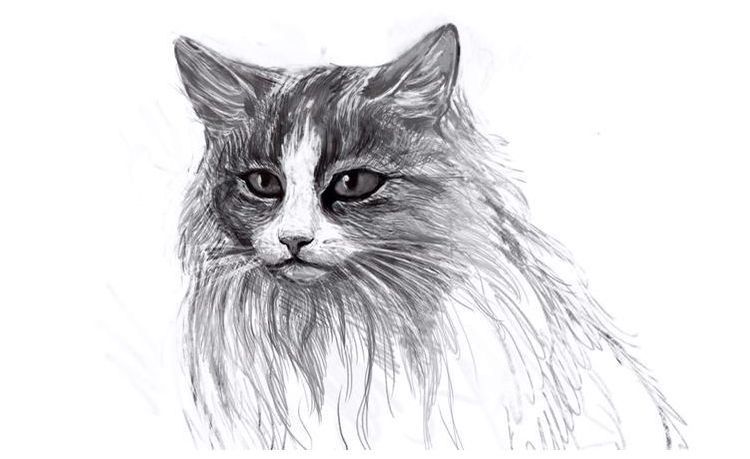
Once you've learned all the rules and practiced drawing a sedentary cat using the simplest outlines, it's time to consider creating a more realistic image. Although this is a more labor-intensive and complex process, the result will certainly please. To create this mini-masterpiece, you'll need several pencils of varying softness. Soft pencils highlight the most expressive details of the face, while hard pencils add shading.
The drawing begins by defining the external contours of the pet - highlighting the ears, the contours of the muzzle and the location of the nose and eyes.
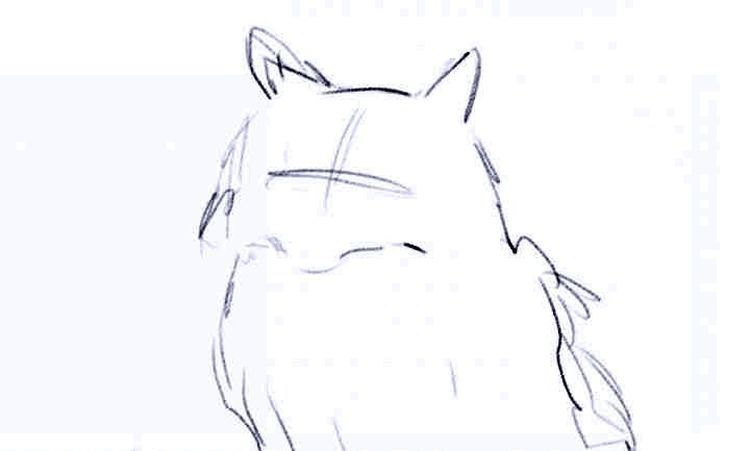
The features of the muzzle should be outlined to reflect its rotation. In the middle muzzles A cross is drawn. This determines the symmetrical placement of the nose, mouth, ears, and eyes. The eyes should point in the same direction. To bring the drawing as close as possible to the cat's original appearance, the animal's image and the outline of the eyes are outlined with darker, contrasting lines.
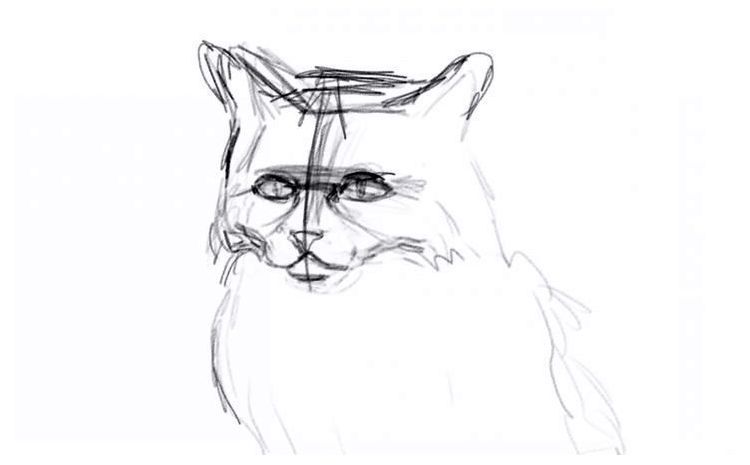
A separate stage is the drawing of the fur and its individual coloring. Light and dark areas on the face and head are drawn using hatching. The general features are made lighter, more transparent, and blurred. Particular attention is paid to the eyes, which are highlighted with the darkest color. The pupils are lightened with an eraser. The naturalness and liveliness of the eyes are emphasized with light and dark highlights. The cat's complex tonal coloring is achieved by moving from dark to light tones. There is no need to clearly outline the animal's body. It is better to leave a more transparent and light silhouette.
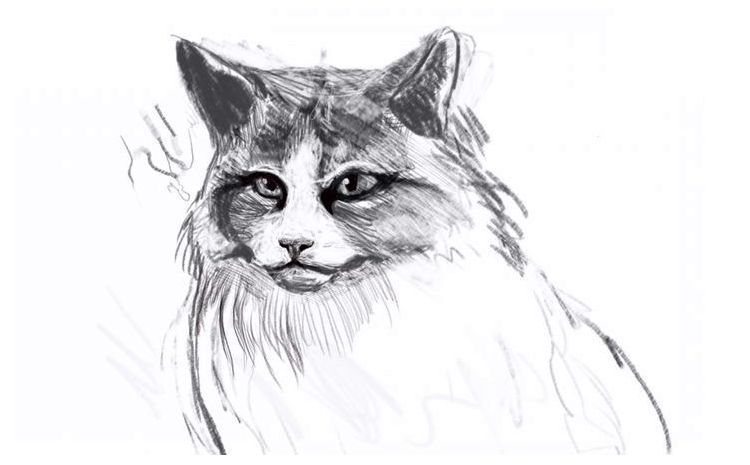
Thin lines are drawn from the muzzle to show the smoothness and softness of the fur. To add volume to the nasolabial triangle, it is lightened slightly with an eraser. On the head, several darker lines are drawn between the ears. The whiskers are also left light, light, and airy.
Read also:



3 comments
faith
not beautiful
Vetch
OK
Rome
Cool, but this would be suitable for 1st grade or 6th grade, not bad. 4 stars.
Add a comment