
How to reliably protect dogs and cats from worms and infections transmitted by endoparasites?
Helminthic infestations are quite common among cats and dogs. The most commonly diagnosed are toxocariasis, dipylidiasis, trichuriasis, and taeniasis. These pathogens typically affect the animal's gastrointestinal tract, causing vomiting, diarrhea, and general intoxication, but can also spread to other organs and tissues, causing various symptoms, such as coughing due to respiratory involvement.
Content
Who is at risk of infection with endoparasites?
It is believed that worm infestations only occur in stray animals or dogs and cats that go outdoors. However, even pets that never leave their homes can become infected with parasitic worms through contact with their owners' outerwear and shoes, doormats, soil from flowerpots, and even through accidental exposure to fleas.

How to properly protect your pet?
Preventing and treating helminthic infestations is an important part of caring for the health and well-being of your pet. Pet owners typically seek advice on choosing a treatment from their veterinarian. Specialists can prescribe affordable yet effective products that are readily available at most retailers. Russian-made products are often preferred, as there are virtually no supply issues. One commonly used Russian-made product for the treatment and prevention of helminthic infestations is the domestically produced drug "Prazicide."
The drug is used for the prevention and treatment of:
- cestodiasis;
- nematodoses;
- toxocariasis;
- toxascariasis;
- uncinariasis;
- trichuriasis;
- ancylostomiasis;
- taeniasis;
- dipylidiasis;
- alveococcosis;
- echinococcosis;
- diphyllobothriasis;
- mesocestoidiasis;
- giardiasis.
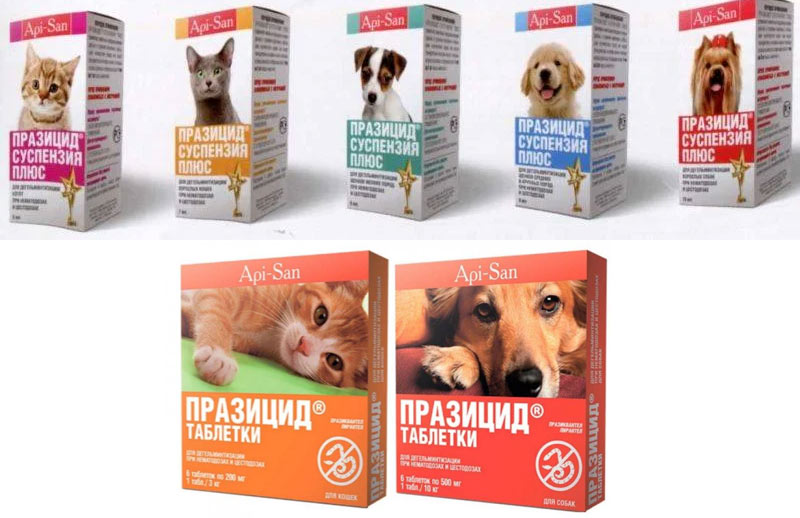
The domestically produced "Prazicide" contains effective and animal-safe ingredients with a broad spectrum of action. These include the classic "praziquantel," "febantel," and "pyrantel," which block the parasites' respiration and muscle activity, resulting in their death.
The presence of three components in the formula prevents parasites from becoming accustomed to the active ingredients and also increases the effectiveness of the drug compared to single-component analogues.
The drug begins to work within a few hours of administration, allowing for rapid relief from the source of the animal's unpleasant symptoms. It's also important to note that this medication, in all dosage forms, is highly safe and does not cause any adverse side effects in animals when used correctly.
Practice of application
Practical experience shows that the multi-component "Prazicide" is effective in combating parasites in dogs and cats. The drug is available in two forms—tablets and suspension—making it convenient to use.
- Pills Suitable for dogs and cats, for whom it is easier to administer medications to the root of the tongue.
- Suspension can be used if the pet behaves aggressively and may injure itself or the owner during the administration of the drug.
The tablets and suspension can be given with a treat or a small amount of food, as both dosage forms do not have an unpleasant taste.
How often should I deworm my pet?
For preventative purposes, anthelmintics are administered at the dosage indicated on the package once a quarter and before each vaccination. For therapeutic purposes, the medications are given to your pet:
- twice with an interval of 14 days for nematodosis;
- once a day for three consecutive days - in case of cestodiasis, giardiasis and mixed invasion.
In conclusion, it is worth noting that medications for the prevention and treatment of helminthic infestations in dogs and cats differ in composition, level of tolerance by pets, and list of side effects.
It makes sense to choose a product that is effective against a broad spectrum of parasites, including nematodes and cestodes, and has a high safety profile when used according to instructions. It's important to consider any anthelmintic used based on the animal's specific needs, as well as local epidemiological conditions and parasite infestation levels in the region.
Regular use of anthelmintic medications according to the instructions will help maintain the health of pets and protect them from dangerous parasitic infections.
Stepan Olenchuk, veterinary anesthesiologist, Vetcity Clinic, Moscow
Read also:


2 comments
Bakhtiyar
Yes, we love our cats!
Anna
Interesting article. Our smaller brothers definitely need to be protected.
Add a comment