
How do cats drink?
Cats are unique creations of nature. Flexible, agile, and dexterous. Even a drinking cat looks graceful, barely touching the water with its tongue. Not only domestic cats but also wild felines—lions, tigers, leopards, and panthers—drink in this unique way. How do cats do it?
Content
- 1 Research by scientists
- 2 How cats drink water: the specifics of the process
- 3 Why do cats need a special way to drink?
- 4 How much water does a cat need?
- 5 Why does my cat drink little water?
- 6 Popular places where cats like to drink
- 7 How to water a cat correctly
- 8 The link between water consumption and disease
- 9 Interesting facts about how cats drink water
Research by scientists
One day, MIT researcher Roman Stoker was watching his cat, Guta-Guta, lap up milk. Captivated by his pet's subtle movements, Stoker and his colleagues decided to study the matter thoroughly.
The results of the study were astonishing.
It turns out that a cat drinks by using the tip of its tongue like a spoon, moving at a speed of approximately one meter per second.
When a cat quickly curls its tongue, the liquid forms a column, which grows in height due to inertia. The pet then closes its mouth to take a sip before gravity collapses the column.
Interestingly, larger pets lap more slowly. The reason for this paradox is still unknown.
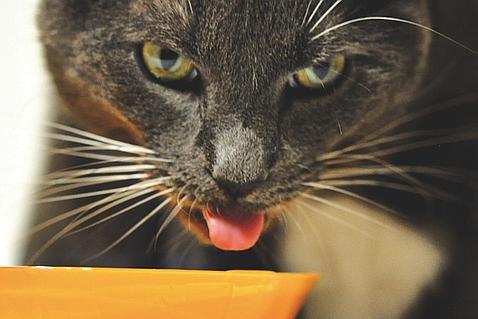
Cats drink more carefully than dogs.
Cats' lapping techniques differ from those of dogs. Dogs use their tongues to scoop up water and fill their cheeks with it. Unlike their furry friends, cats don't splash the water. Their muzzles stay dry.
Table: Differences between cats and dogs in the drinking process
| Animal | Method of drinking | Peculiarities |
|---|---|---|
| Cat | A quick touch of the tongue and the rise of water due to inertia | Minimum splash, high speed |
| Dog | Scooping up water with the tongue, like a spoon | Lots of splashes, less precise movement |
How cats drink water: the specifics of the process
When a cat drinks, it doesn't scoop up liquid with its tongue like a dog. Its tongue acts like a miniature pump. The tip of its tongue quickly touches the surface of the water and then pulls upward, drawing a thin stream of liquid. Thanks to its precise movements and the force of inertia, the liquid rises into the oral cavity.
Interestingly, cats' tongues move on average about four times per second. This allows them to drink gently, with minimal splashing.
Why do cats need a special way to drink?
This method is evolutionarily linked to their hunting heritage. Wild cats tried to drink quickly and quietly to avoid attracting predators. Economy of movement and precision are their innate advantages.
How much water does a cat need?
The amount of liquid consumed depends on the diet, room temperature and activity of the animal.
| Cat weight | Daily water intake |
|---|---|
| 2–3 kg | 100–120 ml |
| 4–5 kg | 180–250 ml |
| 6–7 kg | 250–350 ml |
If a cat eats dry food, it requires significantly more water than if it eats natural food or wet food.
Why does my cat drink little water?
Some owners report that their pets rarely approach their bowl. This may be due to several reasons:
-
the cat gets moisture from wet food;
-
the animal prefers running water;
-
stress or unfamiliar environment;
-
kidney or urinary tract diseases.
In the latter case, it is worth showing your pet to a veterinarian.
Popular places where cats like to drink
Many owners notice that cats choose unusual places to drink:
-
dripping water from the tap;
-
aquarium;
-
bath or sink;
-
flower pots.
This selectivity is linked to instinct. In the wild, animals often avoid standing water, considering it potentially dangerous.
How to water a cat correctly
To ensure your pet gets enough fluid, it's important to consider its preferences.
Tips for owners:
-
place several bowls in different parts of the apartment;
-
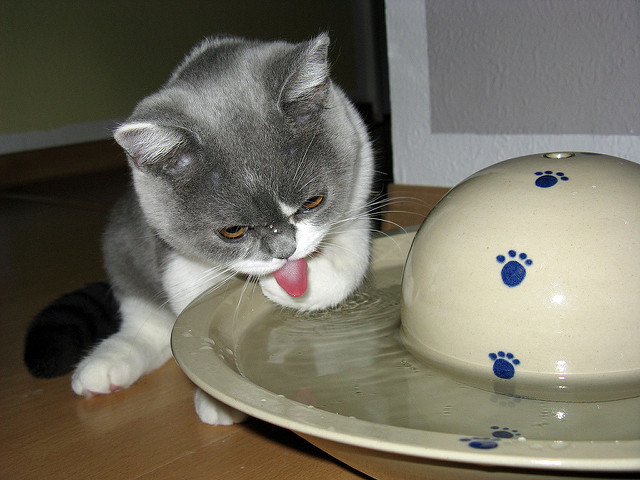
offer drinking fountains for cats - they imitate running water;
-
use ceramic or glass bowls rather than plastic;
-
change the water at least twice a day.
The link between water consumption and disease
Changing drinking habits can be a sign of illness.
-
Increased thirst is typical for diabetes and chronic renal failure.
-
Refusal to drink water often indicates inflammation or dehydration after an illness.
Therefore, it is important for owners to monitor how much and how the cat drinks.
Interesting facts about how cats drink water
-
The movements of a cat's tongue resemble a small piston creating a column of water.
-
When drinking, a cat can take up to 20–25 sips per minute.
-
Unlike dogs, cats rarely splash liquid around the bowl.
-
Studies have shown that large wild cats (lions, tigers) have a drinking mechanism identical to that of domestic cats, only the tongue movements are slower.
Read also:


Add a comment