
Peculiarities of cat birth at home
If your cat isn't spayed and has access to the outdoors, she may become pregnant and give birth to kittens when she reaches fertile age. Whether you missed the pregnancy or planned it, it's best to familiarize yourself with how cats give birth in advance. Especially if cat giving birth are passing for the first time.
Content
How does a cat give birth to kittens?
Usually, a cat's birth is uncomplicated, and no human or veterinarian assistance is required. However, sometimes a little help is needed. If you know your cat is already carrying kittens, you have an average of 58-72 days to gather the necessary information. However, this only applies if you know the date of conception (for example, if you mated intentionally or caught your cat running away).
Otherwise, it won't be until the third week of pregnancy that you'll begin to suspect that babies are coming soon. But then you'll have just over a month to prepare.
First-timers may rush around the room in panic, unsure what's happening to them. Labor isn't so painless that you can just lie quietly in the box, but you should try to calm the cat. Don't pick her up or press on her belly. Let nature take its course.
As soon as your cat's tongue sticks out, their breathing quickens (they look a bit like a dog running wild), and they begin to urinate or defecate, the process has already begun. Don't panic. Your pet will sense this and become agitated.
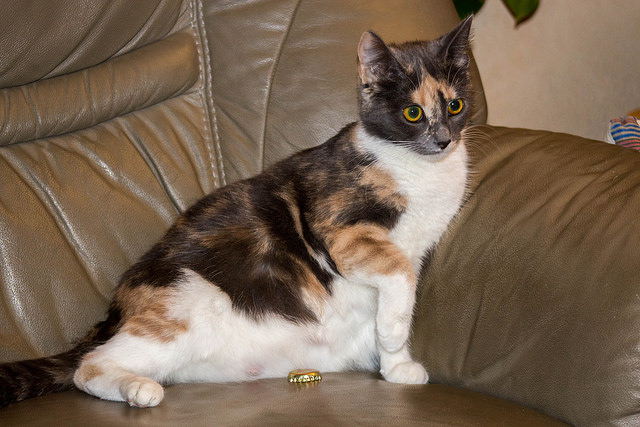
Labor in cats varies in length. Some cats can give birth in as little as two hours, while five is more than enough for others, and still others can struggle even longer. Even knowing how many kittens a cat gives birth to at a time doesn't guarantee your cat has finished. One cat might give birth to four or five, while another might give birth to eight.
A cat doesn't give birth like a conveyor belt. She needs to recover after each contraction. She can also become tired from the process, and the size of the kittens matters. In the case of large kittens, the process can be prolonged. Complications (both during and after birth) are much more common in those who give birth to large kittens or whose birth process drags on for hours.
How to help a cat give birth?
The mother cat has given birth to kittens. Your job is to ensure that the sac, which each kitten has been in throughout pregnancy, is broken and removed from the kitten's body. Otherwise, the baby will suffocate. Therefore, break the sac just above the kitten's nose and wipe its face with a dry napkin or cloth. Gently shake the newborn kitten upside down. This will help it breathe. Wipe its face again, removing any mucus from its nostrils.
Place dry, clean diapers or sheets under the cat, changing them periodically. If this is the cat's first birth, you will likely need scissors.. Be sure to sterilize them.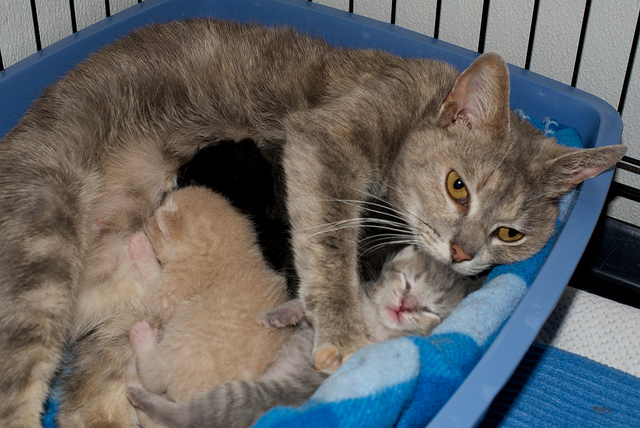
However, leave the cutting of the umbilical cord to the new mother. You might cut too close to the kitten. The umbilical cord contains arteries and veins, and if cut incorrectly, severe bleeding can occur. The mother cat, on the other hand, will crush the vessels with her teeth while cutting, thereby preventing severe blood loss.
If this is the cat's first birth, she may not know what to do. Therefore, use sterile scissors to cut the umbilical cord. Leave about 3 centimeters from the belly. Treat the umbilical cord stump with hydrogen peroxide. Be careful not to crush her babies.
If the placenta was expelled with the kitten, carefully remove it and discard it. Don't give it to the mother. If there is no placenta (it's the placenta), it should be expelled with the next contraction. Count the number of placenta to ensure it matches the number of newborn kittens.
That's why it's important not to stray too far from your cat, but if she's hiding from you, don't bother her or interfere. Standing over her, staring intently, could delay the birth process. This is bad for both the kittens and the adult cat.
As soon as the mother cat has given birth to her kittens, dry them off. Place them near their mother so they can nurse. Remember, they are still blind. Therefore, it's best to use a spacious cardboard box as a "nest," cutting a hole in it (not at the very bottom, so the kittens can't climb out) for the mother to eat and use the toilet. Several small holes (higher than the cat's height, to prevent drafts) can be used for ventilation.
Postpartum care for a cat
The animal needs peace and quiet. Don't disturb them. Ideally, place the "nest" in a quiet and warm place so that extraneous sounds, voices, footsteps, and smells don't disturb the feline family. Provide the animal with free access to food, water, and a litter box. Your cat shouldn't spend a lot of time wandering around the apartment, leaving the kittens alone. Place the bowl so that the mother can at least glimpse her "nest" with her kittens.
The food should be rich in all vitamins and minerals, as some will be absorbed into the milk. Avoid feeding fatty foods. It's best to offer warm foods and lung broths more often.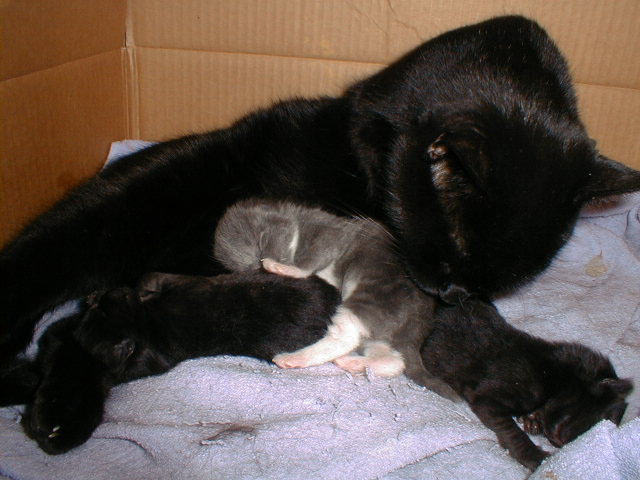
If your animal starts bleeding, has a fever, loses appetite, or you notice any other health issues, contact your veterinarian immediately.
If you don't plan to breed your pet, consider spaying her as soon as she's had enough rest after giving birth. Don't delay. Otherwise, you'll miss her next heat cycle. Once your cat has given birth, consider how many times she gives birth in a year.
Each year, she can have four to six heat cycles, and her pregnancy lasts about two months. This means that a cat can become pregnant and give birth once she reaches one year of age. Once the kitten reaches two months of age, she can go into heat again. This leads to another pregnancy, and then another birth. This continues for as long as the cat remains fertile. Some cats even give birth at seven years of age.
Read also:
- How to help a cat give birth at home
- How does a cat behave before giving birth?
- How do you know if a cat has given birth to all her kittens?


Add a comment