
Is it necessary to play with a cat and how to do it correctly?
Do you play with your cat? Many people enjoy playing with their kitty while she's still small, but why bother playing with an adult? The answer is simple. It benefits both you and your pet. Not sure how to play with your cat? Then our article is for you.
Content
Why does the cat play?
For a cat, play isn't just a pleasant pastime; it's also a chance to practice. These play-training sessions begin in a pet's early years and continue throughout the life of the little predator. Even as a kitten, it begins to imitate its parents' behavior patterns, learning to hunt from its siblings or its owner. Even if you don't play with a kitten, it will find something to do, and it's a good thing it's not your favorite curtains or a ball of wool for knitting.
Adult cats relieve stress and depression through play. If you learn how to play with your cat and devote a few free minutes to it from time to time, you can build a trusting bond with your pet. Play also helps control cats prone to aggressive behavior. Furthermore, playing with a cat is one of the best ways to bring two animals together in the same home. This is especially important if the relationship is developing between a new and an older furry friend.
How to play with a cat at home
A cat will happily engage in play if the object of play resembles natural prey, such as a mouse. In its natural environment, the "prey" won't be hanging around a cat's nose. For this reason, it's important to motivate the pet to play by periodically tugging and pulling the toy. Alternatively, you can leave the teaser alone, and when the pet starts to lose interest, suddenly set it in motion. You can be sure your cat will happily join in the fun.
Try to move the toy so that it creates the impression of fleeing prey. It's even better if your pet is hiding (under the bed). The cat will definitely attack from its hiding place. You can also put the teaser to an inaccessible height or in a makeshift hiding place, and then show it to your cat again. Few will refuse such "prey." Don't keep your pet waiting for too long. Periodically, let them catch the prey. Let them drag it around and play with it. If you notice your cat is tired, lying down, and breathing heavily, it's best to put the game on hold—they've had their fill of fun.
If we're talking about how to play with a cat from a safety standpoint, then you should certainly be cautious. Therefore, if you're playing with a pet a child is playing, it's best to stay nearby. If you notice that the cat is playing too much and is about to scratch the baby, stop playing for a while.
Why play?
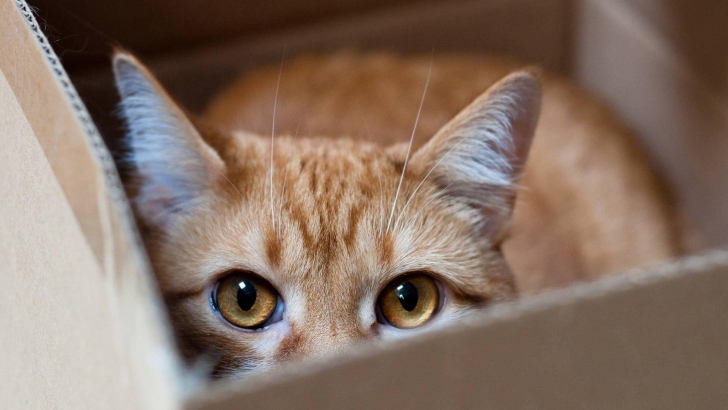
Games with a cat
- The well-known bow game never gets old among felines, so feel free to try it. If you're short on time, simply tie a ribbon to your leg and go about your chores while your kitty frolics, chasing the ribbon. When choosing this option, be careful not to step on your kitty while he's playing.
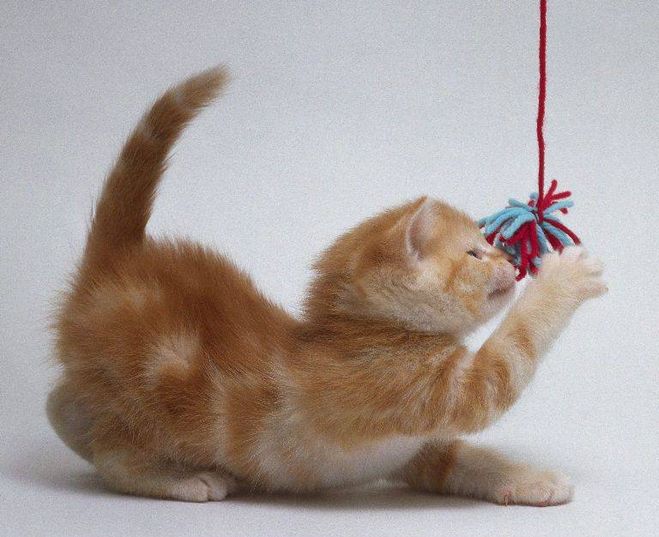
- Play with her with a ping-pong ball. You can simply roll it around the floor, or you can throw it against the wall and catch it. If you choose this option, you'll be surprised at the somersaults your kitty can perform.
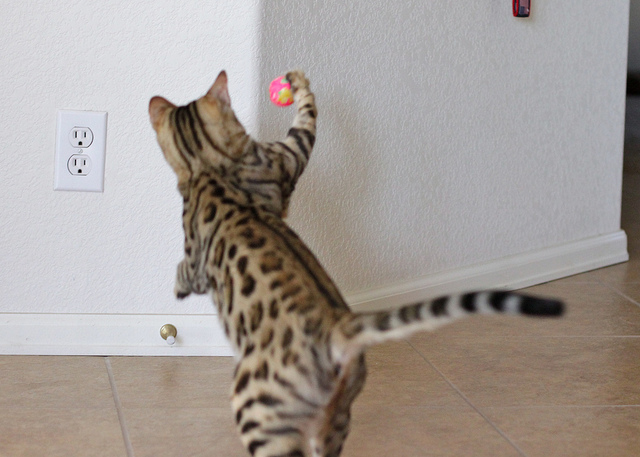
- Create a maze for her using boxes. Glue or staple several boxes together, cutting holes in them first, and place her favorite treat somewhere.
Cats usually enjoy climbing through these types of mazes.
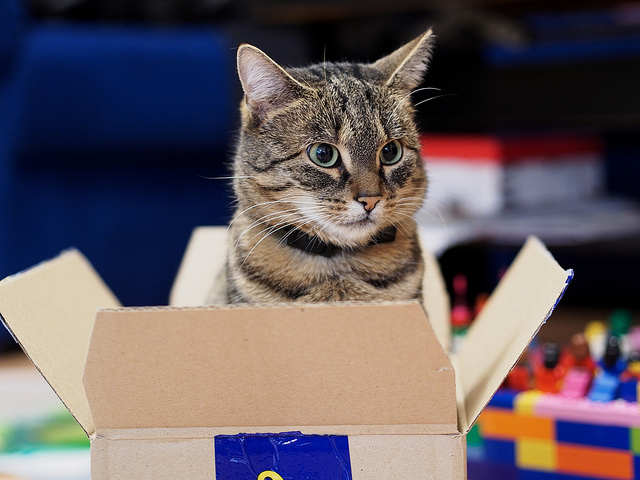
You can also use a laser pointer or flashlight to play. There are certainly many game options, and you probably have your own favorites, so give it a try without delay.
Reasons why you don't want a cat
If you've noticed a decrease in your pet's play activity, there could be several reasons. One of them is deteriorating health. Therefore, if you notice your beloved, always playful cat is feeling down, take her to the vet. Keep in mind that problems can also be psychological, and sometimes the best remedy is gentle petting. Your pet may also dislike a toy or not want to play right now.
The cat is playing shell game


Add a comment