
How to give a pill to a puppy?
How to give a puppy a pill without wasting a ton of time and effort. Many dog owners face this seemingly minor problem: their pets flat-out refuse medication. If adult animals have difficulties, let alone our whiskered little ones.
Why doesn't a puppy want to take a pill? Unlike humans, your dog won't understand even the most persistent assurances that it's medicine and will help with some ailment. A dog relies on instincts and senses in any situation, which are much more highly developed than ours. Therefore, a pill or medicine smells much stronger to a puppy than we can imagine. Dogs don't naturally take medications, meaning all the substances contained in pills are foreign to them. This means the dog will most likely refuse the pill and spit it out, even if you put it in its mouth. So what should you do in such a situation? How can you convince your dog to take the pill it so desperately needs?
There are several ways to do this, which we will consider.
Content
Preparing the puppy and owner
Successful drug administration begins long before contact with the drug:
-
Trust trainingA few days before starting treatment, it's worth conducting gentle training: petting the puppy, opening its mouth, offering treats—so that taking medication isn't associated with anything unpleasant.
-
Oral health checkupBefore administering the tablet, check for inflammation or lesions in the oral cavity. If so, discuss gentler administration methods with your veterinarian.
-
Create a positive environmentA quiet, warm place, a favorite rug, and the absence of loud noises will help reduce stress.
Helpful tips
So, here are our recommendations on how to properly give a pill to a puppy without injuring him.
Catch command
To perform this procedure, your puppy must be the type of dog that catches food on the fly. As is well known, a dog will eat a caught treat without hesitation, as if it were legitimate prey. Take advantage of this opportunity – place a puppy pill in a piece of ground meat or meat and toss the "gift" to the animal.
Deception is for the good
The most common, and therefore most effective, method is considered to be a simple trick. This involves giving your dog a pill, disguising it in your pet's favorite treat. This could be a piece of meat, cheese, ground meat—whatever, as long as the puppy happily swallows the treat along with the medicine. However, it's important to remember that if your dog accidentally bites into a bitter pill, he's guaranteed to spit it out, and then no amount of force will get him to take the pill.
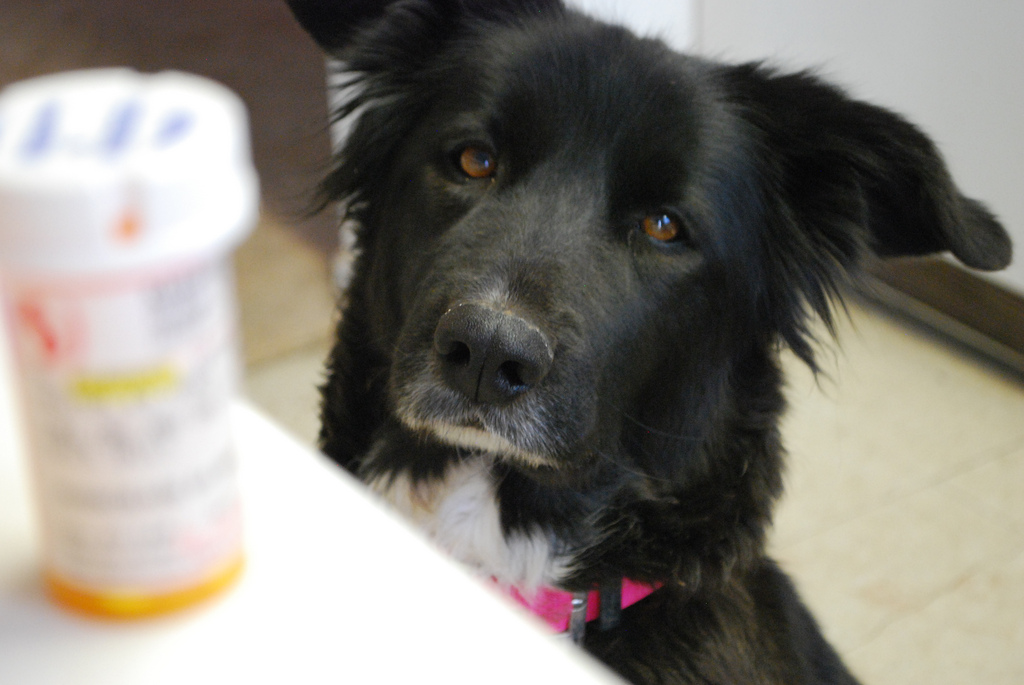
Before giving a gelatin tablet to a puppy, dip it in vegetable oil. If you give a dry tablet, the gelatin, moistened with saliva, will stick to the dog's tongue, cheeks, and roof of the mouth. This can cause the pet to become frightened and spit out the medication. Using oil prevents this sticking process, making the gelatin tablet much easier for the puppy to swallow.
If the tablet doesn't have a strong taste and can be crushed, it can easily be fed to the puppy along with ground meat or pâté. However, if the tablet can't be crushed (for example, if it's in a gelatin capsule), this method, unfortunately, won't work. Another method, which guarantees 100% results, is very helpful.
The traditional way
To give a pill to a puppy, prepare a convenient place to administer the pill and gently call your pet there. Your voice should be cheerful, without any agitation or anxiety, otherwise your dog will sense something is amiss. Then, open its mouth, place the pill on the back of its tongue, and close its mouth, preventing it from spitting it out.
Caution! Never throw the tablet directly into your throat! This may cause choking., if the medicine accidentally gets into the respiratory tract.
By stroking the throat, it is necessary to provoke the swallowing reflex, and after the dog swallows the medicine, watch for some time to ensure that the dog does not spit out the unswallowed pill.
To do this, don't let your dog out of the room and keep an eye on everything they do. There are some sneaky dogs who hide (!) the pill in their cheeks and then spit it out later, unnoticed by their owner.
Masking the drug
Camouflage is a key technique, especially for fussy puppies. Competitors offer interesting ideas:
| Camouflage method | Where is it used? | Notes |
|---|---|---|
| In minced meat | For most puppies | Suitable for tablets with a mild odor |
| In soft cheese | Puppies love cheese-like snacks | Suitable for tablets that do not dissolve quickly |
| In yogurt or cottage cheese | Attractive taste, easy to swallow | Can be mixed at the same time |
| In special soft shells | The tablet is wrapped in a shell | Dissolves quickly in the mouth |
Additional tips on dosing and monitoring
In addition to the usual instructions:
-
Measure not only the puppy's weight, but also the dynamics of weight gain—if growth is active, the dosage may need to be adjusted.
-
Record the time of administration and reaction.This will help the veterinarian assess the effectiveness and the need for adjustments to the regimen.
-
Check for residue in your mouth after a few minutes. - Some dogs manage to spit out pills that were previously hidden under their tongue.
Difficulties of treatment
Sometimes situations arise when standard methods don't work - here's what to do in such cases:
-
Scapulation with minimal violence
If the puppy doesn't swallow on its own, the veterinarian may use a special plastic drip-jet tip. This requires careful placement and proper technique. -
Dissolving tablets
Some tablets can be dissolved in boiled water or broth, subject to doctor approval. The liquid is easily drawn into a syringe without a needle and injected into the mouth. -
Prevention of vomiting
If you are prone to vomiting after taking the medicine, you can apply a little honey or give the tablet on an empty stomach, unless this is contraindicated. -
Attracting culinary aromas
You can lightly coat the tablet with chicken broth in the freezer - this will be interesting for the puppy and will help him swallow it faster.
After the appointment: observation
-
Observe your puppy for 30 minutes to ensure the tablet is swallowed and there is no allergic reaction.
-
If the drug causes salivation or mild vomiting, this often resolves on its own. However, if symptoms persist, consult a doctor.
-
Record improvements in the clinical picture (appetite, activity, sleep) - this will help evaluate the effectiveness of treatment.
An introducer is a useful little thing
If you're unsure how to properly give your puppy a pill because your pet is fidgeting, biting, or clenching its jaw, use an introducer. This inexpensive, syringe-like device can make feeding your puppy a pill much easier.
Place the tablet into the special slot at the end of the device. Then, insert the tip of the "syringe" through any crevice in your teeth. Once you reach the root of your tongue, press the plunger. This will allow the retaining band to open and release the tablet.
To master this process, conduct a few trial sessions without the pill. While doing this, praise and pet the puppy. This combination will allow you to give the puppy a pill without much fuss.
This technique can be difficult to master the first time, but once you get the hang of it, the treatment process will become simple and seamless. After your dog has finally taken the medication, it's a good idea to praise them and treat them with their favorite treat. This will minimize the negative impact of the medication and reinforce the puppy's belief that their owner would never do anything bad to them.
The key is to avoid physical force. If you force a puppy to do anything, it will run away and become uncooperative. It may even become aggressive or panicky. Therefore, don't worry about forcing a pill; instead, teach your puppy to accept such procedures calmly. Act quickly and calmly, without getting nervous, and show your pet the confidence of a true pack leader.
If you are unsure, ask an experienced dog owner to demonstrate the procedure or consult your veterinarian.
Basically, this is all the knowledge needed to properly administer a pill to a puppy without harming the pet's health and nerves.
Any questions? You can ask our website's staff veterinarian in the comments below, who will answer them as quickly as possible.
Read also:
- What and how to feed a puppy correctly?
- Vetmedin for dogs
- Dog tricks: a list of the most interesting ones


Add a comment