
How to give liquid medicine to a dog
Sooner or later, owners are faced with the need to give their dog liquid medication. We'll tell you how to do this if your pet flatly refuses to take the medication voluntarily.
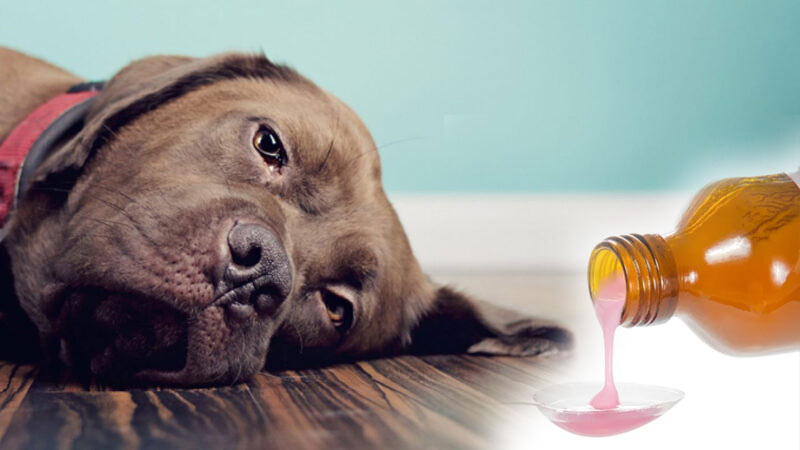
At first glance, giving a pet medication in liquid form seems easier than taking a tablet. However, many dogs flatly refuse to take unpalatable syrups and suspensions, struggling and actively spitting out the medication once it's in their mouth.
Important! In this case, there is a high probability that the dose of the active substance entering the body will be lower than necessary, and the treatment will not have the desired effect.
That's why today we'll talk about how to properly administer liquid medication to a dog, minimizing discomfort for the animal and ensuring the required amount of the drug enters the body.
Content
Method #1 – Lick it off a spoon (for delicious syrups)
Many veterinary drug manufacturers today are trying to make syrups more appealing to pets by using aromatic and flavoring additives. Therefore, before moving on to the methods described below, try offering your pet the medication in a measuring spoon (or teaspoon).
Method #2 – pour with a spoon
This option is suitable for small amounts of liquid or gel medication. Ideally, administer only enough medication at a time to allow the dog to swallow it easily.
The procedure is similar to feeding a pill. Place the dog in a comfortable position (facing or back to you) and slightly raise its head. If the pet resists at this stage, realizing what awaits it, it's worth enlisting the help of a second person to steady the animal. Opening its mouth slightly (gently applying pressure with your fingers near the jaws) quickly push the contents of the spoon deeper. Close its mouth and stroke its neck, encouraging swallowing.
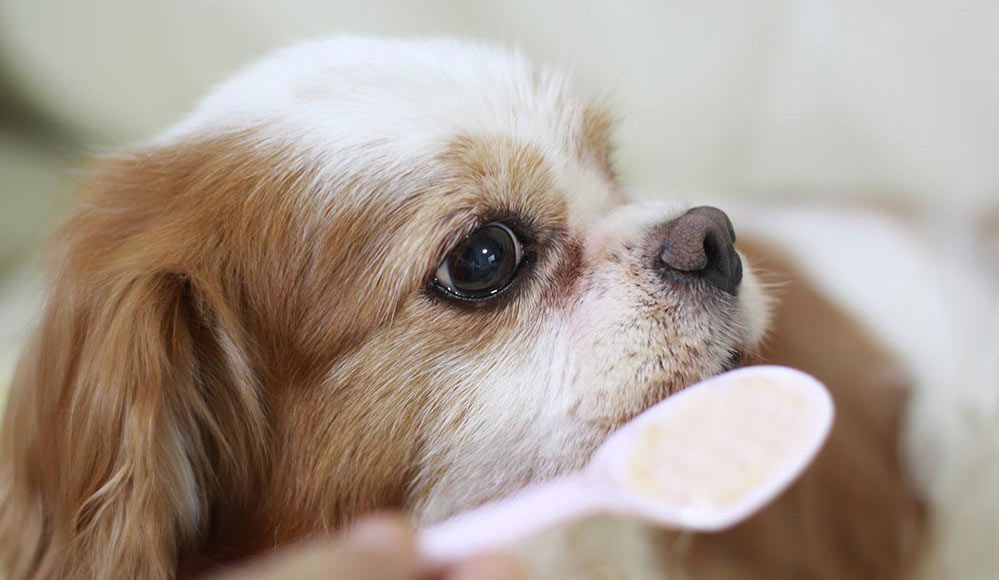
Important! If the medicine is not palatable, hold the mouth firmly while closing the mouth, as the dog will try to push it out with its tongue and vigorously shake its head.
If the required amount of medication exceeds one sip, repeat the procedure, taking a short break and calming the animal. However, this method is not recommended if you need to give your dog more than three doses (sips) at a time. In this case, it is better to use a regular medical syringe.
Find out also about How to give powders to a dog on our website.
Method No. 3 – with a syringe (naturally, without a needle!)
Using a syringe of the optimal volume is more convenient than a teaspoon. Firstly, you can measure the amount of medication more accurately (the instructions usually specify how many milliliters to administer per dose). Secondly, the risk of spilling the valuable contents before it reaches the mouth is significantly lower.
The actual procedure for administering liquid medication to a dog using a syringe is largely similar to method #2. The animal must be positioned comfortably (if necessary, ask an assistant to hold the dog in place). There are two options:
- for small breeds – open the mouth slightly and inject the contents of the syringe in small amounts, giving the dog the opportunity to swallow the medicine.
- for large breeds – gently pull back the lip in the jaw wash area, creating a pocket, and inject the medicine between the teeth.
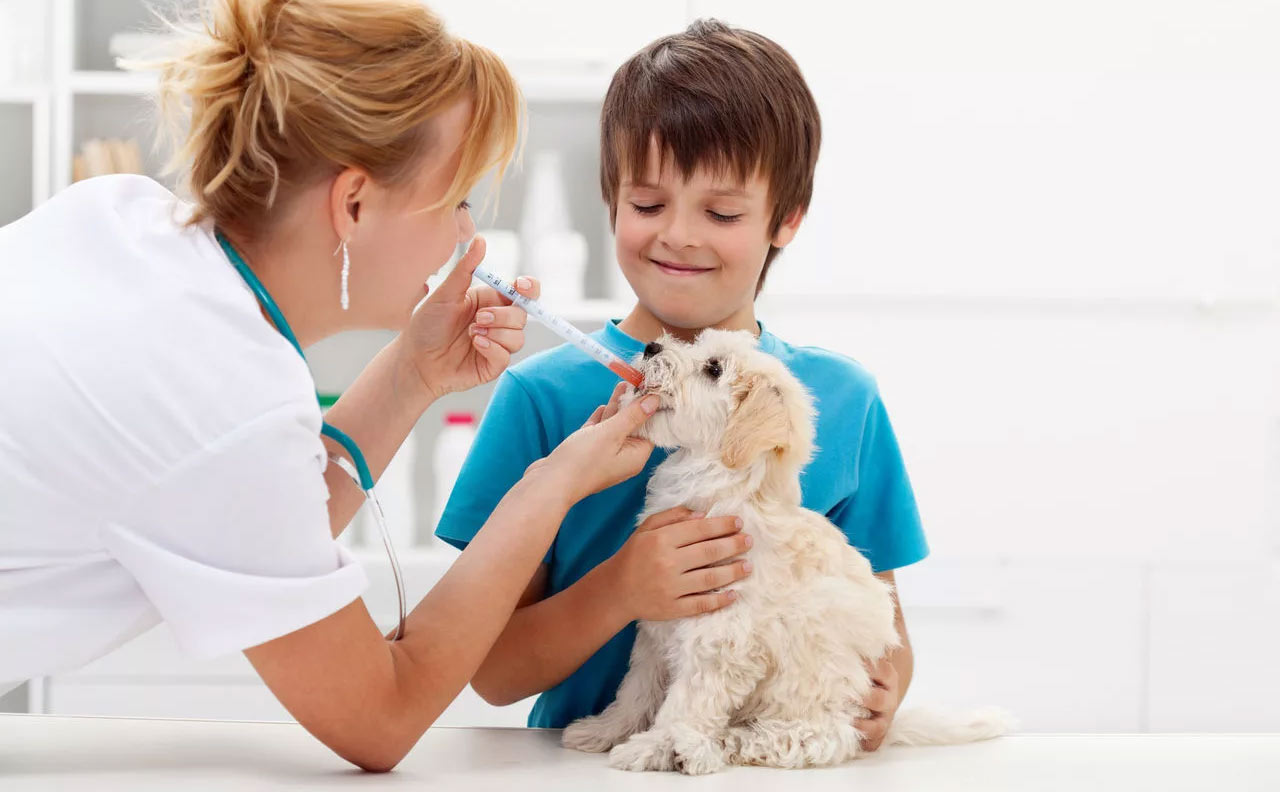
Important! When administering liquid medication to small dogs, the syringe must be positioned correctly, avoiding directing the stream toward the roof of the mouth. It's also important to release the contents slowly to avoid the medication entering the larynx, which can cause harm to the dog and increase discomfort. Furthermore, aspiration of liquid into the respiratory tract can cause respiratory distress. aspiration pneumonia, therefore, all manipulations related to treatment with syrups and suspensions should be carried out with extreme caution.
Can I give the medicine something to drink (eat)?
When taking an unpleasant-tasting medication, we often try to wash it down with something we eat or drink. Is it possible to offer your pet a treat immediately after the procedure (and what kind?) delicacy will not harm the treatment), you should immediately check with the veterinarian who prescribed the treatment.
Remember:
- If the medicine is intended for absorption into the mouth or is used for treating the pharynx, it should not be taken with food or water;
- If the drug causes the dog to gag, then you should not give it any treats;
- Many medications are taken on an empty stomach (or, conversely, strictly after meals) and these recommendations cannot be violated.
In other cases, with your veterinarian's permission, it's worth seeking out the best option that will suit both you and your pet, minimizing stress and simplifying the treatment process.
Veterinarian's advice
To avoid problems when treating an adult dog, especially large breeds, it's best to acclimate your pet to the procedure from the first few months of life. We recommend watching this video for tips on training your dog to administer liquid medication using a syringe.
Read also:


Add a comment