
Brushing a cat's teeth
Do cats need regular dental cleaning? This question is often asked by inexperienced owners after seeing specialized products on the shelves at pet stores or a list of hygiene procedures on the veterinary clinic's price list. We offer a detailed understanding of oral hygiene and the dental health of your pet.
Content
Why do cats and kittens need to brush their teeth?
Throughout the civilized world, people brush their teeth twice a day, and the purpose of this procedure is obvious: to remove food particles and plaque from between the teeth. The problems that often lead to dental and gum disease in humans are also common in our furry friends.
Food debris and plaque are a favorable environment for the development of bacteria, which can not only cause an unpleasant odor, but also cause your pet a lot of pain caused by caries, periodontitis, and gingivitis.
The situation is complicated by the fact that the animal cannot tell its owner exactly what is hurting, and the process of treating or removing teeth in cats is performed only under general anesthesia, which can have a negative impact on the pet's health.
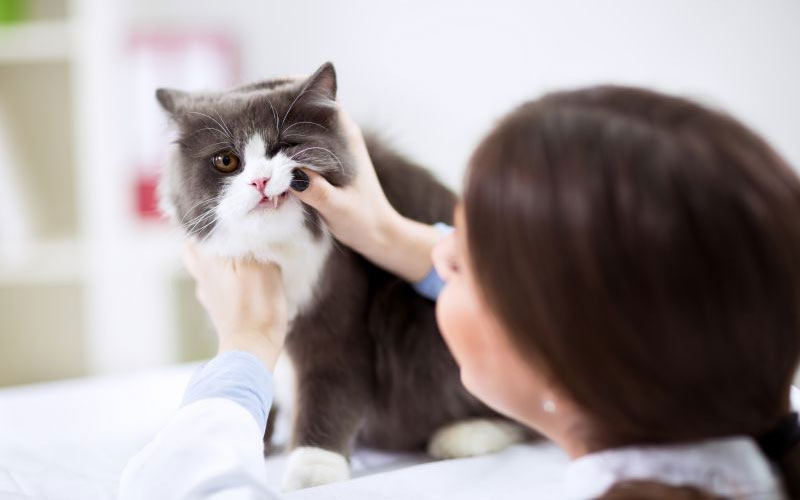
Important! Veterinarians emphasize to breeders that brushing a cat's teeth is a necessary hygiene procedure, and that preventing illnesses is much easier and cheaper than treating them.
Kittens, like humans, have baby teeth. These erupt two weeks after birth and are replaced by permanent teeth between 4 and 7 months (the pace of this change varies from kitten to kitten). Although the risk of dental disease during the first year of life is minimal, hygiene procedures are essential from the moment your kitten arrives.
Early training in hygiene procedures will help:
- train your pet to brush his teeth;
- monitor the correct growth and replacement of baby teeth;
- do not miss the first signs of problems;
- identify abnormal growth of permanent teeth in a timely manner (sometimes a strong baby tooth does not fall out on its own, which can lead to malocclusion in the future).
Cats are carnivores. Wild cats most often feed on hard food: birds, rodents, amphibians, and insects. Chewing such food naturally cleans the teeth. However, after a year, the teeth of wild animals begin to deteriorate.
There is even a method for determining the age of a pet based on the condition of its teeth.
While daily brushing is more of a matter of getting used to for furry pets under 2 years old, it's a vital necessity for adult pets. After 3 years, the risk of dental and gum problems increases dramatically, especially in animals fed a natural diet.
Without special care, cats may notice the following changes as they age:
|
Age |
Dental condition |
|
1 year |
All teeth are white and strong |
|
1.5 years |
The teeth acquire a slightly yellowish tint |
|
2.5 years |
Tartar appears |
So, there's no doubt about the need for hygiene, but how should you brush a kitten's or an adult cat's teeth, and when should you do it at home and when should you go to the veterinarian's office?
Caring for your cat's teeth at home
Healthy teeth for your pet are the result of following three simple rules:
- proper nutrition;
- regular hygiene;
- timely treatment.
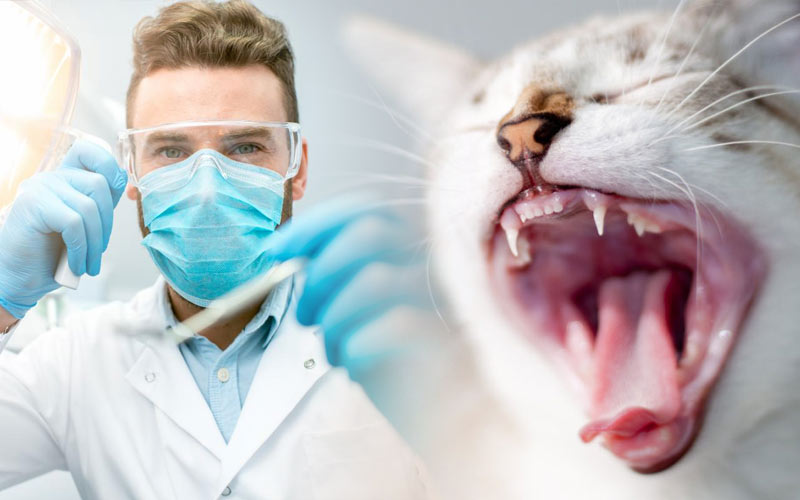
Basic rules of care
A cat's diet should consist primarily of solid foods (meat, pellets, and chewable treats). This will naturally clean and strengthen the teeth, as well as develop the jaw muscles.
There are several options for brushing your cat's teeth. The simplest is using a special toothbrush and toothpaste.
Important! Products intended for human use are strictly prohibited for use on animals. Toothpastes with high levels of active ingredients, strong flavors, and bleaching effects can seriously harm your pet's health, while large, hard brushes can damage delicate gums.
For very young kittens, you can use finger brushes. However, if you're looking for a way to clean an adult cat, it's best to avoid this method, as there's a high risk that the cat will easily chew through both the silicone and the finger underneath. For the same reason, a budget-friendly at-home cleaning method using a cloth wrapped around a finger may be a questionable idea.
Pet stores offer a variety of miniature brushes that minimize discomfort and allow for thorough cleaning of hard-to-reach areas. Pet toothpastes typically have an appealing taste and smell (meaty or fishy) to cats. But most importantly, they don't cause any discomfort when they come into contact with the tongue or mucous membranes.
Carrying out the procedure
Try to perform the procedure when your pet is in a good mood, but not overly excited. It's best to do this with two people, one holding the animal while the other does the cleaning.
- Place the cat with its back to the person who will hold it.
- Hold the paws and body with your hands so that if the animal tries to break free, you can quickly fix it.
- Lift one side of your lip and gently brush the exposed teeth.
- Repeat the procedure for the other side.
Important! Cats' plaque accumulates primarily on the outer surface of their teeth, so avoid brushing the inner surface. This procedure is typically the most distasteful for cats.
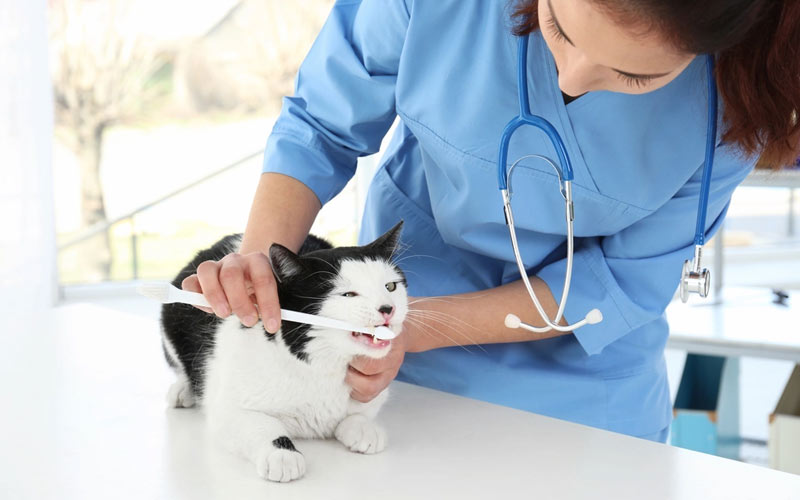
Remember that the goal of the first few brushings isn't proper hygiene, but rather getting your pet used to the toothbrush and the taste of the toothpaste. If your cat doesn't struggle, that's already a victory. Keep your first sessions to no more than 30 seconds. No problem. Over time, once your cat realizes it's not scary at all, and even enjoys it, she'll agree to spend longer with the brush and allow you to brush each tooth more thoroughly.
Important! Remember that even the shortest procedure, and even if your pet wasn't very obedient, will earn a reward.
If the cat is categorically against it
All of the described methods are suitable if your kitten or cat is mature, yet docile and tame. In practice, breeders who only consider how to brush their cat's teeth at home several years after bringing their pet home are often met with violent protests from the animal. Often, attempts to perform the hygiene procedure risk the owner suffering serious scratches and bites.
In this case, it's worth trying alternative options. Of course, they will cost significantly more than a toothbrush and toothpaste, and may not provide the same good results (especially if plaque or the stone is already there), but it is better than doing nothing and waiting for problems to make themselves known through pain and the animal’s refusal to eat.
Available on the market today:
- special food for cleaning teeth, preventing the formation of tartar;
- liquid "toothpastes" that you can simply add to your cat's drinking water;
- Dental sprays.
Hygiene procedures at the veterinarian
If all your ideas for brushing your cat's teeth at home have failed, you can schedule a special dental hygiene procedure at a clinic.
One of the most popular procedures today for removing tartar accumulated over the years from a cat's teeth is ultrasonic cleaning. The cost and duration of the procedure depend on factors such as:
- breed (dimensions);
- age;
- condition of teeth.
Important! All dental procedures for cats (teeth cleaning and polishing, treatment, and extractions) are performed under sedation, as any movement by the animal will not only interfere with the specialist's ability to perform the work quickly and efficiently, but can also cause gum injury.
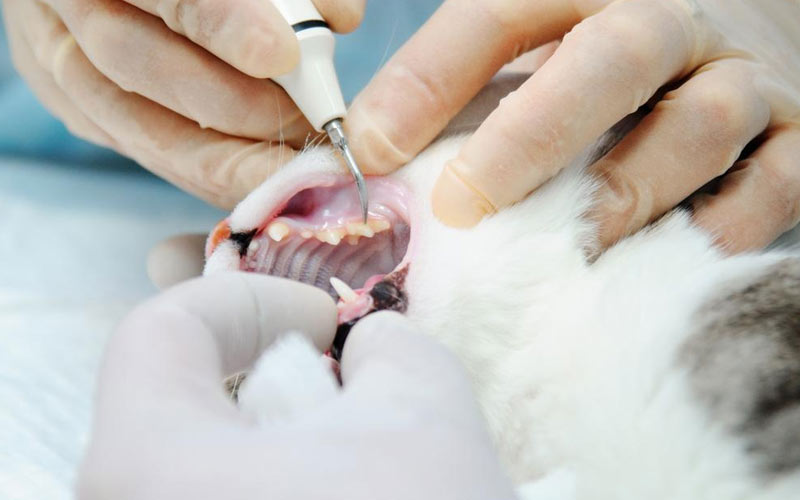
The use of general anesthesia is associated with a number of precautions and contraindications for ultrasonic cleaning in cats. For example, in animals over 6 years old, a veterinarian must perform a thorough evaluation of their condition, including echocardiography and blood tests. At any age, a checkup is recommended for breeds prone to cardiovascular disease. These include:
- Persians;
- Scots;
- British;
- sphinxes and related breeds;
- ragdolls;
- Maine Coons.
As an alternative to general anesthesia, muscle relaxants may be suggested. In this case, the animal will be aware and sensitive, but under the influence of the drugs, it will be unable to move. It's easy to imagine the stress this would cause, so drug-induced immobilization (rather than complete sleep, as with sedation) should only be used when absolutely necessary.
Conclusion
As you can see, pet oral care can be very diverse. The main thing is to find an option that suits both you and your pet. It's never too late to start. Even if you missed the opportunity to introduce your pet to this type of care as a puppy, try it now, because clean teeth are the key to your pet's health and longevity.
If you have any questions, please ask an experienced veterinarian right now using the comment form below.
Video review on brushing cats and dogs' teeth
Read also:
- Why does my cat have bad breath?
- How to quickly accustom a kitten to its name
- My cat stopped eating dry food: reasons and what to do




2 comments
Yuri
Hello. My cat has been diagnosed with gingivitis. Is it possible to clean his teeth with an ultrasound without anesthesia? We're being told to have the procedure done under anesthesia, which I don't want. My cat is 13 years old. Thank you.
Daria is a veterinarian
Hello! 13 years isn't such a terrible age for a cat; they can live for 20-25 years with good care and proper nutrition. The decision to use anesthesia is made ONLY AFTER A THOROUGH EXAMINATION (particular attention should be paid to the heart). If anesthesia isn't used, sedatives and muscle relaxants may be used. Avoid allowing the cat to twitch, otherwise the dental cleaning process will be prolonged. And it's unknown how the cat will react during the procedure: it might become nervous and twitch, potentially injuring itself and the dentist. That's why anesthesia is used. What causes gingivitis? Tartar buildup?
Add a comment