
How to clean a cat's ears
Cats' ears detect sounds over a much wider range than humans, and they also function as balance organs. Although cats are very clean, the complex structure of their auricles means they can't always clean them perfectly on their own. Therefore, it's helpful for owners of these adorable pets to know how to clean their cat's ears and how often they should do so.
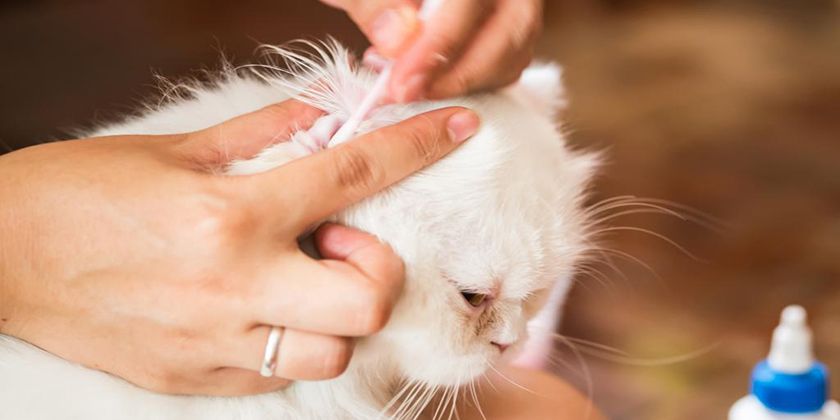
Content
The structure and function of the cat's ear
Anatomically, the ear consists of the following sections:
- The external part of the ear. This is formed by an elastic, skin-covered cartilaginous plate, the auricle, and the bony-cartilaginous canal—the auditory canal. This section, like a locator, captures sounds and transmits them for further processing. At the base of the auricle are the muscles that enable ear movement and the ceruminous glands, which produce earwax—a substance that protects the internal parts of the organ from contamination.
- Middle ear. It consists of a thin membrane sensitive to sound vibrations—the eardrum—and movable ossicles that transmit sound to the next, inner ear section.
- Internal. Located in the temporal bone, it performs sensory functions, converting sound signals into nerve impulses and sending them to the brain. The inner ear also contains an organ responsible for spatial orientation (the vestibular apparatus).
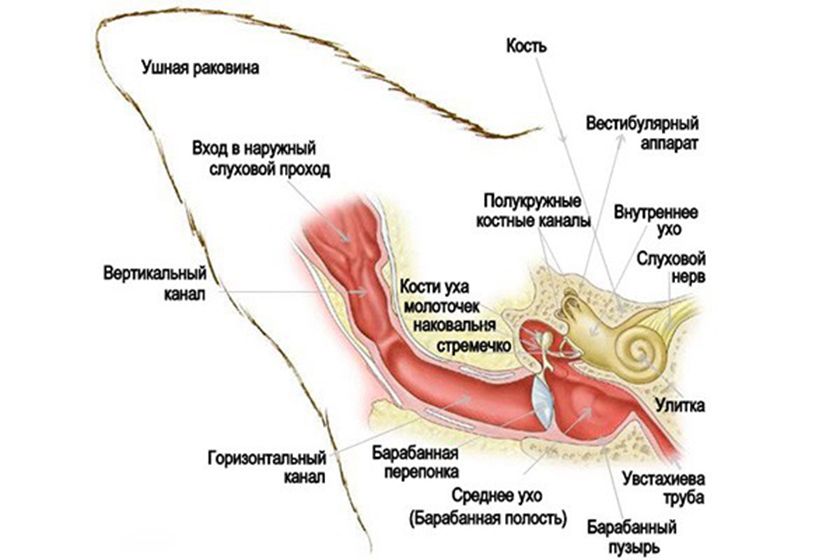
Only the outer part of a cat's ears gets dirty: dust, dead skin particles, small hairs, and wax accumulate there. Therefore, when cleaning a cat's ears properly, it's important to only clean this part.
How often should a cat's ears be cleaned?
A cat's ears typically need to be cleaned every few weeks. The exception is breeds with large or hairless ears (the fur on a cat's ears also provides some protection from dirt). Breeds such as Sphynxes, Devon Rexes, Siamese, Balinese, and Ukrainian Levkoys produce more earwax. If left untreated, the excess earwax can become a breeding ground for pathogens and lead to earwax buildup, so these cats should have their ears cleaned every 2-3 days.
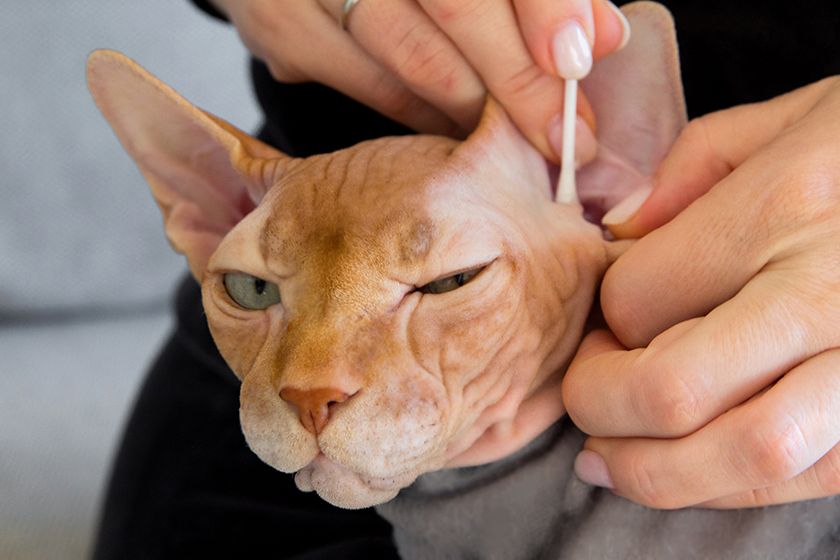
There are times when cleaning a cat's ears at home is strictly not recommended. This procedure should be performed by a veterinarian if your cat has:
- the auricle is inflamed, swollen or damaged, its integrity is compromised;
- there is a rash inside the ear or raid, indicating the presence of the disease;
- serous or purulent discharge from the ears is detected;
- There is a fungal infection of the ears, the signs of which are the presence of a rash, scratches and dry crusts.
Preparing for the procedure
For the procedure you will need:
- Cotton swabs (children's cotton swabs with a thicker roller at the base work well).
- Gauze pads or cosmetic discs.
- Liquid hygiene product. Available options include chlorhexidine or boric acid solution, calendula infusion, or chamomile tea. Avoid using alcohol-containing products or soap solutions. Ear care products can be purchased at a pet store or veterinary pharmacy. The ingredients in drops and lotions facilitate cleaning the auricle and ear canal of wax and debris.
The following have earned positive reviews from veterinarians:
- Surolan (Germany),
- ProVET SaniPet (Ukraine),
- Trixie (China),
- BioTestLab Oto (Ukraine),
- Auricap (Ukraine),
- Bars (Ukraine),
- Rosinka (Russia),
- Otoklin (Germany).
Carrying out the procedure
Before cleaning your cat's ears, make sure it sits still. Some cats tolerate this procedure calmly; you can simply place them on your lap or a table. However, if you suspect your pet will struggle or twitch, it's best to wrap their paws and body in a large towel or sheet.
It is advisable to shake the bottle of cleaning agent to ensure that its components are thoroughly mixed and to warm it slightly so that contact of the skin with the cold liquid does not cause discomfort to the animal.
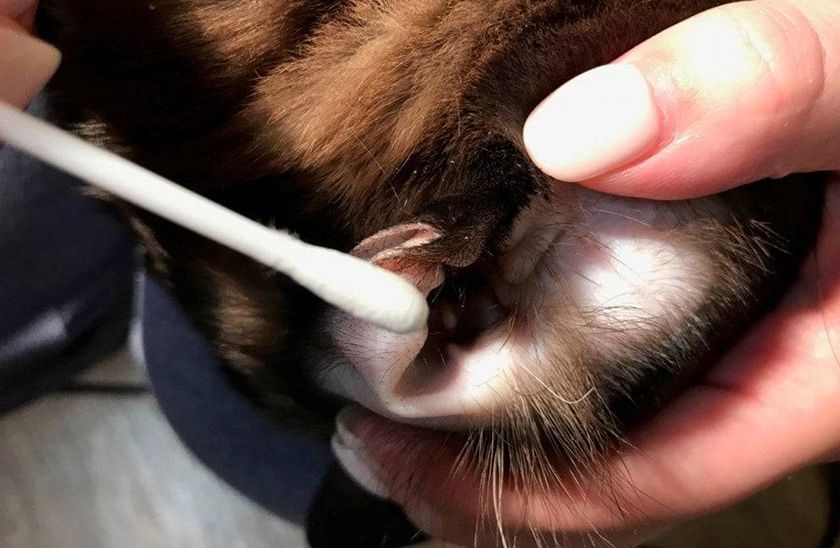
Then, use your hand to hold the cat's head in place, drop two or three drops of the hygiene product into each ear, and gently knead the ears so that it is evenly distributed over the inner surface of the auricle.
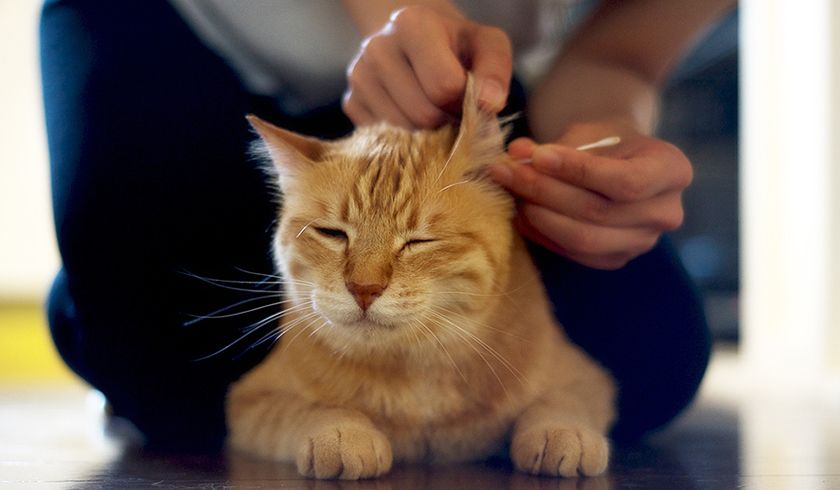
Using a gauze pad or cosmetic disc, gently remove accumulated debris and wax from the auricle, moving from the inside outward. Clean the ear folds and ear canal with cotton swabs soaked in cleaning solution. Avoid going too deep into the ear to avoid damaging the eardrum. Continue wiping until the swabs and swabs are clean.
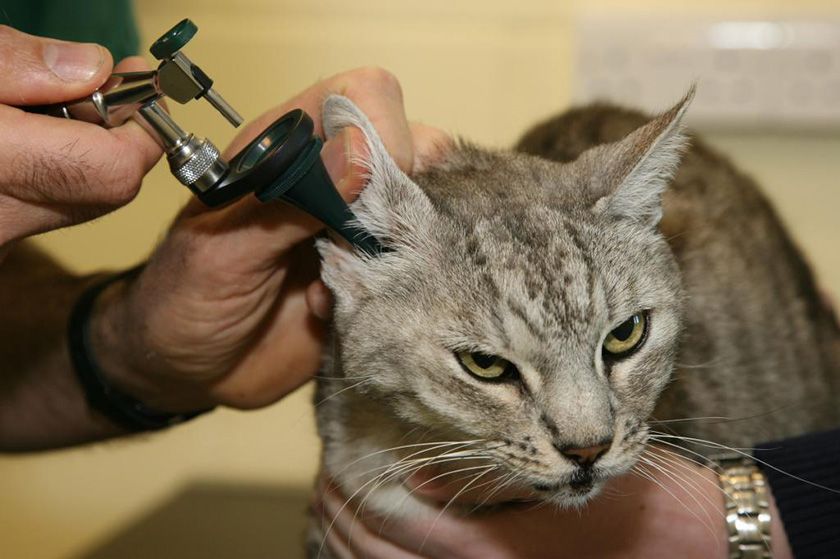
The procedure will be special if the cat is infected. otodectosis – this is usually part of the treatment course. Your vet will advise you on how to clean your cat's ears at home for this condition. Before cleaning your cat's ears, you'll need to remove any pus and crusts from the auricle using special products that have a softening and antiseptic effect. After cleaning, treat the ears with medications against ear mites. This procedure should be repeated daily until the parasite is completely eradicated.
It's best to accustom your cat to ear cleaning from a young age. This way, your pet will be patient and accept this hygienic procedure without resentment. This is especially true if she knows she'll be praised and rewarded with a treat for good behavior.
Read also:


Add a comment